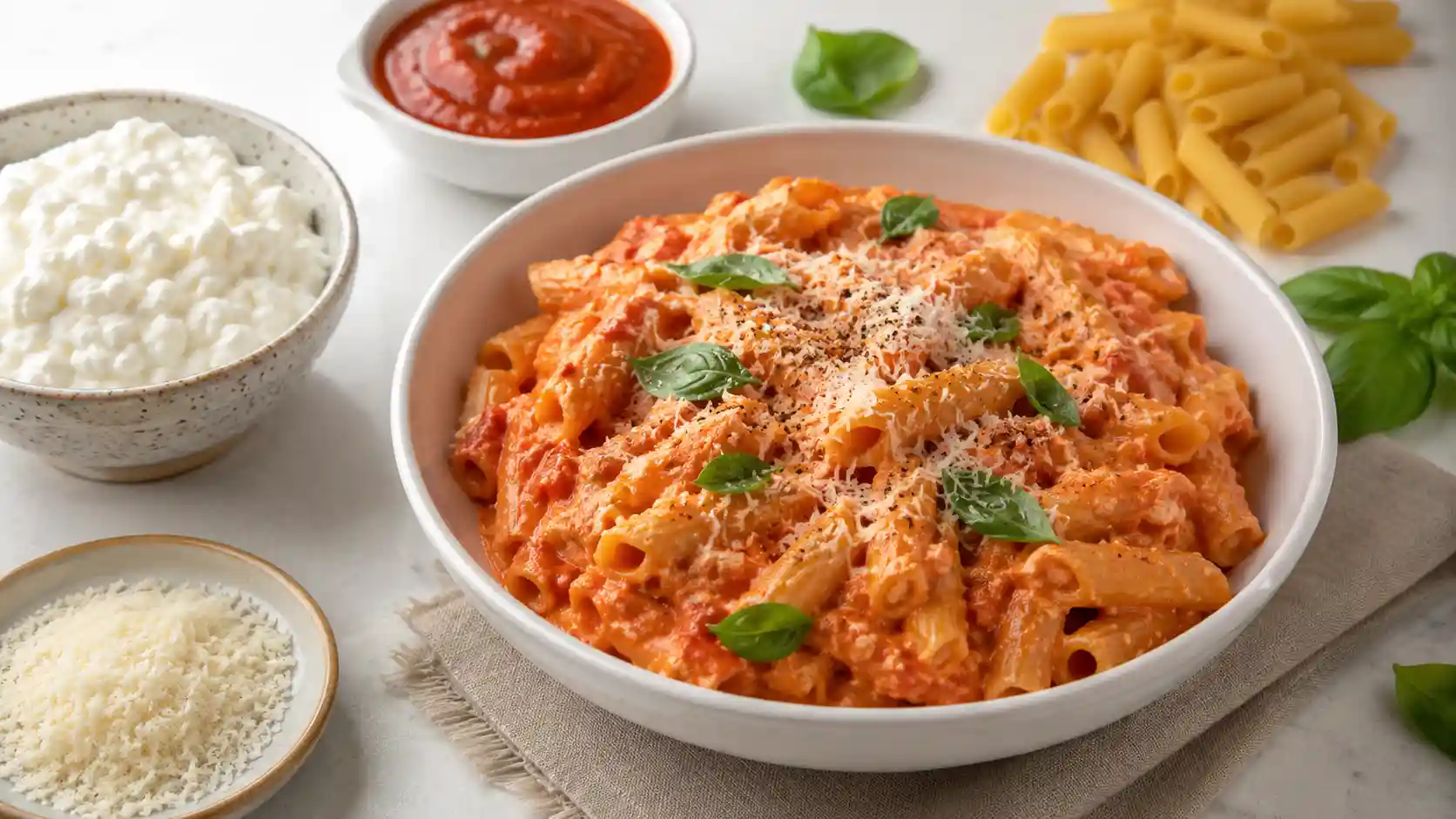
Ingredients
Equipment
Method
- Bring a large pot of salted water to a boil. Cook the pasta until al dente according to the package directions.
- Before draining, reserve at least 1 cup of pasta water. Drain the pasta and set it aside.
- Add the cottage cheese, marinara sauce, parmesan, olive oil, garlic, Italian seasoning, black pepper, red pepper flakes, and 1/2 cup reserved pasta water to a blender.
- Blend until the sauce is fully smooth, stopping to scrape down the sides if needed.
- Pour the sauce into a large skillet or back into the warm pot. Warm it over low heat for 1 to 2 minutes, stirring often.
- Add the cooked pasta and toss until coated. Add more reserved pasta water a splash at a time until the sauce is creamy and coats the pasta.
- If using spinach or quick-cooking vegetables, stir them in while the pasta is warm and cook gently until softened or heated through.
- Taste before adding salt. Cottage cheese, parmesan, and marinara can already be salty, so add salt only if needed.
- Serve warm.
Notes
Blend the sauce until fully smooth before warming it. This helps prevent a grainy or curd-like texture.
Warm the sauce gently over low heat. Avoid boiling it after blending because high heat can make the sauce less creamy.
Reserve more pasta water than you think you need. Add it a splash at a time to loosen the sauce and help it coat the pasta.
Use regular pasta or protein pasta depending on your budget and preference.
For a fuller meal, stir in cooked ground chicken, ground turkey, chickpeas, white beans, tofu, spinach, broccoli, mushrooms, peas, or zucchini.
Store leftovers in airtight containers in the refrigerator for 3 to 4 days. For best texture, store the sauce and pasta separately when possible. Reheat gently with a splash of water and avoid high heat.
Freezing is not recommended because cottage cheese can change texture after thawing.