
This cottage cheese mac and cheese is a creamy stovetop dinner made with short pasta, blended cottage cheese, sharp cheddar, milk, and a little pasta water. It gives you the comfort of classic mac and cheese with a smoother cottage cheese sauce that fits well into a practical budget meal plan.
The key is to blend the cottage cheese first and warm the sauce gently. That helps the sauce stay creamy instead of grainy. If you already like simple cottage cheese meals, you may also enjoy these high protein cottage cheese recipes for more easy ideas.
Why You’ll Like This Cottage Cheese Mac and Cheese
This recipe is a good fit when you want a cozy pasta dinner that still uses simple protein-friendly ingredients. It is not complicated, and it does not need protein powder, special pasta, or expensive add-ins.
- It has a creamy comfort food feel.
- It uses simple grocery staples.
- Blended cottage cheese helps create a smoother sauce.
- Sharp cheddar gives it a familiar mac and cheese flavor.
- It works for dinner, leftovers, or a quick lunch.
- You can add frozen vegetables or cooked chicken if you want a bigger meal.
Ingredients You’ll Need
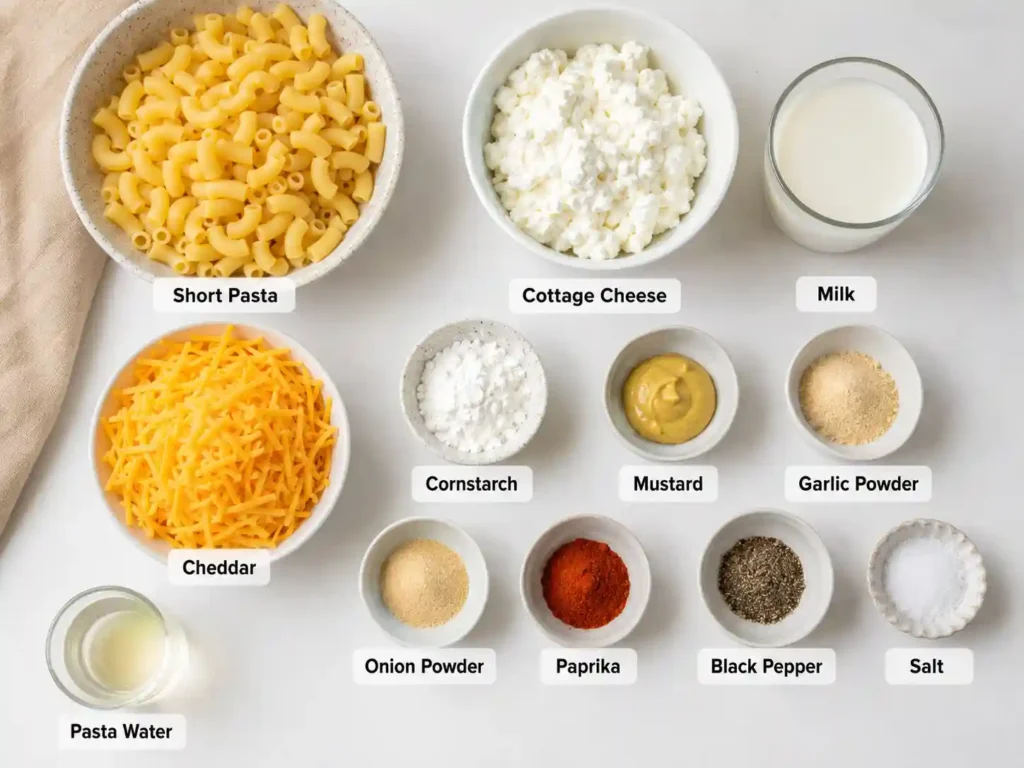
Short Pasta
Elbow macaroni is the classic choice, but shells, cavatappi, or another short pasta shape will also work. Short pasta holds the sauce better than long noodles.
Cottage Cheese
Cottage cheese is the base of the sauce. Blend it until very smooth before heating. This step matters because it helps remove the curdy texture and makes the sauce creamier.
Milk
Milk helps thin the cottage cheese and makes the sauce easier to blend. Whole milk or 2% milk will give the creamiest result, but you can use what you normally keep at home.
Sharp Cheddar
Sharp cheddar gives the recipe that classic mac and cheese flavor. Freshly shredded cheddar from a block usually melts more smoothly than pre-shredded cheese.
Cornstarch
A small amount of cornstarch helps the sauce thicken and coat the pasta. It also helps keep the sauce from feeling too thin.
Seasonings
Mustard powder or Dijon, garlic powder, onion powder, paprika, black pepper, and salt help make the sauce taste more like classic mac and cheese.
Pasta Water
Reserved pasta water helps loosen the sauce at the end. Save some before draining the pasta so you can adjust the texture as needed.
Best Cottage Cheese to Use
For the creamiest cottage cheese mac and cheese, 2% or whole milk cottage cheese usually works best. Low-fat cottage cheese can still work, but the sauce may taste a little lighter and less rich.
If your cottage cheese tastes salty, go easy with the added salt until the sauce is finished. Cheddar can also add saltiness, so it is better to season slowly and adjust at the end.
The most important step is blending. A blender or food processor helps turn the cottage cheese into a smooth sauce base before it goes into the pan. If you skip blending, the sauce will likely be grainier.
How to Make Cottage Cheese Mac and Cheese
Cook the Pasta
Bring a large pot of salted water to a boil. Cook the pasta until al dente according to the package directions. Before draining, reserve about 1/2 cup of pasta water.
Blend the Cottage Cheese Sauce
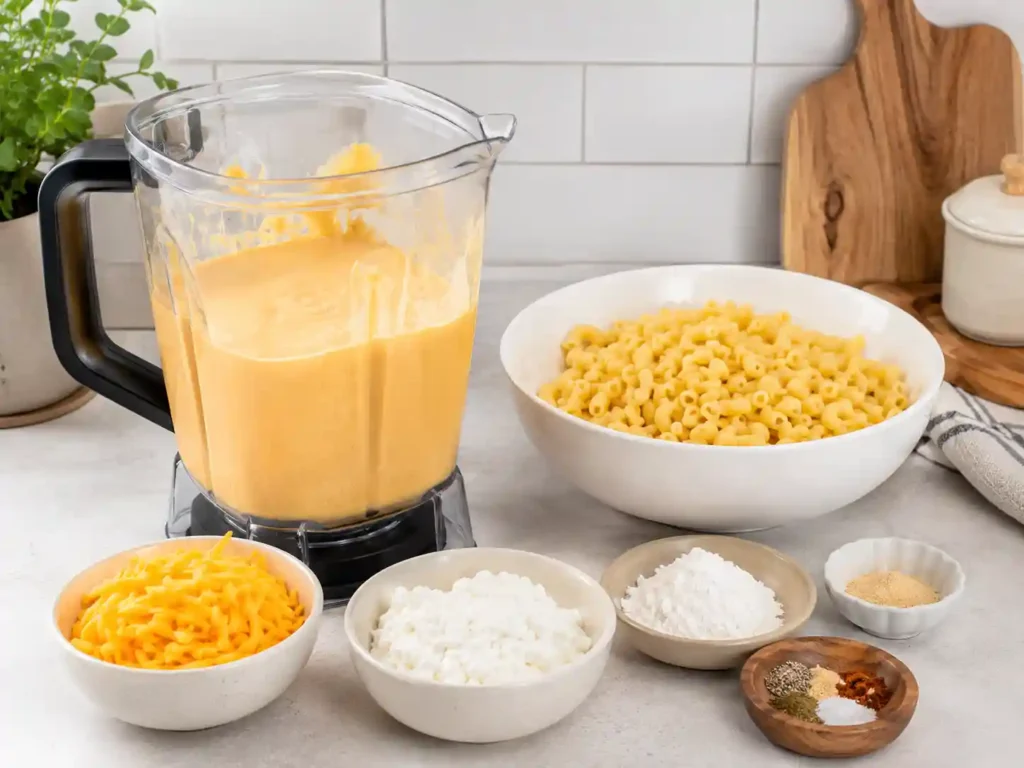
Add the cottage cheese, milk, cornstarch, mustard powder or Dijon, garlic powder, onion powder, paprika, and black pepper to a blender. Blend until the mixture looks smooth and creamy.
Warm the Sauce Gently
Pour the blended sauce into a large pot or deep skillet. Warm it over low heat, stirring often. Do not boil the sauce. High heat can make dairy-based sauces separate or turn grainy.
Add the Cheddar
Add the freshly shredded cheddar a little at a time. Stir gently until the cheese melts into the sauce. Keep the heat low, or remove the pan from the heat while the cheese melts.
Toss With Pasta
Add the drained pasta to the sauce and stir until coated. If the sauce is too thick, add a splash of reserved pasta water or milk until it reaches the texture you like.
How to Keep the Sauce Smooth
The biggest mistake with cottage cheese mac and cheese is using too much heat. A gentle stovetop method gives you the best chance of a creamy sauce.

- Blend the cottage cheese until completely smooth.
- Use low heat when warming the sauce.
- Do not let the sauce boil after adding cheddar.
- Add the cheddar gradually instead of all at once.
- Use freshly shredded cheese when possible.
- Save pasta water so you can loosen the sauce at the end.
- Cook the pasta al dente so it does not get mushy when mixed with the sauce.
Budget Add-Ins and Variations
You can keep the base recipe simple or add budget-friendly extras. These add-ins are optional and not included in the estimated nutrition below.
- Frozen broccoli: Add it during the last few minutes of cooking the pasta.
- Frozen peas: Stir them into the hot pasta and sauce until warmed through.
- Spinach: Stir in a handful of fresh spinach or thawed frozen spinach at the end.
- Cooked chicken: Add chopped cooked chicken for a more filling dinner.
- Spicy version: Add hot sauce, cayenne, or chopped jalapeños.
- Crunchy topping: Add toasted breadcrumbs before serving.
For another creamy pasta idea using cottage cheese, try this cottage cheese pasta sauce.
What to Serve With Cottage Cheese Mac and Cheese
This recipe can work as a main dish or as a side. For a simple dinner, serve it with a green salad, steamed vegetables, roasted vegetables, or cooked chicken.
If you want more simple dinner ideas that fit the same practical style, browse these easy protein dinner ideas.
Helpful Tools for This Recipe
You do not need fancy equipment for this recipe, but a few basic kitchen tools make it easier.
- Blender or food processor: Helps make the cottage cheese sauce smooth.
- Large pot: Useful for boiling the pasta.
- Deep skillet or saucepan: Gives you room to warm the sauce and toss the pasta.
- Box grater: Helpful if you are shredding cheddar from a block.
- Silicone spatula: Good for stirring the sauce gently.
- Airtight meal prep containers: Useful for storing leftovers.
Meal Prep and Storage
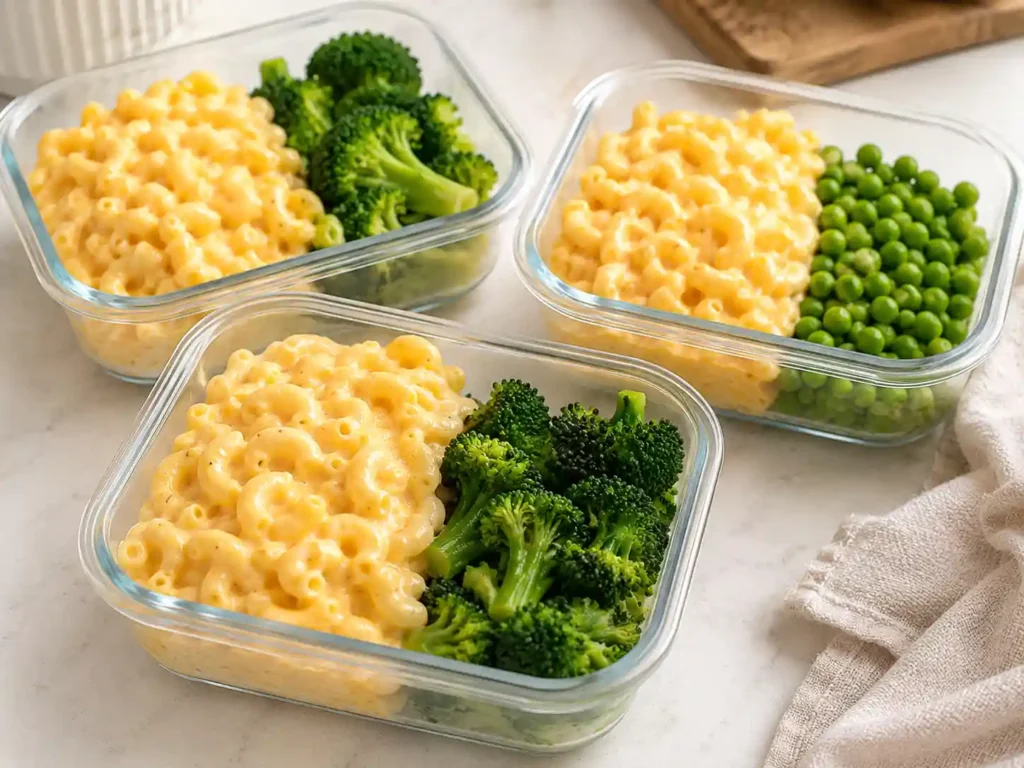
Store leftovers in airtight meal prep containers and refrigerate for 3 to 4 days. This recipe is best reheated gently because dairy-based sauces can thicken after chilling.
To reheat, add a splash of milk or water and warm the pasta over low heat on the stovetop or in short microwave intervals. Stir between intervals until the sauce becomes creamy again.
Freezing is not the best option for this recipe because cottage cheese sauces may separate after thawing. For more make-ahead ideas, see these high protein cottage cheese meal prep ideas and cheap high protein meal prep.
Estimated Nutrition
Estimated nutrition per serving, not guaranteed. This estimate is based on 4 servings made with 8 ounces dry pasta, 1 cup cottage cheese, 3/4 cup 2% milk, 1 cup shredded sharp cheddar, and 1 teaspoon cornstarch. Your final nutrition will vary based on brands, exact ingredients, pasta shape, and serving size.
- Calories: about 385 per serving
- Protein: about 22 grams per serving
- Carbohydrates: about 47 grams per serving
- Fat: about 13 grams per serving
- Fiber: about 2 grams per serving
- Sodium: varies widely by cottage cheese, cheddar, pasta water, and added salt

Cottage Cheese Mac and Cheese
Ingredients
Equipment
Method
- Bring a large pot of salted water to a boil. Cook the pasta until al dente according to the package directions.
- Before draining, reserve 1/2 cup of pasta water. Drain the pasta and set it aside.
- Add the cottage cheese, milk, cornstarch, mustard powder or Dijon, garlic powder, onion powder, paprika, and black pepper to a blender.
- Blend until the sauce is very smooth. Stop and scrape down the sides if needed.
- Pour the blended sauce into a large pot or deep skillet over low heat. Stir often and warm gently for 2 to 3 minutes.
- Add the shredded cheddar a little at a time, stirring until melted. Keep the heat low and do not let the sauce boil.
- Add the cooked pasta and stir until evenly coated.
- Add reserved pasta water, 1 tablespoon at a time, until the sauce reaches your preferred texture.
- Taste and adjust salt if needed. Serve warm.
Notes
FAQs
Can you taste the cottage cheese in mac and cheese?
The flavor is usually mild once the cottage cheese is blended with cheddar, milk, and seasonings. Sharp cheddar gives the sauce the stronger classic mac and cheese flavor.
Why is my cottage cheese mac and cheese grainy?
Graininess usually happens when the cottage cheese is not blended long enough, the sauce is heated too high, or the cheddar is added while the sauce is boiling. Blend well and keep the heat low.
Can I make cottage cheese mac and cheese ahead of time?
Yes, but it tastes creamiest right after cooking. For leftovers, refrigerate in airtight containers and reheat gently with a splash of milk or water.
Can I use low-fat cottage cheese?
Yes. Low-fat cottage cheese can work, but the sauce may taste lighter and less rich than a sauce made with 2% or whole milk cottage cheese.
Can I add chicken or vegetables?
Yes. Cooked chicken, frozen broccoli, peas, or spinach all work well. Add cooked chicken at the end and add frozen vegetables during the last few minutes of boiling the pasta or while warming the sauce.
More Easy Protein-Friendly Meals
If you want more practical meals like this, try these high protein lunch ideas or browse the full list of high protein cottage cheese recipes.