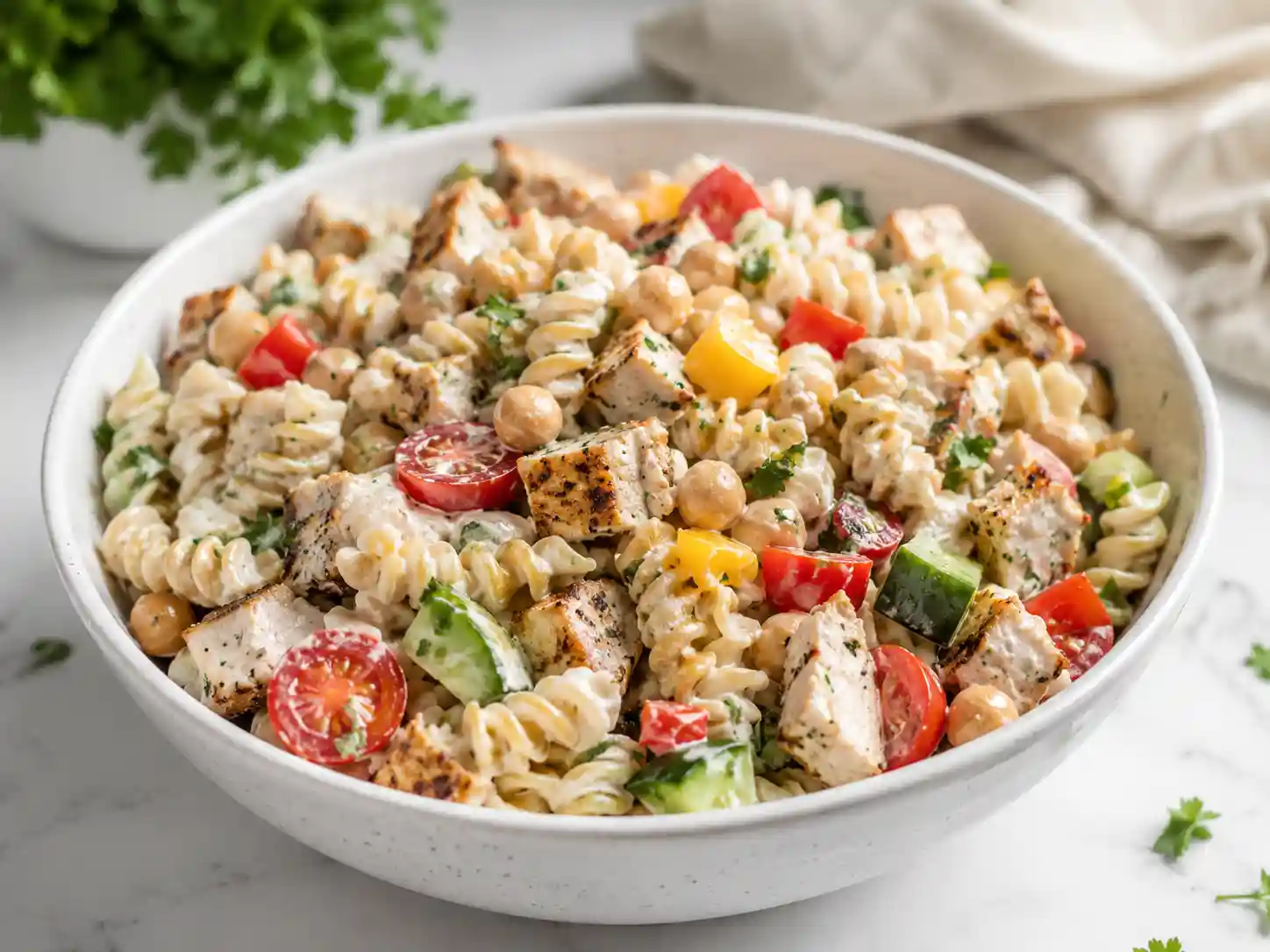
Protein pasta salad recipes are useful when you need a cold lunch that feels more substantial than a small bowl of greens. Short pasta creates a practical base, while chicken, tuna, eggs, tofu, beans, lentils, Greek yogurt, cottage cheese, or edamame can turn it into a complete meal.
This guide includes one flexible base recipe and 27 flavor variations for work lunches, summer meals, potlucks, and weekly meal prep. You will also find no-mayo dressings, budget substitutions, pasta-selection tips, texture fixes, storage guidance, and ways to reuse the same groceries across several different salads.
For a broader weekly system, begin with the Cheap High Protein Meal Prep guide. It explains how to prepare proteins, carbohydrates, vegetables, and sauces without cooking a completely different meal every day.
Quick Answer: What Are the Best Protein Pasta Salad Recipes?
The best protein pasta salad recipes combine short pasta, a clear protein source, crisp vegetables, and a dressing that still tastes good after chilling. Useful options include Greek yogurt chicken pasta salad, tuna cucumber pasta salad, shrimp lemon pasta salad, turkey taco pasta salad, chickpea pasta salad, cottage cheese tuna pasta salad, and tofu peanut noodle salad.
For better meal prep texture, cook the pasta only until tender, drain it thoroughly, cool warm ingredients before mixing, and keep avocado, delicate herbs, lettuce, crackers, seeds, and other crunchy toppings separate until serving.
| Meal Prep Need | Good Starting Point | Why It Works |
|---|---|---|
| Fast no-cook lunch | Tuna Cucumber Pasta Salad | Canned tuna and pre-cooked pasta make assembly quick. |
| Budget meal prep | Chickpea or White Bean Pasta Salad | Beans add protein, fiber, and volume without requiring a costly protein. |
| Higher-protein lunch | Greek Yogurt Chicken Pasta Salad | Chicken and Greek yogurt both contribute protein. |
| Plant-forward option | Tofu Peanut or Edamame Sesame Pasta Salad | Tofu and edamame work well in chilled meals. |
| Fresh summer lunch | Shrimp Lemon Pasta Salad | It tastes bright and can be served cold. |
| Best use of leftovers | Leftover Protein Pasta Salad | Cooked protein and vegetables can be repurposed into a new lunch. |
What Counts as a Protein Pasta Salad?
A protein pasta salad is a chilled pasta dish built around a meaningful protein source. The protein may come from chicken, tuna, shrimp, turkey, eggs, tofu, beans, lentils, edamame, Greek yogurt, cottage cheese, or a pasta made with legumes.
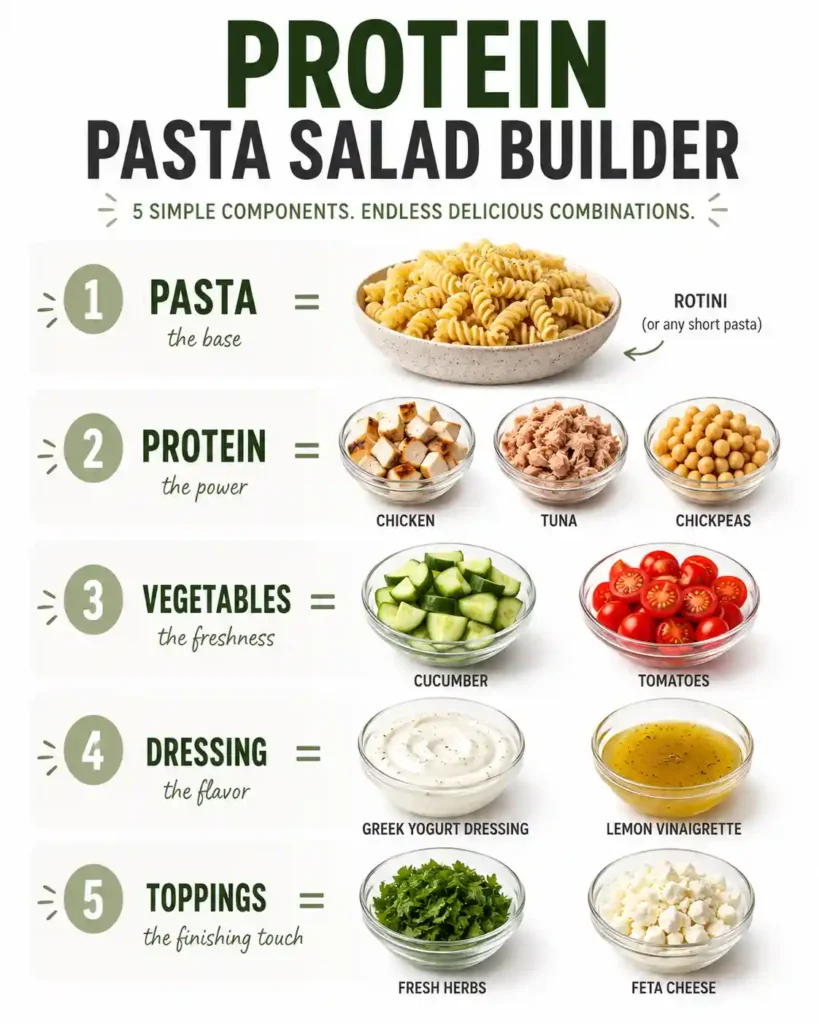
A practical meal-sized version normally includes five parts:
- Pasta: rotini, penne, shells, bow ties, or another short shape.
- Protein: chicken, tuna, eggs, tofu, beans, lentils, edamame, seafood, or a dairy-based dressing.
- Vegetables: cucumber, peppers, tomatoes, cabbage, carrots, celery, peas, spinach, or corn.
- Dressing: Greek yogurt dressing, vinaigrette, pesto, hummus dressing, tahini sauce, or lemon dressing.
- Fresh texture: herbs, pickles, green onion, seeds, crunchy cabbage, or toppings added at serving time.
The pasta itself does not need to provide all the protein. Standard pasta can still create a protein-focused lunch when it is combined with enough chicken, tuna, tofu, beans, eggs, or another substantial ingredient.
Easy Base Recipe for Protein Pasta Salad
This flexible formula makes approximately two large lunch portions or three smaller servings. Adjust the ingredients to match your appetite, grocery budget, and the protein you already have.
Base Ingredients
- 2 cups cooked short pasta, cooled and drained
- 1 to 1 1/2 cups selected protein
- 1 1/2 cups chopped vegetables
- 1/3 to 1/2 cup dressing
- 2 to 4 tablespoons chopped herbs, green onions, pickles, or another flavor booster
- Optional crunchy topping added shortly before serving
Protein Options
- Cooked chicken or ground turkey
- Drained canned tuna or salmon
- Cooked chilled shrimp
- Boiled eggs
- Firm tofu or shelled edamame
- Chickpeas, white beans, black beans, or lentils
- Greek yogurt or blended cottage cheese used in the dressing
Base Directions
- Cook the pasta according to the package directions until just tender.
- Drain it thoroughly and rinse with cool water when appropriate for the pasta used.
- Let cooked proteins and vegetables cool before combining them with the pasta.
- Add the pasta, protein, vegetables, and herbs to a large mixing bowl.
- Stir in part of the dressing. Add more only as needed to coat the ingredients.
- Taste and adjust with lemon juice, vinegar, herbs, mustard, black pepper, or other seasoning.
- Chill before serving or divide the salad into airtight containers.
- Add avocado, lettuce, crackers, seeds, and delicate toppings shortly before eating.
Budget strategy: choose one pasta, two proteins, three vegetables, and two dressings for the week. Changing the dressing and toppings creates several different lunches without requiring a separate grocery list for every variation.
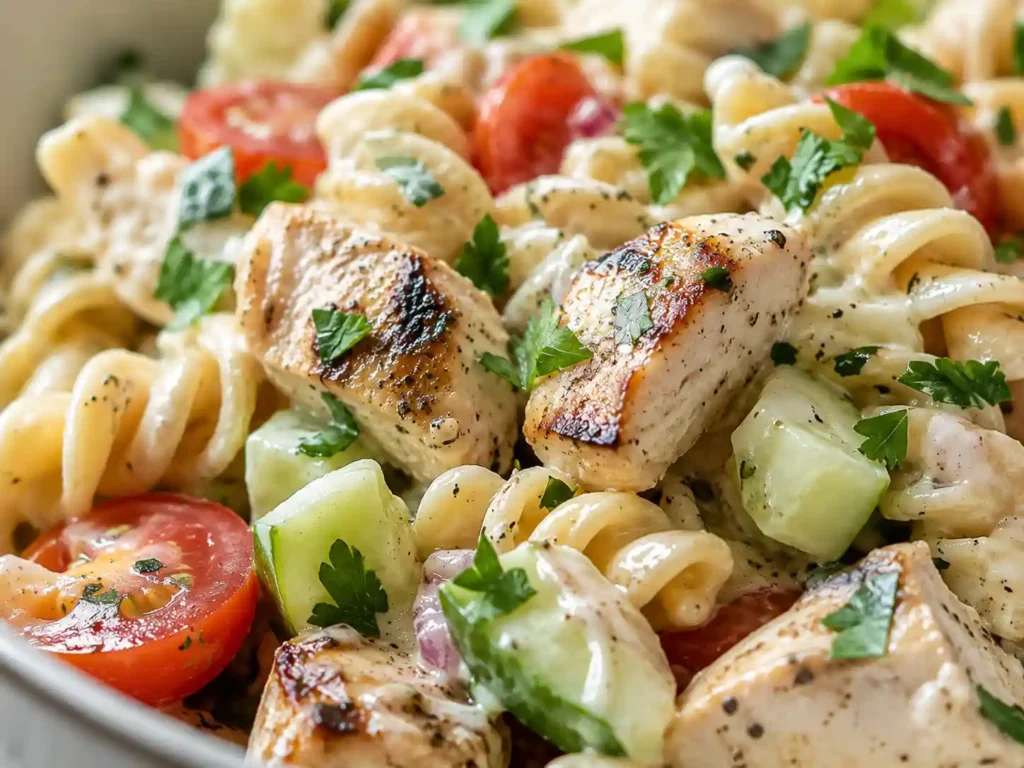
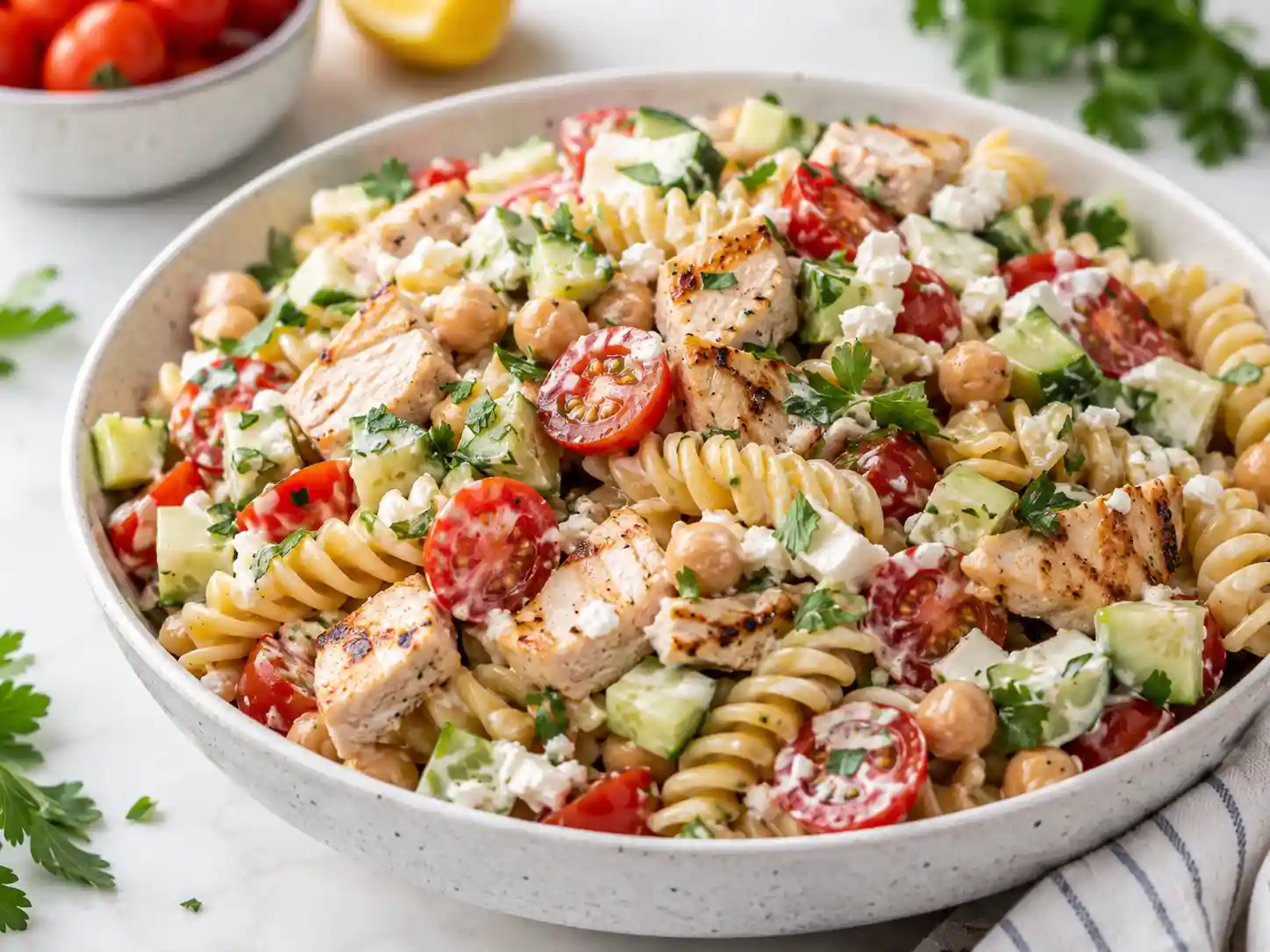
Flexible Protein Pasta Salad
Ingredients
Equipment
Method
- Cook the pasta according to the package directions until just tender. Avoid overcooking because the pasta will soften further after absorbing the dressing.
- Drain the pasta thoroughly. Rinse it with cool water when appropriate for the pasta variety, then allow all excess water to drain away.
- Cool any cooked chicken, turkey, shrimp, tofu, lentils, vegetables, or other warm ingredients before assembling the salad.
- To make the dressing, whisk together the Greek yogurt, lemon juice, Dijon mustard, garlic, herbs, salt, and black pepper. Add water one tablespoon at a time until the dressing reaches a pourable consistency.
- Add the cooled pasta, selected protein, chopped vegetables, and fresh flavor boosters to a large mixing bowl.
- Stir in about two-thirds of the dressing and toss gently until the ingredients are evenly coated. Add more dressing only as needed, reserving a small amount for serving.
- Taste the salad and adjust it with additional lemon juice, mustard, herbs, salt, or black pepper as needed.
- Cover and chill before serving, or divide the salad among airtight meal-prep containers.
- Stir in the reserved dressing shortly before eating if the pasta has absorbed moisture. Add avocado, lettuce, seeds, crackers, roasted chickpeas, or other delicate and crunchy toppings immediately before serving.
Notes
Best Pasta Types for Protein Pasta Salad
Short pasta shapes are usually the easiest choice because they mix well with chopped vegetables, protein, and dressing. The best option depends on your budget, preferred texture, and the other ingredients in the salad.
| Pasta Type | Best Use | Important Note |
|---|---|---|
| Rotini | Creamy and vinaigrette-style salads | The spirals hold dressing and small vegetables well. |
| Penne | Chicken, tuna, and vegetable salads | Cook only until tender so it keeps its structure. |
| Shells | Peas, beans, tuna, and creamy dressings | The shells collect small ingredients and dressing. |
| Bow ties | Summer salads and vinaigrettes | Check the center before draining because thickness can vary. |
| Chickpea or lentil pasta | Plant-forward protein salads | Follow the package directions because texture varies by brand. |
| Standard store-brand pasta | Budget meal prep | It can still create a high-protein meal when paired with enough protein. |
Test legume-based or higher-protein pasta before making a large batch. Some products become firmer or more fragile after chilling, so the package directions and cooling time matter.
Quick Nutrition Reference for Common Ingredients
The figures below are broad planning estimates. Brand, drained weight, pasta type, cooking method, dressing quantity, and actual serving size can change the finished nutrition information.
| Ingredient | Common Serving | Approx. Calories | Approx. Protein |
|---|---|---|---|
| Cooked standard pasta | 1 cup | About 200 to 220 | About 7 to 8 g |
| Cooked chicken breast | 3 oz | About 125 to 140 | About 25 to 27 g |
| Canned tuna in water | 3 oz drained | About 90 to 110 | About 20 to 22 g |
| Cooked shrimp | 3 oz | About 80 to 100 | About 17 to 20 g |
| Plain Greek yogurt | 170 g | About 90 to 120 | About 15 to 18 g |
| Cottage cheese | 1/2 cup | About 90 to 120 | About 12 to 14 g |
| Cooked chickpeas | 1/2 cup | About 130 to 140 | About 7 g |
| Firm tofu | 100 g | Varies by product | Often about 8 to 17 g |
Use your own package labels for closer calculations. USDA FoodData Central also provides searchable food-composition information: USDA FoodData Central.
Nutrition note: This guide provides general meal-planning information and does not replace individualized advice from a registered dietitian, doctor, or qualified healthcare professional.
Best Protein Pasta Salad Ideas by Need
| Need | Best Options | Why They Work |
|---|---|---|
| Most budget-friendly | Chickpea, Lentil, White Bean, Black Bean Fajita | Beans and lentils add protein and help stretch the pasta. |
| Best no-mayo options | Shrimp Lemon, Mediterranean Chicken, White Bean Pesto | They use vinaigrette, pesto, lemon, or hummus-style dressing. |
| Best cold work lunch | Tuna Cucumber, Greek Yogurt Chicken, Cottage Cheese Tuna | They taste good chilled and pack easily. |
| Best sturdy meal prep | Chicken Caesar, Turkey Taco, Edamame Sesame | Firm vegetables and substantial proteins hold their texture well. |
| Best plant-forward option | Tofu Peanut, Chickpea, Lentil, Edamame | They use soy foods, beans, or lentils as the main protein. |
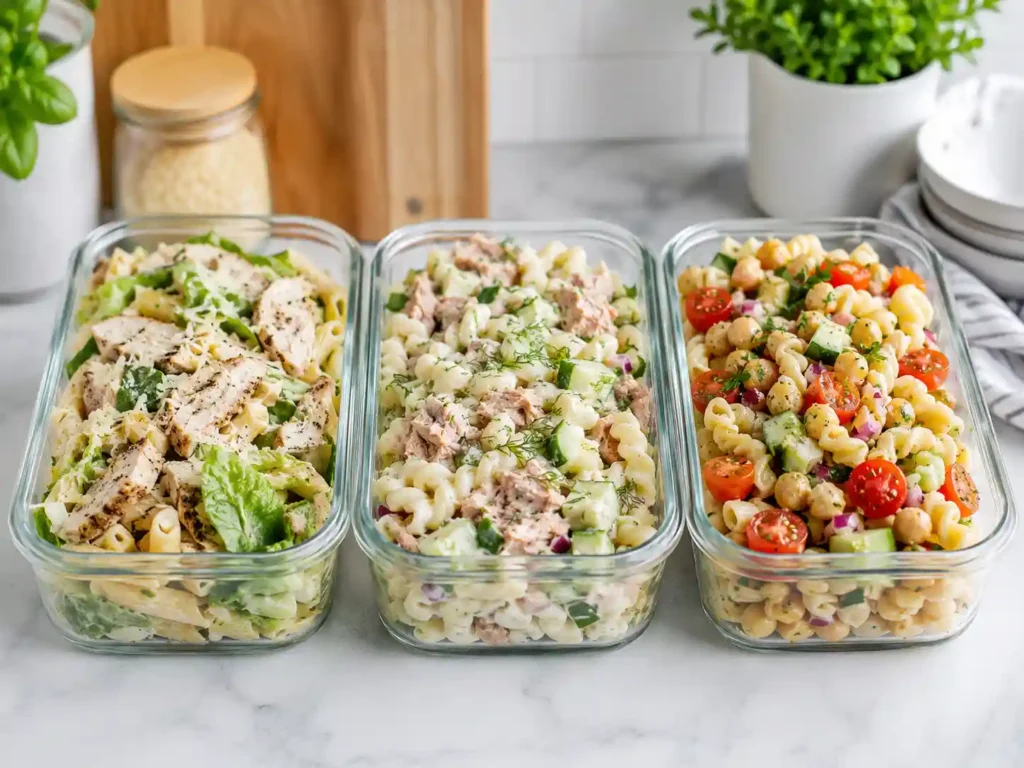
27 Protein Pasta Salad Recipes and Variations
Each combination below uses the flexible base formula. Adjust ingredient amounts according to the type of pasta, the protein selected, the number of servings, and your appetite.
Chicken Protein Pasta Salads
1. Greek Yogurt Chicken Pasta Salad
Combine cooked chicken, short pasta, celery, cucumber, green onion, and chopped herbs. Make the dressing with plain Greek yogurt, mustard, lemon juice, garlic, black pepper, and enough water to loosen it.
Budget tip: use chicken left from another meal instead of preparing a separate batch.
Texture tip: reserve a small amount of dressing and stir it in before serving if the pasta absorbs moisture during refrigeration.
2. Chicken Broccoli Pasta Salad
Combine cooked chicken, short pasta, small broccoli florets, shredded carrots, and green onion. Toss with a simple dressing made from plain Greek yogurt, lemon juice, Dijon mustard, garlic, and black pepper.
Budget tip: frozen broccoli can reduce preparation time and food waste when it is thawed, drained, and patted dry.
Meal prep tip: cool the pasta and chicken before mixing, then reserve a small amount of dressing to refresh the salad before serving.
3. Buffalo Chicken Pasta Salad
Toss cooked chicken with hot sauce before combining it with pasta, celery, carrots, cabbage, and green onions. A Greek yogurt herb dressing balances the heat and keeps the salad creamy.
Budget tip: cabbage and carrots add inexpensive volume.
Serving idea: add extra cucumber or lettuce when you want a fresher bowl.
4. Mediterranean Chicken Pasta Salad
Use chicken, pasta, cucumber, tomatoes, red onion, parsley, and a modest amount of feta-style cheese. Dress it with lemon juice, olive oil, mustard, garlic, oregano, and black pepper.
Budget substitution: white beans can replace part of the chicken.
Meal prep tip: store cut tomatoes separately when they release too much moisture.
5. Pesto Chicken Pasta Salad
Combine chicken, pasta, peas, spinach, cucumber, and a small amount of pesto. Thin the pesto with lemon juice, Greek yogurt, or pasta water so it coats the salad without becoming overly heavy.
Budget tip: frozen peas and spinach reduce preparation time and waste.
Texture tip: add delicate spinach shortly before serving when preparing several days ahead.
6. Barbecue Chicken Pasta Salad
Mix cooked chicken, pasta, corn, cabbage, bell pepper, red onion, and cilantro. Combine barbecue sauce with plain Greek yogurt to make a creamy dressing.
Budget substitution: add black beans and reduce the amount of chicken.
Meal prep tip: keep crackers or other crunchy toppings in a dry container.
7. Chicken Avocado Pasta Salad
Start with chicken, pasta, cucumber, tomatoes, corn, herbs, and a lime vinaigrette. Add diced avocado shortly before eating rather than mixing it into every container in advance.
Texture tip: lemon or lime juice can slow browning, but freshly cut avocado provides the best texture.
Budget substitution: use black beans when avocado is expensive.
8. Chicken Hummus Pasta Salad
Thin hummus with lemon juice, garlic, black pepper, and water to create a quick dressing. Toss it with chicken, pasta, cucumber, tomatoes, carrots, cabbage, and parsley.
Budget advantage: the same hummus can also be used for wraps and vegetable dip.
Protein boost: add chickpeas when you want to stretch the chicken.
Tuna and Seafood Protein Pasta Salads
9. Tuna Cucumber Pasta Salad
Combine drained tuna, pasta, cucumber, celery, peas, green onion, dill, and a Greek yogurt mustard dressing. Lemon juice and black pepper keep the flavor fresh.
Budget tip: frozen peas and canned tuna make this a practical pantry lunch.
Storage tip: drain the tuna and cucumber thoroughly to prevent excess liquid.
For exact quantities and a full recipe card, see this High-Protein Tuna Pasta Salad.
10. Dill Pickle Tuna Pasta Salad
Mix tuna, pasta, chopped pickles, celery, cucumber, dill, green onion, Greek yogurt, mustard, and a small amount of pickle liquid. Add the liquid gradually because too much can make the salad watery.
Budget tip: white beans can make one can of tuna stretch further.
Texture tip: drain the pickles before chopping them.
11. Spicy Tuna Protein Pasta Salad
Combine tuna, pasta, cabbage, cucumber, carrots, green onion, and edamame. Use a dressing made from Greek yogurt, hot sauce, lime juice, garlic, and black pepper.
Protein boost: edamame adds plant protein and texture.
Meal prep tip: keep crunchy toppings separate until serving.
12. Shrimp Lemon Pasta Salad
Use cooked chilled shrimp, pasta, cucumber, tomatoes, parsley, celery, and a lemon mustard vinaigrette. Fresh dill or green onion can add more flavor without requiring a creamy dressing.
Budget note: shrimp is often best used when discounted.
Budget substitution: combine a smaller amount of shrimp with white beans.
13. Shrimp Taco Pasta Salad
Mix chilled shrimp, pasta, black beans, corn, cabbage, tomatoes, cucumber, and cilantro. Finish with salsa-lime yogurt dressing or a simple lime vinaigrette.
Texture tip: add avocado and crushed tortilla chips only before serving.
Budget substitution: increase the beans and corn while reducing the shrimp.
14. Salmon Cucumber Pasta Salad
Combine cooked or canned salmon with pasta, cucumber, celery, spinach, dill, lemon juice, mustard, and Greek yogurt. White beans or peas can add more fiber and stretch the salmon.
Budget note: compare canned salmon with tuna and select the option that fits the current grocery budget.
Storage tip: drain canned salmon thoroughly.
Turkey, Egg, and Cottage Cheese Pasta Salads
15. Turkey Taco Pasta Salad
Use cooked ground turkey, pasta, black beans, corn, cabbage, tomatoes, salsa, lime juice, and cilantro. Add Greek yogurt as a creamy topping or mix it directly into the dressing.
Budget tip: beans help stretch the ground turkey across more servings.
Meal prep tip: cool the turkey completely before combining it with cold ingredients.
16. Greek-Style Turkey Pasta Salad
Combine cooked turkey, pasta, cucumber, tomatoes, red onion, parsley, and feta-style cheese. Dress the salad with lemon juice, oregano, mustard, garlic, black pepper, and a small amount of olive oil.
Budget substitution: chickpeas can replace part of the turkey.
Texture tip: keep tomatoes separate when preparing the salad more than one day ahead.
17. Turkey Cucumber Ranch Pasta Salad
Mix cooked turkey, pasta, cucumber, celery, carrots, green onion, cabbage, and a Greek yogurt ranch-style dressing. Pickles can add extra tang and crunch.
Budget tip: sturdy vegetables add volume without requiring more turkey.
Meal prep tip: store additional dressing separately because pasta continues to absorb moisture.
18. Egg Salad Protein Pasta Bowl
Combine chopped boiled eggs, pasta, celery, cucumber, green onion, mustard, Greek yogurt, dill, and black pepper. Lightly mash one egg into the dressing for a creamier texture.
Budget tip: chickpeas can stretch the egg mixture.
Serving idea: add cabbage or romaine shortly before eating for extra crunch.
19. Cottage Cheese Ranch Pasta Salad
Blend cottage cheese with lemon juice, garlic, herbs, black pepper, and enough water to create a smooth dressing. Toss it with pasta, cucumber, carrots, peas, celery, and green onions.
Protein option: chicken, tuna, eggs, or edamame can be added when you want a more substantial meal.
Texture tip: stir before serving because cottage cheese dressing may thicken when chilled.
20. Cottage Cheese Tuna Pasta Salad
Blend or stir cottage cheese with mustard, lemon juice, dill, and black pepper. Add tuna, pasta, cucumber, celery, peas, and green onion.
Budget tip: white beans can increase the volume without requiring another can of tuna.
Storage tip: keep the mixture consistently refrigerated and drain all canned ingredients well.
Plant-Forward Protein Pasta Salads
21. Chickpea Protein Pasta Salad
Combine chickpeas, pasta, cucumber, tomatoes, bell pepper, parsley, red onion, and lemon mustard vinaigrette. A Greek yogurt or tahini dressing can provide a creamier variation.
Budget advantage: chickpeas are shelf-stable and work in many other meals.
Protein boost: add edamame or use chickpea pasta when it fits your budget.
22. Lentil Pasta Salad
Use firm cooked lentils, pasta, cucumber, carrots, celery, tomatoes, parsley, and a lemon herb dressing. Lentils should remain intact rather than becoming soft or mushy.
Budget tip: dry lentils usually make several portions.
Meal prep tip: cool the lentils completely and drain away any remaining cooking liquid.
23. Tofu Peanut Noodle Pasta Salad
Combine chilled noodles or short pasta with seasoned tofu, cabbage, carrots, cucumber, green onion, and edamame. Finish with a peanut-lime dressing made with peanut butter, lime juice, soy sauce, garlic, and enough water to thin.
Texture tip: cook the tofu until firm around the edges and let it cool before packing.
Meal prep tip: store additional dressing separately.
24. Edamame Sesame Pasta Salad
Mix edamame, pasta, cabbage, carrots, cucumber, bell pepper, and green onion. Use a sesame-style dressing with soy sauce, rice vinegar, ginger, garlic, and a modest amount of sesame oil.
Budget tip: frozen shelled edamame can be portioned as needed.
Texture tip: add seeds immediately before eating.
25. White Bean Pesto Pasta Salad
Combine white beans, pasta, peas, cucumber, spinach, tomatoes, and pesto thinned with lemon juice or water. A spoonful of Greek yogurt can make the dressing creamier.
Budget advantage: white beans turn a smaller amount of pesto into a more filling lunch.
Meal prep tip: add delicate spinach shortly before serving when possible.
26. Black Bean Fajita Pasta Salad
Use black beans, pasta, corn, peppers, cabbage, tomatoes, cilantro, lime juice, cumin, and salsa. Greek yogurt can be mixed into the salsa for a creamy dressing.
Budget tip: this variation relies heavily on affordable pantry staples.
Texture tip: keep avocado and crunchy toppings separate.
27. Leftover Protein Pasta Salad
Start with cooked pasta and whichever prepared protein needs to be used first. Chicken, turkey, tuna, eggs, tofu, beans, lentils, or edamame can all work. Add firm vegetables and select a dressing that matches the existing seasoning.
Budget advantage: this version reduces food waste and avoids purchasing an ingredient for only one recipe.
Storage tip: follow the shortest safe storage period among all ingredients used.
For another plant-forward combination, see this High Fiber Protein Pasta Salad.
No-Mayo Dressings for Protein Pasta Salad
Greek Yogurt Herb Dressing
- 1/2 cup plain Greek yogurt
- 1 tablespoon lemon juice
- 1 teaspoon mustard
- Garlic, dill, parsley, black pepper, and salt to taste
- Water as needed to thin
Lemon Mustard Vinaigrette
- 3 tablespoons olive oil
- 2 tablespoons lemon juice
- 1 teaspoon Dijon mustard
- Garlic, black pepper, and salt to taste
Quick Hummus Dressing
- 1/3 cup hummus
- 2 tablespoons lemon juice
- Garlic and black pepper to taste
- Water as needed to thin
Salsa-Lime Yogurt Dressing
- 1/3 cup plain Greek yogurt
- 1/4 cup salsa
- 1 tablespoon lime juice
- Cumin and black pepper to taste
Cottage Cheese Herb Dressing
- 1/2 cup cottage cheese
- 1 tablespoon lemon juice
- Garlic, herbs, black pepper, and salt to taste
- Water as needed for blending
How to Keep Protein Pasta Salad Fresh
Food safety and texture are related but not identical. A salad may remain within a cautious refrigerated storage period while losing quality because the pasta absorbs dressing or the vegetables release water.
| Component | Best Storage Method | Reason |
|---|---|---|
| Cooked pasta | Cool and drain thoroughly before mixing | Excess water dilutes the dressing. |
| Cooked protein | Cool promptly in a shallow container | Warm ingredients create steam and soften vegetables. |
| Dressing | Reserve part in a small sealed cup | Pasta absorbs moisture during refrigeration. |
| Tomatoes and cucumber | Drain or store separately when very watery | Cut vegetables release liquid over time. |
| Avocado and delicate herbs | Add shortly before eating | This protects appearance and texture. |
| Crackers, seeds, and crunchy toppings | Store in a dry container | Moisture removes their crunch. |
How to Keep Protein Pasta Salad from Getting Dry
Pasta continues to absorb dressing as it chills. The easiest fix is to reserve a small portion of dressing instead of adding everything on the first day. Stir the reserved dressing into the salad shortly before serving.
- Cook the pasta only until tender, not overly soft.
- Drain the pasta thoroughly so water does not weaken the dressing.
- Add enough dressing to coat the salad, then reserve the rest.
- Use lemon juice, Greek yogurt dressing, vinaigrette, or a spoonful of water to loosen a thick dressing.
- Stir the salad after chilling before deciding that it needs more sauce.
- Keep watery vegetables separate when they release too much liquid.
Common Protein Pasta Salad Mistakes
Overcooking the Pasta
Pasta that becomes very soft during cooking can lose even more structure after it absorbs dressing. Cook it only until tender and follow the instructions for the specific pasta selected.
Using Too Much Dressing Immediately
Start with enough dressing to coat the ingredients, then reserve the rest. A small amount added before serving can restore creaminess without leaving the first-day salad overly wet.
Adding Warm Ingredients
Warm chicken, turkey, tofu, lentils, or pasta can create steam inside a closed container. Let cooked ingredients cool promptly before combining them with cold vegetables.
Ignoring Water From Vegetables
Cucumber, tomatoes, pickles, and thawed vegetables can release moisture. Drain or dry them before mixing and store especially watery ingredients separately when needed.
Forgetting Acid and Seasoning
Cold food may need enough lemon juice, vinegar, mustard, herbs, garlic, salt, or pepper to taste balanced. Adjust the seasoning after the salad has chilled because the pasta may absorb part of the dressing.
Making Five Completely Different Recipes
Buying one ingredient for only one salad makes the grocery list longer and increases waste. A more practical plan uses the same cucumber, cabbage, Greek yogurt, beans, herbs, and pasta across several flavor variations.
Food Safety and Storage
Prepared pasta salads containing chicken, turkey, tuna, salmon, shrimp, eggs, Greek yogurt, cottage cheese, tofu, or other perishable ingredients should remain refrigerated. Keep them at 40°F or below and use an insulated lunch bag with ice packs when a refrigerator is not available.
FoodSafety.gov lists egg, chicken, tuna, and macaroni-style salads at three to four days in the refrigerator. Quality may decline sooner depending on the vegetables and dressing. Review the FoodSafety.gov cold storage chart for official guidance.
- Refrigerate perishable ingredients promptly.
- Cool cooked pasta and protein in shallow containers.
- Label meal prep containers with the preparation date.
- Follow the shortest storage window among all ingredients used.
- Discard food that has remained outside safe refrigeration for too long.
- Prepare smaller batches instead of freezing the fully assembled salad.
For more meals designed to be eaten cold, visit High Protein Cold Lunches for Work.
What to Serve With Protein Pasta Salad
A meal-sized pasta salad may already contain protein, carbohydrates, vegetables, and dressing. Smaller portions can be paired with one simple side:
- Fresh fruit
- A simple green salad
- Roasted vegetables
- Soup
- Cucumber and carrots with dip
- Boiled eggs
- Greek yogurt
- Extra beans or edamame
For additional warm-weather meal ideas, use these High Protein Summer Meals.
Helpful Meal Prep Tools
- Large mixing bowl
- Colander for draining pasta and canned ingredients
- Sharp knife and stable cutting board
- Airtight meal prep containers
- Small leak-resistant dressing cups
- Insulated lunch bag
- Reusable ice packs
Specialized equipment is not required. The most useful tools are the ones that keep wet, dry, delicate, and crunchy ingredients separated until serving.
Related Budget Protein Meals
- High Protein Lunch Ideas
- Protein Salad Recipes
- High Protein Dense Bean Salad
- High-Protein Tuna Pasta Salad
- High Fiber Protein Pasta Salad
- High Protein Cold Lunches for Work
How This Guide Was Built
This roundup was organized around one flexible pasta salad formula rather than 27 unrelated shopping lists. Each variation combines pasta with a recognizable protein source, vegetables, flavor, and a practical meal prep note.
Nutrition figures are approximate and have not been laboratory tested. Product brands, portions, drained weights, dressings, cooking methods, and substitutions can change the final values.
No exact grocery cost is included because prices vary by store, location, package size, season, and promotions. Comparing unit prices and reusing ingredients across multiple salads provides a more reliable budget strategy.
Protein Pasta Salad FAQs
What protein goes well in pasta salad?
Chicken, tuna, salmon, shrimp, turkey, eggs, tofu, chickpeas, lentils, beans, edamame, Greek yogurt, and cottage cheese can all work. Select proteins that taste good cold and fit the dressing and vegetables being used.
How do you make pasta salad higher in protein?
Add a substantial protein source and use a protein-friendly dressing. Chicken with Greek yogurt dressing, tuna with cottage cheese dressing, or tofu with edamame are practical combinations. Legume-based pasta can contribute additional protein, but the amount varies by product.
How much protein should a protein pasta salad contain?
There is no single amount that fits everyone. The final total depends on the protein source, pasta type, serving size, appetite, body size, activity level, health status, and the other meals eaten that day.
How long does protein pasta salad last in the refrigerator?
FoodSafety.gov lists egg, chicken, tuna, and macaroni-style salads at three to four days when stored at 40°F or below. The salad may lose texture sooner depending on its vegetables and dressing.
Can protein pasta salad be made without mayo?
Yes. Greek yogurt dressing, blended cottage cheese, lemon vinaigrette, pesto, hummus dressing, tahini dressing, salsa-lime sauce, and soy-ginger dressing are useful alternatives.
Which pasta shape works best?
Short shapes such as rotini, penne, shells, and bow ties are easy to mix with chopped vegetables and dressing. Chickpea, lentil, or other legume-based pasta can also work, but cooking and cooling instructions vary by product.
How do I stop pasta salad from drying out?
Do not overcook the pasta, use enough dressing to coat it, and reserve a small amount of dressing for serving. Lemon juice, Greek yogurt dressing, or vinaigrette can be stirred in after refrigeration when needed.
Can protein pasta salad be frozen?
Freezing often damages the texture of cooked pasta, cucumber, tomatoes, fresh herbs, and dairy-based dressings. Preparing a smaller refrigerated batch usually provides better quality.
Can protein pasta salad be packed for work?
Yes. Keep it refrigerated until serving or pack it in an insulated lunch bag with reusable ice packs. Store delicate and crunchy toppings separately.
Final Thoughts
Protein pasta salad recipes work best when they share a flexible structure: short pasta, one clear protein, crisp vegetables, enough dressing, and toppings added at the right time.
Choose three variations for the week rather than preparing 27 separate recipes. One chicken option, one tuna or egg option, and one bean, lentil, tofu, or edamame option provide variety while allowing the pasta, vegetables, herbs, and dressings to overlap.