Ingredients
Equipment
Method
- Preheat the oven to 350°F (175°C).
- Lightly grease the inside of a rimmed 9 x 13-inch metal sheet pan. Line the bottom with parchment paper, then lightly grease the top of the parchment.
- Add the eggs, cottage cheese, salt, black pepper, and garlic powder to a blender. Blend just until the mixture is evenly combined and mostly smooth.
- Alternatively, whisk the ingredients thoroughly in a large bowl. Small cottage cheese curds may remain.
- Place the prepared pan on a level surface near the oven. Slowly pour the egg mixture into the pan.
- Sprinkle the shredded cheddar evenly over the egg mixture.
- Carefully transfer the pan to the oven and bake for 18 to 23 minutes, beginning to check at 18 minutes.
- Remove the eggs when the center looks set rather than liquid and reaches 160°F (71°C) when checked with a food thermometer.
- Let the baked eggs cool in the pan for 5 to 10 minutes.
- Run a thin spatula around the edges if needed. Lift the egg layer using the parchment or cut it directly in the pan with a utensil that will not damage the surface.
- Divide the baked egg layer into six equal rectangles or squares.
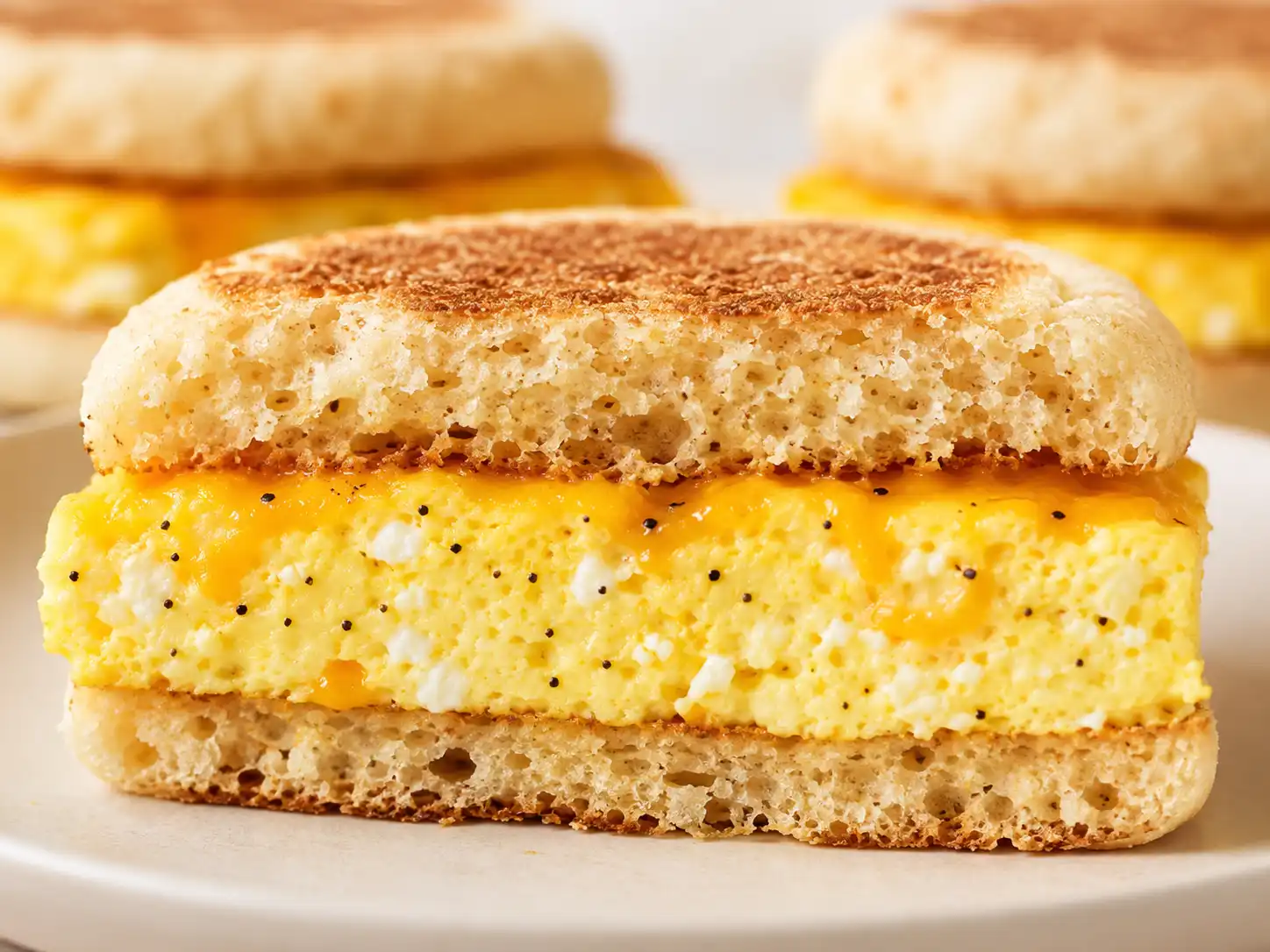
- To assemble the sandwiches, split and lightly toast the English muffins if desired. Place one egg portion on each muffin and add an optional cheese slice or fully cooked turkey sausage patty.
- Serve immediately, or let every component cool completely before wrapping the sandwiches for refrigeration or freezing.
Notes
Use a securely rimmed metal pan measuring approximately 9 x 13 inches. A flat cookie sheet is unsuitable because the liquid egg mixture may spill.
A 13 x 18-inch half sheet pan will produce a much thinner egg layer, while a deep baking dish will require a longer baking time.
Grease both the pan and the top of the parchment paper to reduce sticking.
Cook, drain, and cool vegetables such as spinach, mushrooms, peppers, and onions before adding them. Raw or wet vegetables can create watery pockets.
Begin checking the eggs at 18 minutes. Overbaking can make the portions dry or rubbery.
The eggs are done when the center is set and reaches 160°F (71°C). Reheated portions and assembled sandwiches should reach 165°F (74°C).
Cool the eggs, English muffins, cheese, and other fillings completely before wrapping. Trapped steam can make the bread soggy.
Add wet toppings such as tomato, avocado, salsa, and creamy sauces only after reheating.
Refrigerate prepared sandwiches or egg portions for 3 to 4 days. For best freezer quality, use frozen sandwiches within 1 to 2 months.
The nutrition information applies only to one baked egg portion and excludes the English muffin, extra cheese slice, turkey sausage, vegetables, sauces, and other fillings.