
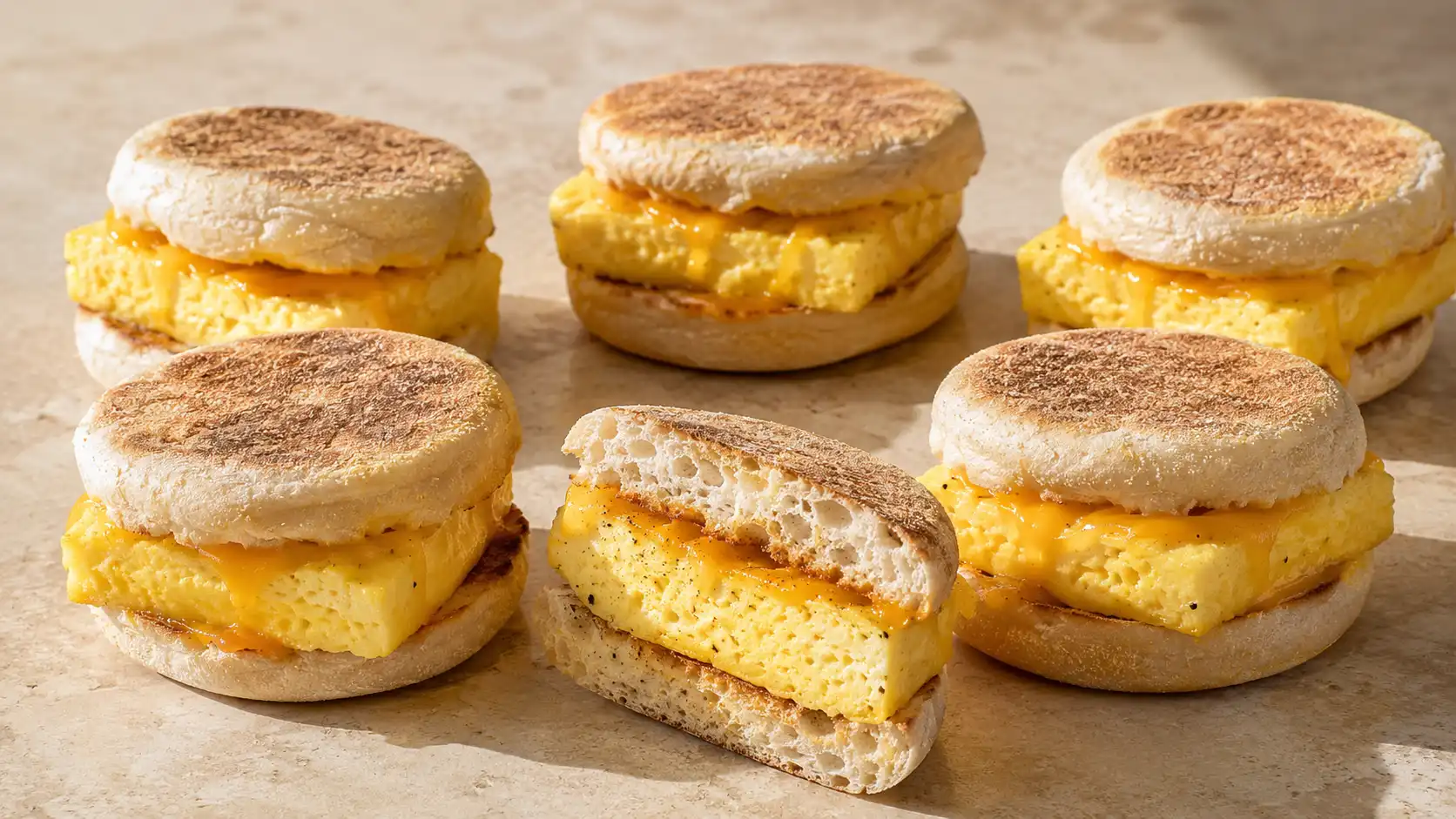
These sheet pan eggs for breakfast sandwiches let you bake six portions at once instead of cooking each egg separately. The eggs are blended with cottage cheese, seasoned, baked in a small rimmed pan, and cut into pieces that fit English muffins.
You can serve the sandwiches right away, refrigerate them for busy mornings, or freeze them for later. The base recipe uses no pork, and the optional fillings can be adjusted to match what you already have at home.
For more practical morning recipes, explore these high-protein breakfasts on a budget.
Quick Answer
To make sheet pan eggs for six breakfast sandwiches, blend 8 eggs with 1/2 cup cottage cheese and seasonings. Pour the mixture into a greased, parchment-lined 9 x 13-inch rimmed sheet pan, add cheddar, and bake at 350°F until the center is set and reaches 160°F. Cool briefly, cut into six portions, and assemble with English muffins and your preferred no-pork fillings.
At a Glance
| Detail | Information |
|---|---|
| Yield | 6 egg portions or 6 assembled sandwiches |
| Pan | Rimmed metal sheet pan measuring approximately 9 x 13 inches |
| Oven temperature | 350°F |
| Estimated prep time | 10 minutes |
| Estimated cook time | 18 to 23 minutes |
| Estimated total time | About 35 minutes, including brief cooling |
| Refrigerator storage | 3 to 4 days |
| Reheating temperature | 165°F in the center |
Why This Sheet Pan Egg Method Works
Six portions bake at the same time
One pan replaces the need to fry or scramble six separate portions. Once baked, the egg layer can be divided into six similarly sized pieces for meal prep.
The portions fit breakfast sandwiches
A shallow rimmed pan produces an egg layer that is easier to place inside an English muffin than a deep breakfast casserole. Cutting the eggs into rectangles also avoids the scraps left behind by a round biscuit cutter.
The fillings are flexible
You can keep the sandwiches simple with egg and cheddar or add cooked vegetables, black beans, or a clearly labeled turkey sausage product. The optional additions are kept separate from the egg base so you can assemble different sandwiches from the same batch.
Ingredients You’ll Need
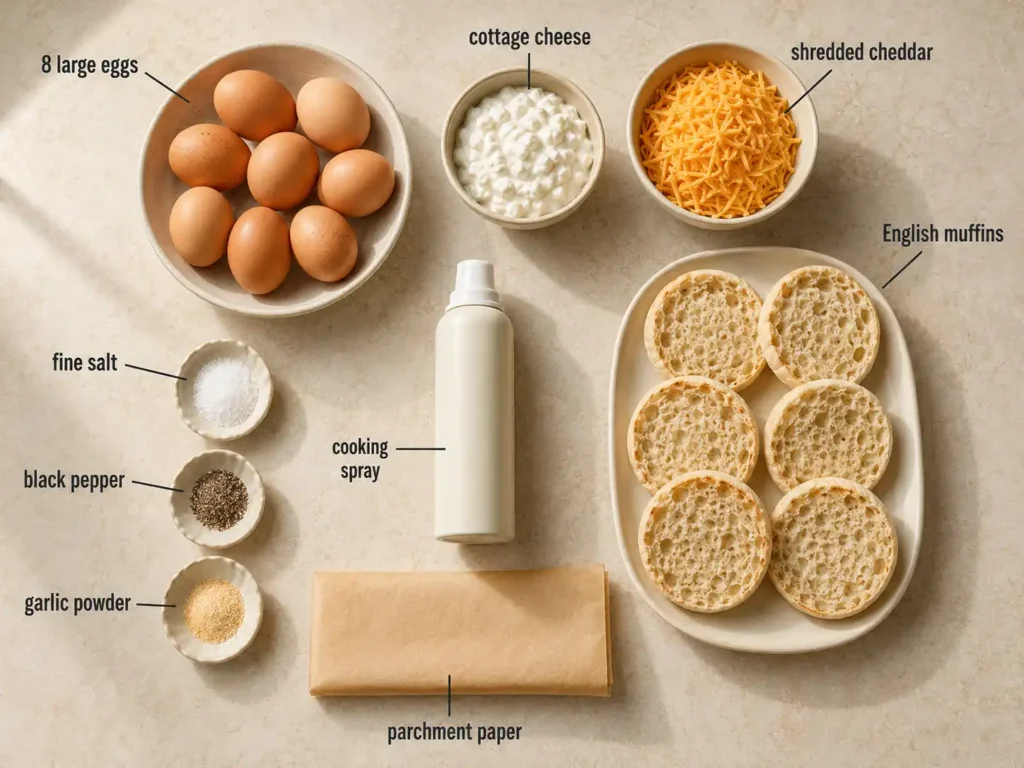
For the sheet pan eggs
- 8 large eggs
- 1/2 cup plain cottage cheese
- 1/2 cup shredded cheddar cheese
- 1/2 teaspoon fine salt
- 1/4 teaspoon black pepper
- 1/4 teaspoon garlic powder
- Cooking spray or a small measured amount of oil, for the pan
- Parchment paper
For six breakfast sandwiches
- 6 English muffins
- 6 baked sheet pan egg portions
- 6 cheese slices, optional
- 6 fully cooked turkey sausage patties, optional
The English muffins, cheese slices, and turkey sausage are assembly ingredients. They are not included in the estimated nutrition for the egg portion because their values vary substantially by product and brand.
Eggs
Eight large eggs provide the structure for the baked layer. Whisking or blending them with the cottage cheese creates an evenly combined mixture that is easy to pour into the pan.
Cottage cheese
Cottage cheese adds dairy, moisture, and protein to the egg mixture. Blend only until the mixture looks mostly smooth. Substituting another dairy product may change the thickness, baking time, and nutrition.
For another way to combine eggs and cottage cheese, see this cottage cheese egg bake.
Cheddar and seasonings
Cheddar adds flavor and helps the portions feel more substantial. Salt, black pepper, and garlic powder keep the seasoning simple. Reduce the salt slightly if your cottage cheese, cheddar, or optional sausage is especially salty.
The Best Pan for Sheet Pan Eggs
A rimmed metal pan measuring approximately 9 x 13 inches works well for this six-portion formula. This size is often sold as a quarter sheet pan, although exact interior measurements and depths vary by manufacturer.
Use a pan with a secure rim on all four sides. A completely flat cookie sheet is not suitable because the liquid egg mixture could spill.
| Pan type | Expected result | What to adjust |
|---|---|---|
| Rimmed 9 x 13-inch metal sheet pan | Moderately thick portions suitable for six sandwiches | Use the recipe and baking range below |
| 13 x 18-inch half sheet pan | A much thinner egg layer | Begin checking sooner to prevent dry eggs |
| Deep 9 x 13-inch baking dish | A thicker, casserole-style egg layer | Expect a longer baking time and verify the center carefully |
| Smaller rimmed pan | A thicker egg layer with a softer center | Do not overfill the pan and allow additional baking time if needed |
How to Make Sheet Pan Eggs for Breakfast Sandwiches
1. Prepare the oven and pan
Preheat the oven to 350°F.
Lightly grease the inside of a rimmed 9 x 13-inch metal sheet pan. Line the bottom with parchment paper, then lightly grease the parchment as well. This makes the baked eggs easier to lift and divide.
2. Blend the egg mixture
Add the eggs, cottage cheese, salt, black pepper, and garlic powder to a blender. Blend just until evenly combined.
You can also place the ingredients in a large bowl and whisk thoroughly. A whisked mixture may retain small cottage cheese curds, which is acceptable.
3. Fill the pan
Place the prepared pan on a level surface near the oven. Pour in the egg mixture slowly. Sprinkle the shredded cheddar evenly across the top.
Move the pan carefully because the uncooked mixture is liquid and the sides of a quarter sheet pan are relatively shallow.
4. Bake until set
Bake for approximately 18 to 23 minutes. Begin checking near the lower end of the range because pan dimensions, materials, and oven calibration can affect the cooking time.
The eggs are ready when the center looks set rather than liquid and reaches 160°F when checked with a food thermometer. Do not rely only on browning around the edges.
5. Cool and portion
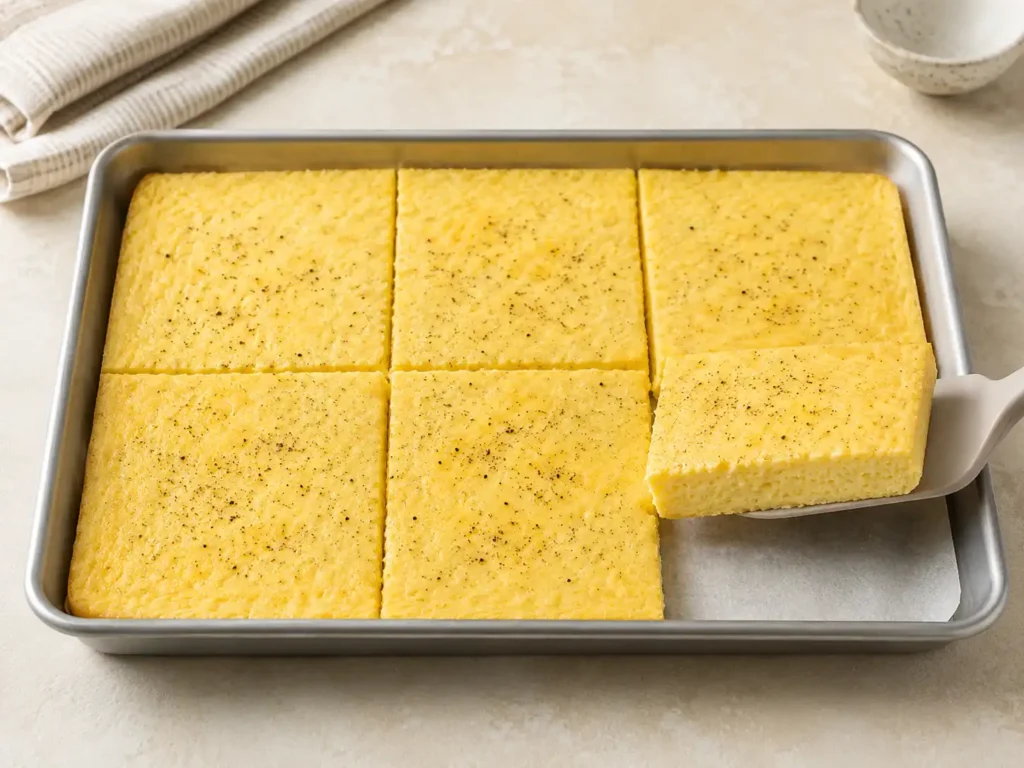
Place the pan on a heat-safe surface and let the eggs cool for about 5 to 10 minutes. Run a thin spatula around the edges if necessary.
Lift the egg layer with the parchment or cut it directly in the pan with a utensil that will not damage the surface. Divide it into six equal rectangles or squares.
6. Assemble the sandwiches
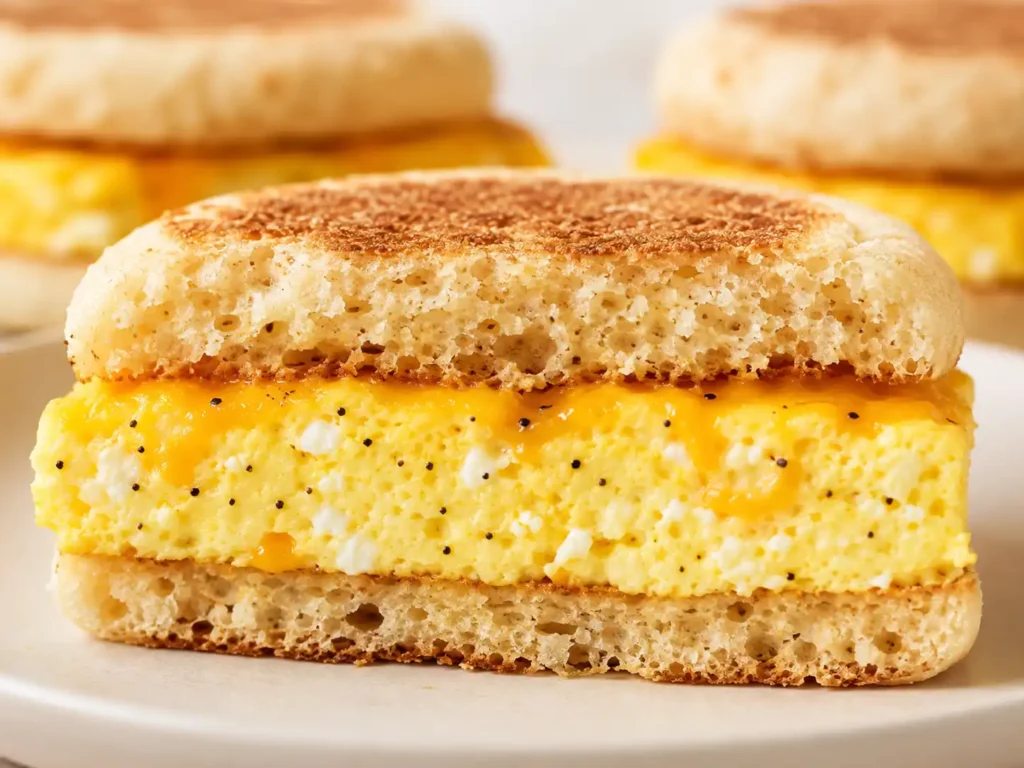
Split the English muffins and toast them lightly if desired. Place one egg portion on each muffin. Add an optional cheese slice or fully cooked turkey sausage patty.
Serve immediately, or allow every component to cool before wrapping sandwiches for the refrigerator or freezer.
How to Keep Sheet Pan Eggs from Sticking
- Grease the metal pan before adding the parchment paper.
- Lightly grease the top of the parchment as well.
- Cover the entire bottom of the pan with parchment.
- Let the baked eggs rest briefly before lifting them.
- Use a thin silicone or nylon spatula to loosen the edges.
A nonstick pan alone may not prevent every section from sticking. Parchment plus a light coating of fat provides an extra barrier and makes cleanup easier.
How to Avoid Watery or Rubbery Eggs
Cook vegetables before adding them
Raw spinach, mushrooms, peppers, onions, and similar vegetables can release moisture while the eggs bake. Cook them first, then drain and cool them before adding a small amount to the egg mixture.
Remove as much water as possible
Thawed frozen spinach should be squeezed very well. Cooked mushrooms should be allowed to release their liquid in the skillet. Avoid adding fresh tomato directly to sandwiches that will be frozen.
Do not use an oversized pan
A half sheet pan spreads this six-serving formula too thin. Thin eggs cook quickly and may become dry before you notice the center is done.
Begin checking early
Eggs can become firm and rubbery when baked longer than necessary. Start checking at 18 minutes and remove the pan once the center is set and has reached 160°F.
Budget-Friendly Filling Ideas
These combinations use the same sheet pan egg base. No exact cost is provided because prices vary by store, package size, region, and date.
| Filling | Preparation | Meal-prep note |
|---|---|---|
| Egg and cheddar | Use the baked egg portion without an additional meat filling | Simple and easy to freeze |
| Spinach and cheddar | Cook and thoroughly squeeze the spinach before adding it | Keep the spinach amount moderate to control moisture |
| Turkey sausage and egg | Use a fully cooked product clearly labeled as turkey sausage | Check the product label for ingredients and reheating directions |
| Black bean and egg | Drain, rinse, and lightly mash the beans | Use a thin layer so the sandwich remains easy to eat |
| Bell pepper and onion | Finely chop, sauté, drain, and cool the vegetables | Do not add them while warm or wet |
Packaged sausage products vary. Check the full ingredient list to confirm that the product contains no pork, bacon, ham, alcohol, or alcohol-based flavoring.
How to Meal Prep Breakfast Sandwiches
Cool every component first
Warm eggs and toasted muffins release steam. Wrapping them immediately can trap condensation and soften the bread. Let the eggs, bread, cheese, and cooked fillings cool before assembly.
Wrap each sandwich separately
Wrap each sandwich securely or place it in an individual freezer-safe container. Individual portions are easier to refrigerate, freeze, and reheat as needed.
Keep wet toppings separate
Add tomato, avocado, salsa, and creamy sauces after reheating. Freezing these ingredients inside the sandwich can make the English muffin soggy.
Choose refrigeration or freezing
Refrigerate sandwiches you plan to eat within 3 to 4 days. Freeze the remaining sandwiches after they have cooled completely.
For the best texture, use frozen sandwiches within about 1 to 2 months. This is a quality recommendation rather than a safety deadline. Properly frozen food can remain safe longer, but the eggs and bread may gradually lose quality.
For another portable breakfast option, try these egg white breakfast burritos.
Newsletter CTA: Get practical budget protein breakfasts and meal-prep recipes sent to your inbox.
Storage and Reheating Guide
| Storage method | Recommended time | Reheating method | Safety target |
|---|---|---|---|
| Refrigerator | 3 to 4 days | Microwave in short intervals or warm in a toaster oven | 165°F in the center |
| Freezer, thawed overnight | For best quality, use within about 1 to 2 months | Thaw in the refrigerator, then microwave or use a toaster oven | 165°F in the center |
| Freezer, reheated from frozen | For best quality, use within about 1 to 2 months | Use reduced microwave power first, then finish at full power | 165°F in the center |
| Egg portions without bread | 3 to 4 days refrigerated | Microwave covered in short intervals | 165°F when reheating leftovers |
How to reheat a refrigerated sandwich
- Remove any foil, plastic wrap, or packaging that is not microwave-safe.
- Wrap the sandwich loosely in a paper towel.
- Microwave in short intervals, turning the sandwich halfway through.
- Let it stand briefly so the heat can distribute.
- Check that the center reaches 165°F before eating.
How to reheat a frozen sandwich
For the most even result, thaw the sandwich overnight in the refrigerator and reheat it the next morning.
To reheat directly from frozen, start with the microwave’s defrost setting or reduced power. Turn the sandwich, then continue at full power in short intervals until the center reaches 165°F.
Microwave wattages vary, so an exact universal heating time would not be reliable.
How to use a toaster oven
Wrap the sandwich in foil and warm it until the center is hot. Open the foil for the final few minutes if you want the English muffin to become less soft. Verify a reheating temperature of 165°F.
Easy Variations and Substitutions
Use a different cheese
Monterey Jack, mozzarella, or another cheese that melts well can replace the cheddar. The flavor, sodium, fat, and estimated nutrition will change.
Add egg whites
You may replace part of the whole eggs with liquid egg whites, but the formula should be tested before publishing an exact substitution. Egg whites change the moisture, structure, color, and nutrition of the baked layer.
Make vegetable sheet pan eggs
Add a small amount of cooked, drained spinach, mushrooms, bell pepper, or onion. Too many vegetables can make the portions fragile or watery.
Freeze only the egg portions
You can refrigerate or freeze the cooked egg squares separately, then assemble each sandwich with a freshly toasted English muffin. This approach also lets you change the fillings from day to day.
Helpful Tools for This Recipe
No special appliance is required, but the following tools make the process easier:
- A rimmed metal sheet pan measuring approximately 9 x 13 inches
- Parchment paper
- A blender or large mixing bowl and whisk
- A thin silicone or nylon spatula
- An instant-read food thermometer
- Freezer-safe containers or individual sandwich wraps
A food thermometer is especially useful because it confirms that the egg mixture has reached 160°F and that reheated sandwiches reach 165°F.
Troubleshooting Sheet Pan Eggs
| Problem | Likely cause | How to fix it |
|---|---|---|
| The eggs stick to the parchment | The parchment was not greased | Lightly grease both the pan and the top of the parchment next time |
| The center remains wet | The pan is deeper than expected or the eggs need more time | Continue baking and verify that the center reaches 160°F |
| The eggs are rubbery | They were baked too long | Begin checking earlier and remove the pan as soon as the center is safely set |
| The egg layer is too thin | The pan is too large | Use a rimmed pan closer to 9 x 13 inches |
| Watery pockets appear | Vegetables were added raw or insufficiently drained | Cook, drain, and cool vegetables before adding them |
| The English muffin becomes soggy | The sandwich was wrapped while warm or contained wet toppings | Cool all components and add wet toppings after reheating |
| The cheese makes the pan greasy | Too much cheese or a higher-fat cheese was used | Use the measured amount and avoid adding extra cheese directly to the egg base |
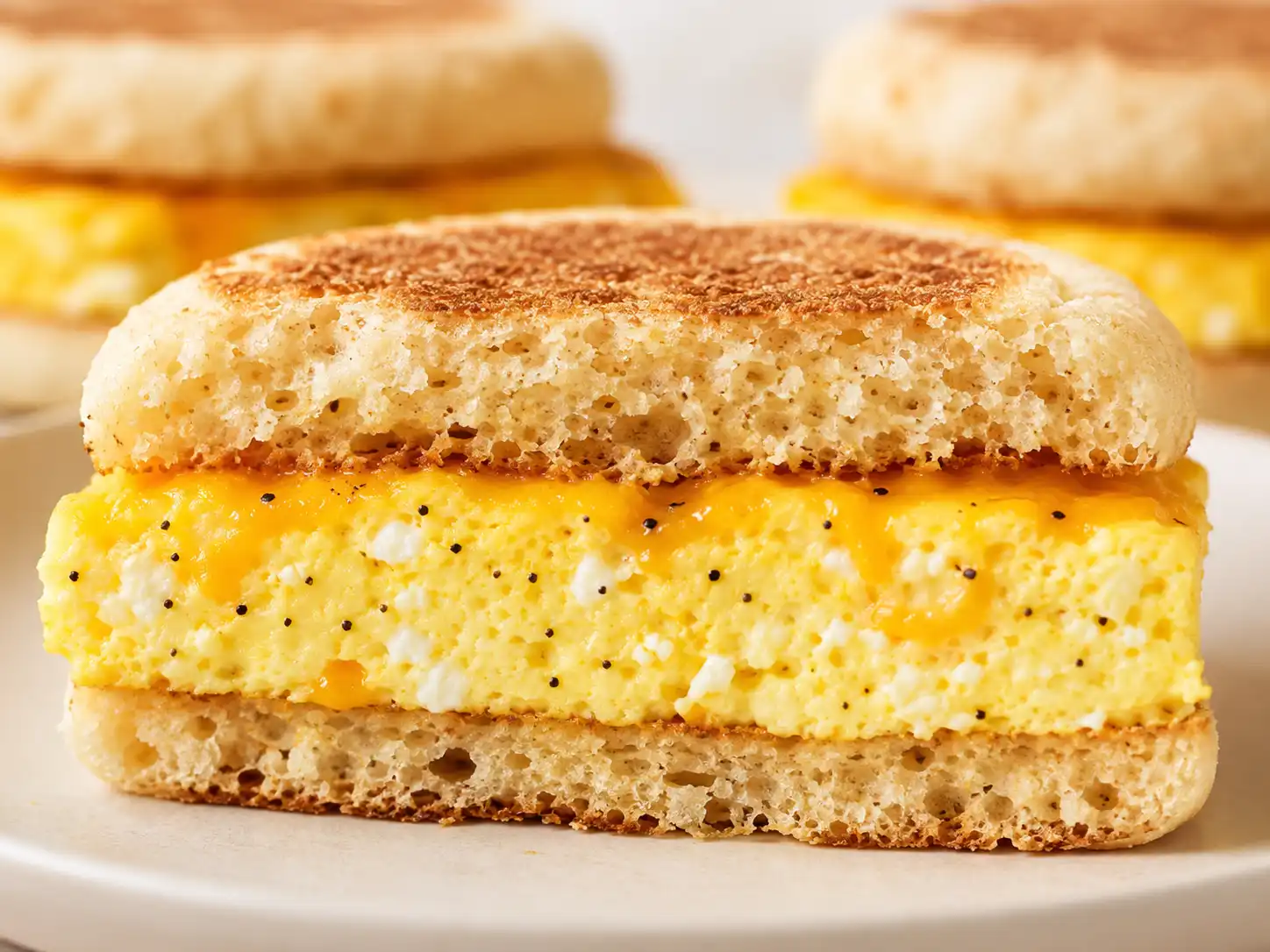
Sheet Pan Eggs for Breakfast Sandwiches
Ingredients
Equipment
Method
- Preheat the oven to 350°F (175°C).
- Lightly grease the inside of a rimmed 9 x 13-inch metal sheet pan. Line the bottom with parchment paper, then lightly grease the top of the parchment.
- Add the eggs, cottage cheese, salt, black pepper, and garlic powder to a blender. Blend just until the mixture is evenly combined and mostly smooth.
- Alternatively, whisk the ingredients thoroughly in a large bowl. Small cottage cheese curds may remain.
- Place the prepared pan on a level surface near the oven. Slowly pour the egg mixture into the pan.
- Sprinkle the shredded cheddar evenly over the egg mixture.
- Carefully transfer the pan to the oven and bake for 18 to 23 minutes, beginning to check at 18 minutes.
- Remove the eggs when the center looks set rather than liquid and reaches 160°F (71°C) when checked with a food thermometer.
- Let the baked eggs cool in the pan for 5 to 10 minutes.
- Run a thin spatula around the edges if needed. Lift the egg layer using the parchment or cut it directly in the pan with a utensil that will not damage the surface.
- Divide the baked egg layer into six equal rectangles or squares.
- To assemble the sandwiches, split and lightly toast the English muffins if desired. Place one egg portion on each muffin and add an optional cheese slice or fully cooked turkey sausage patty.
- Serve immediately, or let every component cool completely before wrapping the sandwiches for refrigeration or freezing.
Notes
Frequently Asked Questions
What size sheet pan is best for breakfast sandwich eggs?
A rimmed metal pan measuring approximately 9 x 13 inches works well for this six-portion recipe. A larger pan produces thinner eggs, while a smaller or deeper pan generally requires more baking time.
How do you know when sheet pan eggs are done?
The center should look set rather than liquid. Check the thickest central area with a food thermometer and make sure it reaches 160°F.
Can you freeze sheet pan egg breakfast sandwiches?
Yes. Let every component cool, assemble the sandwiches, wrap them individually, and freeze them. For the best texture, use them within about 1 to 2 months and add wet toppings only after reheating.
How do you reheat a frozen breakfast sandwich?
You can thaw it overnight in the refrigerator and reheat it the next morning. You can also start from frozen using reduced microwave power before finishing at full power. In both cases, reheat the center to 165°F.
Why are my sheet pan eggs watery?
Common causes include raw vegetables, poorly drained spinach, too much added liquid, an overly deep pan, or insufficient baking. Cook and drain vegetables first and verify that the center reaches 160°F.
Estimated Nutrition
The following estimate applies to one of six sheet pan egg portions only. It includes the eggs, cottage cheese, cheddar, seasonings, and a minimal amount of cooking spray. It does not include an English muffin, an additional cheese slice, turkey sausage, vegetables, sauces, or other sandwich fillings.
| Estimated nutrient | Per egg portion |
|---|---|
| Calories | About 145 |
| Protein | About 12 g |
| Carbohydrates | About 2 g |
| Fat | About 10 g |
Nutrition is estimated, not guaranteed. Values vary according to egg size, cottage cheese fat level, cheddar brand, cooking spray, actual portion size, and substitutions. Calculate the complete sandwich separately using the exact English muffin and optional fillings selected.
More Budget Protein Breakfast Ideas
Prepare more make-ahead mornings with these cheap high-protein meal prep ideas. You can also try this high-protein baked oatmeal or a quick Greek yogurt breakfast bowl.