Ingredients
Equipment
Method
- Add the less-sodium soy sauce, 1/3 cup water, brown sugar, honey, rice vinegar, grated ginger, and minced garlic to a small saucepan.
- Set the saucepan over medium heat and whisk until the brown sugar dissolves and the mixture reaches a gentle simmer.
- In a separate small bowl, whisk the cornstarch with 2 tablespoons of cold water until completely smooth and no dry lumps remain.
- Whisk the cornstarch slurry again immediately before using it, then slowly pour it into the simmering sauce while whisking continuously.
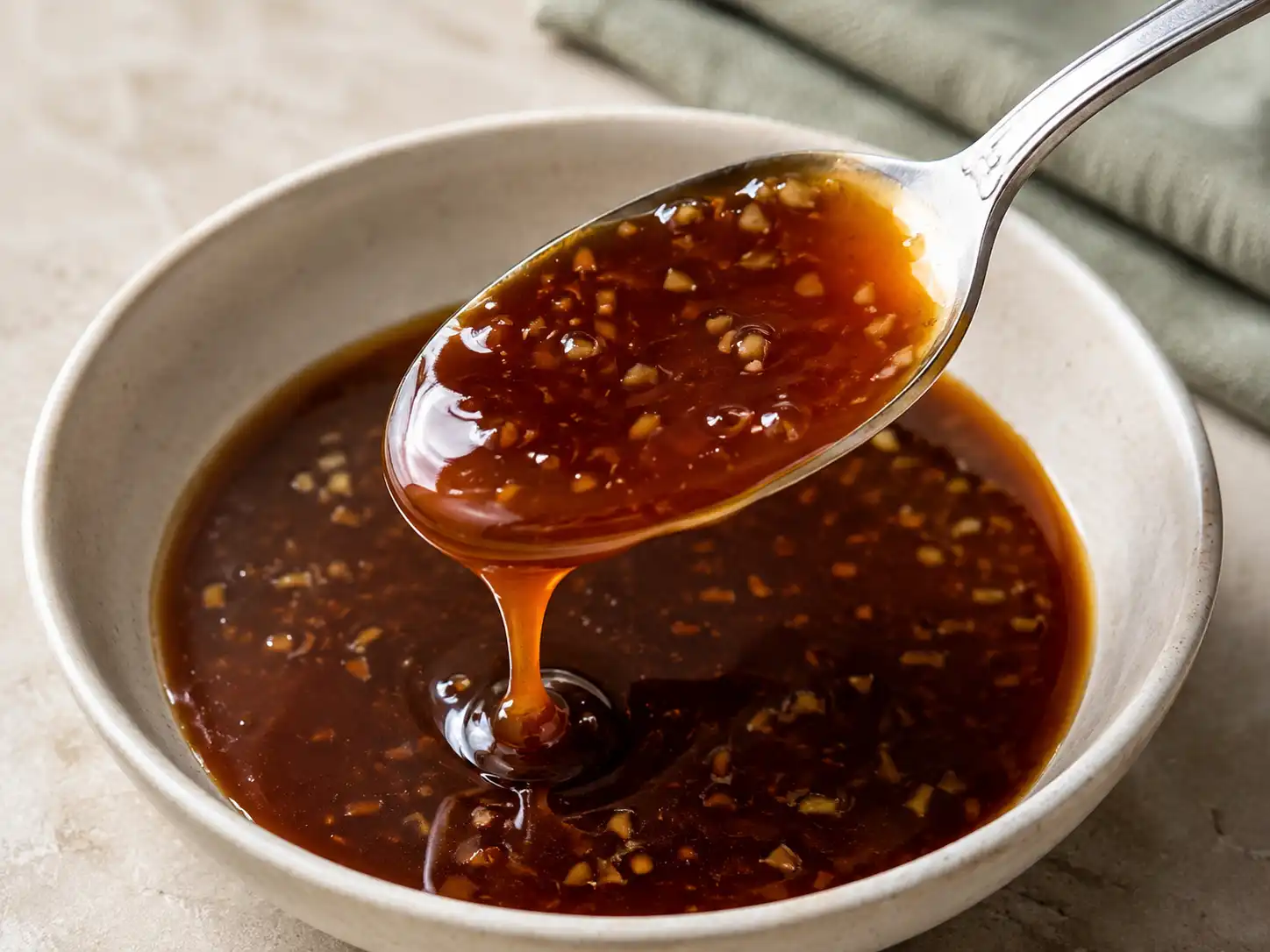
- Reduce the heat to medium-low and cook for 1 to 2 minutes, whisking frequently, until the sauce becomes glossy and lightly coats the back of a spoon.
- Remove the saucepan from the heat. Stir in the optional toasted sesame oil, if using.
- Let the sauce cool for several minutes. It will continue to thicken as it cools, so avoid overcooking it in the saucepan.
- For an exact recipe-card yield, transfer the cooled sauce to a liquid measuring cup. The expected yield is approximately 1 cup, or 16 one-tablespoon servings.
Notes
For a thin marinade, omit the cornstarch and the 2 tablespoons of slurry water. Warm the remaining ingredients only until the sugar dissolves, then cool completely before adding it to raw meat, poultry, tofu, or vegetables.
For a more pourable bowl or stir-fry sauce, use 1 1/2 teaspoons cornstarch mixed with 1 tablespoon cold water. For a thicker glaze, use the full 1 tablespoon cornstarch and 2 tablespoons cold water.
If the finished sauce is too thick, whisk in water 1 tablespoon at a time over low heat. If it remains too thin after cooling, return it to a gentle simmer or add a small amount of freshly mixed cornstarch slurry. Always mix cornstarch with cold water before adding it to the hot sauce.
When using the sauce as a marinade, refrigerate the food throughout marinating and reserve a clean portion before it contacts raw meat or poultry. Do not use contaminated marinade as a serving sauce unless it has been safely brought to a boil first.
Transfer leftover sauce to a clean covered container and refrigerate promptly at 40°F/4°C or below. Use within 7 days as a conservative quality guideline. Reheat only the amount needed, stirring frequently and adding a small splash of water if the sauce has thickened in the refrigerator.
This recipe contains no mirin or sake. If complete avoidance of alcohol is required, verify the label of the soy sauce because some fermented soy sauces may contain naturally occurring alcohol.