
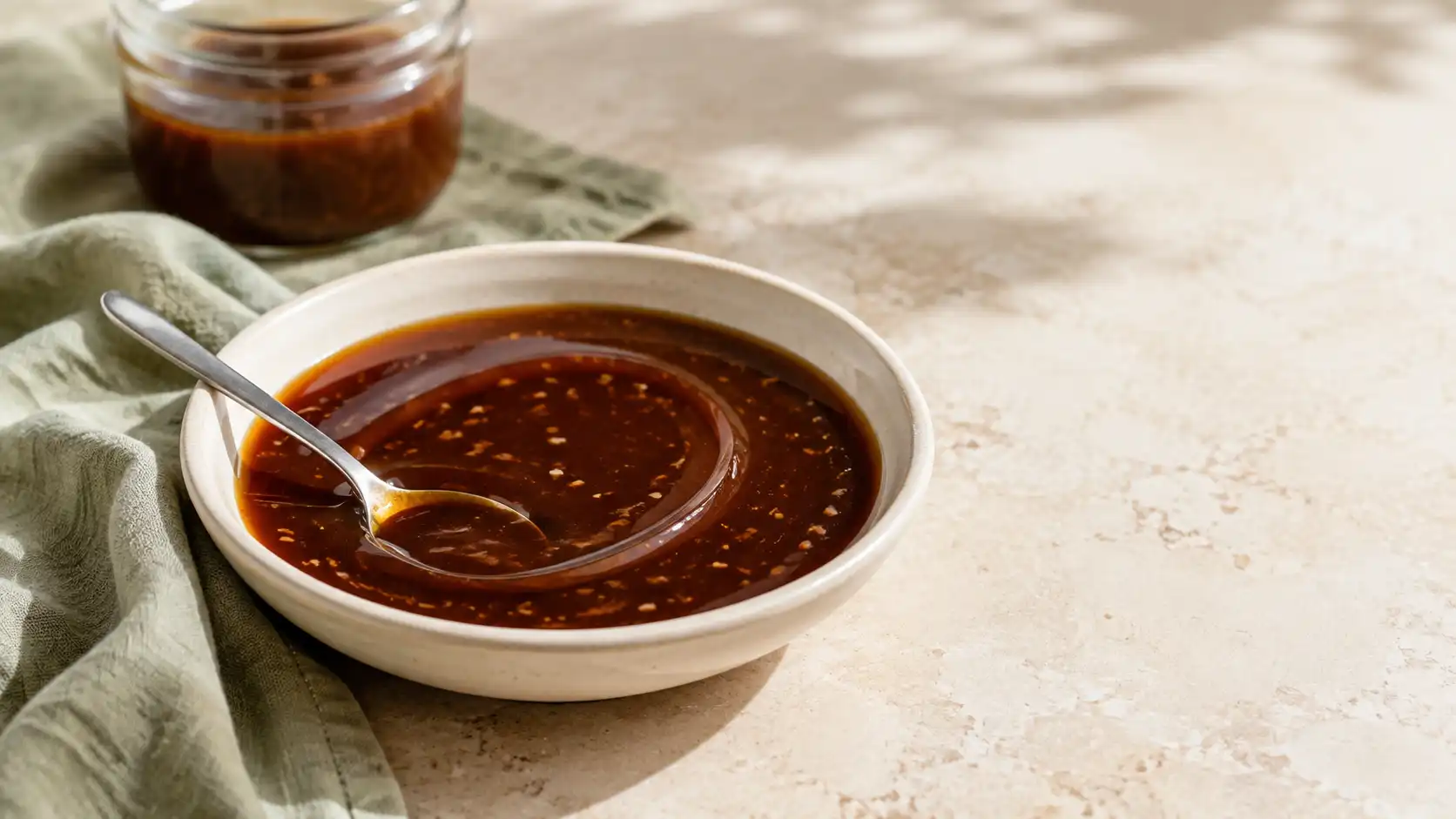
This homemade teriyaki sauce combines soy sauce, brown sugar, honey, rice vinegar, garlic, and ginger. Cornstarch turns the mixture into a smooth, glossy sauce that works well with rice bowls, stir-fries, cooked proteins, and vegetables.
The formula does not use mirin or sake. You can prepare it as a thin marinade, a pourable sauce, or a thicker glaze. Try the finished sauce with this teriyaki chicken rice bowl.
Quick Answer
To make teriyaki sauce without mirin or sake, simmer less-sodium soy sauce, water, brown sugar, honey, rice vinegar, garlic, and ginger. Whisk in a cornstarch slurry and cook until the sauce lightly coats a spoon. The complete formula makes about 1 cup, although the cooled yield should be measured before publishing a final recipe card.
Teriyaki Sauce at a Glance
| Detail | Estimate |
|---|---|
| Preparation time | About 5 minutes |
| Cooking time | About 5 to 7 minutes |
| Total time | About 10 to 12 minutes |
| Expected yield | About 1 cup |
| Serving size | 1 tablespoon |
| Estimated servings | 16 |
| Primary uses | Rice bowls, stir-fries, marinades, and glazes |
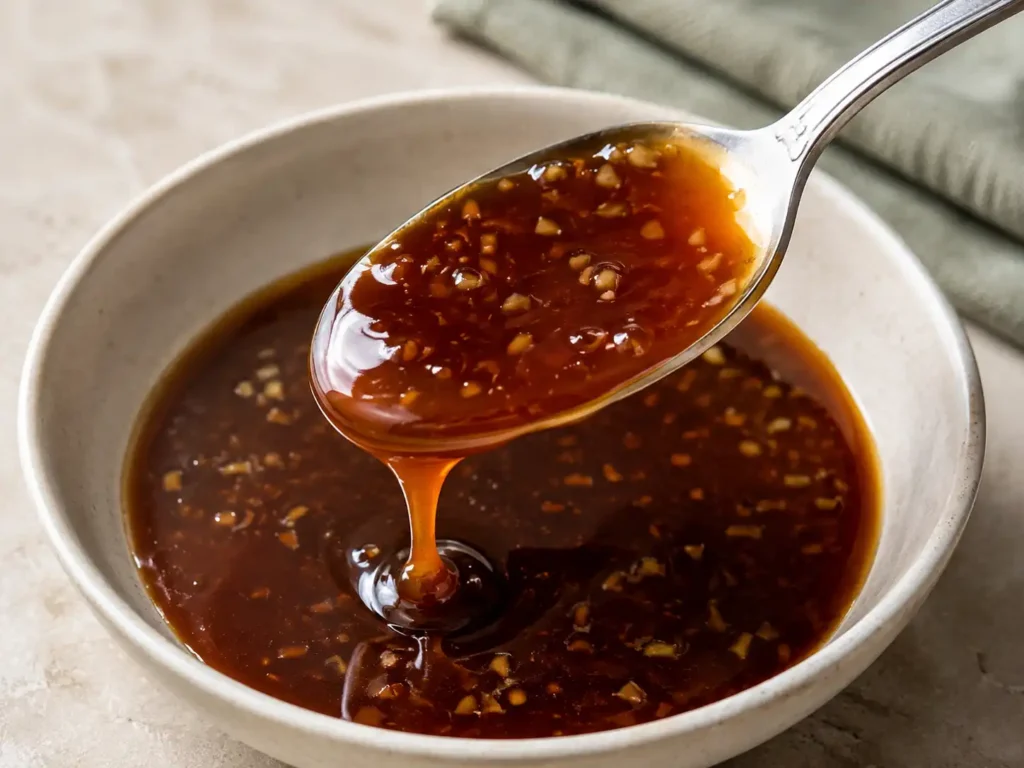
What This Teriyaki Sauce Is, and What It Is Not
Traditional Japanese teriyaki sauce commonly uses soy sauce, mirin, sake, and sugar. It is usually reduced until glossy rather than thickened with cornstarch.
This recipe is an American-style pantry adaptation. It replaces mirin and sake with brown sugar, honey, rice vinegar, and water. Cornstarch provides a thicker consistency that is useful for bowls and meal prep.
| Feature | Traditional Japanese-Style Sauce | This Recipe |
|---|---|---|
| Common base | Soy sauce, mirin, sake, and sugar | Soy sauce, water, brown sugar, honey, and rice vinegar |
| Thickening method | Reduction | Cornstarch slurry |
| Final consistency | Usually thinner | Adjustable from marinade to glaze |
| Mirin or sake | Commonly included | Not included |
Important: “Without mirin or sake” does not automatically mean alcohol-free. Naturally brewed soy sauce can contain alcohol produced during fermentation. Check the label of the exact soy sauce you use if alcohol content is a concern.
Ingredients and Why They Matter
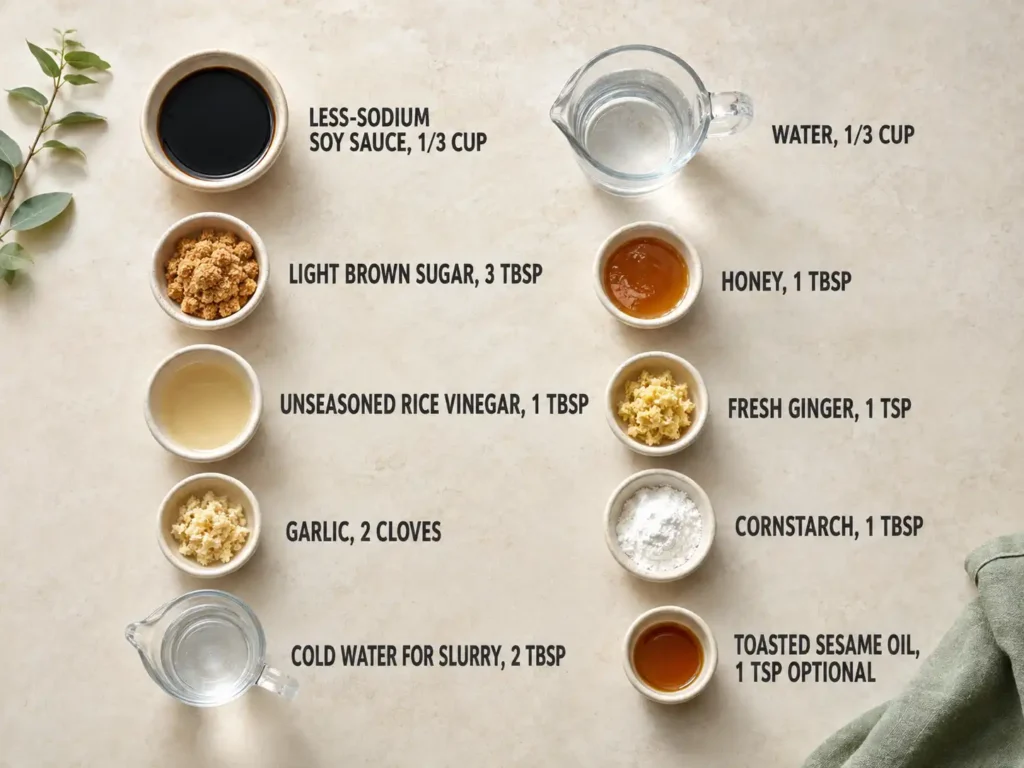
Less-sodium soy sauce
Soy sauce supplies most of the savory flavor and sodium. A product labeled less sodium gives you more control than regular soy sauce, but sodium levels still vary considerably by brand.
Soy sauce normally contains soy and wheat. Use a certified gluten-free alternative only when required, and verify every label rather than assuming that all tamari or soy sauce products are gluten-free.
Brown sugar and honey
Brown sugar provides sweetness and helps create a glossy finish. Honey adds additional sweetness and body. Both are part of the standard formula used for the nutrition estimate.
Rice vinegar, garlic, and ginger
Unseasoned rice vinegar adds acidity without the extra sugar and salt found in many seasoned rice vinegars. Fresh garlic and ginger provide the aromatic flavor associated with this American-style sauce.
Cornstarch slurry
Mixing cornstarch with cold water before adding it to the saucepan helps prevent lumps. The sauce continues to thicken as it cools, so stop cooking when it is slightly thinner than your desired final consistency.
Optional toasted sesame oil
A teaspoon of toasted sesame oil can be stirred in after cooking. It changes the flavor and introduces sesame as an additional allergen. This optional ingredient is not included in the estimated nutrition.
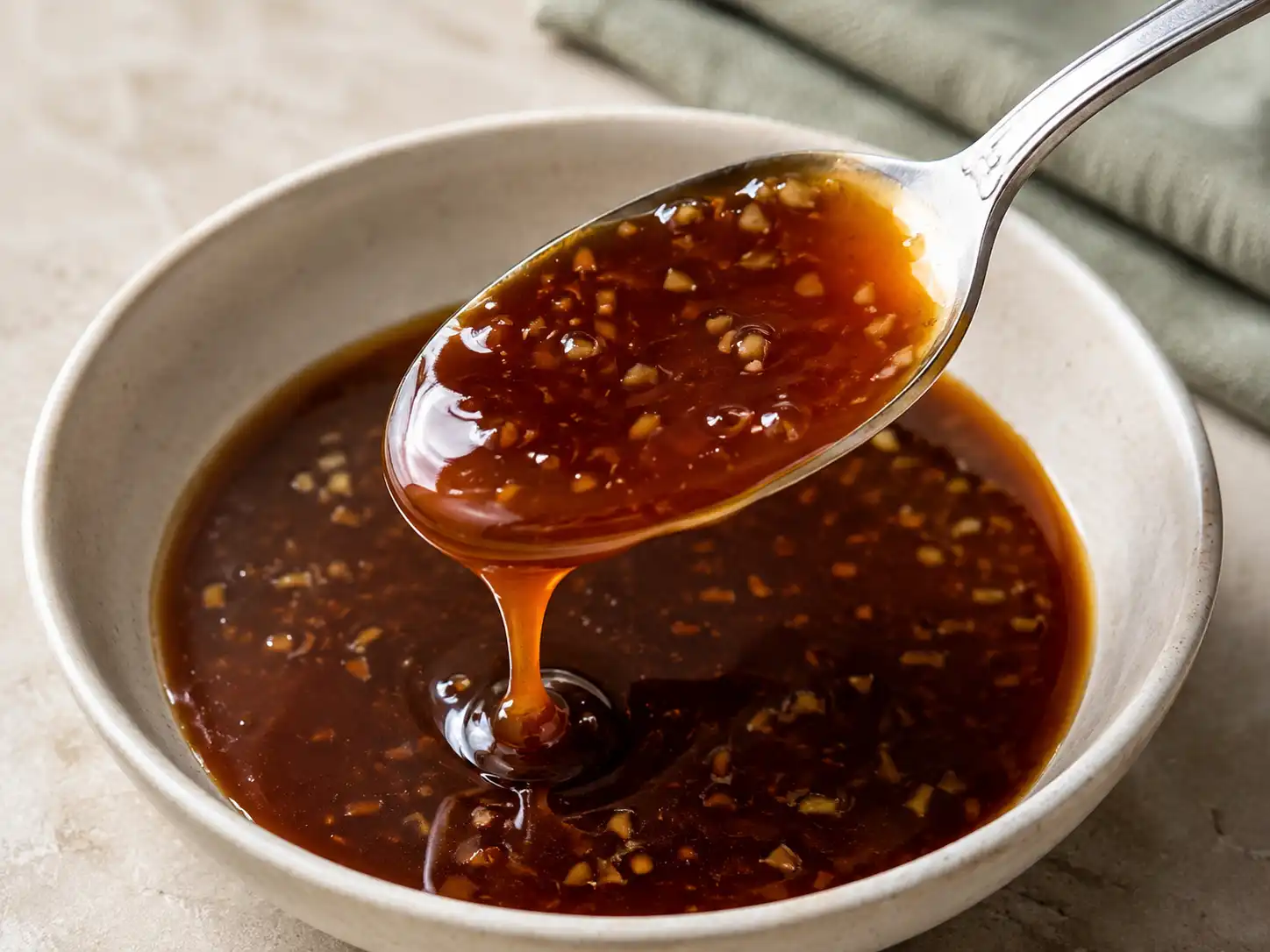
Teriyaki Sauce Without Mirin or Sake
Ingredients
Equipment
Method
- Add the less-sodium soy sauce, 1/3 cup water, brown sugar, honey, rice vinegar, grated ginger, and minced garlic to a small saucepan.
- Set the saucepan over medium heat and whisk until the brown sugar dissolves and the mixture reaches a gentle simmer.
- In a separate small bowl, whisk the cornstarch with 2 tablespoons of cold water until completely smooth and no dry lumps remain.
- Whisk the cornstarch slurry again immediately before using it, then slowly pour it into the simmering sauce while whisking continuously.
- Reduce the heat to medium-low and cook for 1 to 2 minutes, whisking frequently, until the sauce becomes glossy and lightly coats the back of a spoon.
- Remove the saucepan from the heat. Stir in the optional toasted sesame oil, if using.
- Let the sauce cool for several minutes. It will continue to thicken as it cools, so avoid overcooking it in the saucepan.
- For an exact recipe-card yield, transfer the cooled sauce to a liquid measuring cup. The expected yield is approximately 1 cup, or 16 one-tablespoon servings.
Notes
Choose the Right Teriyaki Sauce Texture
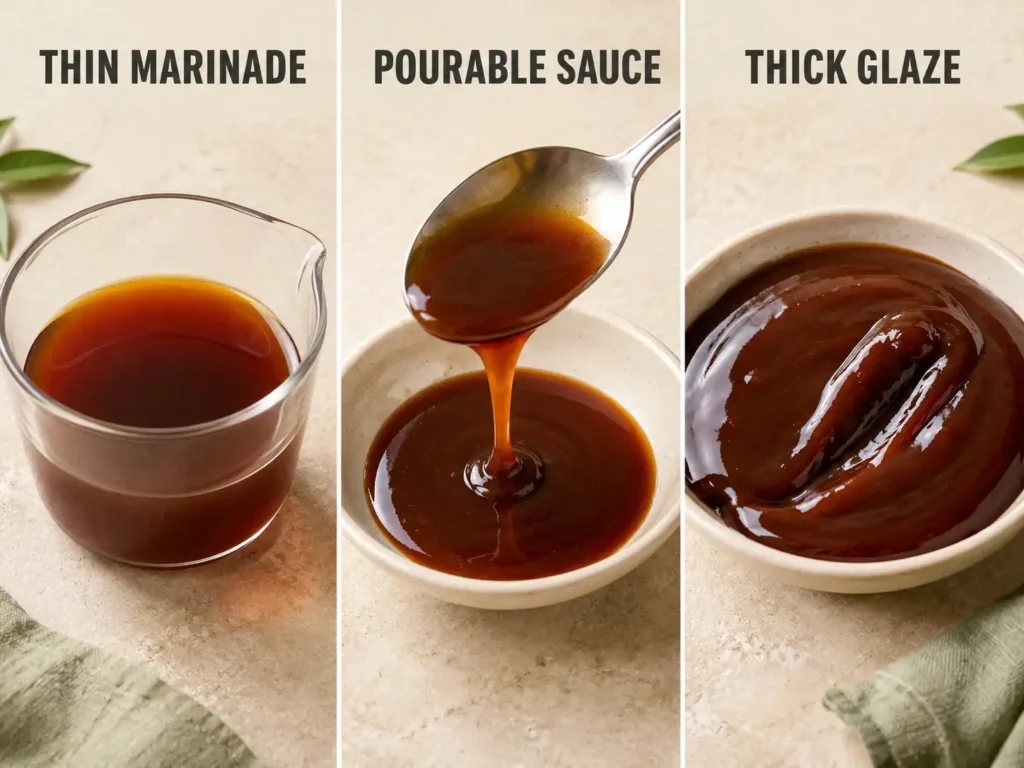
The amount of cornstarch determines whether the mixture behaves like a marinade, a pourable sauce, or a glaze.
| Desired Result | Cornstarch Adjustment | Method | Best Uses |
|---|---|---|---|
| Thin marinade | Omit the cornstarch and slurry water | Warm only until the sugar dissolves, then cool completely | Marinating chicken, beef, turkey, tofu, or vegetables |
| Pourable sauce | Use 1 1/2 teaspoons cornstarch with 1 tablespoon cold water | Simmer until the sauce lightly coats a spoon | Rice bowls, noodles, and stir-fries |
| Thick glaze | Use the full 1 tablespoon cornstarch with 2 tablespoons cold water | Simmer for 1 to 2 minutes after adding the slurry | Brushing onto cooked protein or drizzling over a finished bowl |
If using the thin version as a marinade, cool it fully before adding raw meat or poultry. Always marinate food in the refrigerator.
How to Use Teriyaki Sauce in Protein Meals
- Rice bowls: Spoon the finished sauce over cooked chicken, beef, turkey, tofu, rice, and vegetables.
- Stir-fries: Add the sauce near the end of cooking so the sugar does not scorch.
- Glazes: Brush a thick version onto food during the final stage of cooking.
- Meal prep: Store clean sauce separately in small covered containers until serving.
- Marinades: Use the thin variation and keep the food refrigerated throughout the marinating time.
For more combinations, browse these chicken rice bowl recipes and high-protein bowls on a budget. The sauce can also be portioned separately when preparing a cheap high-protein meal prep.
Budget-Friendly Ingredient Notes
This sauce uses standard pantry ingredients, but prices vary by store, brand, package size, and location. No cost-per-serving estimate is included because current local pricing was not supplied.
- Use the soy sauce already available in your kitchen, but check its sodium level before making substitutions.
- Unseasoned rice vinegar gives you more control over sweetness and sodium than seasoned rice vinegar.
- Fresh ginger can be grated before freezing in small portions for future recipes.
- Measure the cornstarch rather than adding it directly from the container. Too much can produce a stiff or gummy sauce.
Teriyaki Sauce Troubleshooting
| Problem | Likely Cause | How to Correct It |
|---|---|---|
| The sauce is too thin | It has not simmered long enough, or too little slurry was used | Let it cool briefly before judging. If it remains thin, simmer again or add a small amount of fresh cold-water slurry. |
| The sauce is too thick | It cooked too long or lost too much water | Whisk in water 1 tablespoon at a time over low heat. |
| The sauce has lumps | The cornstarch was added directly or the slurry settled | Strain the sauce if needed. Next time, use cold water and whisk the slurry immediately before adding it. |
| The sauce tastes too salty | The soy sauce brand is saltier than expected or the sauce reduced too far | Whisk in a small amount of water. Serve it sparingly rather than adding more soy sauce. |
| The sauce tastes scorched | The heat was too high or the sugary mixture was left unstirred | Do not scrape burned material from the bottom of the pan. A distinctly burned batch should be discarded and remade over lower heat. |
Storage, Reheating, and Marinade Safety
Refrigerating the sauce
Transfer the sauce to a clean, covered container and refrigerate it within two hours. Keep the refrigerator at 40°F or below, as recommended by the FDA.
For a conservative quality window, use the refrigerated sauce within 7 days. This is not a laboratory-validated shelf-life determination for this exact formula. Discard the sauce sooner if it develops mold, an unusual odor, unexpected bubbling, or another clear sign of spoilage.
Reheating the sauce
Reheat only the amount needed. Place it in a small saucepan, stir frequently, and bring it to a boil before serving. Add a small amount of water if refrigeration has made it too thick.
Using it as a marinade
Always marinate meat or poultry in the refrigerator. Before raw food touches the marinade, set aside any portion you want to use later as a clean serving sauce.
The simplest approach is to discard marinade that has contacted raw meat or poultry. If it will be reused, the USDA FSIS advises bringing it to a boil first.
Estimated Nutrition
The following estimate applies to the standard thickened recipe and assumes the cooled sauce produces exactly 1 cup, or 16 one-tablespoon servings.
| Nutrient | Estimated Amount per 1 Tablespoon |
|---|---|
| Calories | About 20 |
| Protein | About 0.4 g |
| Carbohydrate | About 4.5 g |
| Total sugars | About 3.5 g |
| Fat | 0 g |
| Sodium | About 200 mg |
Nutrition note: This is an estimate, not guaranteed or medically precise nutrition information. It uses the label values for Kikkoman Less Sodium Soy Sauce and generic ingredient data from USDA FoodData Central. Different brands, measuring methods, cooking loss, and final yield will change the result. The optional sesame oil is excluded.
Helpful Tools for This Recipe
- A small saucepan for controlled simmering
- A whisk for combining the slurry smoothly
- Measuring cups and spoons
- A liquid measuring cup for checking the cooled yield
- A fine-mesh strainer for correcting small lumps
- A clean airtight jar or covered food-storage container
- Small covered sauce containers for meal prep
No specific brands or affiliate products are required to prepare this recipe.
More Homemade Sauces
For different flavor profiles, try bang bang sauce, honey mustard sauce, or cilantro lime sauce.
Frequently Asked Questions
What is teriyaki sauce made of?
This version contains less-sodium soy sauce, water, brown sugar, honey, unseasoned rice vinegar, garlic, ginger, and cornstarch. Traditional Japanese versions commonly use soy sauce, mirin, sake, and sugar instead.
Can I make teriyaki sauce without mirin or sake?
Yes. This American-style adaptation uses rice vinegar, water, brown sugar, and honey instead of mirin and sake. It should not be described as alcohol-free unless every ingredient label has been checked.
How do I thicken teriyaki sauce without lumps?
Whisk cornstarch with cold water in a separate bowl. Stir the slurry again immediately before slowly whisking it into the simmering sauce. Never add dry cornstarch directly to the saucepan.
Can the same sauce be used as a marinade and a glaze?
Yes, but adjust the cornstarch. Omit it for a thin marinade, use half the amount for a pourable sauce, or use the full amount for a glaze. Reserve a clean portion before the marinade touches raw food.
How long does homemade teriyaki sauce last?
Refrigerate it promptly in a clean, covered container at 40°F or below. Use it within 7 days as a conservative quality recommendation. The exact shelf life of this research-developed formula has not been validated through laboratory testing.
Final Takeaway
This teriyaki sauce without mirin or sake can be adjusted for marinades, pourable sauces, and glossy glazes. Keep the cornstarch slurry cold, avoid excessive heat, measure the cooled yield, and store the finished sauce safely in the refrigerator.