
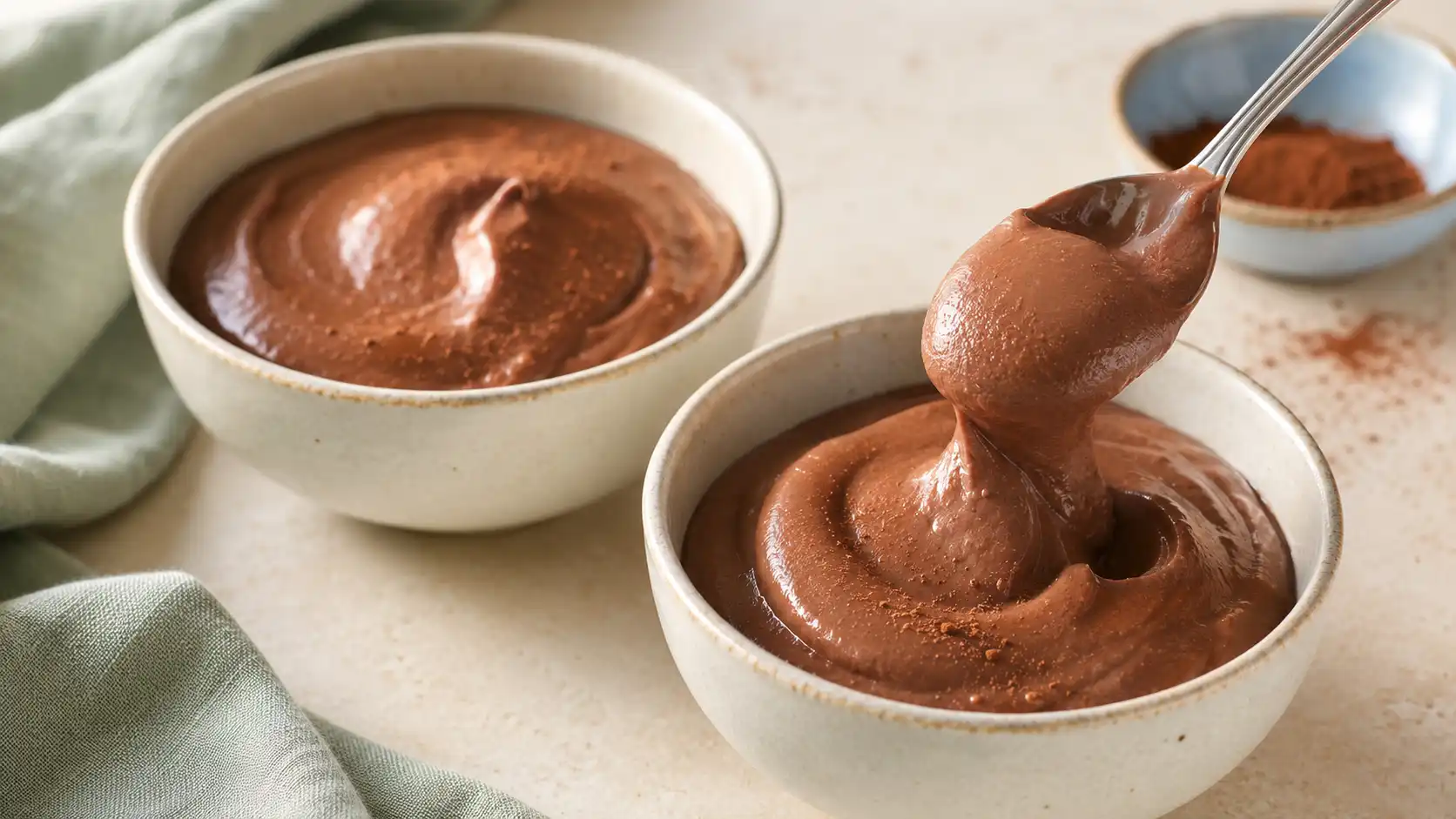
This cottage cheese chocolate pudding turns three basic ingredients into a cold, spoonable dessert. Cottage cheese provides the creamy base and protein, while cocoa powder and maple syrup build the chocolate flavor without requiring protein powder.
The key is to blend long enough for the curds to disappear, then chill the pudding if you prefer a thicker texture. If you have cottage cheese left in the tub, these high-protein cottage cheese recipes offer more ways to use it.
Quick Answer
Blend 1 cup cottage cheese with 2 tablespoons unsweetened cocoa powder and 2 tablespoons pure maple syrup. Scrape the container and blend again until no visible curds remain. Divide the pudding into two small servings and eat it immediately for a softer texture, or refrigerate it for 30 minutes so it thickens.
At a Glance
| Detail | Information |
|---|---|
| Yield | 2 small servings |
| Active preparation | 5 minutes |
| Optional chill | 30 minutes |
| Total time with chilling | 35 minutes |
| Method | No-cook and blended |
| Best equipment | Compact blender cup or food processor |
| Storage | 3 to 4 days refrigerated |
Why This Chocolate Cottage Cheese Pudding Works
Full-fat cottage cheese gives the pudding body without cream, cornstarch, or a boxed pudding mix. Unsweetened cocoa powder provides concentrated chocolate flavor, while a liquid sweetener adds sweetness without making a small blender batch harder to process.
Chilling is optional rather than hidden inside the preparation time. The freshly blended pudding is softer, while a short rest in the refrigerator makes it firmer and more spoonable.
Cottage Cheese Chocolate Pudding Ingredients
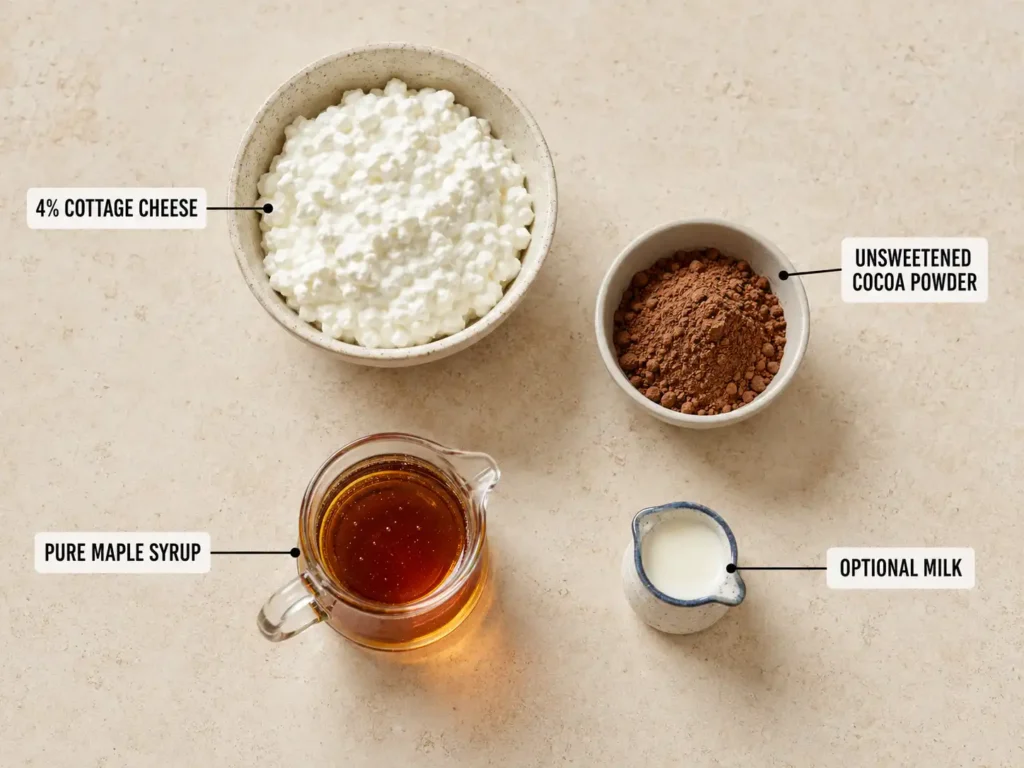
- 1 cup (226 g) full-fat cottage cheese: Choose 4% milkfat for the richest base. Check that the label says the product is made with pasteurized milk.
- 2 tablespoons (10 g) unsweetened natural cocoa powder: Use plain cocoa with no sugar added.
- 2 tablespoons (40 g) pure maple syrup: This sweetens the cocoa and supplies enough liquid to help the mixture blend.
- Optional, 1 to 2 teaspoons milk: Add only when the blades spin without pulling the mixture downward. Optional milk is excluded from the nutrition estimate.
Allergen note: This recipe contains milk. Check every packaged ingredient if you are cooking for someone with an allergy.
Ingredient and budget notes
Compare the unit price of small and large cottage cheese tubs instead of assuming that one package is cheaper. Regular unsweetened cocoa works well here, so a specialty cacao powder is not required. If maple syrup is not already in your pantry, honey can replace it in the same amount, although the flavor and nutrition will change.
For a savory way to finish the same tub, try this cottage cheese protein dip.
| Choice | Likely effect | Adjustment |
|---|---|---|
| 4% cottage cheese | Richer and thicker | Use as the standard recipe |
| 2% cottage cheese | Slightly lighter texture | Blend fully, then chill before judging thickness |
| Fat-free cottage cheese | Less rich and potentially looser | Avoid adding milk unless the blender truly needs it |
| Natural cocoa powder | Classic cocoa flavor | Use as the standard recipe |
| Dutch-process cocoa | Darker color and a different flavor | Taste before changing the sweetener |
How to Make Cottage Cheese Chocolate Pudding
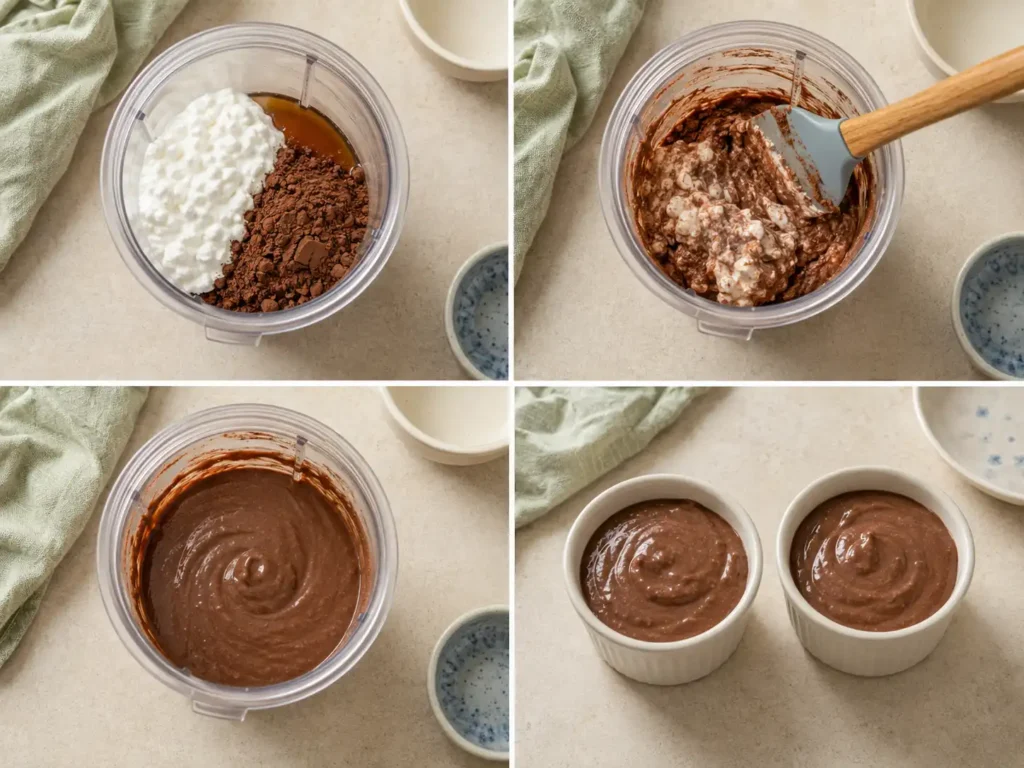
- Add the cottage cheese, cocoa powder, and maple syrup to a compact blender cup or food processor.
- Blend for about 60 seconds. Stop and scrape the sides and bottom with a silicone spatula.
- Blend for another 30 to 60 seconds, or until no visible white curds remain.
- If the blades spin without moving the mixture, add 1 teaspoon milk and blend again. Add the second teaspoon only if it is still necessary.
- Taste the pudding. If you prefer it sweeter, add maple syrup 1 teaspoon at a time. Additional syrup changes the nutrition.
- Divide the pudding between two small containers. Serve immediately for a softer consistency or cover and refrigerate for 30 minutes for a thicker texture.
Use the right blender container
A one-cup batch can sit below the blades of some full-size blenders. A compact blender cup or food processor keeps the ingredients closer to the blade and reduces the temptation to pour in too much milk. Stop to scrape rather than letting dry cocoa collect around the sides.
Chill before adding more thickener
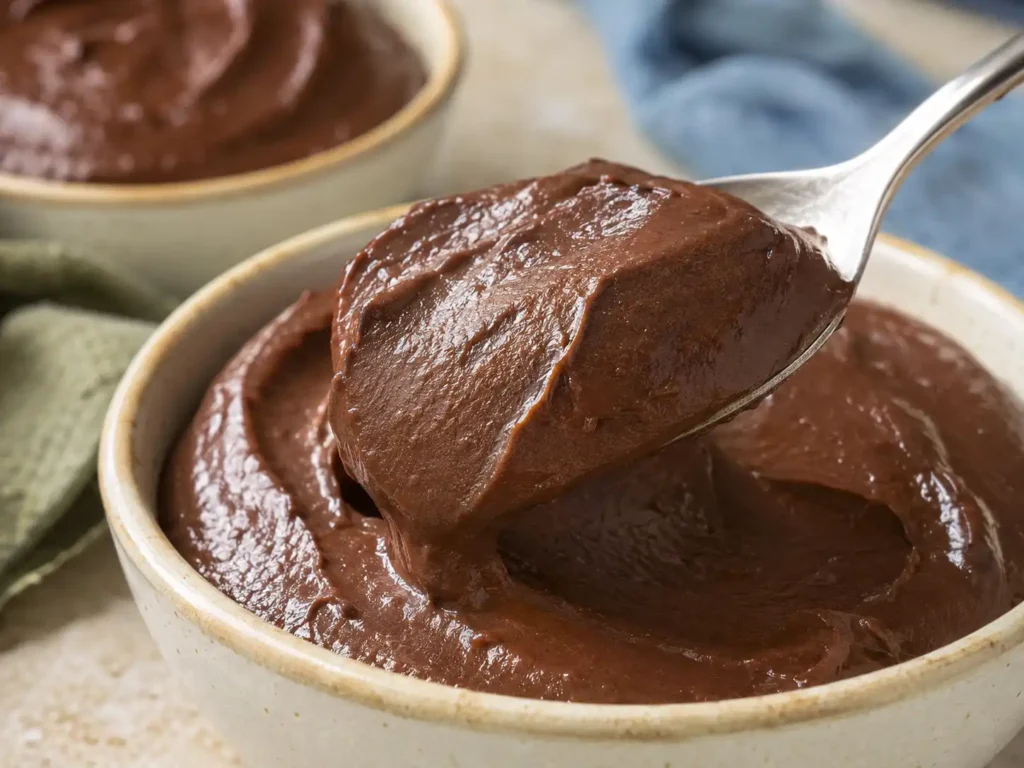
The pudding becomes thicker as it gets cold. If it seems slightly soft after blending, refrigerate it for 30 minutes before changing the ingredient ratio. Adding more cocoa immediately can make the flavor bitter or leave dry pockets in the pudding.
Troubleshooting Texture and Flavor
| Problem | Likely cause | Solution |
|---|---|---|
| Grainy texture | Visible cottage cheese curds remain | Scrape the container and blend for another 30 to 60 seconds |
| Blades spin without mixing | The batch is too small for the container | Use a smaller vessel or add milk 1 teaspoon at a time |
| Pudding seems thin | It is still warm from blending or contains extra liquid | Chill for 30 minutes before adjusting anything else |
| Chocolate tastes bitter | The cocoa is strong or the pudding needs more sweetness | Add maple syrup 1 teaspoon at a time and blend again |
| Dairy flavor is noticeable | The cottage cheese is tangy or high in sodium | Try another brand and make sure the mixture is completely smooth |
Substitutions and Optional Toppings
- Lower-fat cottage cheese: A 2% version can work, but the pudding may feel less rich. Chill it before deciding that it is too thin.
- Honey: Replace the maple syrup with the same amount of honey. Expect a different sweetness and flavor.
- Dutch-process cocoa: It can replace natural cocoa, but it creates a darker color and different chocolate profile.
- Toppings: Add fresh berries, a few mini chocolate chips, or a light cocoa dusting only when serving. None of these options are included in the nutrition estimate.
For another cold make-ahead snack, consider blueberry cottage cheese meal prep cups or blackberry Greek yogurt protein cups.
Meal Prep and Storage
Divide the pudding into clean, airtight containers and refrigerate it promptly. Keep the refrigerator at 40°F (4°C) or below. For this prepared pudding, use a conservative make-ahead window of 3 to 4 days and keep toppings separate until serving.
FoodSafety.gov advises refrigerating perishable foods within 2 hours, or within 1 hour when the temperature is above 90°F (32°C). Discard pudding that has remained outside safe refrigeration beyond those limits. See the official four food-safety steps for more details.
A small amount of separation after refrigeration does not necessarily mean the pudding has spoiled. Stir it and check for an unusual odor, color, or visible mold before eating. Freezing is not recommended for the best quality because cottage cheese can become grainy after thawing. This pudding is served cold and does not need reheating.
For more ways to prepare cottage cheese in advance, browse these cottage cheese meal prep ideas.
Estimated Nutrition per Serving
Estimated nutrition, not guaranteed: One of two servings provides approximately 175 calories, 13 g protein, 22 g carbohydrates, 5.5 g fat, 2 g fiber, and about 440 mg sodium.
The estimate uses half of the standard three-ingredient recipe and excludes optional milk, extra maple syrup, and toppings. Cottage cheese labels vary substantially, especially for sodium and protein, so recalculate the values with the exact products used before treating them as final. Nutrition estimates are not medical advice.
Helpful Tools for This Recipe
- Compact blender cup: Keeps a small batch close to the blades.
- Food processor: Provides another way to blend the curds until smooth.
- Silicone spatula: Helps scrape cocoa and cottage cheese from the sides.
- Small lidded containers: Make it easier to divide and refrigerate the two servings.
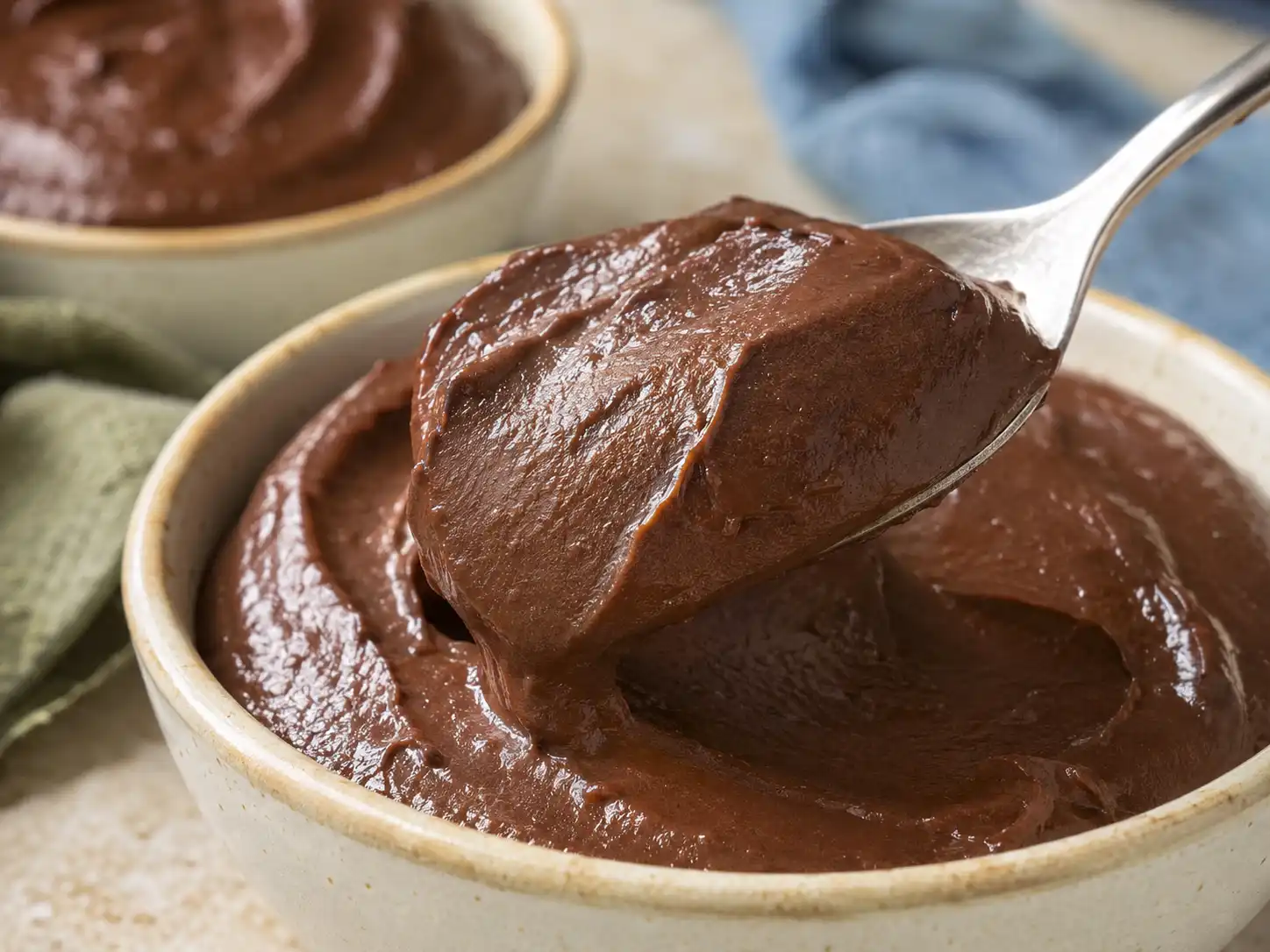
Cottage Cheese Chocolate Pudding (No Protein Powder)
Ingredients
Equipment
Method
- Add the cottage cheese, unsweetened cocoa powder, and pure maple syrup to a compact blender cup or food processor.
- Blend for about 60 seconds. Stop and scrape the sides and bottom of the container with a silicone spatula.
- Blend for another 30 to 60 seconds, or until no visible white curds remain and the pudding looks smooth.
- If the blades spin without moving the mixture downward, add 1 teaspoon of milk and blend again. Add the second teaspoon only when necessary.
- Taste the pudding. For additional sweetness, blend in more maple syrup 1 teaspoon at a time, noting that extra syrup changes the nutrition.
- Divide the pudding between two small containers. Serve immediately for a softer consistency or cover and refrigerate for 30 minutes for a thicker, more spoonable texture.
Notes
Frequently Asked Questions
Can you taste the cottage cheese in chocolate pudding?
The cocoa and maple syrup reduce the dairy flavor, but the result still depends on the cottage cheese brand. Thorough blending removes the curd texture, while chilling gives the pudding a firmer consistency.
What cottage cheese works best?
A full-fat 4% cottage cheese provides the richest base. A 2% version can also work, but the finished pudding may be slightly less creamy. Choose cottage cheese made with pasteurized milk.
Can I make it without a blender?
A food processor is the best alternative. Stirring or whisking by hand will not fully remove the curds, so the result will not have the same pudding-like texture.
Can I use honey instead of maple syrup?
Yes. Replace the maple syrup with 2 tablespoons honey. The flavor and nutrition will change, so the published estimate applies only to the maple syrup version.
How long does cottage cheese chocolate pudding last?
Store it in an airtight container in a refrigerator set to 40°F (4°C) or below and use it within 3 to 4 days. Keep toppings separate and stir the pudding before serving if it has separated slightly.
Final Takeaway
This three-ingredient cottage cheese chocolate pudding keeps the method simple while addressing the most common texture problems. Use a small blender vessel, scrape and blend again, then chill before deciding whether the pudding needs any adjustment. For more practical options, explore these high-protein snacks on a budget.