
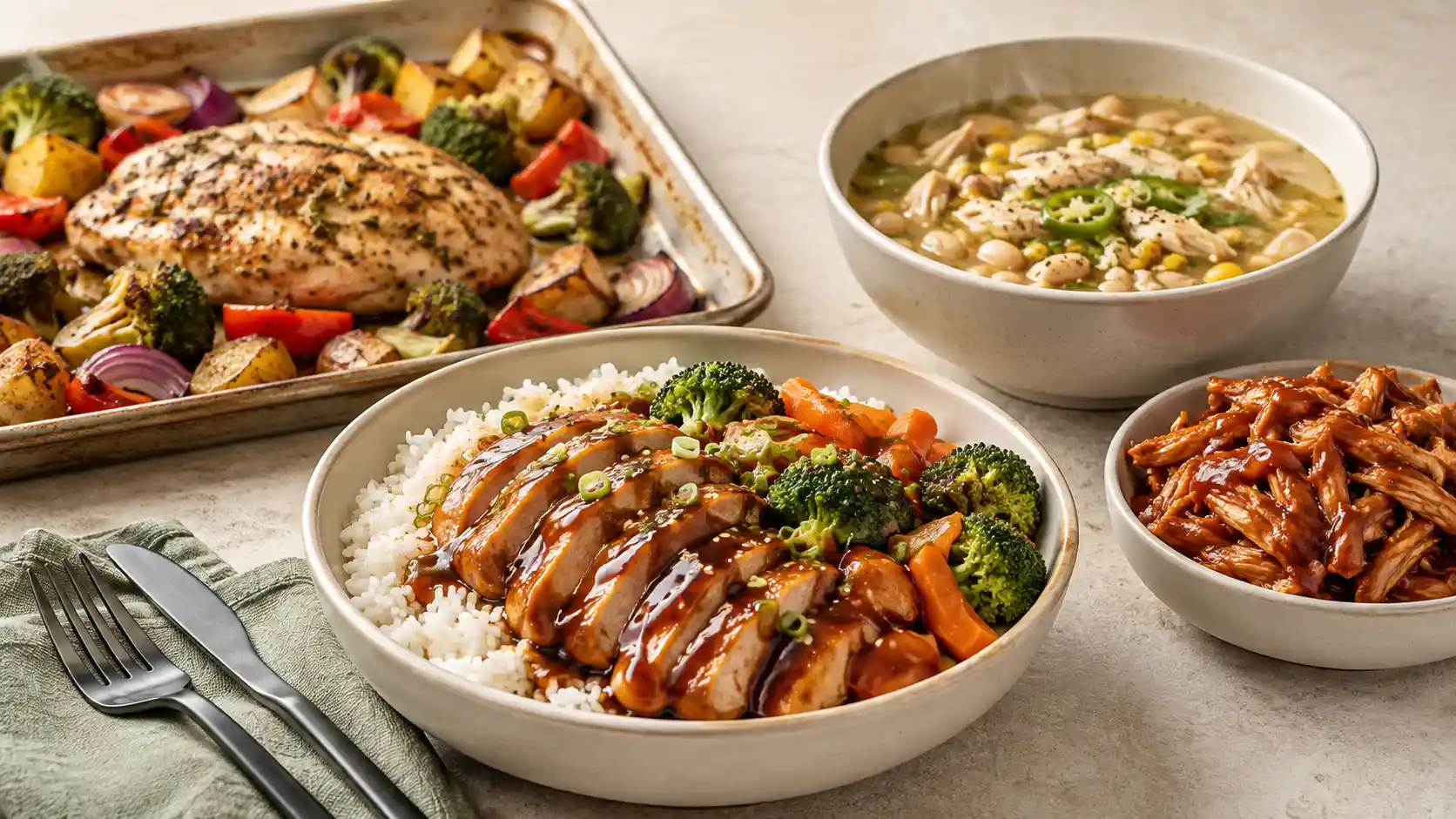
Chicken breast dinner ideas are easy to repeat when the same package lands in your cart every week. The useful question is not only what to cook, but which method fits tonight: a quick skillet, a hands-off oven dinner, a slow-cooker meal, or bowls you can portion for later.
This guide organizes practical options by cooking method and links to full recipes already available on Budget Protein Meals. Some of those recipes allow either chicken breast or thighs. When that happens, the note below tells you to choose chicken breast so the meal stays aligned with this guide.
Quick Answer: What Can You Make With Chicken Breast for Dinner?
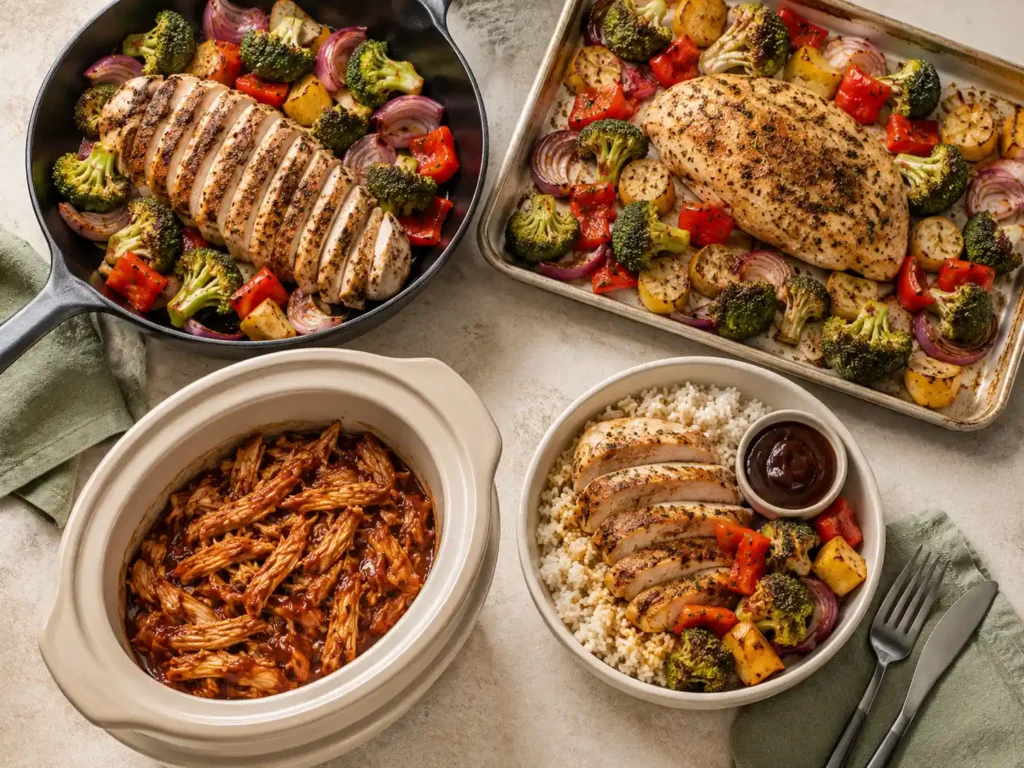
Chicken breast can become a skillet dinner, sheet-pan meal, casserole, shredded slow-cooker filling, chili, or meal-prep bowl. Choose a skillet when you want a short active cook, the oven when you want to prepare the components and step away, a slow cooker when you want shredded or saucy chicken, and bowls when you need separate portions. Whatever the method, use a food thermometer because cooking time changes with thickness, equipment, and recipe.
Chicken Breast Dinner Ideas at a Glance
Use this table to narrow the list before you open a full recipe.
| Dinner idea | Method | Best for | Planning note |
|---|---|---|---|
| Teriyaki chicken breast rice bowl | Skillet and bowl | A complete meal with rice and vegetables | Choose the chicken breast option in the linked recipe |
| Sheet-pan chicken breast and vegetables | Oven | One-pan cleanup | Cut components as the chosen recipe directs so they finish safely |
| Chicken zucchini casserole | Oven | Using properly stored cooked chicken breast | Follow the recipe’s zucchini preparation instead of assuming frozen swaps |
| BBQ shredded chicken | Slow cooker | Sandwiches, bowls, wraps, or baked potatoes | Store the chicken with its sauce and keep crunchy additions separate |
| White chicken chili | Slow cooker | A bean-based make-ahead dinner | Pack fresh toppings separately |
| Pesto chicken meal-prep bowls | Skillet and bowl | Portioned lunches or dinners | Choose chicken breast and keep extra pesto separate if preferred |
| Build-your-own chicken rice bowls | Component prep | Using one batch in several combinations | Select breast-based recipes from the broader bowl collection |
How to Choose the Right Chicken Breast Dinner
Choose a skillet for a shorter active cook
Thin, even pieces are easier to cook uniformly in a skillet than one thick, uneven breast. Skillet meals also make it simple to add a sauce after the chicken cooks. This format is useful when you want dinner the same night and do not need the oven or slow cooker running.
Choose the oven for one-pan cooking
Sheet-pan meals and casseroles move most of the work into one baking vessel. They still need a complete recipe, since the size of the chicken pieces, oven temperature, vegetables, and sauce all affect timing. Do not rely on one universal bake time.
Choose a slow cooker for shredded or saucy chicken
Slow-cooker recipes work well when the finished chicken will be shredded into sauce, chili, bowls, or sandwiches. Follow the recipe’s liquid amount and cook setting. More time is not automatically better for lean chicken breast.
Choose bowls for planned portions
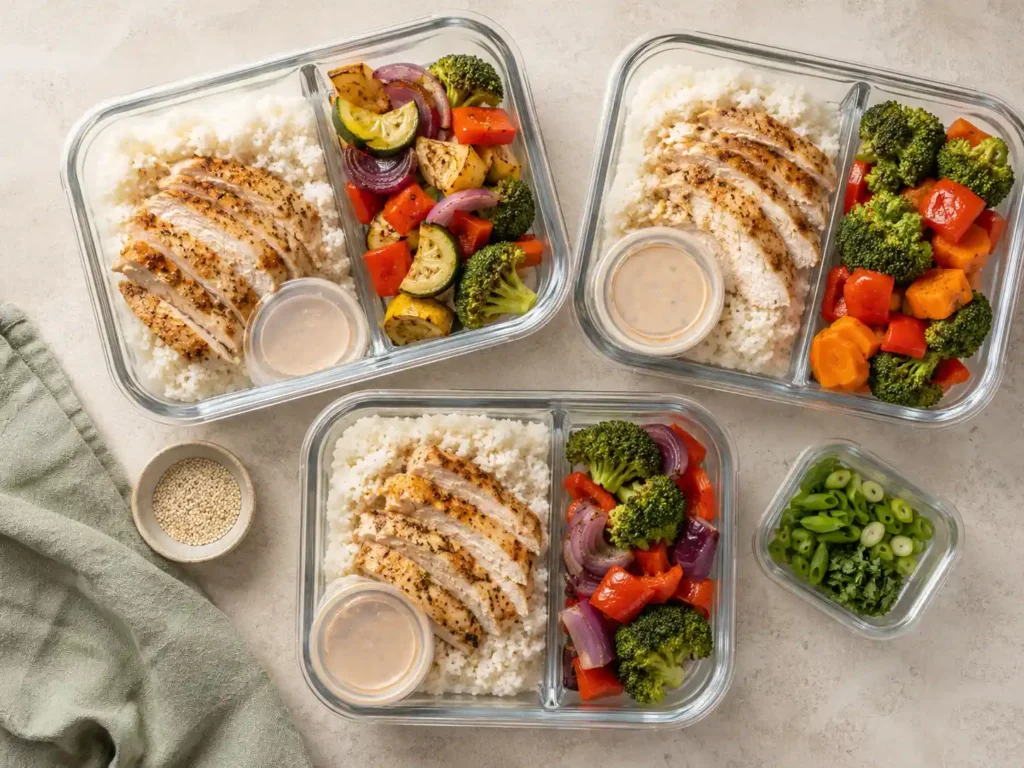
Bowls make the components visible and easy to divide. They are especially useful when warm chicken and rice need to be stored separately from cold vegetables, herbs, or sauce.
Chicken Breast Dinner Ideas by Method
1. Teriyaki Chicken Breast Rice Bowls
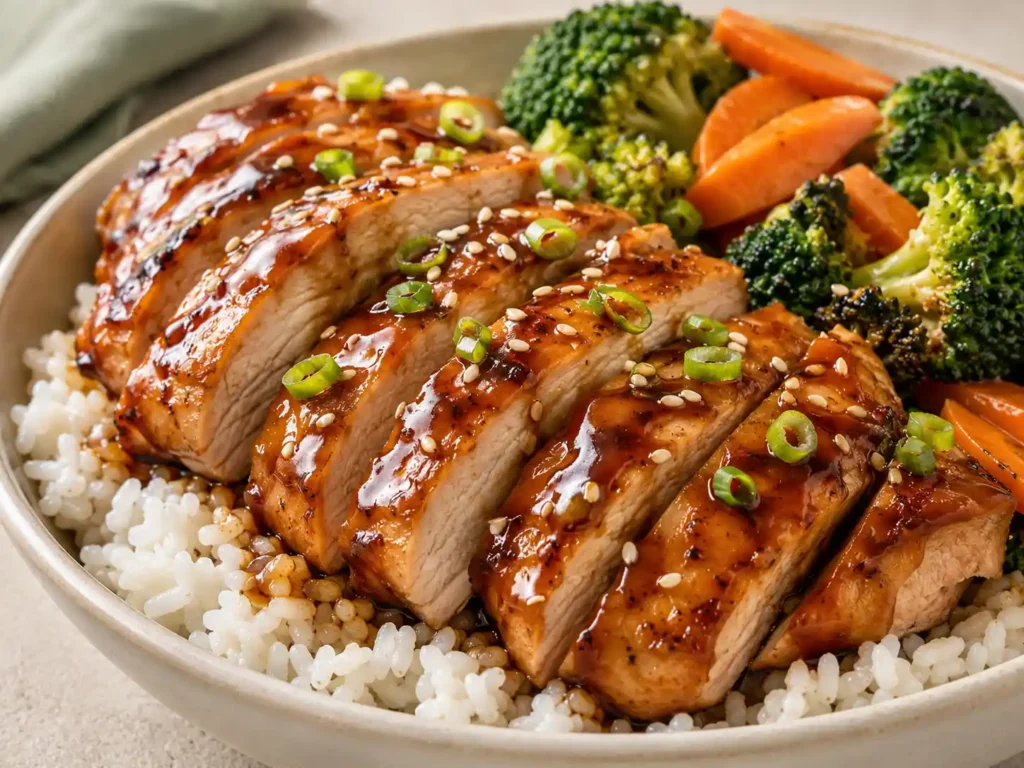
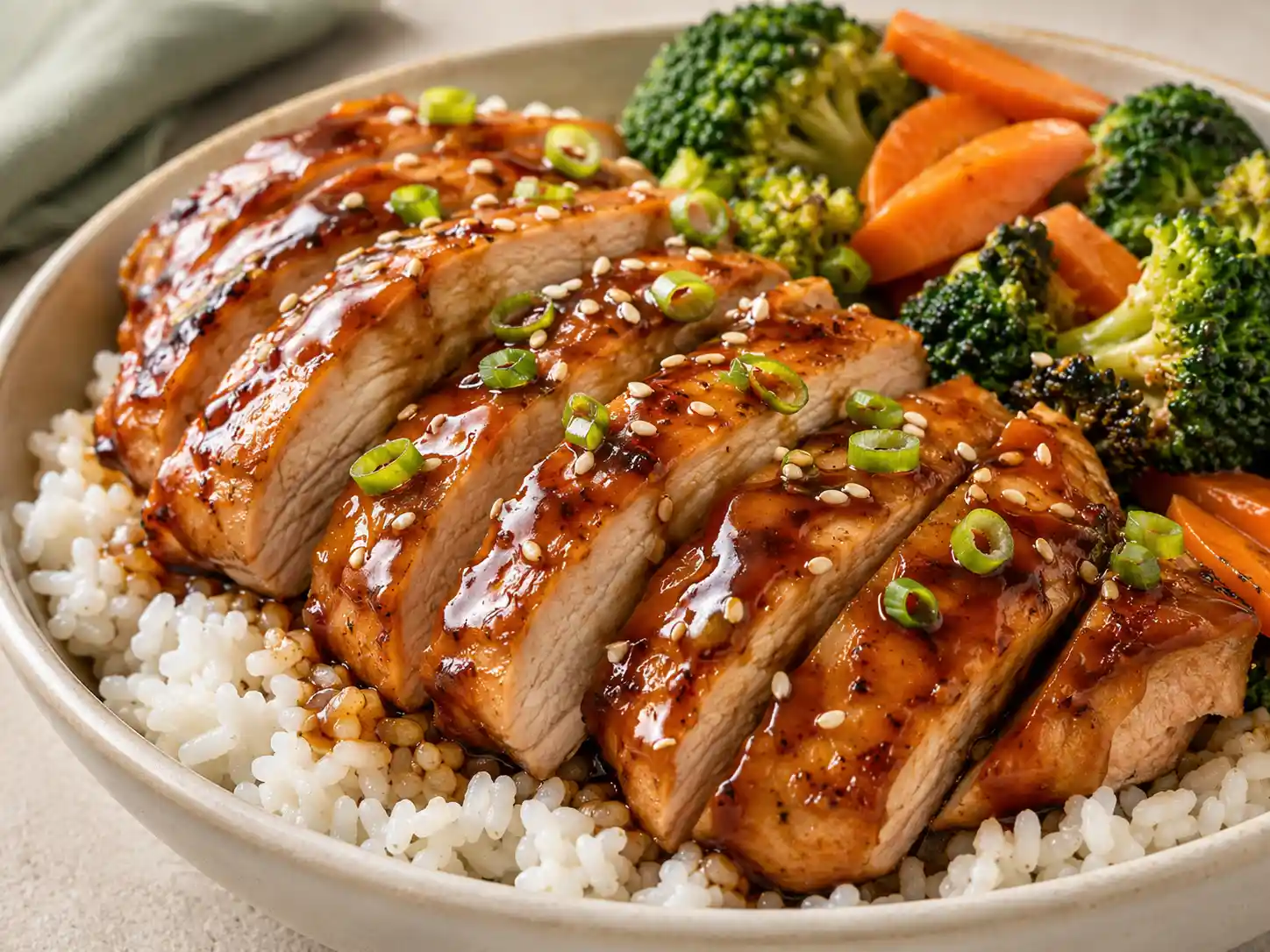
A teriyaki-style bowl combines skillet-cooked chicken, rice, vegetables, and a glossy sauce in one practical dinner. The full recipe allows chicken breast or boneless skinless thighs. Choose chicken breast for the version covered by this guide. The sauce is thickened separately, which gives you more control than trying to cook raw chicken in a heavy coating from the start.
Make the full Teriyaki Chicken Rice Bowl.
2. Baked Chicken Breast and Vegetables on a Sheet Pan
A sheet-pan dinner is a flexible format, not a single universal recipe. Start with a fully specified chicken breast recipe, then use the vegetables and seasoning it actually calls for. Cut the chicken only as directed, keep the pieces in a single layer, and check the thickest piece with a thermometer. If a vegetable releases a lot of water, crowding the pan can steam the food instead of helping it brown.
This format is most budget-friendly when the recipe already matches vegetables you have. Avoid untested substitutions that change moisture or cooking time just to use an ingredient up.
3. Chicken Zucchini Casserole With Cooked Breast
A casserole is useful when you already have properly cooked and refrigerated chicken breast. The linked zucchini casserole begins with cooked chicken rather than specifying a raw cut, so use cooked breast in that slot. Follow the recipe’s directions for preparing the zucchini. Frozen zucchini should not be treated as an automatic substitute because its extra moisture can change the finished texture.
See the full Chicken Zucchini Casserole.
4. BBQ Chicken in the Slow Cooker
This recipe specifically uses boneless skinless chicken breasts and cooks them with a measured sauce before shredding. The finished chicken can be served in rice bowls, sandwiches, wraps, baked potatoes, or beside beans and vegetables, so one batch can cover more than one serving format during the week.
Use the complete BBQ Chicken Crockpot recipe for the amounts and cook settings.
5. Crockpot White Chicken Chili
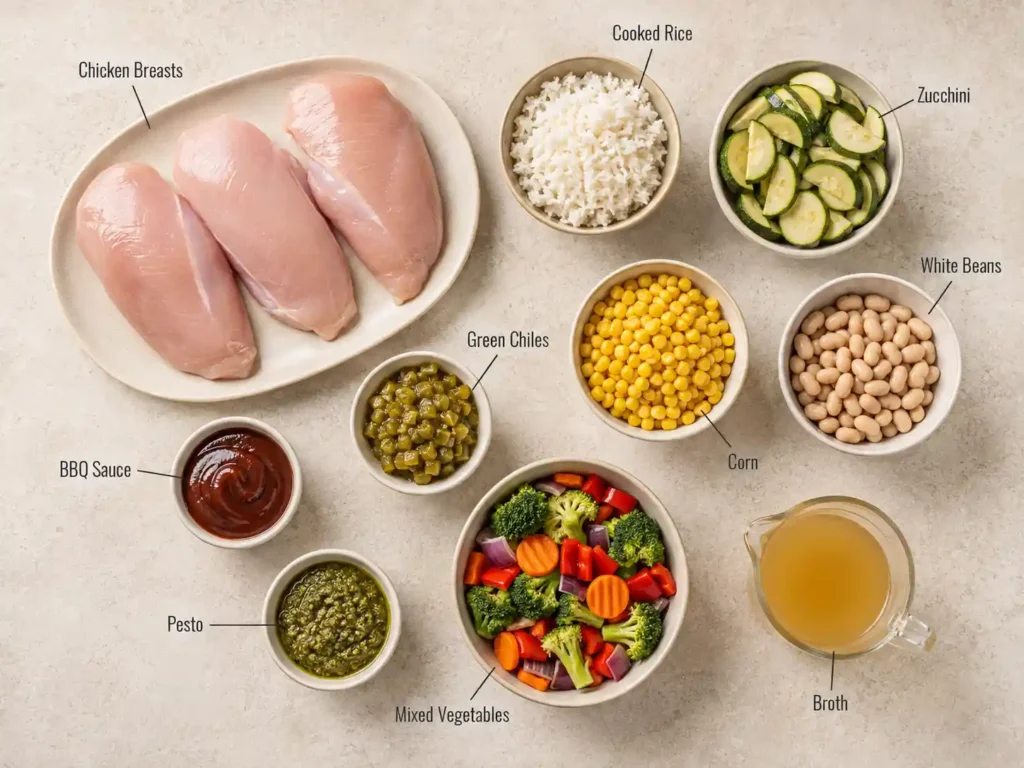
White chicken chili pairs chicken breast with white beans, corn, green chiles, broth, and seasonings. Because the beans and broth are already part of the recipe, it is a practical choice when you want the chicken distributed through a larger meal. Store cheese, crackers, herbs, or other fresh toppings separately so each serving can be reheated without them.
Follow the measured Crockpot White Chicken Chili recipe.
6. Pesto Chicken Breast Meal-Prep Bowls
Pesto bowls combine cooked chicken, a base, vegetables, and pesto in individual portions. The linked recipe permits chicken breast or thighs, so select breast for this roundup. If you prefer a fresher pesto flavor, pack any extra sauce in a small lidded cup and add it after reheating the warm components.
Make the Pesto Chicken Meal Prep Bowls with the chicken breast option.
7. Build-Your-Own Chicken Breast Rice Bowls
Rice bowls are useful when you want to change the sauce or vegetables without changing the whole prep routine. Cook and store the chicken safely, choose a rice base, then add vegetables and the sauce specified by the recipe you are following. The broader collection includes more than one type of chicken, so select the recipes that specify or allow chicken breast.
Browse the Chicken Rice Bowl Recipes hub without duplicating all of its bowl variations here.
How to Keep Chicken Breast From Drying Out
- Even out the thickness: When the recipe permits it, cut the breast into cutlets or gently pound the thick end so the meat cooks more uniformly.
- Use temperature, not appearance alone: Check the thickest part with a food thermometer and make sure it reaches 165°F/74°C.
- Follow the stated method: A skillet cutlet, casserole filling, and slow-cooker breast do not share one reliable cooking time.
- Rest before slicing when directed: Follow the full recipe’s resting instruction rather than cutting immediately.
- Reheat with moisture when appropriate: Cover the portion and add a small amount of its sauce, broth, or water if the dish can accept it, then reheat to 165°F/74°C.
Common Problems and Practical Fixes
| Problem | Likely cause | Practical fix |
|---|---|---|
| The thin end is dry before the thick end is done | The breast has uneven thickness | Use evenly sized cutlets when the recipe allows and check the thickest piece |
| The casserole is watery | A high-moisture substitution or crowded ingredients changed the recipe | Follow the recipe’s vegetable preparation and avoid untested frozen swaps |
| The meal-prep bowl turns soggy | Hot, cold, and wet components were packed together | Store sauce and fresh toppings separately from components that will be reheated |
| The reheated chicken tastes dry | The portion was overheated without moisture | Cover it, add compatible sauce or broth, and stop once the food reaches 165°F/74°C |
Budget-Friendly Ways to Plan Chicken Breast Dinners
Compare the unit price shown at your store instead of assuming the largest package is the best value. A larger pack only helps if the unit price is lower and you can cook or freeze the chicken safely before it spoils.
Choose recipes with overlapping ingredients. For example, rice can support a teriyaki bowl and a pesto bowl, while beans can serve beside BBQ chicken and inside white chicken chili. This reduces one-off purchases without requiring you to claim a fixed cost per serving.
Use optional toppings as optional. Buy the core ingredients first, then add cheese, herbs, avocado, or crunchy garnishes only when they fit the recipe and your grocery plan. Frozen or canned vegetables can be useful, but only substitute them when the recipe allows the change or when the preparation method accounts for their moisture.
Meal Prep, Storage, and Reheating
Food safety depends on temperature and time, not on whether the chicken still looks or smells acceptable. Use the current official guidance below for cooked chicken and other perishable bowl components.
| Safety point | What to do | Official source |
|---|---|---|
| Cooking poultry | Check 165°F/74°C in the thickest part | FoodSafety.gov |
| Prompt refrigeration | Refrigerate within 2 hours, or within 1 hour when the temperature is above 90°F/32°C | FDA |
| Cooling larger amounts | Divide food into shallow containers so it cools more quickly | USDA FSIS |
| Refrigerated leftovers | Use within 3 to 4 days, or freeze sooner | USDA FSIS |
| Reheating leftovers | Reheat to 165°F/74°C | FoodSafety.gov |
Do not leave a large pan or slow-cooker insert on the counter for an extended cooling period. Divide the food promptly into shallow containers and refrigerate within the official time limit. Keep cold toppings and sauces in separate containers when only the chicken, rice, or chili should be reheated.
What to Serve With Chicken Breast for Dinner
Build the plate around the recipe you chose. Rice, potatoes, pasta, beans, or lentils can provide the base. Add the vegetable specified by the recipe, then use its sauce or garnish for contrast. If the chicken is already saucy, a simple base is usually more practical than introducing a second sauce.
For meal prep, favor sides that can be cooled and portioned safely. Pack salad greens, cucumbers, herbs, and crunchy toppings away from anything that will be heated.
Helpful Tools for This Guide
- Instant-read food thermometer: For checking the thickest part of the chicken and reheated portions.
- Large skillet: For cutlets, vegetables, and skillet-based bowls.
- Rimmed sheet pan or baking dish: For oven dinners and casseroles.
- Slow cooker: For the measured BBQ chicken and white chili recipes.
- Shallow meal-prep containers: For faster cooling and portioning.
- Small lidded cups: For sauces and cold toppings that should stay separate.
Chicken Breast Dinner Ideas for Easy Budget Meals
Ingredients
Equipment
Method
- Choose the cooking method that fits your dinner plan: skillet, oven, slow cooker, casserole, or meal-prep bowls.
- For skillet recipes, use evenly sized chicken breast pieces or cutlets when the recipe permits. Cook according to the complete recipe and verify that the thickest part reaches 165°F/74°C.
- For the Teriyaki Chicken Breast Rice Bowl, cook the chicken breast in a skillet, prepare the rice and vegetables, thicken the teriyaki-style sauce separately as directed, and assemble the components into bowls.
- For a sheet-pan dinner, arrange the chicken breast and recipe-specified vegetables in a single layer. Cut all components as directed by the complete recipe and bake until the thickest part of the chicken reaches 165°F/74°C.
- For the Chicken Zucchini Casserole, begin with properly cooked chicken breast and prepare the zucchini exactly as directed by the full recipe. Assemble and bake according to the specified casserole method.
- For Slow-Cooker BBQ Chicken, place boneless skinless chicken breasts in the slow cooker with the measured sauce ingredients. Follow the complete recipe’s cook setting and timing, then shred the chicken into the sauce before serving.
- For Crockpot White Chicken Chili, combine chicken breast with white beans, corn, green chiles, broth, and the recipe-specified seasonings. Cook according to the complete slow-cooker recipe and add fresh toppings only when serving.
- For Pesto Chicken Breast Meal-Prep Bowls, cook the chicken breast and prepare the chosen base and vegetables. Divide the components among individual containers and keep extra pesto separate if you prefer to add it after reheating.
- For Build-Your-Own Chicken Breast Rice Bowls, prepare one batch of safely cooked chicken breast and rice, then portion with vegetables and the sauce specified by the individual bowl recipe.
- For more evenly cooked chicken breast, reduce large differences in thickness when the recipe permits by slicing the breast into cutlets or gently pounding the thicker end.
- Do not rely on appearance or one universal cooking time. Use an instant-read thermometer and verify an internal temperature of at least 165°F/74°C in the thickest part.
- For meal prep, divide cooked food promptly into shallow containers. Refrigerate perishable foods within two hours, or within one hour when the surrounding temperature is above 90°F/32°C.
- Keep sauces, salad greens, cucumbers, herbs, and crunchy toppings separate from hot components whenever they should not be reheated.
- Use refrigerated cooked leftovers within three to four days or freeze them sooner. Reheat leftovers to 165°F/74°C, covering the portion and adding a compatible splash of sauce, broth, or water when appropriate to help prevent dryness.
Notes
Frequently Asked Questions
What can I make with chicken breast for dinner?
Try a skillet rice bowl, sheet-pan dinner, casserole made with cooked breast, shredded BBQ chicken, white chicken chili, or a pesto meal-prep bowl. Pick the method based on your available equipment and whether you need leftovers.
How do I keep chicken breast from drying out?
Even out its thickness when the recipe allows, use a thermometer, and follow the specific method instead of relying on a universal cooking time. For leftovers, reheat with compatible sauce or broth and stop when the food reaches 165°F/74°C.
What temperature should chicken breast reach?
Chicken breast should reach a minimum internal temperature of 165°F/74°C in the thickest part. Reheated leftovers should also reach 165°F/74°C.
How long does cooked chicken breast last in the refrigerator?
USDA guidance gives cooked leftovers 3 to 4 days in a refrigerator kept at 40°F/4°C or below. Freeze portions sooner if you will not use them in that window.
Which chicken breast dinners work best for meal prep?
Saucy shredded chicken, chili, and component-style bowls are practical because they can be portioned and stored deliberately. Keep cold toppings, crunchy items, and extra sauce separate, and follow the same cooling, storage, and reheating rules for every option.
Final Takeaway
Choose one cooking method first, then select recipes that reuse one or two core ingredients. A skillet bowl and a slow-cooker dinner can create variety without requiring a completely different grocery list. For weeknight formats beyond chicken breast, browse these Easy Protein Dinner Ideas.