
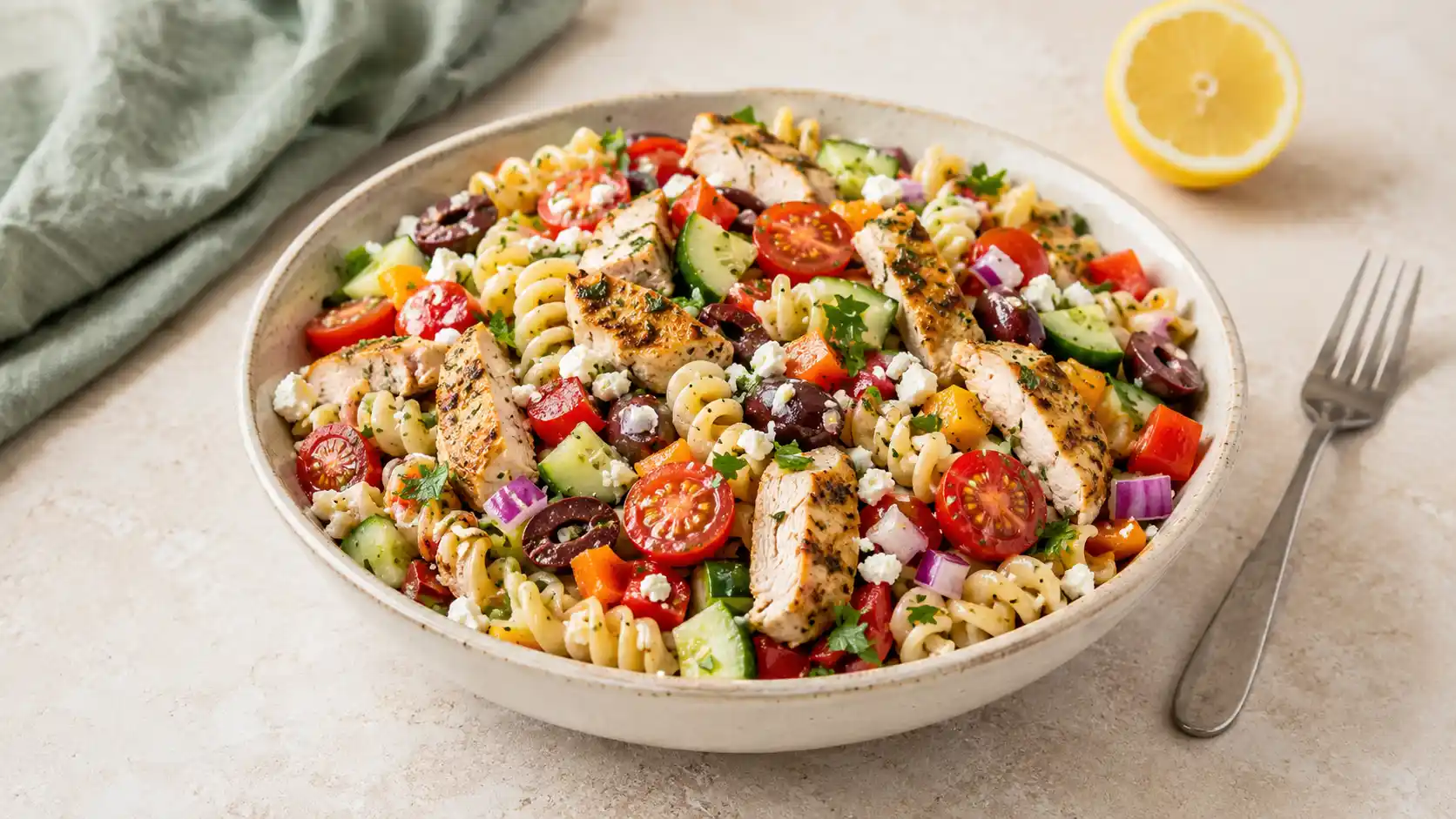
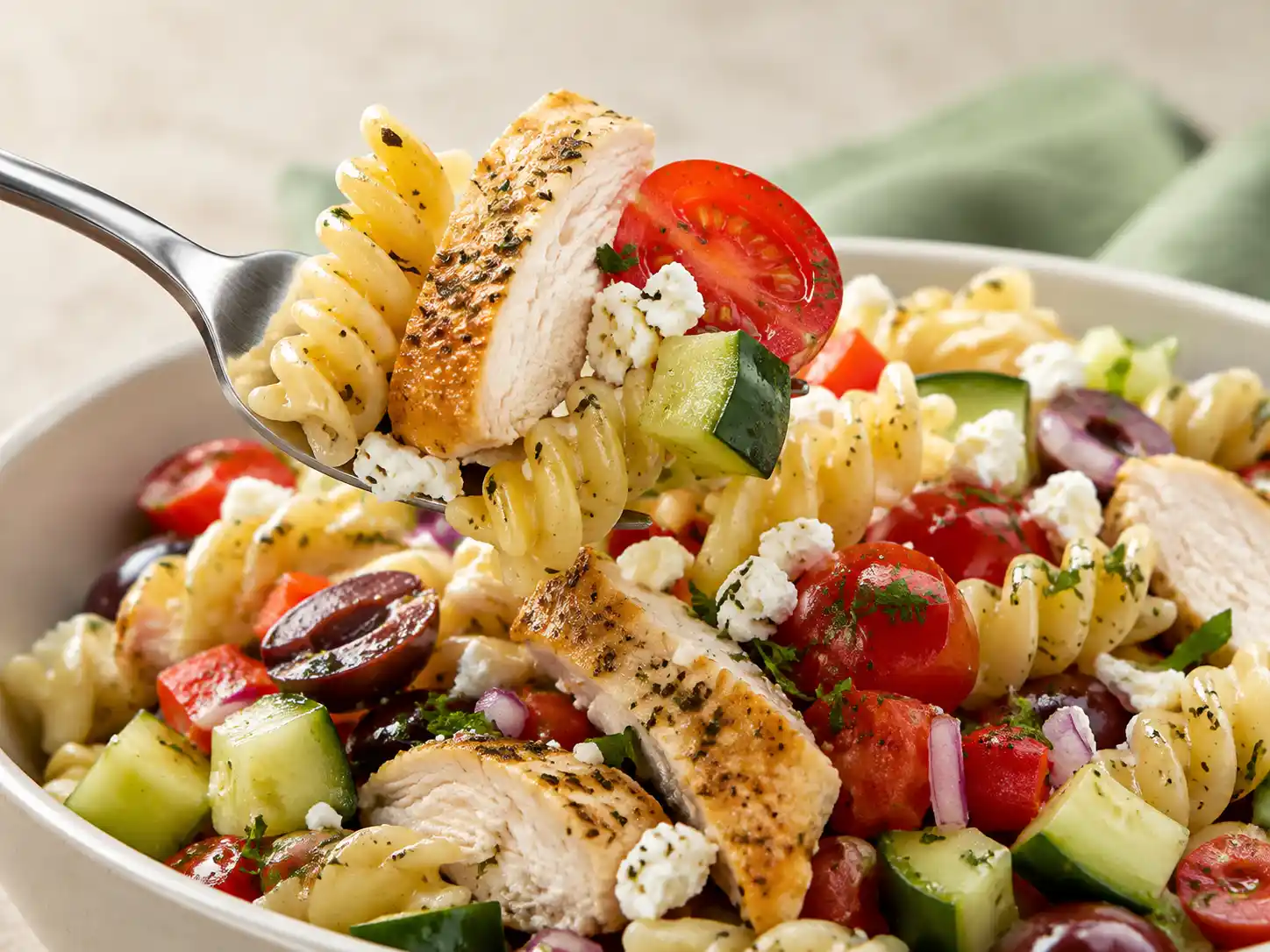
This Greek pasta salad with chicken turns a classic summer side into a practical cold lunch or light dinner. It combines tender rotini, seasoned chicken, feta, cucumber, tomatoes, bell pepper, olives, and a bright lemon dressing without mayonnaise.
The recipe makes six portions and provides an estimated 37 grams of protein per serving. It also fits naturally into a rotation of protein pasta salad recipes for work lunches, summer dinners, and make-ahead meals.
Quick Answer: What Is Greek Pasta Salad?
Greek pasta salad is a chilled, Greek-inspired pasta dish made with short pasta, crisp vegetables, olives, feta, herbs, and a lemon and red wine vinegar dressing. This version adds cooked chicken, giving each of the six estimated portions enough substance to work as a complete cold lunch rather than only an accompanying side.
Greek Pasta Salad at a Glance
| Feature | Details |
|---|---|
| Yield | 6 meal-size portions |
| Prep time | 20 minutes |
| Cook time | 20 minutes |
| Chill time | 30 minutes |
| Total time | 1 hour 10 minutes |
| Estimated protein | About 37 grams per portion |
| Storage | 3 to 4 days at 40°F or below, with the best texture within 3 days |
Why This Greek Pasta Salad Works
- It works as a complete meal. Chicken and feta add more substance than a traditional pasta salad served only as a side.
- It does not need mayonnaise. Olive oil, lemon juice, red wine vinegar, Dijon mustard, garlic, and oregano create a bright dressing.
- It is suitable for cold meal prep. The salad can be divided into six containers and eaten without reheating.
- The vegetables add contrast. Cucumber and bell pepper stay crisp while tomatoes bring freshness and moisture.
- The flavor can be refreshed. A small portion of dressing is reserved for meals served later in the week.
This is especially useful during warm weather when you want something from the high protein summer meals rotation that does not require reheating.
Ingredients You’ll Need
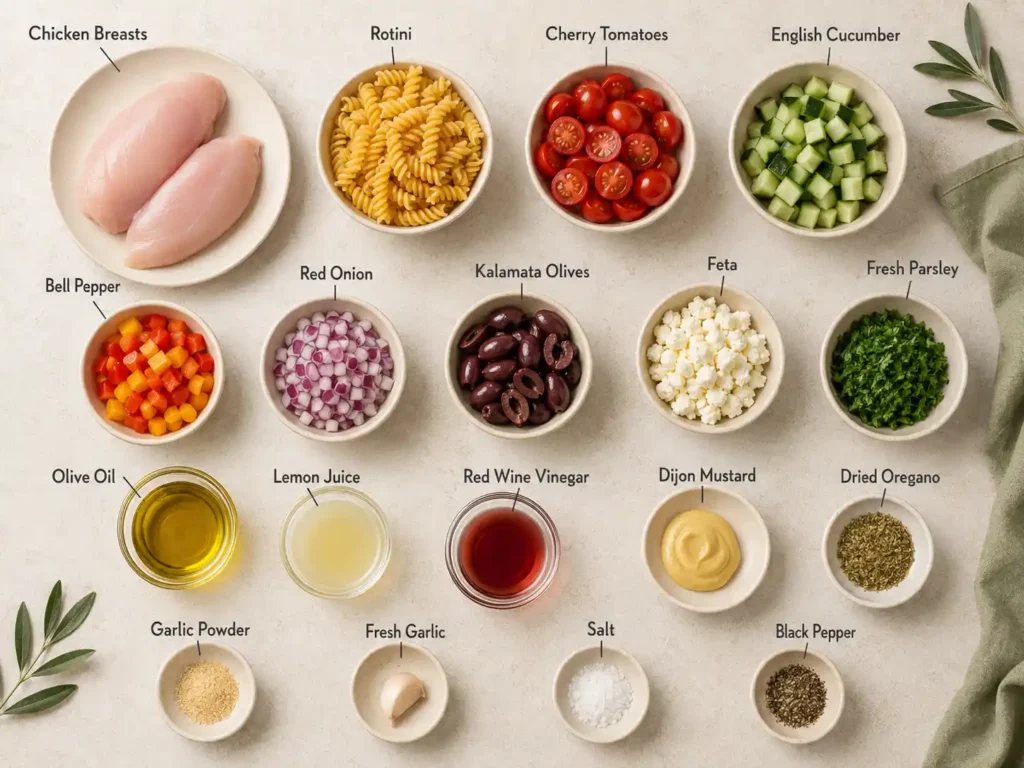
For the chicken
- 1 1/2 pounds boneless, skinless chicken breasts
- 1 tablespoon olive oil
- 1 tablespoon lemon juice
- 1 teaspoon dried oregano
- 1/2 teaspoon garlic powder
- 1/2 teaspoon salt
- 1/4 teaspoon black pepper
For the pasta salad
- 12 ounces dry rotini
- 1 pint cherry tomatoes, halved
- 1 large English cucumber, diced, about 2 cups
- 1 medium bell pepper, diced
- 1/3 cup finely diced red onion
- 1/2 cup pitted Kalamata olives, halved
- 4 ounces feta cheese, crumbled
- 1/4 cup chopped fresh parsley
Greek-style dressing
- 1/3 cup olive oil
- 3 tablespoons red wine vinegar
- 2 tablespoons lemon juice
- 1 teaspoon Dijon mustard
- 1 teaspoon dried oregano
- 1 small garlic clove, finely grated
- 1/4 teaspoon salt, plus more only after tasting
- 1/4 teaspoon black pepper
Ingredient Notes
Choose a short pasta shape
Rotini is a good choice because its twists catch the dressing and small pieces of feta. Fusilli, penne, or bow ties can also work, but the estimated nutrition below is based on 12 ounces of standard dry rotini.
Use an English cucumber when possible
English cucumbers generally contain fewer large seeds than standard cucumbers. If you use a regular cucumber, remove the watery center before dicing it.
Wait before adding extra salt
Feta and olives already contribute salt. Taste the assembled salad before adding more so the dressing does not become overly salty.
Use fresh parsley for the standard recipe
Fresh parsley gives the salad a clean finish without overpowering the lemon and oregano. Fresh dill can replace it, but that substitution is not included in the nutrition estimate.
How to Make Greek Pasta Salad with Chicken
1. Make the dressing
Whisk the olive oil, red wine vinegar, lemon juice, Dijon mustard, oregano, garlic, salt, and black pepper in a small bowl or jar.
Transfer 2 tablespoons of the dressing to a small covered container and refrigerate it. This reserved portion can refresh the salad after the pasta has absorbed some of the original dressing.
2. Prepare the chicken
If the chicken breasts are thick, place them between two sheets of parchment paper and gently pound them to an even thickness of about 3/4 inch. This helps them cook more evenly.
Coat the chicken with 1 tablespoon olive oil, 1 tablespoon lemon juice, oregano, garlic powder, salt, and black pepper.
3. Cook the chicken safely
Heat a large skillet over medium heat. Add the chicken in a single layer, working in batches if necessary.
Cook for approximately 6 to 8 minutes per side. Cooking time will vary with thickness, so use an instant-read food thermometer rather than relying only on the clock. The chicken is ready when the thickest part reaches 165°F, the safe minimum temperature for poultry listed by the USDA Food Safety and Inspection Service.
Transfer the chicken to a clean cutting board and let it rest for 5 minutes before cutting it into bite-size pieces.
4. Cook and season the pasta
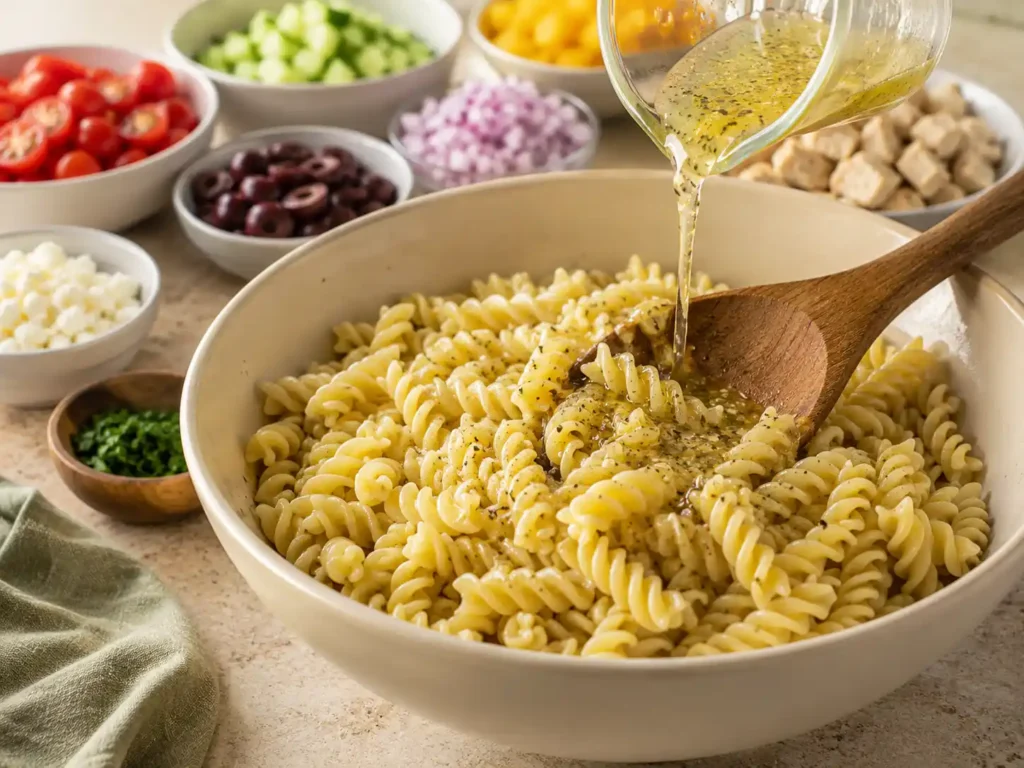
While the chicken cooks, bring a large pot of water to a boil. Salt the water according to your usual cooking preference, then add the rotini.
Cook according to the package directions until tender but not mushy. Drain thoroughly without rinsing.
Transfer the warm pasta to a large mixing bowl and toss it with 1/4 cup of the prepared dressing. Let the pasta cool for about 10 minutes. Dressing the pasta while it is still slightly warm helps it absorb flavor, while the short cooling period prevents the fresh vegetables and feta from becoming warm and soft.
5. Assemble the salad
Add the tomatoes, cucumber, bell pepper, red onion, olives, parsley, feta, and chopped chicken to the cooled pasta.
Pour in the dressing that remains in the mixing bowl, keeping the reserved 2 tablespoons refrigerated for later portions. Toss gently until the ingredients are evenly coated.
6. Chill before serving
Cover and refrigerate the salad for about 30 minutes before serving. Taste after chilling and add a small amount of salt, pepper, lemon juice, or reserved dressing only if needed.
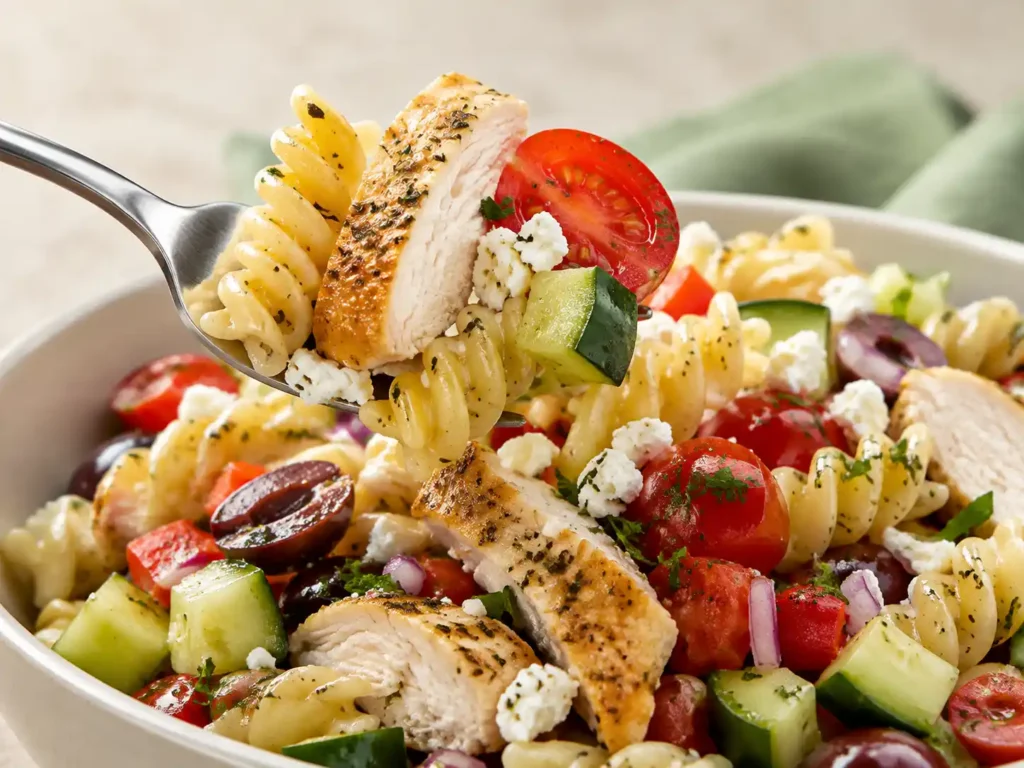
How to Prevent Dry or Watery Pasta Salad
| Problem | Likely Cause | Practical Fix |
|---|---|---|
| Dry pasta on the second or third day | The pasta absorbed the dressing during storage | Add a little reserved dressing and toss before eating |
| Liquid pooling in the container | Tomatoes or cucumber released water | Drain excess liquid before adding reserved dressing |
| Mushy pasta | The pasta was overcooked | Cook only until tender and drain promptly |
| Soft vegetables | They were mixed with very hot pasta | Let the dressed pasta cool for about 10 minutes first |
| Overly salty flavor | Salt was added before tasting the feta and olives | Wait until the salad is assembled and chilled before adjusting salt |
| Harsh raw onion flavor | The onion is strong or cut too coarsely | Dice it finely or rinse it briefly under cold water and drain well |
Meal Prep and Storage
How to portion it
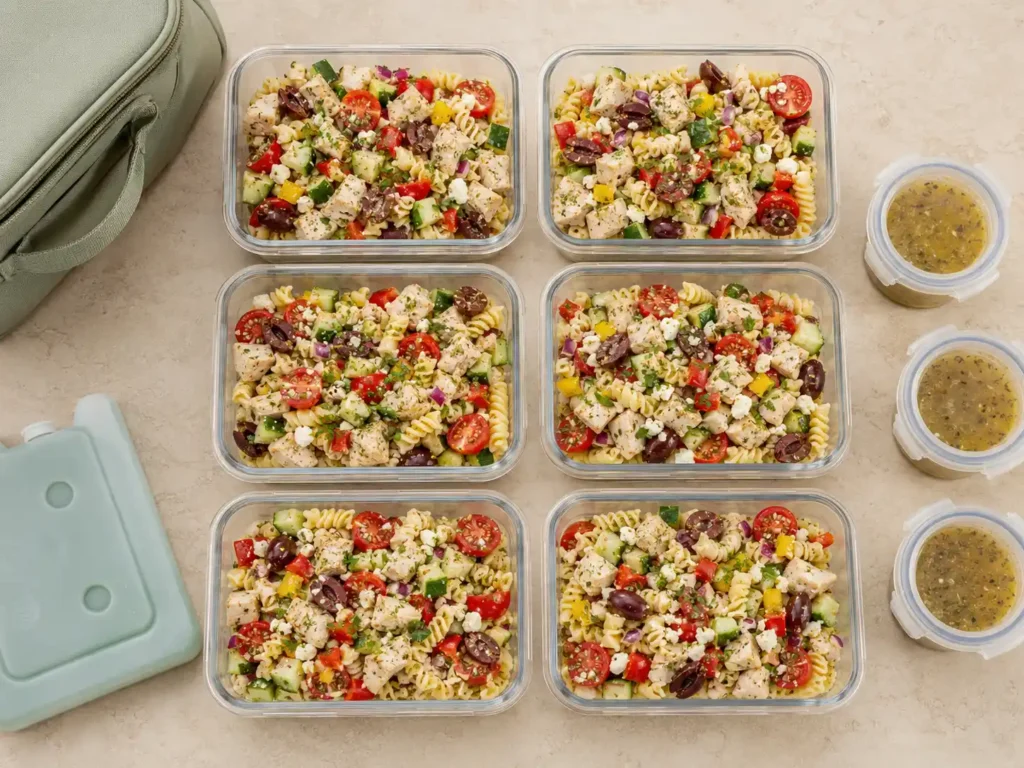
Divide the finished salad evenly among six airtight meal prep containers. Keeping the reserved dressing in a separate leak-proof cup helps maintain a fresher texture for meals eaten later in the week.
For more lunches that can be eaten without a microwave, browse these high protein cold lunches for work.
How long Greek pasta salad keeps
Store the salad at 40°F or below. FoodSafety.gov lists chicken and macaroni-style salads for 3 to 4 days in the refrigerator. Because the fresh tomatoes and cucumber gradually soften, this version has its best texture within the first 3 days.
Refrigerate the finished salad within 2 hours of preparation. If the surrounding temperature is above 90°F, refrigerate it within 1 hour. See the official FoodSafety.gov cold storage chart for the full guidance.
How to pack it for work
Keep the container refrigerated until lunch. If a refrigerator is not available, carry it in an insulated lunch bag with an ice pack so it remains cold.
This pasta salad is intended to be eaten cold, so reheating is unnecessary. If you prefer to let it lose some of its refrigerator chill, keep the official two-hour room-temperature limit in mind.
Can Greek pasta salad be frozen?
Freezing is not recommended. The official cold storage chart notes that chicken and macaroni-style salads do not freeze well, and the cucumber, tomatoes, pasta, and feta would lose much of their original texture.
Budget-Friendly Ingredient Swaps
The best budget choice depends on current prices in your area. These substitutions avoid unsupported cost claims while still giving you practical ways to use ingredients already available.
| Original Ingredient | Practical Swap | Expected Difference |
|---|---|---|
| Freshly cooked chicken breast | Properly refrigerated leftover chicken | Saves a cooking step and may have a softer texture |
| Cherry tomatoes | Seeded and diced Roma tomatoes | Less juicy, with a firmer bite |
| Kalamata olives | Drained canned black olives | Milder and less briny |
| Fresh parsley | A smaller amount of another fresh herb already on hand | Changes the final flavor slightly |
| Bell pepper | Additional cucumber | More crunch but less sweetness |
| Rotini | Another standard short pasta | Similar flavor, with slightly different dressing coverage |
For a broader system built around repeatable ingredients and make-ahead portions, see this guide to cheap high protein meal prep.
Variations and Substitutions
- Use chicken thighs: Boneless, skinless chicken thighs can replace the breasts. Cook them to 165°F and expect a richer flavor.
- Change the pasta: Fusilli, penne, or bow ties can replace rotini. Follow the cooking time on the selected package.
- Use dill: Replace parsley with chopped fresh dill for a more pronounced herb flavor.
- Reduce the onion bite: Rinse diced red onion under cold water, drain it well, and pat it dry before adding it.
- Make smaller side portions: Divide the recipe into more portions when serving it beside another main dish. Nutrition per portion will change.
These substitutions and any additional ingredients are not included in the nutrition estimate.
Helpful Tools for This Recipe
- Instant-read food thermometer: Confirms that the thickest part of the chicken reaches 165°F.
- Large colander: Helps drain the pasta thoroughly so water does not dilute the dressing.
- Large mixing bowl: Provides enough room to toss the pasta without crushing the vegetables.
- Leak-proof meal prep containers: Keep individual portions contained during transport.
- Small dressing cups: Hold reserved dressing for later servings.
- Insulated lunch bag and ice pack: Help keep the salad cold when workplace refrigeration is unavailable.
What to Serve with Greek Pasta Salad
Each portion contains chicken, pasta, vegetables, feta, and dressing, so it can stand alone as lunch. For a larger dinner, serve it with warm pita, fresh fruit, a simple green salad, or a light vegetable soup.
If you enjoy the same lemon, oregano, chicken, and cucumber combination in a warm meal, try the Greek chicken rice bowl.
For another cold pasta lunch, choose the chicken Caesar pasta salad or the tangier dill pickle chicken pasta salad.
Estimated Nutrition per Serving
The following estimate is based on six equal portions made with standard dry rotini, raw boneless skinless chicken breast, the full measured amount of olive oil, feta, Kalamata-style olives, vegetables, parsley, and the listed seasonings. Values were calculated from standard food-composition entries in USDA FoodData Central.
| Nutrient | Estimated Amount per Serving |
|---|---|
| Calories | About 580 |
| Protein | About 37 g |
| Carbohydrates | About 51 g |
| Fat | About 25 g |
| Fiber | About 4 g |
| Total sugars | About 6 g |
| Sodium | About 750 mg |
Nutrition note: Nutrition is estimated, not guaranteed. Values vary with pasta, chicken, feta, olive, mustard, and other ingredient brands, as well as the amount of dressing left in the bowl. Salt absorbed from the pasta water is not included. Ingredient swaps and optional variations are also excluded.
Greek Pasta Salad with Chicken
Ingredients
Equipment
Method
- Whisk the olive oil, apple cider vinegar, lemon juice, alcohol-free Dijon mustard, oregano, grated garlic, salt, and black pepper in a small bowl or jar until combined.
- Transfer 2 tablespoons of the dressing to a small covered container and refrigerate it. Reserve this portion for refreshing later servings.
- If the chicken breasts are thick, place them between sheets of parchment paper and gently pound them to an even thickness of approximately 3/4 inch.
- Coat the chicken with 1 tablespoon olive oil, 1 tablespoon lemon juice, dried oregano, garlic powder, salt, and black pepper.
- Heat a large skillet over medium heat. Add the chicken in a single layer, working in batches if necessary.
- Cook the chicken for approximately 6 to 8 minutes per side, depending on thickness. Confirm that the thickest part reaches 165°F or 74°C with an instant-read thermometer.
- Transfer the cooked chicken to a clean cutting board. Let it rest for 5 minutes, then cut it into bite-size pieces.
- While the chicken cooks, bring a large pot of water to a boil. Salt the water as desired, add the rotini, and cook according to the package directions until tender but not mushy.
- Drain the pasta thoroughly without rinsing it. Transfer the warm pasta to a large mixing bowl and toss it with 1/4 cup of the prepared dressing.
- Let the dressed pasta cool for approximately 10 minutes so it can absorb flavor without warming and softening the vegetables or feta.
- Add the cherry tomatoes, cucumber, bell pepper, red onion, olives, parsley, feta, and chopped chicken to the cooled pasta.
- Pour in the remaining dressing, excluding the reserved 2 tablespoons, and toss gently until the ingredients are evenly coated.
- Cover and refrigerate the salad for approximately 30 minutes.
- Taste the chilled salad and adjust with a small amount of salt, black pepper, lemon juice, or reserved dressing only if needed.
- Divide the salad evenly among 6 meal-prep containers and keep refrigerated until serving.
Notes
Frequently Asked Questions
Can Greek pasta salad be made ahead?
Yes. Prepare and refrigerate it at least 30 minutes before serving. For the best texture during longer meal prep, keep 2 tablespoons of dressing separate and add a small amount to later portions as needed.
How long does Greek pasta salad last in the fridge?
Store it at 40°F or below and use it within 3 to 4 days. The flavor and texture are usually best during the first 3 days because tomatoes and cucumber soften over time.
What pasta shape is best for Greek pasta salad?
Rotini, fusilli, penne, and bow ties all work. Short shapes with twists, ridges, or folds hold the dressing more effectively than long noodles.
Can I use leftover or rotisserie-style chicken?
Yes. Use properly cooked and refrigerated chicken that is still within its safe storage period. Remove skin and bones before cutting or shredding it, and keep the finished salad cold.
How do I keep pasta salad from becoming dry or watery?
Dress the warm pasta with part of the vinaigrette, reserve a small amount for later servings, and let the pasta cool before adding the vegetables. If liquid collects during storage, drain it before adding more dressing.
Final Takeaway
Greek pasta salad with chicken gives you a fresh, no-mayo lunch made from familiar ingredients and a simple lemon dressing. Portion it into six containers, keep it properly chilled, and use the reserved dressing to refresh meals later in the week.