
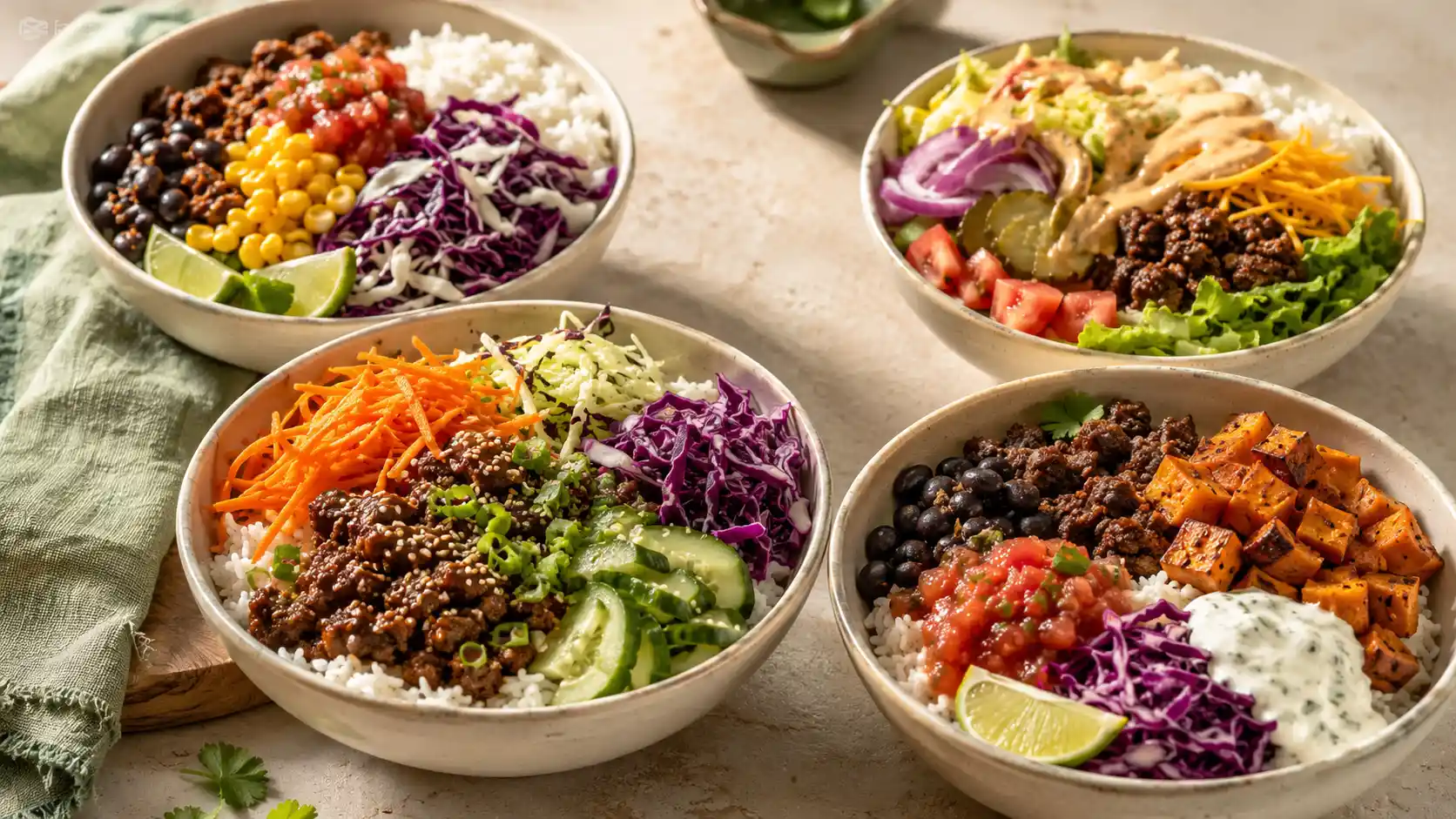
These ground beef recipes for dinner turn one familiar ingredient into eight practical bowls for weeknights and meal prep. The collection includes rice bowls, taco-inspired combinations, burger flavors, a burrito bowl, and a roasted sweet potato option.
Each recipe has its own complete ingredient list and instructions. Use this guide to compare the options, choose a bowl that fits what you already have, and learn how to store the components for better texture later.
Quick Answer: What Can You Make With Ground Beef for Dinner?
Ground beef works well in rice bowls, taco bowls, burrito bowls, burger-inspired meals, and roasted sweet potato bowls. Pair it with an affordable base, add beans or vegetables when they fit the recipe, and keep sauces and fresh toppings separate for meal prep. The eight dinner ideas below provide different flavor directions without requiring eight completely different grocery lists.
Ground Beef Dinner Recipes at a Glance
| Recipe | Main base | Flavor direction | Best for |
|---|---|---|---|
| Ground Beef Protein Bowl | Rice or sweet potatoes | Taco-style with lime sauce | A flexible first bowl |
| Ground Beef Rice Bowl | Rice | Garlic, ginger, and lime | Adding quick-cooking vegetables |
| Taco Protein Bowl | Rice or another bowl base | Taco seasoning and salsa | Customizing the ground protein |
| Beef Burrito Bowl | Rice | Beans, corn, and salsa | Four make-ahead portions |
| Cheeseburger Rice Bowl | Rice | Cheddar, pickles, and burger sauce | Classic burger flavor |
| Burger Bowl Meal Prep | Roasted potatoes | Pickles and yogurt burger sauce | A non-rice burger bowl |
| Korean-Inspired Beef Bowl | Rice | Sweet-savory garlic and ginger sauce | A different pantry-sauce direction |
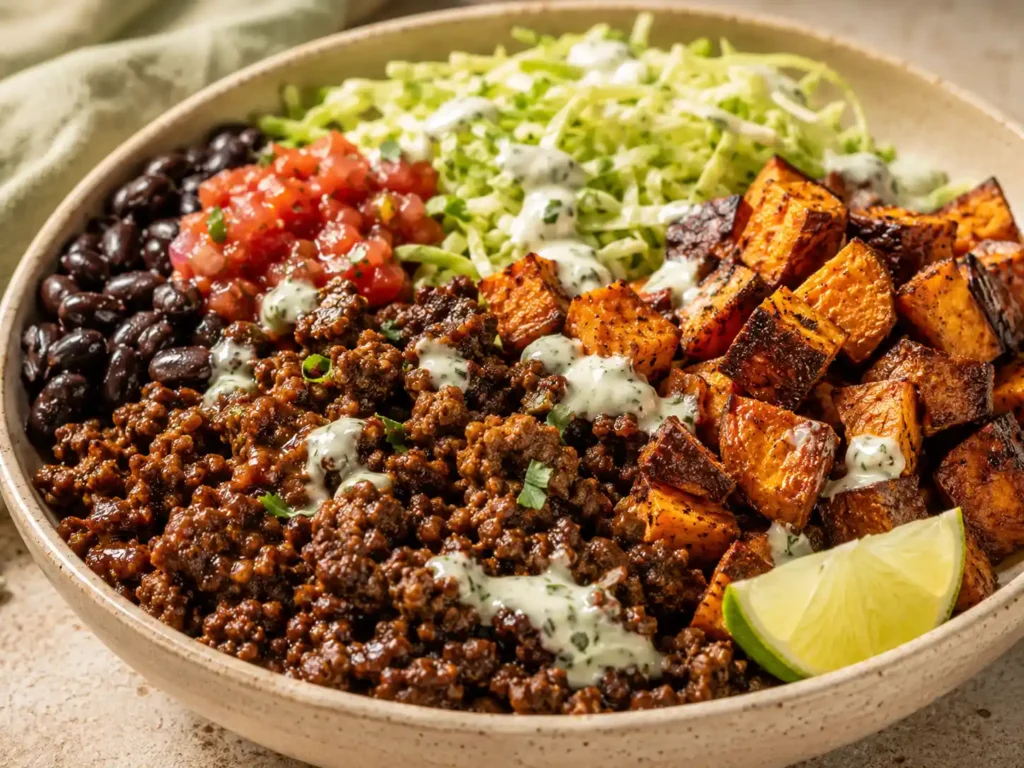
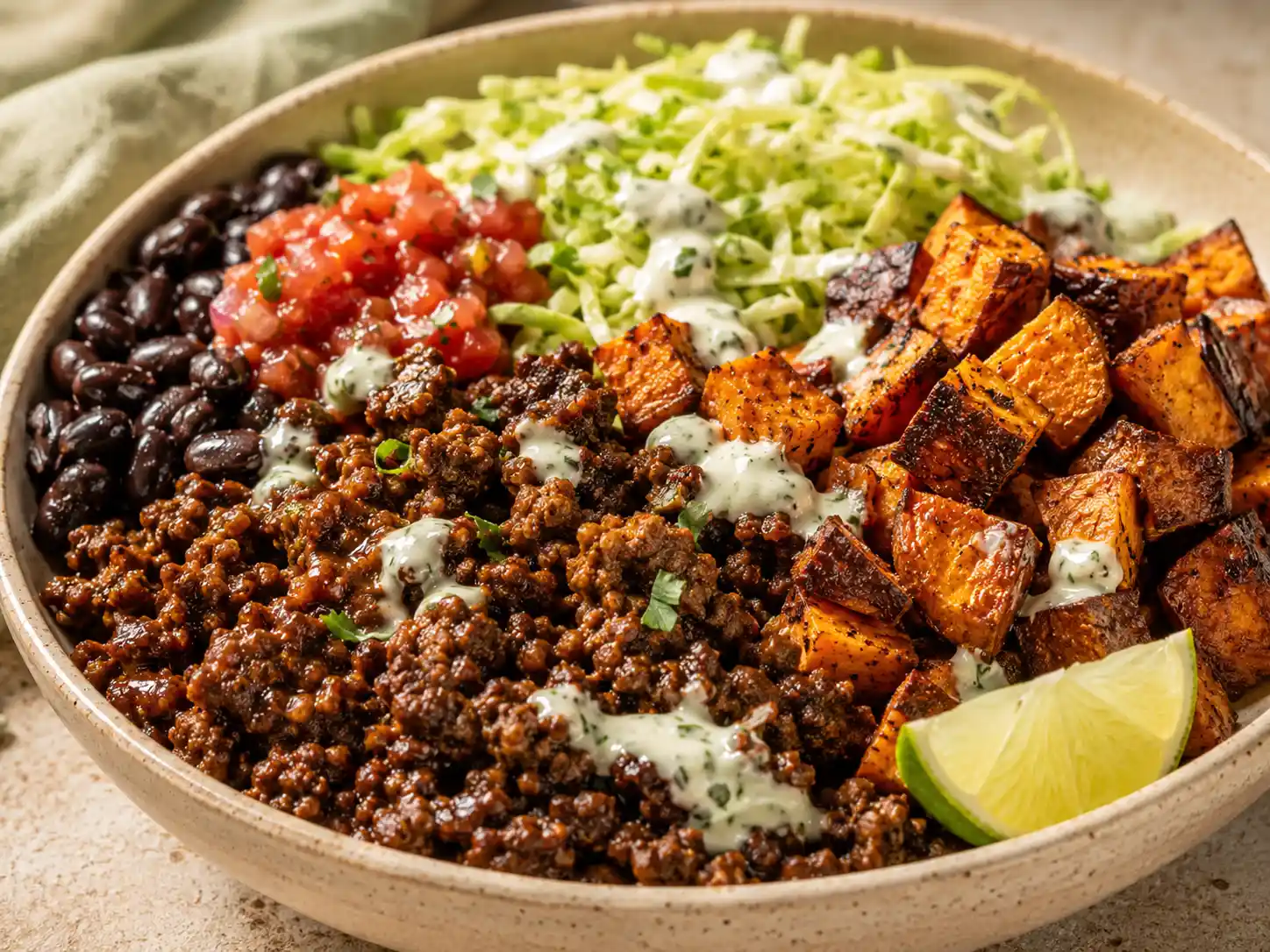
| Beef and Sweet Potato Bowl | Roasted sweet potatoes | Taco-style seasonings and salsa | A hearty roasted base |
8 Ground Beef Recipes for Dinner
1. Ground Beef Protein Bowl
This flexible bowl combines taco-style ground beef with rice or roasted sweet potatoes, black beans, corn, vegetables, and a creamy lime sauce. Cottage cheese, plain Greek yogurt, or salsa can provide the finishing sauce, depending on the version you choose.
Best for: Starting with a customizable bowl that can use rice, beans, corn, cabbage, and other familiar ingredients. For meal prep, pack the cooked base and beef together, then store the sauce and fresh toppings separately.
2. Healthy Ground Beef Rice Bowl
This ground beef rice bowl uses cabbage, carrots, bell pepper, garlic, ginger, and lime to add color and texture. The title describes the recipe’s vegetable-forward format, not a weight-loss, medical, or low-calorie promise.
Best for: Using quick-cooking vegetables in the same skillet as the beef. Pack cucumber, green onions, lime, and other fresh garnishes separately so they remain crisp.
3. Taco Protein Bowl
The taco protein bowl combines a ground protein with rice, black beans, corn, salsa, and taco-style seasonings. The complete recipe allows ground beef, ground turkey, or ground chicken, so choose the correct cooking temperature for the protein you use.
Best for: Households that want one adaptable taco-bowl template. When using ground beef, cook it to 160°F and keep lettuce, creamy toppings, avocado, and salsa separate from the portion being reheated.
4. Beef Burrito Bowl Meal Prep
This meal-prep recipe makes four bowls with seasoned ground beef, rice, black beans, corn, and salsa. Lettuce, tomatoes, green onions, lime, and optional creamy toppings add freshness after the hot base is reheated.
Best for: Preparing several lunches or dinners at once. Store the rice, beef, beans, and corn together, but keep lettuce, avocado, salsa, and creamy toppings in separate containers.
5. Cheeseburger Rice Bowl
The cheeseburger rice bowl layers seasoned ground beef and rice with cheddar, pickles, lettuce, tomato, onion, and a creamy burger-style sauce. It provides familiar burger flavor in a bowl that is easier to portion for packed meals.
Best for: Anyone choosing between burger night and meal prep. Reheat only the beef and rice, then add the cheese, vegetables, pickles, and sauce according to your preferred texture.
6. Burger Bowl Meal Prep
This version replaces the rice base with roasted potatoes. The cooked components are paired with lettuce, tomatoes, pickles, red onion, and a Greek yogurt burger sauce stored separately.
Best for: A burger-inspired bowl without rice. Cut the potatoes evenly for consistent roasting, and pack the fresh toppings away from the beef and potatoes until serving.
7. Korean Ground Beef Rice Bowl
This Korean-inspired bowl pairs ground beef and rice with a sweet-savory sauce made with garlic, ginger, soy sauce, brown sugar, and sesame oil. Cabbage, carrots, cucumber, spinach, or cooked frozen vegetables can complete the bowl.
Best for: A flavor direction that differs from taco and burger bowls. This recipe does not claim to be traditional bulgogi. Pack the beef and rice together while keeping cucumber and other crisp toppings separate.
8. Beef and Sweet Potato Bowl
Roasted sweet potatoes create a warm base for seasoned ground beef, salsa, black beans, cabbage, and an optional cottage cheese or Greek yogurt topping. The roasted base distinguishes it from the rice-focused bowls in this collection.
Best for: Using sweet potatoes as the main starch. Store the roasted potatoes, beef, and beans together, then add avocado, salsa, greens, creamy toppings, or crunchy ingredients after reheating.
How to Choose the Right Ground Beef Dinner
Choose a rice bowl for simple batch cooking
The ground beef rice bowl, burrito bowl, cheeseburger bowl, Korean-inspired bowl, and taco bowl all work with rice. Cook the rice according to its package directions and divide it only after confirming the yield required by the individual recipe.
Choose potatoes for a different texture
The burger bowl uses roasted white potatoes, while the beef and sweet potato bowl has a sweeter roasted base. Both require a sheet pan, but they help break up a meal-prep week dominated by rice.
Choose beans and vegetables to expand the bowl
Beans, corn, cabbage, carrots, bell peppers, and other vegetables appear in several recipes. Add them only where the individual recipe supports them. They can increase the volume and variety of the meal, but they do not prove an exact cost or nutrition claim.
How to Make Ground Beef Go Further
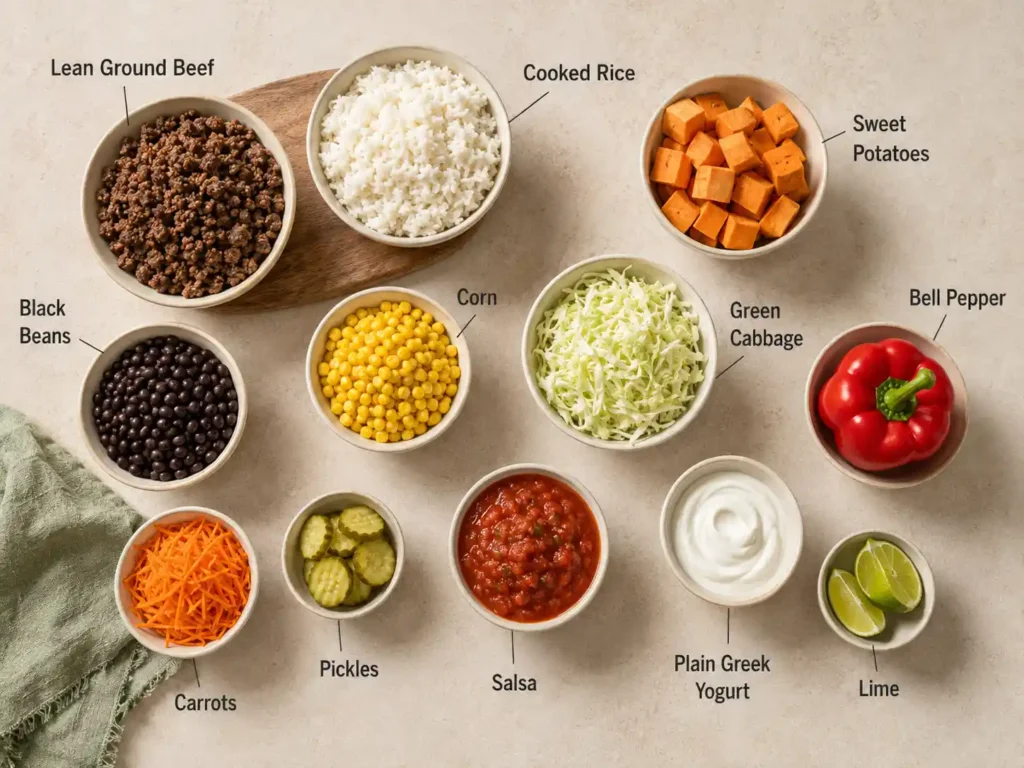
- Follow recipes that include beans: Black beans work naturally in the protein bowl, burrito bowl, taco bowl, and sweet potato bowl.
- Use the specified base: Rice or potatoes can turn the seasoned beef into a complete bowl instead of serving the beef alone.
- Use practical vegetables: Cabbage, carrots, peppers, onions, corn, and suitable frozen vegetables can add texture and volume.
- Compare the products you actually buy: Package size and unit price matter more than assumptions about which option is always cheapest.
- Skip unnecessary toppings: Start with the core recipe, then add optional toppings only when they fit your grocery plan.
Ground Beef Meal Prep and Food Safety
Cook ground beef to an internal temperature of 160°F/71°C, measured with a food thermometer. Do not rely only on the color of the meat. FoodSafety.gov recommends reheating leftovers to 165°F/74°C. See the official safe minimum temperature chart.
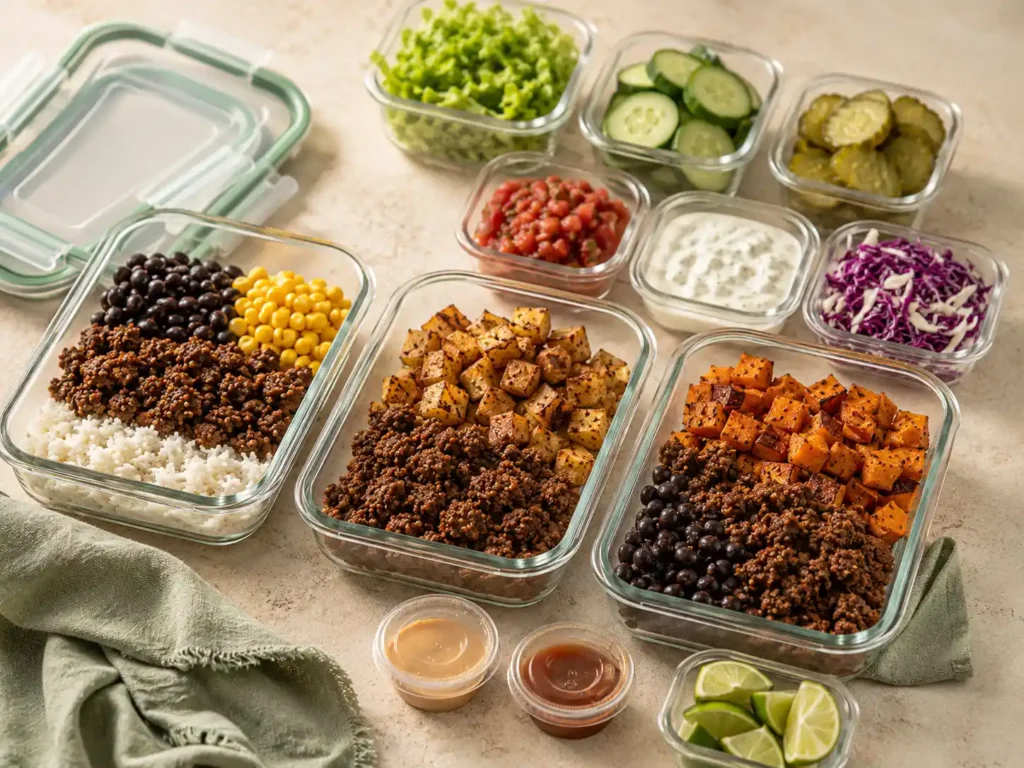
Refrigerate perishable food within two hours of cooking. When food is exposed to temperatures above 90°F/32°C, refrigerate it within one hour. Divide the cooked components among shallow containers so they cool more quickly. More information is available in the official four steps to food safety.
Use refrigerated cooked components within three to four days. Reheat only the rice, potatoes, beef, beans, corn, or cooked vegetables that are meant to be served warm. Add lettuce, cucumber, avocado, yogurt-based sauces, salsa, and crunchy toppings afterward.
Common Problems and Simple Fixes
The beef turns out greasy
Choose the ground beef specified by the recipe and drain excess rendered fat when needed. Avoid adding extra cooking oil automatically. Some recipes require little or no added oil once the beef begins cooking.
The beef becomes dry during reheating
Do not overcook it during the initial preparation. When supported by the recipe, tomato paste, salsa, sauce, or a small amount of water can help the mixture retain moisture. Reheat only until the food reaches 165°F.
The rice becomes hard
Store the rice in an airtight container with the cooked beef or another moist component when the recipe permits it. Cover the container during reheating and stir between heating intervals.
Fresh toppings lose their texture
Warm rice, potatoes, and beef release heat and moisture. Pack lettuce, cucumber, tomatoes, avocado, pickles, salsa, and creamy sauces separately, then add them after reheating.
Helpful Tools for This Guide
No special appliance is required for every recipe, but these basic tool categories are useful:
- Large skillet: For browning ground beef and cooking vegetables.
- Instant-read food thermometer: For confirming safe cooking and reheating temperatures.
- Pot or rice cooker: For recipes built around rice.
- Sheet pan: For roasted white potatoes or sweet potatoes.
- Shallow meal-prep containers: For faster cooling and portioned storage.
- Small sauce containers: For keeping salsa and creamy toppings separate.
Ground Beef Recipes for Dinner: 8 Budget Meal Prep Bowls
Ingredients
Equipment
Method
- Choose one of the eight bowl variations and prepare its rice, white potato, or sweet potato base as appropriate.
- Brown the ground beef in a large skillet, breaking it into small pieces as it cooks. Cook ground beef to an internal temperature of 160°F/71°C and drain excess rendered fat when necessary.
- For the Ground Beef Protein Bowl, combine the cooked base with taco-style beef, black beans, corn, vegetables, and your choice of cottage cheese, Greek yogurt, or salsa.
- For the Ground Beef Rice Bowl, cook cabbage, carrots, bell pepper, garlic, and ginger with the beef as appropriate, then serve over rice and finish with lime and fresh garnishes.
- For the Taco Protein Bowl, combine seasoned ground beef with the prepared base, black beans, corn, and salsa. Add fresh or creamy toppings after reheating.
- For the Beef Burrito Bowl, divide rice, seasoned beef, black beans, and corn among meal-prep containers. Keep salsa, lettuce, tomatoes, green onions, lime, avocado, and creamy toppings separate.
- For the Cheeseburger Rice Bowl, layer cooked rice and seasoned ground beef, then add cheddar, pickles, lettuce, tomato, onion, and burger-style sauce according to your preferred texture.
- For the Burger Bowl Meal Prep, roast evenly cut white potatoes until tender and browned. Portion them with cooked beef and keep lettuce, tomatoes, pickles, red onion, and Greek yogurt burger sauce separate until serving.
- For the Korean-Inspired Beef Bowl, flavor cooked ground beef with garlic, ginger, soy sauce, brown sugar, and sesame oil. Serve over rice with suitable vegetables and keep crisp cucumber or similar toppings separate.
- For the Beef and Sweet Potato Bowl, roast the sweet potatoes and serve them with taco-style seasoned ground beef, black beans, cabbage, salsa, and optional cottage cheese or Greek yogurt.
- For meal prep, divide hot cooked components among shallow containers and refrigerate promptly. Store sauces and fresh toppings separately for better texture.
- Reheat cooked leftovers to 165°F/74°C. Add lettuce, cucumber, avocado, salsa, yogurt-based sauces, pickles, and other fresh or crunchy toppings after reheating.
Notes
Frequently Asked Questions
What can I make with ground beef for dinner?
You can make rice bowls, taco bowls, burrito bowls, cheeseburger bowls, roasted potato bowls, or sweet potato bowls. Choose a recipe based on the base and toppings you already have rather than treating every bowl as interchangeable.
What goes well with ground beef?
Rice, white potatoes, sweet potatoes, beans, corn, cabbage, carrots, bell peppers, onions, salsa, pickles, and simple sauces can all work with ground beef. Use the combinations specified by the individual recipe for reliable proportions and flavor.
How can I make ground beef go further?
Select a recipe that combines ground beef with beans, rice, potatoes, or vegetables. These ingredients increase the total amount of food in the meal, although the exact cost and nutrition depend on the quantities and products used.
How long can cooked ground beef stay in the refrigerator?
Properly refrigerated cooked ground beef is generally used within three to four days. Refrigerate it promptly in shallow, airtight containers and discard food that has been held outside safe temperature limits.
What temperature should ground beef reach?
Ground beef should reach 160°F/71°C. Use a food thermometer rather than relying only on color. Reheat cooked leftovers to 165°F/74°C.
Final Takeaway
These eight ground beef recipes for dinner offer several ways to build a practical bowl without publishing duplicate recipes. Start with the flavor and base that fit your evening, follow the linked recipe for exact quantities, and store hot and cold components separately when preparing meals ahead.