Protein salad recipes should feel like complete meals, not bowls of lettuce that leave you searching for a snack twenty minutes later. The most satisfying versions combine a clear protein source with vegetables, fiber, texture, flavor, and enough food to fit your appetite.
This guide includes 25 practical salad ideas made with chicken, turkey, tuna, salmon, shrimp, eggs, cottage cheese, Greek yogurt, tofu, beans, lentils, edamame, grains, and everyday vegetables. You will also find budget substitutions, meal prep notes, dressing ideas, and storage guidance.
For more packable meals, start with these High Protein Lunch Ideas. To turn several of these salads into a weekly routine, use the full Cheap High Protein Meal Prep guide.
Quick Answer: What Makes a Protein Salad Filling?
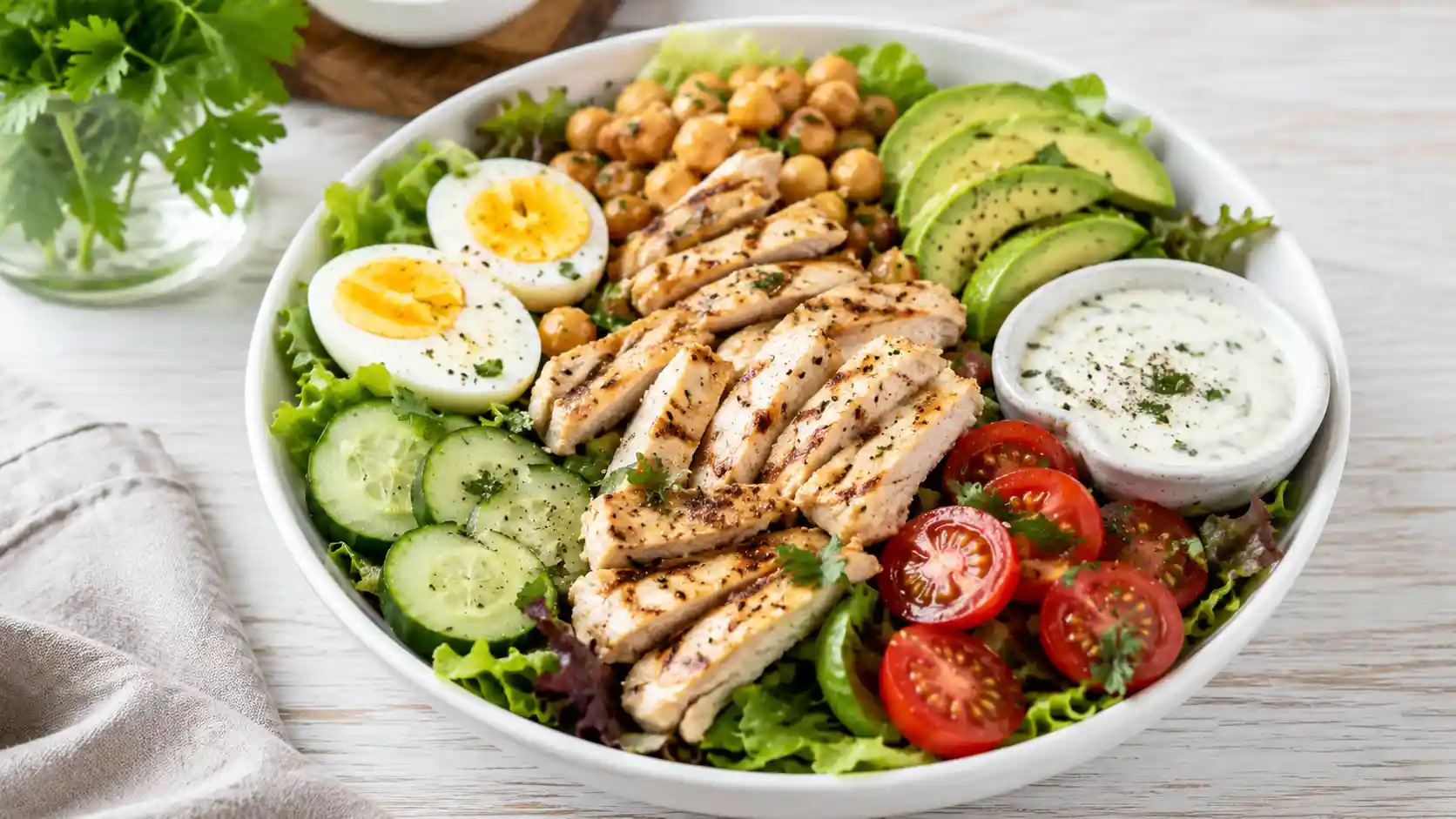
A filling protein salad starts with a substantial protein source such as chicken, tuna, eggs, tofu, beans, lentils, cottage cheese, or Greek yogurt. Add high-volume vegetables, a fiber-rich ingredient, a flavorful dressing, and an optional carb or fat based on your appetite.
Many meal-sized salads contain approximately 25–40 grams of protein, but that is only a general planning range. Exact needs vary by body size, activity level, health status, appetite, and the rest of your daily meals.
| Salad Goal | Good Starting Point | Why It Works |
|---|---|---|
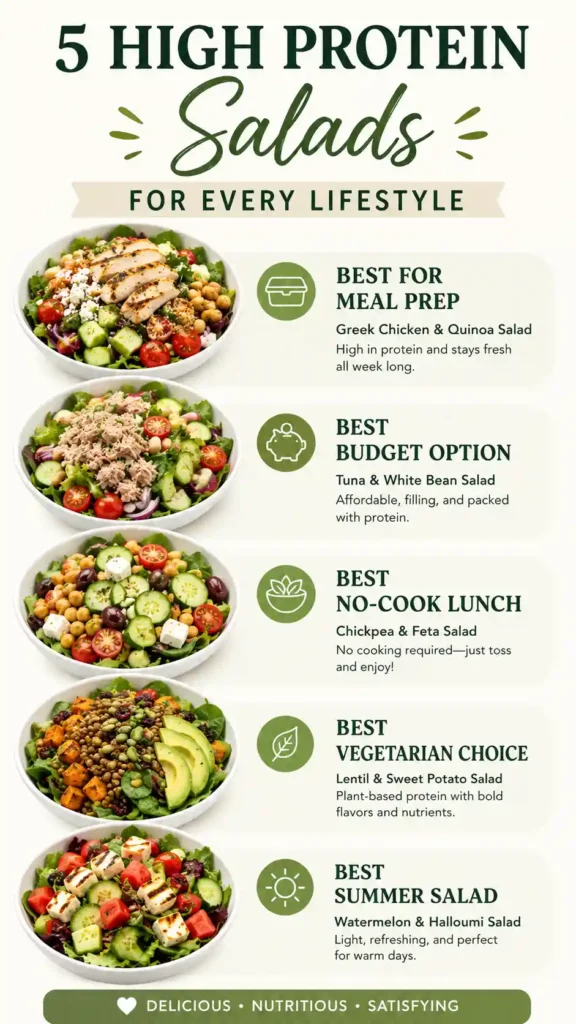
| Fast cold lunch | Tuna White Bean Salad | Canned ingredients make it fast, affordable, and no-cook. |
| Budget meal prep | High Protein Dense Bean Salad | Beans, lentils, and edamame provide protein and fiber. |
| Filling dinner salad | Chicken Avocado Cobb Salad | Chicken, eggs, vegetables, and avocado create a complete bowl. |
| Vegetarian lunch | Lentil Feta Salad | Lentils provide protein and fiber while feta adds flavor. |
| Summer lunch | Shrimp Avocado Lime Salad | It tastes fresh and works well as a chilled meal. |
| Best sturdy meal prep | Chicken Quinoa Greek-Style Salad | Chicken, quinoa, and firm vegetables hold their texture well. |
How to Build a Better Protein Salad
You do not need a complicated recipe every time. Use this flexible formula to build salads from what you already have.
- Choose a protein: chicken, turkey, tuna, salmon, shrimp, eggs, tofu, beans, lentils, edamame, Greek yogurt, or cottage cheese.
- Add vegetables: romaine, cabbage, spinach, cucumber, tomatoes, carrots, peppers, celery, broccoli, or onions.
- Include fiber or carbohydrates: beans, lentils, quinoa, rice, potatoes, pasta, corn, chickpeas, or whole-grain crackers.
- Add flavor: lemon juice, mustard, salsa, herbs, garlic, vinegar, hot sauce, hummus, or yogurt dressing.
- Finish with texture: cucumber, cabbage, roasted chickpeas, seeds, nuts, pickles, or crunchy vegetables.
A smaller side salad may only need vegetables and a light dressing. A meal-sized salad usually needs a stronger protein anchor and enough fiber or carbohydrates to feel complete.
Quick Nutrition Facts for Common Salad Proteins
The values below are general estimates based on common portions. Brands, cooking methods, drained weights, and serving sizes can change the final numbers.
| Protein | Common Serving | Approx. Calories | Approx. Protein |
|---|---|---|---|
| Cooked chicken breast | 3 oz cooked | 125 to 140 | 25 to 27 g |
| Canned tuna in water | 3 oz drained | 90 to 110 | 20 to 22 g |
| Cooked shrimp | 3 oz | 80 to 100 | 18 to 20 g |
| Large egg | 1 egg | 70 to 80 | About 6 g |
| Plain nonfat Greek yogurt | 170 g | 90 to 110 | 16 to 18 g |
| Cottage cheese | 1/2 cup | 90 to 120 | 12 to 14 g |
| Cooked lentils | 1 cup | 220 to 240 | 17 to 18 g |
| Shelled edamame | 1 cup | 180 to 200 | 17 to 19 g |
Use these figures as planning references rather than guaranteed values. For closer estimates, check your ingredient labels or search the USDA FoodData Central database.
25 Protein Salad Recipes That Actually Keep You Full
1. Greek Yogurt Chicken Salad
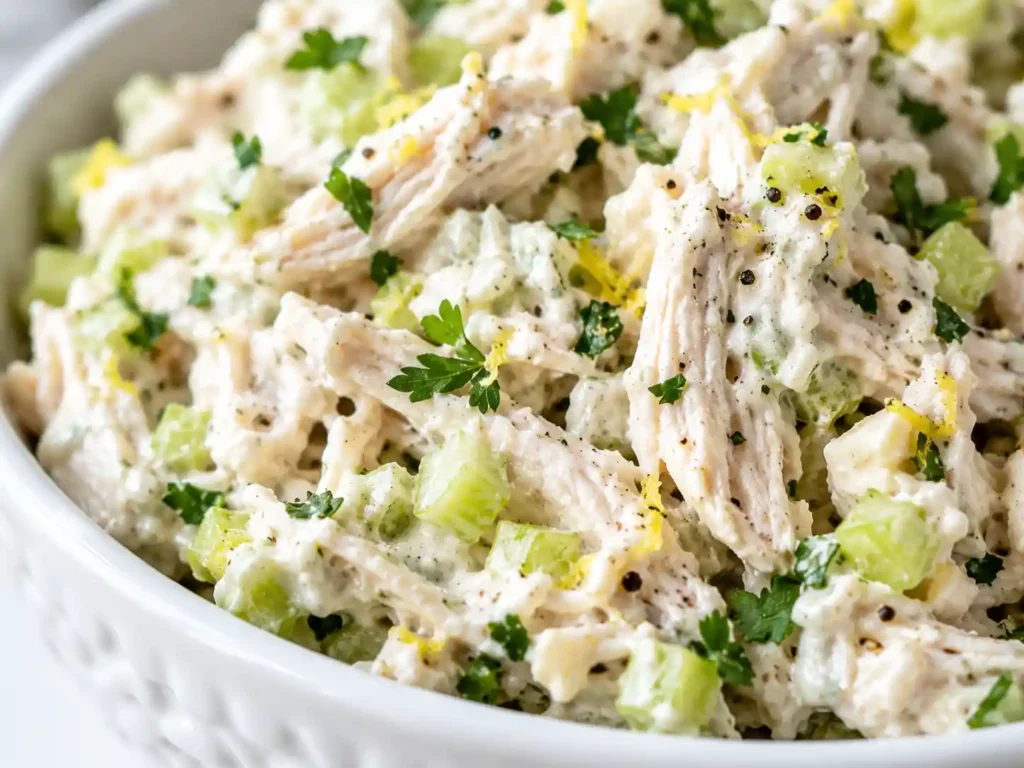
Combine chopped cooked chicken with plain Greek yogurt, celery, red onion, lemon juice, parsley, black pepper, and a small pinch of salt. The yogurt creates a creamy base while the celery and onion keep the texture fresh.
Serve the mixture over romaine, spinach, cucumber slices, whole-grain toast, or inside a wrap. Chickpeas or a boiled egg can make the salad more substantial.
Best for: meal prep, sandwiches, lettuce cups, and cold lunches.
Budget tip: use leftover cooked chicken instead of preparing a separate batch.
Estimated protein: approximately 30–40 grams per serving.
For another creamy variation, see this Cottage Cheese Chicken Salad.
2. Tuna Cucumber Crunch Salad
Mix drained canned tuna with chopped cucumber, celery, cherry tomatoes, dill, lemon juice, black pepper, and a spoonful of Greek yogurt. This combination tastes fresh and has enough crunch to avoid the soft texture of a basic tuna salad.
White beans or chickpeas can stretch the tuna and add fiber. Serve the salad over greens, with crackers, or inside a tortilla.
Best for: five-minute lunches and no-cook meal prep.
Budget tip: compare the drained weight rather than only the can price.
Estimated protein: approximately 25–35 grams per serving.
3. Shrimp Taco Salad
Start with romaine, cooked chilled shrimp, black beans, corn, tomatoes, cucumber, and salsa-lime dressing. Add avocado or a small handful of crushed tortilla chips when you want extra richness or crunch.
The beans make the salad more filling and help reduce the amount of shrimp needed per serving. Greek yogurt can replace a heavier creamy topping.
Best for: warm-weather lunches and taco-style meal prep.
Budget tip: use shrimp when it is discounted and rely on beans for additional volume.
Estimated protein: approximately 25–35 grams per serving.
4. Egg and Cottage Cheese Protein Salad
Chop boiled eggs and mix them with cottage cheese, mustard, celery, green onion, black pepper, and a little pickle relish. Serve the mixture over spinach, romaine, cabbage, or cucumber slices.
Cottage cheese makes the filling creamy while increasing the protein. Add a small wrap, toast, potatoes, or crackers when you need more energy.
Best for: inexpensive meal prep and breakfast-style lunches.
Budget tip: boil several eggs at once for multiple meals.
Estimated protein: approximately 25–35 grams per serving.
5. Chicken Avocado Cobb Salad
Layer lettuce with cooked chicken, boiled eggs, avocado, tomatoes, cucumber, red onion, and a modest amount of cheese. Finish with vinaigrette or a Greek yogurt herb dressing.
This salad combines lean protein with vegetables, fat, and plenty of texture. Roasted potatoes or beans can turn it into a larger dinner salad.
Best for: filling lunches and simple dinners.
Budget tip: use whichever firm vegetables are already in your refrigerator.
Estimated protein: approximately 35–45 grams per serving.
6. Turkey Taco Salad
Cook ground turkey with taco-style seasoning, then serve it over lettuce with black beans, salsa, corn, cucumber, tomatoes, and Greek yogurt. Keep the warm turkey separate from the greens until serving.
Rice or roasted potatoes can be added when you need a bigger meal. For a lighter bowl, increase the lettuce, cabbage, and crunchy vegetables instead.
Best for: dinner leftovers and work lunch meal prep.
Budget tip: beans help stretch the ground turkey across more servings.
Estimated protein: approximately 30–40 grams per serving.
7. Salmon Cucumber Salad
Combine cooked or canned salmon with cucumber, spinach, red onion, lemon juice, dill, black pepper, and a small amount of olive oil. Potatoes, white beans, or quinoa can make the salad more substantial.
Drain canned salmon thoroughly before mixing. A yogurt-mustard dressing also works well when you want a creamier result.
Best for: cold lunches and pantry-based meals.
Budget tip: compare canned salmon with tuna and choose the option that fits your weekly budget.
Estimated protein: approximately 25–35 grams per serving.
8. High Protein Dense Bean Salad
Mix chickpeas, black beans, shelled edamame, cucumber, tomatoes, parsley, red onion, lemon juice, and a small amount of olive oil. Feta-style cheese is optional.
The combination of legumes and edamame provides both protein and fiber. Because the ingredients are sturdy, the salad also holds up well for meal prep.
Best for: budget lunches and plant-forward meal prep.
Budget tip: use whichever beans are already in your pantry.
Estimated protein: approximately 20–30 grams per serving.
See the complete High Protein Dense Bean Salad guide for more combinations.
9. Tofu Sesame Crunch Salad
Combine cooked firm tofu with cabbage, carrots, cucumber, edamame, green onion, and a sesame-style dressing. Pressing the tofu before cooking helps it develop a firmer texture and absorb more seasoning.
Cabbage stays crisp longer than delicate greens, making this a practical packed lunch. Sesame seeds or chopped peanuts can be added immediately before eating.
Best for: vegetarian work lunches.
Budget tip: frozen edamame and cabbage can be used across several meals.
Estimated protein: approximately 25–35 grams per serving.
10. Chicken Caesar Protein Salad
Use romaine, cooked chicken, boiled egg, a small amount of grated cheese, and a Greek yogurt Caesar-style dressing. Roasted chickpeas can provide crunch in place of a large portion of croutons.
Keep the dressing separate until lunch so the romaine remains crisp. Add potatoes or pasta if you want a more filling variation.
Best for: familiar lunches and easy meal prep.
Budget tip: use leftover chicken and homemade yogurt dressing.
Estimated protein: approximately 35–45 grams per serving.
11. Lentil Feta Salad
Combine cooked lentils with cucumber, tomatoes, parsley, red onion, feta-style cheese, lemon juice, black pepper, and a small amount of olive oil. Serve it cold or at room temperature.
Lentils provide protein and fiber, while the cheese and lemon add enough flavor to keep the dressing simple. Spinach, cabbage, or romaine can be added for more volume.
Best for: vegetarian lunches on a budget.
Budget tip: dry lentils usually provide more servings than individual prepared pouches.
Estimated protein: approximately 20–28 grams per serving.
12. Buffalo Chicken Salad Bowl
Toss shredded chicken with hot sauce, then add lettuce, celery, carrots, cucumber, cabbage, and a Greek yogurt herb drizzle. Beans or roasted potatoes can provide additional carbohydrates and fiber.
This variation is useful for leftover chicken because the sauce changes the flavor without requiring a completely new recipe.
Best for: bold lunches and leftover chicken.
Budget tip: prepare one yogurt sauce that can also be used for wraps and vegetable dip.
Estimated protein: approximately 30–40 grams per serving.
13. Tuna White Bean Salad
Mix drained tuna with white beans, celery, cucumber, parsley, lemon juice, black pepper, and a little olive oil. Serve the mixture over romaine, spinach, cabbage, or arugula.
The beans stretch the tuna and add fiber without requiring any cooking. Mustard or Greek yogurt can be added for a creamier variation.
Best for: inexpensive no-cook lunches.
Budget tip: one can of tuna can make more servings when combined with beans.
Estimated protein: approximately 30–40 grams per serving.
Another option is this Cottage Cheese Tuna Salad.
14. Chicken Quinoa Greek-Style Salad
Combine cooked chicken, quinoa, cucumber, tomatoes, greens, herbs, feta-style cheese, and a lemon oregano dressing. Keep the dressing in a separate container until serving.
Quinoa adds carbohydrates and a small amount of extra protein. Rice or pasta can replace it when those ingredients are more affordable.
Best for: sturdy meal prep lunches.
Budget tip: use rice instead of quinoa when the price difference is significant.
Estimated protein: approximately 35–45 grams per serving.
15. Beef and Potato Protein Salad
Use sliced cooked beef, boiled or roasted potatoes, greens, cucumber, tomatoes, red onion, and a mustard vinaigrette. Let the cooked ingredients cool before placing them over the greens.
Potatoes help the salad feel like a complete meal. Choose a practical portion of beef and add beans when you want to stretch it further.
Best for: larger appetites and dinner leftovers.
Budget tip: use leftover cooked beef rather than buying a separate cut only for the salad.
Estimated protein: approximately 30–40 grams per serving.
16. Chickpea Chicken Salad
Combine shredded chicken with chickpeas, Greek yogurt, mustard, celery, green onion, lemon juice, and herbs. Leave the chickpeas whole for texture or mash a portion for a creamier filling.
Serve the mixture over greens, with cucumber slices, in a wrap, or with crackers. Chickpeas increase the number of servings while adding fiber.
Best for: sandwich filling, wraps, and salad bowls.
Budget tip: use equal portions of chicken and chickpeas to stretch the protein.
Estimated protein: approximately 30–40 grams per serving.
17. Shrimp Avocado Lime Salad
Mix cooked chilled shrimp with avocado, romaine, cabbage, cucumber, tomatoes, cilantro, and lime juice. Add rice, quinoa, corn, or black beans for a more substantial bowl.
Keep the avocado separate until serving when preparing the salad ahead. This helps protect its color and texture.
Best for: light summer lunches.
Budget tip: black beans can reduce the amount of shrimp needed per portion.
Estimated protein: approximately 25–35 grams per serving.
18. Turkey Tomato Crunch Salad
Combine chopped cooked turkey with lettuce, tomatoes, cucumber, cabbage, avocado, and a creamy Greek yogurt herb dressing. A boiled egg or white beans can provide additional protein.
The cabbage and cucumber keep the salad crunchy, while tomatoes and dressing add enough moisture without making the bowl watery.
Best for: savory cold lunches.
Budget tip: use leftover cooked turkey and sturdy vegetables already on hand.
Estimated protein: approximately 30–40 grams per serving.
19. Cottage Cheese Ranch Salad Bowl
Blend cottage cheese with lemon juice, garlic, herbs, black pepper, and enough water to create a pourable dressing. Serve it over chicken, lettuce, cucumber, carrots, tomatoes, and cabbage.
The cottage cheese acts as both a dressing base and a protein source. It can also be served as a dip when you prefer the vegetables on the side.
Best for: creamy meal prep salads.
Budget tip: one container of cottage cheese can work for breakfast, dips, and salad dressing.
Estimated protein: approximately 35–45 grams per serving with chicken.
20. Edamame Crunch Salad
Combine shelled edamame with cabbage, carrots, cucumber, bell pepper, green onion, and a peanut-lime or soy-ginger dressing. Tofu can be added for a higher-protein variation.
The vegetables remain crisp for several days when stored dry. Add the dressing and any seeds or nuts immediately before serving.
Best for: plant-forward lunches and meal prep.
Budget tip: frozen edamame can be portioned without thawing the entire bag.
Estimated protein: approximately 20–30 grams per serving.
21. Mediterranean-Style Tuna Salad Plate
Build a plate with tuna, cucumbers, tomatoes, chickpeas, greens, herbs, and Greek yogurt cucumber sauce. Add pita, rice, potatoes, or crackers when you need a larger meal.
This snack-style layout keeps the textures separate and lets you assemble each bite differently. It also works well in a divided lunch container.
Best for: cold work lunches and snack-style meals.
Budget tip: chickpeas and cucumbers increase the volume without requiring more tuna.
Estimated protein: approximately 30–40 grams per serving.
22. Chicken Pasta Protein Salad
Mix cooked short pasta with chicken, cucumber, tomatoes, spinach, celery, herbs, and a Greek yogurt dressing. Cook the pasta only until tender so it holds up better after chilling.
A bean-based or higher-protein pasta may increase the protein, but standard pasta also works when paired with enough chicken.
Best for: make-ahead lunches and larger appetites.
Budget tip: frozen peas and leftover chicken are easy low-waste additions.
Estimated protein: approximately 35–50 grams per serving.
Find more combinations in these Protein Pasta Salad Recipes.
23. Egg White Taco Salad
Cook egg whites with taco-style seasoning, then serve them over lettuce with beans, salsa, corn, cucumber, and avocado. One whole egg can be included for extra flavor and richness.
The beans provide fiber and make the salad more satisfying. Keep salsa separate when packing the bowl for later.
Best for: breakfast-style lunches and lighter meals.
Budget tip: whole eggs can replace part of the carton egg whites when they cost less.
Estimated protein: approximately 25–35 grams per serving.
24. Chicken Hummus Salad Bowl
Add cooked chicken, greens, cucumber, tomatoes, carrots, cabbage, and hummus to a bowl. Thin the hummus with lemon juice and water to make a quick dressing.
Chickpeas, rice, quinoa, or roasted potatoes can be added when you need more fiber or carbohydrates.
Best for: fast lunches with minimal sauce preparation.
Budget tip: use the same hummus for salad dressing, wraps, and vegetable dip.
Estimated protein: approximately 30–40 grams per serving.
25. Salmon Egg Power Salad
Combine cooked or canned salmon with boiled eggs, greens, cucumber, tomatoes, cabbage, avocado, and lemon vinaigrette. Potatoes, beans, or quinoa can make the meal larger.
Because salmon and eggs are both substantial ingredients, moderate portions may be enough. Keep the dressing separate when preparing the salad ahead.
Best for: filling lunches and dinner salads.
Budget tip: use one egg per serving and add beans if salmon is expensive.
Estimated protein: approximately 35–50 grams per serving.
How to Meal Prep Protein Salads Without Soggy Greens
Protein salads work well for meal prep when cooked, wet, and crunchy ingredients are stored correctly. Mixing everything several days in advance is usually what causes texture problems.
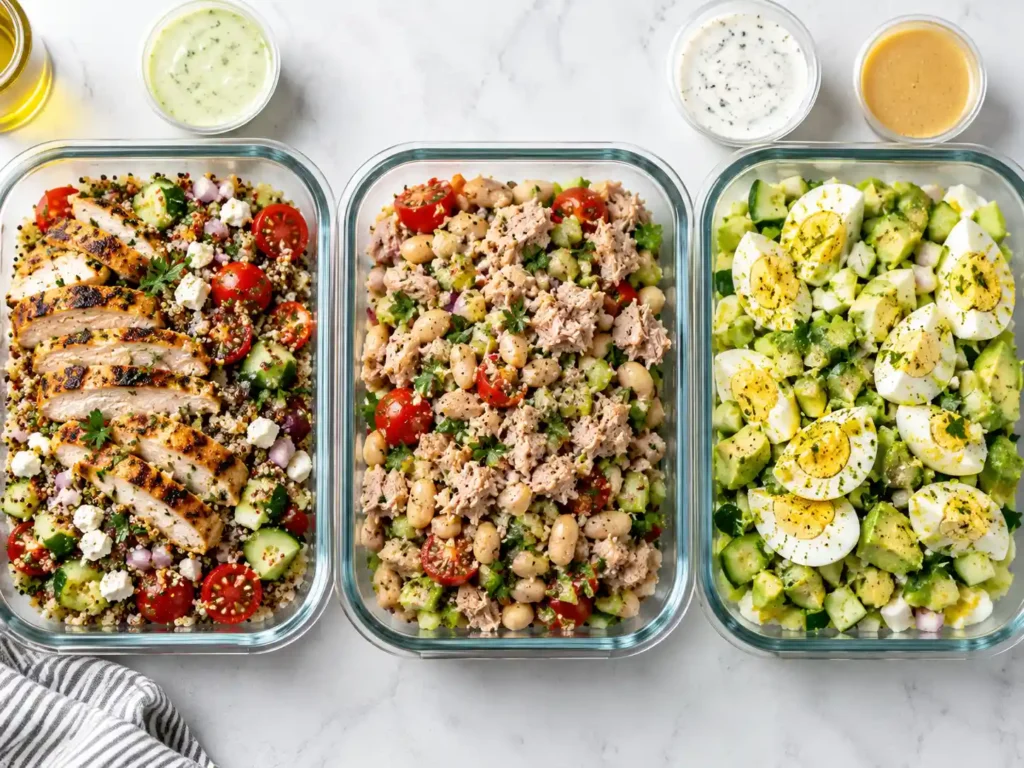
| Ingredient | Best Storage Method | Why |
|---|---|---|
| Cooked protein | Cool completely and store in a sealed container | Warm protein can create steam and soften vegetables. |
| Leafy greens | Store dry in a separate section | Excess moisture causes faster wilting. |
| Dressing | Use a small leak-resistant cup | Adding it at serving time protects the texture. |
| Cucumber and tomatoes | Keep separate from delicate greens when possible | Cut vegetables release moisture during storage. |
| Crackers, seeds, or roasted chickpeas | Store in a dry container or small bag | Dry toppings lose their crunch near wet ingredients. |
| Avocado | Cut close to serving | This preserves its appearance and texture. |
Sturdy ingredients such as cabbage, romaine, carrots, celery, beans, lentils, quinoa, and cooked pasta generally hold up better than delicate greens. For additional packed options, see these High Protein Cold Lunches for Work.
Easy High Protein Salad Dressings
Dressing can change the same chicken, tuna, egg, bean, or tofu base into several different meals. Start with one of these simple combinations.
- Greek yogurt herb dressing: plain Greek yogurt, lemon juice, garlic, parsley, dill, black pepper, and enough water to thin.
- Lemon mustard vinaigrette: lemon juice, Dijon mustard, olive oil, garlic, black pepper, and a small pinch of salt.
- Salsa yogurt dressing: salsa, Greek yogurt, lime juice, and taco-style seasoning.
- Tahini lemon dressing: tahini, lemon juice, garlic, water, and black pepper.
- Quick hummus dressing: hummus, lemon juice, water, garlic, and pepper.
- Soy-ginger dressing: soy sauce, rice vinegar, ginger, garlic, and a small amount of honey if desired.
Prepare only as much dressing as you will use within a few days. Store it separately so one batch can work for salads, wraps, bowls, and vegetable dip.
Budget-Friendly Protein Salad Ingredients
A short list of repeatable ingredients is usually more economical than buying a different specialty product for every salad.
| Ingredient | Useful Salad Ideas | Budget Advantage |
|---|---|---|
| Eggs | Protein boxes, chopped salads, egg salad bowls | Easy to prepare several at once |
| Canned tuna | White bean salad, cucumber salad, snack plates | Shelf-stable and fast |
| Beans and lentils | Dense bean salad, taco salad, lentil salad | Add protein, fiber, and volume |
| Greek yogurt | Chicken salad, tuna salad, creamy dressings | Works in both sweet and savory meals |
| Cottage cheese | Egg salad, ranch dressing, creamy bowls | Can act as protein and sauce |
| Chicken | Cobb salad, Caesar salad, pasta salad | One batch can support several recipes |
| Cabbage | Tofu crunch salad, edamame salad, taco salad | Affordable and sturdy for meal prep |
| Frozen edamame | Bean salad, tofu salad, cabbage crunch bowls | Easy to portion with little waste |
Helpful Tools for Protein Salad Meal Prep
No special equipment is required, but a few basic tools make preparation and storage easier.
- Leak-resistant meal prep containers
- Small dressing cups with secure lids
- Salad spinner or clean kitchen towels for drying greens
- Sharp chef’s knife and cutting board
- Large mixing bowl
- Insulated lunch bag and reusable ice pack
- Reusable dry container for crackers and crunchy toppings
Choose tools that match the meals you actually prepare. Expensive equipment does not improve a salad if the ingredients and dressing are still stored together too early.
Food Safety and Storage Notes
Cooked proteins and prepared salads containing chicken, turkey, tuna, salmon, shrimp, eggs, Greek yogurt, or cottage cheese should remain refrigerated. Use an insulated lunch bag with ice packs when a refrigerator is not available.
Most cooked leftovers should be used within three to four days when stored properly. Cool cooked foods quickly in shallow containers and refrigerate perishable ingredients within two hours. Review the official USDA FSIS leftovers and food safety guidance for more details.
- Cool cooked chicken, turkey, eggs, seafood, grains, and vegetables before packing them with greens.
- Keep cold salads refrigerated at 40°F or below.
- Use an ice pack when transporting salads to work or school.
- Discard food that has been left at room temperature beyond the recommended safety window.
- Freeze extra cooked protein before mixing it into a salad if you will not use it within a few days.
What to Serve With Protein Salads
A salad that already contains protein, vegetables, fiber, carbohydrates, and dressing may not need a side. Smaller salads can be paired with one simple addition.
- Whole-grain toast or crackers
- Rice or quinoa
- Roasted potatoes or sweet potatoes
- Fresh fruit
- Soup
- Greek yogurt
- A small wrap or pita
- Extra beans or lentils
For seasonal ideas that work well during warmer weather, visit High Protein Summer Meals.
How We Built This Protein Salad Guide
This roundup was organized around practical meal building rather than one strict nutrition target. Each idea includes a recognizable protein source, affordable substitutions, vegetables or fiber, and a way to keep the texture suitable for lunch or meal prep.
Protein estimates are approximate and have not been laboratory tested. Ingredient brands, drained weights, portion sizes, cooking methods, dressings, and substitutions can change the final nutrition information.
This guide provides general meal-planning information and does not replace personalized advice from a registered dietitian, doctor, or qualified healthcare professional.
FAQs About Protein Salad Recipes
What makes a salad high in protein?
A salad becomes higher in protein when it contains a substantial source such as chicken, turkey, tuna, salmon, shrimp, eggs, tofu, Greek yogurt, cottage cheese, beans, lentils, or edamame. A combination of two smaller sources can also work.
How much protein should a filling salad have?
Many meal-sized salads contain approximately 25–40 grams of protein, but no single amount fits everyone. Your ideal portion depends on your appetite, body size, activity level, health needs, and the other foods included in the meal.
Are protein salads good for meal prep?
Yes. Use sturdy ingredients such as cabbage, romaine, carrots, beans, lentils, quinoa, pasta, chicken, or tofu. Store the dressing, wet vegetables, and crunchy toppings separately until serving.
What are the cheapest ingredients for a protein salad?
Eggs, beans, lentils, canned tuna, Greek yogurt, cottage cheese, tofu, cabbage, and frozen edamame can all work well. Actual prices vary by store, so compare unit prices and use ingredients across several meals.
How do I keep a protein salad from getting soggy?
Dry the greens thoroughly, let cooked ingredients cool, and store dressing in a separate container. Keep tomatoes, cut cucumber, avocado, crackers, and crunchy toppings away from delicate greens until serving.
Can I make a filling protein salad without chicken?
Yes. Tuna, salmon, shrimp, eggs, tofu, edamame, beans, lentils, cottage cheese, and Greek yogurt can all create substantial salads without chicken.
How long can I keep meal prep salads in the refrigerator?
Most cooked components should be used within three to four days when refrigerated correctly. Some assembled salads may lose quality sooner because of cut vegetables, dressing, avocado, or delicate greens.
Final Thoughts
Protein salad recipes work best when they are built like complete meals. Start with a clear protein source, add vegetables and fiber, include a satisfying dressing, and finish with enough carbohydrates or healthy fat for your appetite.
Choose three ideas from this guide for the week: one chicken or turkey salad, one bean or lentil salad, and one tuna, egg, or tofu option. Reusing the same vegetables and dressing across those meals keeps preparation manageable without making every lunch taste identical.