
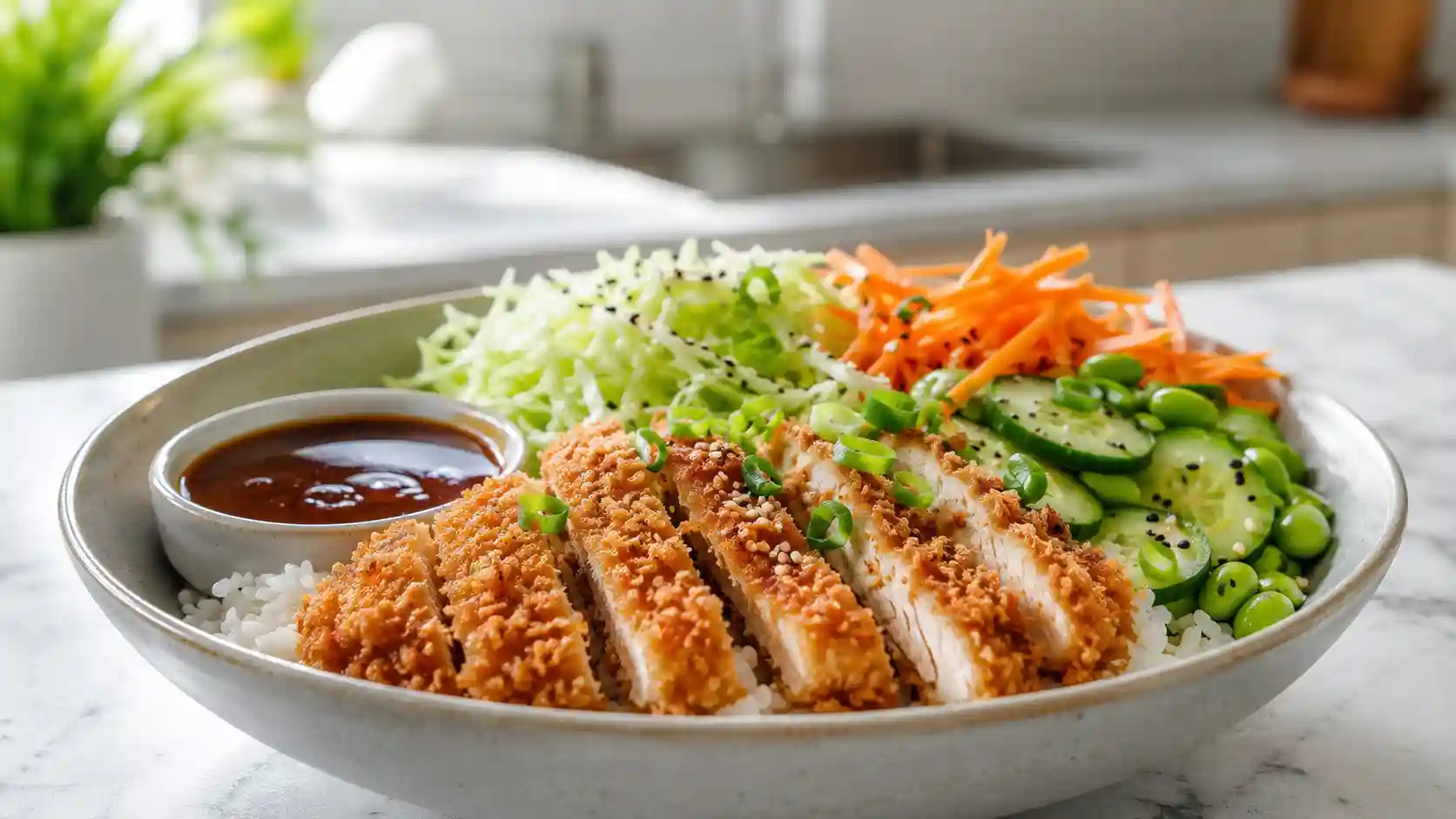
This healthy chicken katsu bowl gives you everything satisfying about a restaurant katsu bowl without the deep fryer. Thin panko-coated chicken goes into the oven or air fryer, comes out golden and crispy, and gets layered over fluffy rice with crunchy vegetables and a tangy katsu-style sauce. It is a practical, affordable bowl that works equally well as a weeknight dinner or a meal prep lunch you will actually look forward to eating.
If you want to compare this to the pan-fried version, the chicken katsu rice bowl covers the classic skillet method in full detail.
Quick Answer Box
| Detail | Summary |
|---|---|
| What it is | Crispy panko chicken served over rice with vegetables and a simple katsu-style sauce |
| Why it works | Oven or air fryer cooking produces a light, crunchy crust without deep frying; balanced bowl with protein, rice, and vegetables |
| Best cooking method | Air fryer for maximum crunch; oven for larger batches |
| Meal prep tip | Store crispy chicken separately from rice and vegetables; keep sauce in a small cup on the side |
Why This Healthy Chicken Katsu Bowl Works
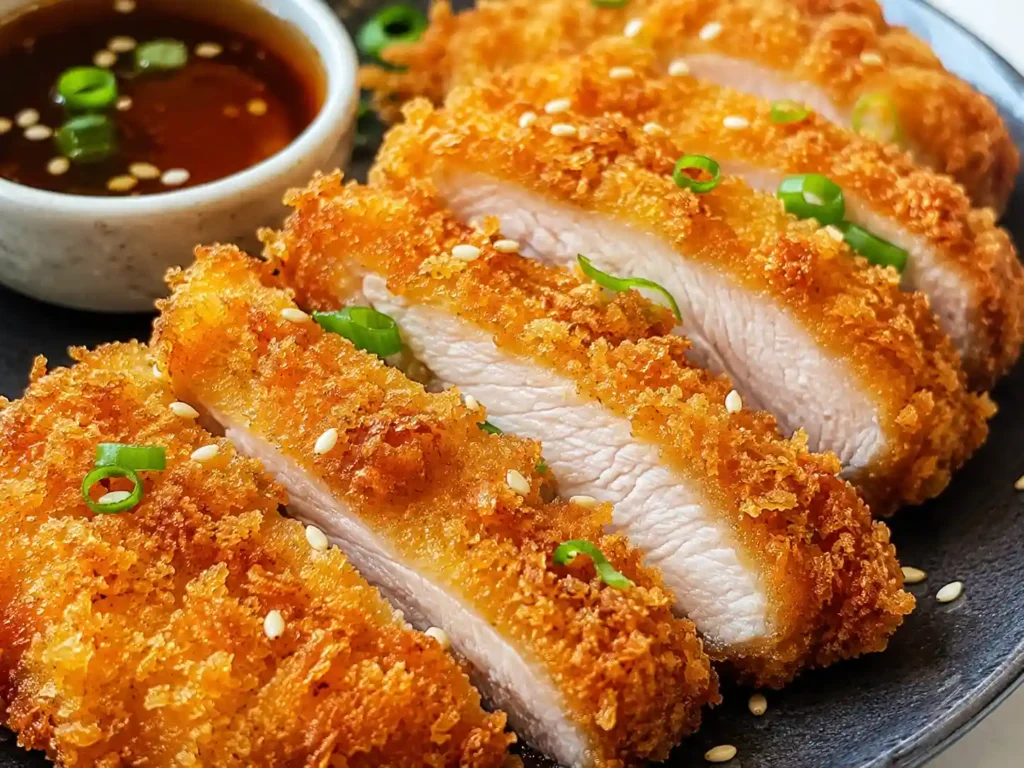
Crispy without deep frying
Traditional deep-fried katsu tastes great, but deep frying at home requires a significant amount of oil and a fair amount of cleanup. The oven and air fryer methods here get the panko coating golden and crunchy by using a light oil spray and the right temperature instead. The key is thin, even chicken pieces and a wire rack in the oven so hot air circulates around the entire cutlet rather than just the top. The result is a noticeably crispy coating that holds up well through slicing and bowl assembly.
Budget-friendly bowl ingredients
Every component in this bowl is affordable and widely available at US grocery stores. Chicken breast, thighs, or tenders work interchangeably depending on what is on sale. Panko breadcrumbs are available in most stores and a single bag covers many batches. The vegetables, rice, and pantry sauce ingredients are all everyday staples. This bowl is built around ingredients you are likely already buying, not specialty items.
Easy to prep for lunches
With a bit of planning around what to store together and what to keep separate, this bowl holds up well in the refrigerator for 3 to 4 days. Cook the chicken in a larger batch while you have the oven or air fryer going, prep the rice and vegetables at the same time, and divide everything into containers. For a broader look at building affordable meal prep routines, this guide to cheap high protein meal prep covers the planning side well. It is also a natural addition to any high protein lunch ideas rotation.
Ingredients You’ll Need
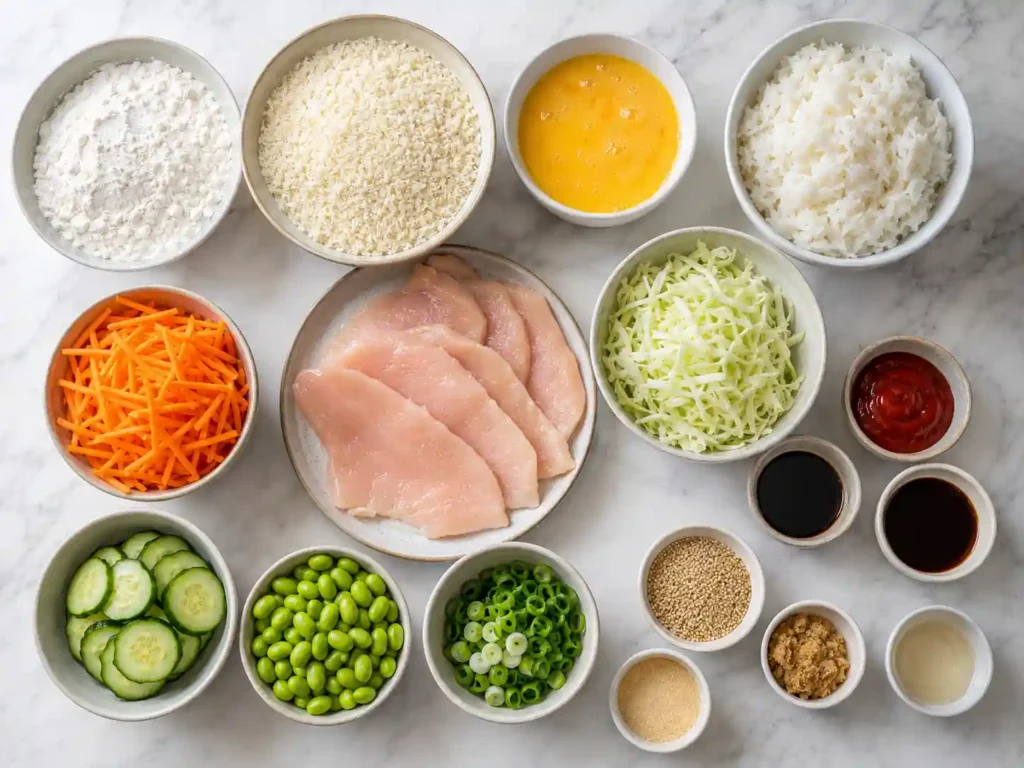
Chicken and panko coating
- Boneless, skinless chicken breast, chicken thighs, or chicken tenders
- All-purpose flour
- Eggs, beaten
- Panko breadcrumbs
- Salt and black pepper
- Garlic powder (optional, added to the flour or panko)
- Neutral cooking oil spray or a small amount of neutral oil for brushing
Rice and bowl toppings
- Cooked white rice, jasmine rice, or brown rice
- Shredded green cabbage or napa cabbage
- Sliced or shredded carrots
- Sliced cucumber
- Shelled edamame, thawed from frozen
- Sliced green onions
- Sesame seeds
- Avocado, sliced fresh at serving (optional)
Simple katsu-style sauce
- Worcestershire sauce
- Ketchup
- Soy sauce
- Brown sugar
- Garlic powder
- Rice vinegar or apple cider vinegar (optional, for brightness)
How to Make a Healthy Chicken Katsu Bowl
Prep the chicken
Start with thin, even chicken pieces. If using chicken breast, slice each piece horizontally into thinner cutlets, or place between two sheets of plastic wrap and pound to an even thickness with a meat mallet or the bottom of a heavy pan. Tenders are already thin and can go straight to breading. Even thickness is important because it ensures the chicken cooks through at the same rate the coating browns. Thick, uneven pieces result in overcooked exteriors or underdone centers.
Pat the chicken dry with paper towels before starting. Dry chicken helps the flour adhere better, which helps the egg layer hold, which helps the panko stick firmly and stay on during cooking.
Bread the chicken
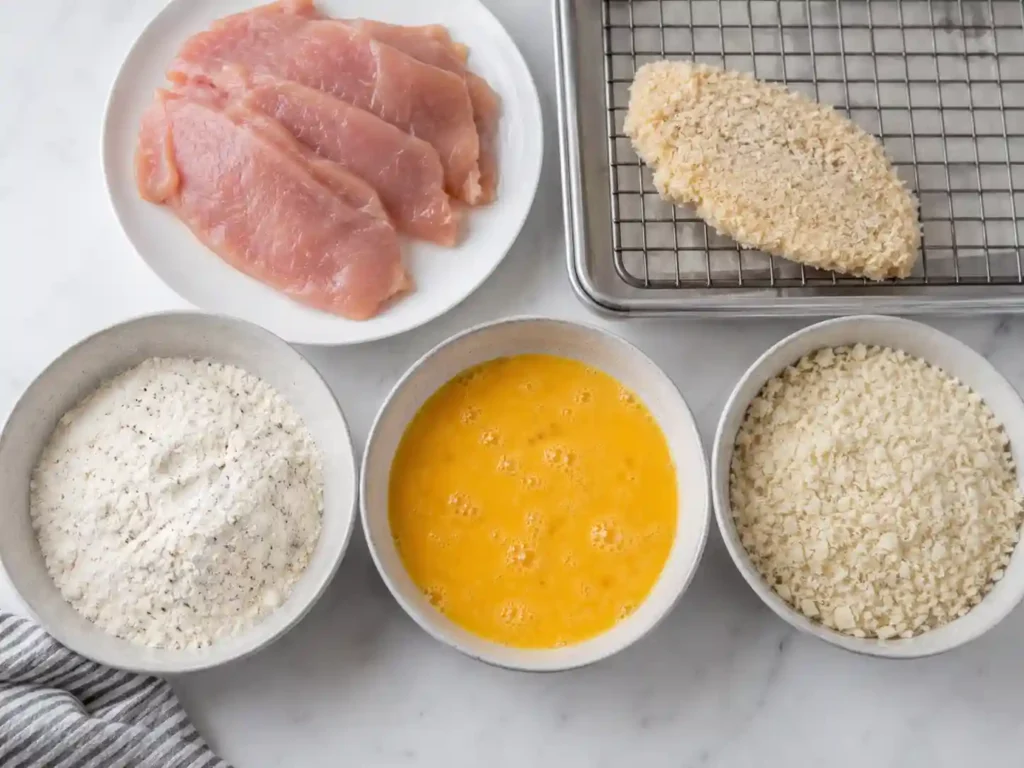
Set up three shallow bowls in a line: one with seasoned flour, one with beaten eggs, and one with panko breadcrumbs. Working one piece at a time, press the chicken into the flour and shake off the excess. Dip in the egg and let the extra drip off. Press firmly into the panko on both sides, making sure the coating covers every surface. Press the panko in gently so it sticks rather than just resting on top.
Shallow breading bowls or rimmed plates keep the process clean and prevent the panko from getting clumped with egg. Set each breaded piece aside on a clean plate or wire rack while you finish the rest. For best results, use the chicken right away rather than letting the breaded pieces sit for a long time before cooking.
Bake or air fry until crispy
See the full oven versus air fryer comparison in the next section. Regardless of method, spray or brush the breaded chicken lightly with neutral oil before cooking. This is what allows panko to brown in dry heat rather than requiring full submersion in hot oil. Cook until the chicken is deep golden brown and reaches an internal temperature of at least 165°F / 74°C. Always verify with an instant-read meat thermometer, particularly for thicker pieces. Once cooked, rest the chicken on a wire rack for a couple of minutes before slicing. A wire rack keeps air circulating underneath so the bottom crust stays crispy rather than steaming against a solid surface.
Assemble the bowl
Add a scoop of cooked rice to each bowl. Arrange the vegetables alongside the rice in sections. Slice the rested chicken just before serving and place it on top of the rice and vegetables. Drizzle a small amount of katsu-style sauce over the top or serve it on the side. Add sesame seeds, sliced green onions, and any other toppings right before eating.
Oven vs Air Fryer Method
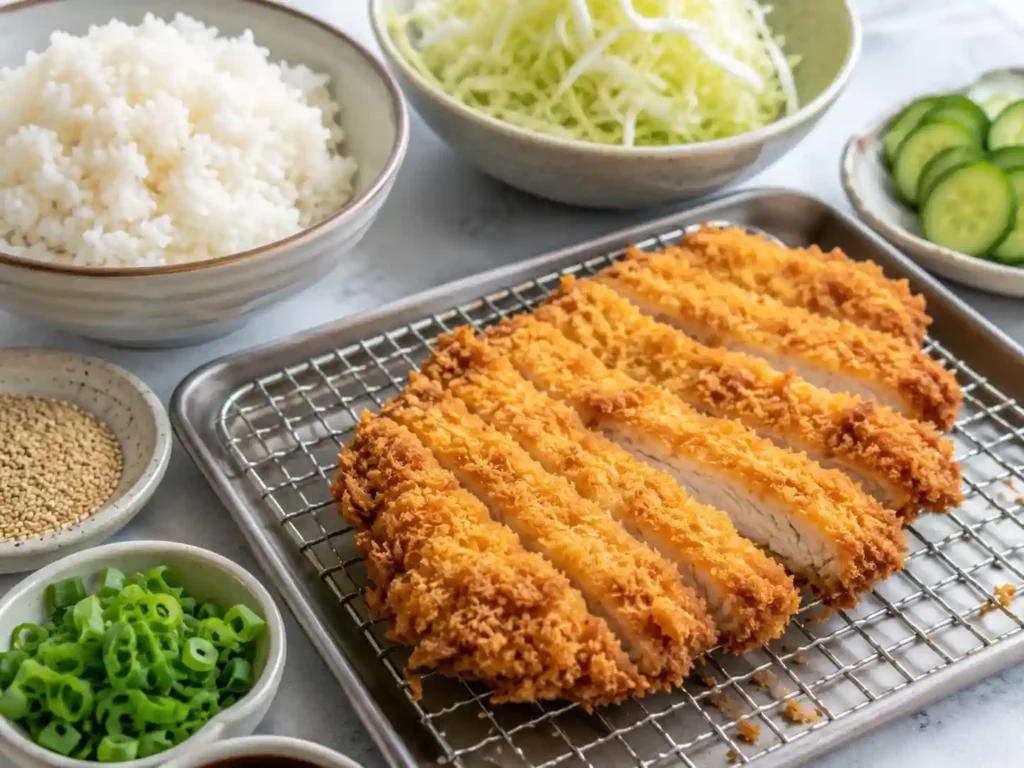
Both methods produce crispy panko chicken without deep frying. Here is how they compare so you can choose based on your equipment and batch size.
| Detail | Oven | Air Fryer |
|---|---|---|
| Crust result | Golden and crispy, slightly lighter than pan-fried | Closer to pan-fried crunch, deeply golden |
| Batch size | Better for larger batches; cook multiple pieces at once on a sheet pan | Better for smaller batches; pieces must not overlap |
| Wire rack | Strongly recommended; set rack over a baking sheet for air circulation | Built into the basket; no extra rack needed |
| Oil needed | Light spray or brush on both sides before cooking | Light spray before cooking |
| Flipping | Flip halfway through for even browning | Flip halfway through for even browning |
| Safe internal temp | 165°F / 74°C; verify with a thermometer | 165°F / 74°C; verify with a thermometer |
| Reheating | Oven or toaster oven restores most crunch | Air fryer re-crisps very effectively |
| Best for | Meal prep batches, cooking for multiple people | Single servings, faster weeknight cooking |
Timing note: Actual cooking times vary based on chicken thickness, oven calibration, and air fryer model. Always use an instant-read thermometer rather than relying on timing alone.
Budget-Friendly Variations
Vegetable swaps
Use whatever fresh or frozen vegetables are affordable or already in your refrigerator. Shredded coleslaw mix from a bag covers both cabbage and carrots in one purchase and saves prep time. Snap peas, thinly sliced bell pepper, and blanched broccoli florets all work well. Frozen edamame thaws quickly and is typically one of the more affordable protein-boosting toppings. Skip avocado on weeks when it is expensive or not on sale.
Rice swaps
White rice is the most affordable and fastest base option. Brown rice works well for more chew and a nuttier flavor but takes longer to cook. Leftover rice from a previous meal is a great shortcut that saves both time and energy. Microwave rice pouches work for single servings or when you need rice quickly without planning ahead. Cauliflower rice is an option if you want a lighter base, though it changes the texture and volume of the bowl significantly.
Sauce shortcuts
The homemade katsu-style sauce comes together in under two minutes from pantry ingredients. If you already have a bottle of store-bought Worcestershire sauce and ketchup, you have most of the base covered. Make a larger batch of the sauce at the start of the week and store it in a small sealed jar in the refrigerator so it is ready across multiple bowls without repeating the prep step.
Meal Prep and Storage Tips
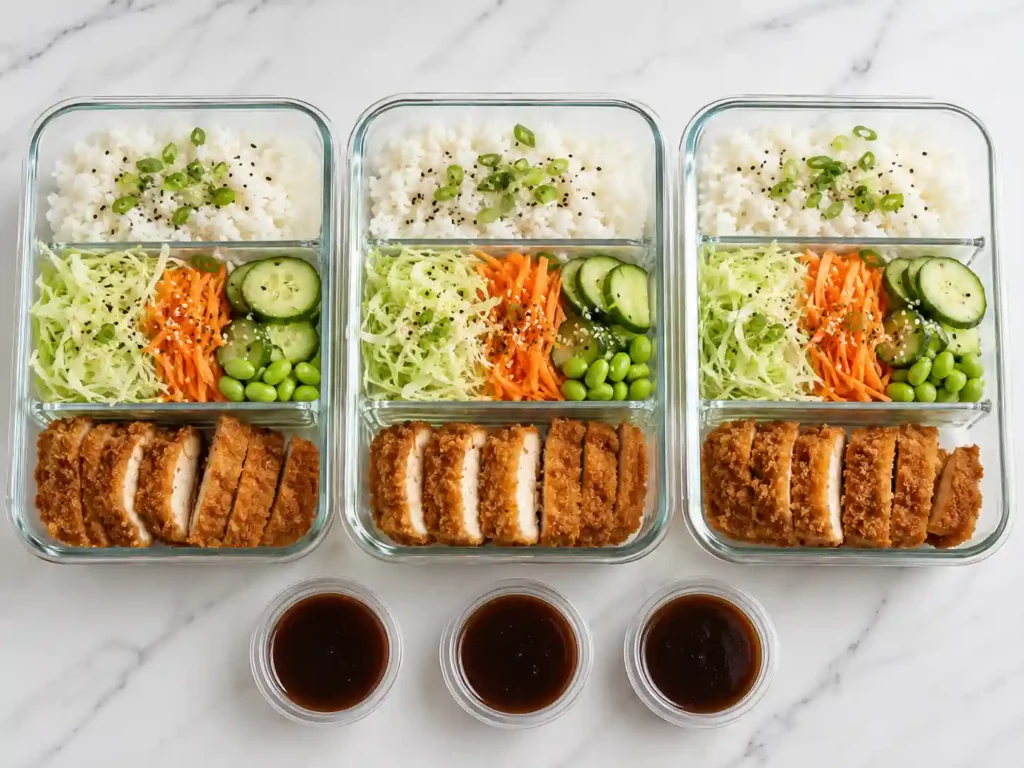
How to keep the chicken crispy
Panko breading holds its crunch best when it stays away from moisture during storage. Do not pack the chicken on top of warm rice or next to wet vegetables in the same container. Store the cooked chicken pieces whole in their own airtight container so they stay as dry as possible. When you are ready to eat, reheat the chicken separately using dry heat before slicing and placing it on the assembled bowl.
What to store separately
Keep the following in separate containers or bags: cooked chicken, cooked rice, fresh vegetables, sauce, and any toppings like sesame seeds or green onions. Rice and vegetables can share a container without affecting each other significantly. The sauce should always travel in its own small sealed cup or container. Fresh toppings like green onions, sesame seeds, and avocado should be added at the time of eating, not packed in with the rest of the bowl.
How to reheat
Reheat the chicken in an air fryer, toaster oven, or conventional oven until it reaches 165°F / 74°C throughout. This dry-heat method restores more of the panko crust than microwaving does. Microwave reheating heats food using steam internally, which softens the breading. If a microwave is your only option, reheat on medium power in short intervals and keep the time short to minimize softening. Reheat the rice separately in the microwave with a small splash of water and a loose cover to keep it from drying out. Add vegetables cold or at room temperature, and pour the sauce right before eating.
Cooked leftovers can generally be kept 3 to 4 days in the refrigerator when stored properly in airtight containers. For more practical meal prep strategies, check out this overview of cheap high protein meal prep.
What to Serve with Chicken Katsu Bowls
This bowl is a complete meal on its own, but a few simple additions work well if you want more variety.
- Miso soup alongside the bowl if you have miso paste on hand
- A quick cucumber salad dressed with rice vinegar, a pinch of sugar, and sesame seeds
- Steamed edamame in the shell as a simple side
- A soft-boiled or fried egg placed on top of the bowl at serving
- A small side of pickled vegetables for brightness and contrast
Common Mistakes to Avoid
- Skipping the wire rack in the oven. Placing breaded chicken flat on a solid baking sheet traps steam underneath and softens the bottom crust. A wire rack set over the baking sheet allows air to circulate on all sides and produces a much crispier result.
- Not spraying the panko with oil. Panko needs a light coating of oil to brown in dry heat. Without it, the coating stays pale and dry rather than turning golden and crispy.
- Chicken too thick. Thick, uneven pieces take too long to cook through at the temperature needed to crisp the panko. Slice or pound to an even thickness before breading.
- Rushing the breading station. Skipping or skimping on the flour step means the egg has nothing to grip, and the panko will fall off during cooking. Each layer matters and each step should be done fully before moving to the next.
- Pouring sauce over the chicken too early. Katsu-style sauce softens panko breading within minutes. Always serve sauce on the side or pour it right before eating, never during prep or packing.
- Storing everything in one container. Wet vegetables, warm rice, and sauce all release moisture that will soften the crispy chicken coating during storage. Keep the components separate.
- Only using a microwave to reheat. Microwave reheating softens the breading significantly. Use dry heat such as an air fryer or oven to reheat the chicken whenever possible for better texture.
- Overcrowding the air fryer basket. Panko chicken pieces need space around them for hot air to circulate. Overlapping pieces steam each other instead of crisping. Cook in batches if needed.
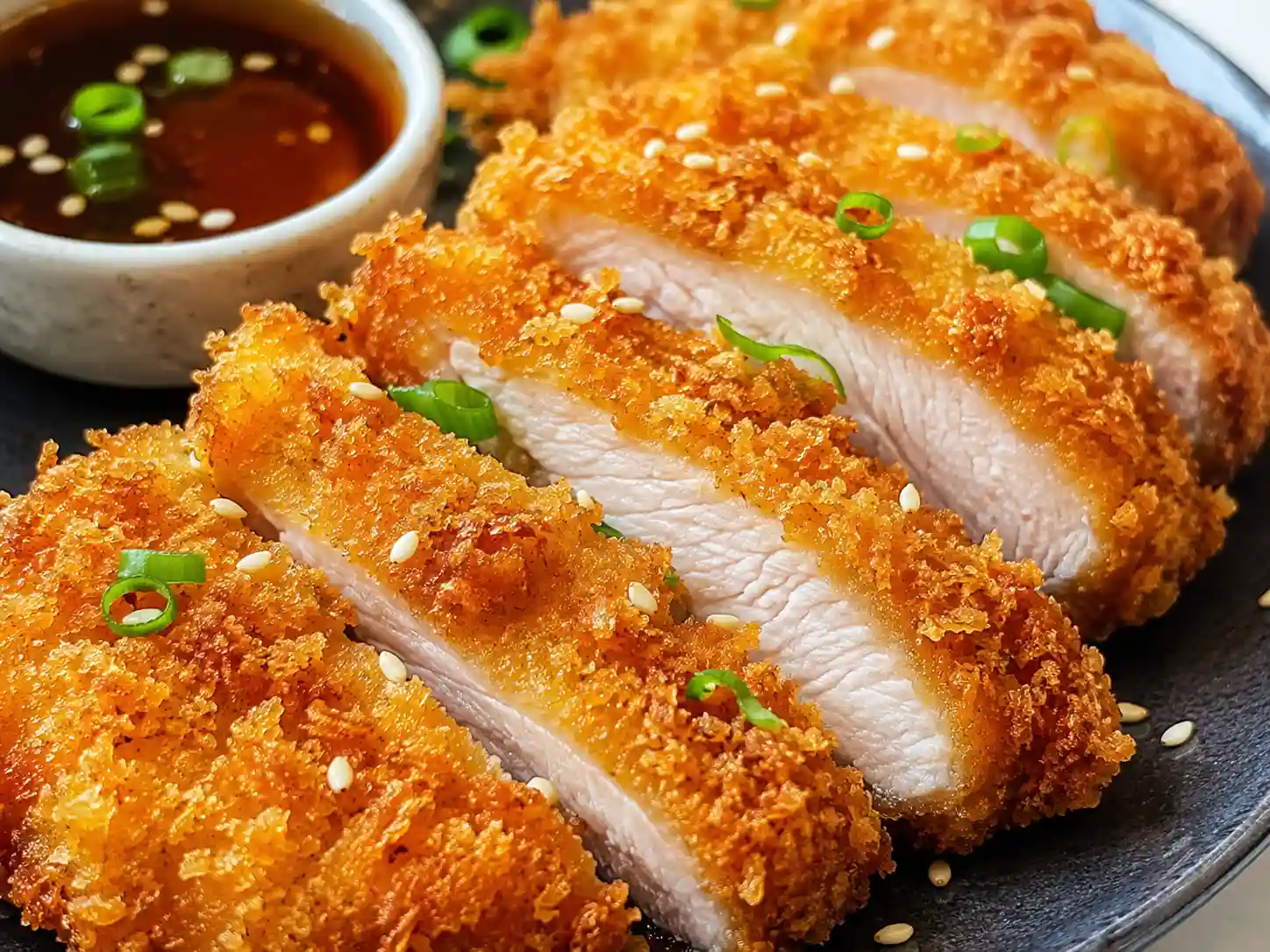

Healthy Chicken Katsu Bowl
Ingredients
Equipment
Method
- Cook the rice according to package directions. If using leftover rice, reheat it with a small splash of water until fluffy and steaming.
- Prepare the chicken by slicing chicken breast horizontally into thin cutlets, or pound chicken pieces to an even thickness. Pat the chicken dry with paper towels.
- Set up three shallow bowls. Add flour, salt, black pepper, and garlic powder to the first bowl. Add beaten eggs to the second bowl. Add panko breadcrumbs to the third bowl.
- Coat each chicken piece in the seasoned flour and shake off the excess. Dip into the beaten egg, then press firmly into the panko breadcrumbs until evenly coated on both sides.
- For the oven method, preheat the oven to 425°F / 220°C. Place a wire rack over a baking sheet, arrange the breaded chicken on the rack, and lightly spray or brush both sides with neutral oil.
- Bake for 18 to 22 minutes, flipping halfway through, until the coating is golden and the chicken reaches 165°F / 74°C in the thickest part.
- For the air fryer method, preheat the air fryer to 390°F / 200°C. Arrange the chicken in a single layer without overlapping, spray lightly with oil, and air fry for 10 to 14 minutes, flipping halfway through, until golden and cooked to 165°F / 74°C.
- Transfer the cooked chicken to a wire rack and let it rest for a few minutes before slicing. This helps keep the bottom crust from steaming and softening.
- In a small bowl, whisk together Worcestershire sauce, ketchup, low-sodium soy sauce, brown sugar, garlic powder, and optional rice vinegar until smooth.
- Divide the cooked rice among 4 bowls. Arrange shredded cabbage, carrots, cucumber, edamame, and any optional avocado alongside the rice.
- Slice the rested chicken just before serving and place it over the rice and vegetables. Drizzle with a small amount of katsu-style sauce or serve the sauce on the side.
- Finish with sesame seeds and sliced green onions. For meal prep, keep chicken, rice, vegetables, sauce, and toppings in separate containers until serving.
Notes
Equipment: Air fryer or oven with wire rack and baking sheet, instant-read thermometer, three shallow breading bowls, airtight meal prep containers, small sauce cups
FAQs
It comes close, especially with the air fryer method. The key details are thin chicken, a generous and firmly pressed panko coating, a light oil spray before cooking, and a wire rack in the oven for air circulation on all sides. The result is noticeably crispy, though it will not be identical to deep-fried katsu. Most people find the baked or air fryer version a practical and satisfying substitute for everyday cooking.
Yes. Cook the chicken, rice, and vegetables, then divide them into separate airtight containers. Keep the sauce in its own small sealed cup. The chicken stores best on its own rather than stacked with wet components. Assembled bowls keep well in the refrigerator for 3 to 4 days when stored properly. Reheat the chicken with dry heat for the best texture recovery.
Shredded cabbage, sliced carrots, cucumber, edamame, and green onions all work well because they add crunch and freshness without needing to be cooked. A bag of pre-shredded coleslaw mix covers cabbage and carrots in one step. Avoid placing wet or watery vegetables directly against the breading. Keep dressed or watery vegetables in a separate section of the bowl.
Yes. Boneless, skinless chicken thighs work well in this recipe. They tend to stay juicier than breast and tolerate the oven or air fryer heat without drying out. Pound or flatten them to an even thickness before breading for the most consistent cook. Always verify the internal temperature reaches 165°F / 74°C before serving.
The three-step breading process is the key. Do not skip or rush the flour step. The flour gives the egg something to grip, and the egg gives the panko something to stick to. Press the panko firmly onto both sides of each piece so it adheres rather than resting loosely. Pat the chicken dry before starting and avoid letting breaded pieces sit wet for too long before cooking.
More Chicken Bowl Ideas
If this bowl works for your routine, here are a few more chicken rice bowl options worth adding to the rotation:
- Teriyaki chicken rice bowl for a glossy sweet-savory sauced chicken bowl that is great for meal prep
- Sticky chicken rice bowl for another pan-sauce chicken and rice combination
- Buffalo chicken rice bowl for a tangy, spicy take on the chicken and rice format
- Street corn chicken rice bowl for a bold, creamy bowl with a completely different flavor direction
For dinner planning across the week, easy protein dinner ideas covers a wider range of practical chicken and protein meals. And if you want to build a full week of meals around bowls and prep sessions like this one, the site also has a collection of high protein lunch ideas that pairs well with this bowl as part of a repeatable weekly plan.
Newsletter CTA
Want more budget-friendly meal prep ideas like this one? Sign up for the BudgetProteinMeals.com newsletter and get practical recipes, weekly prep guides, and affordable meal planning tips sent straight to your inbox.