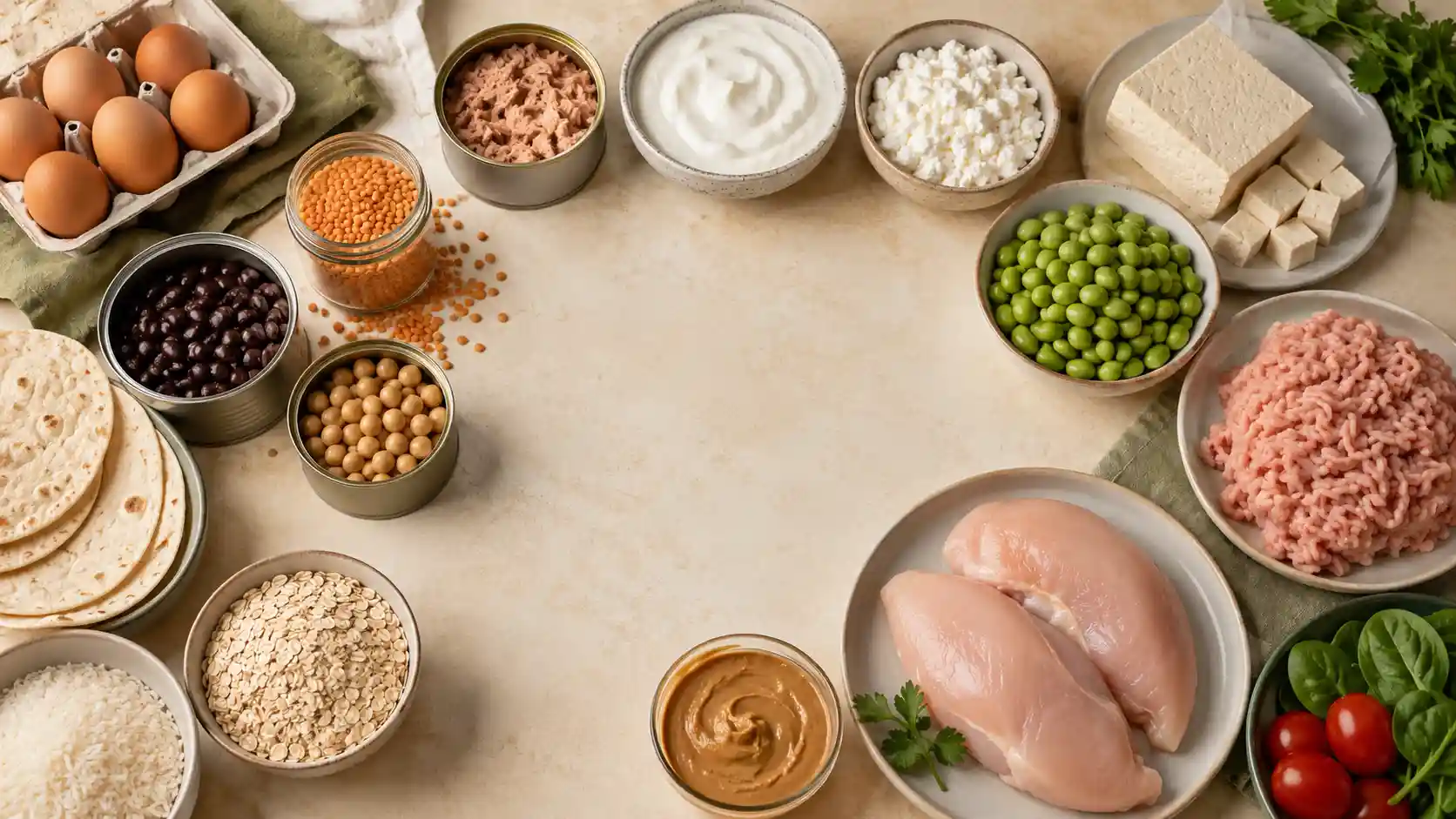
A cheap protein grocery list should help you buy foods you will actually use, not push you toward one supposedly perfect ingredient or a fixed weekly total. Prices change by store, region, brand, package size, and promotion, so this guide focuses on flexible value. You will find practical options organized by store section, along with ways to compare packages, reduce waste, and turn the same groceries into breakfasts, lunches, dinners, and snacks. Use the list as a starting point, then adjust it to your household, schedule, storage space, and local prices.
Quick Answer: What Should Be on a Cheap Protein Grocery List?
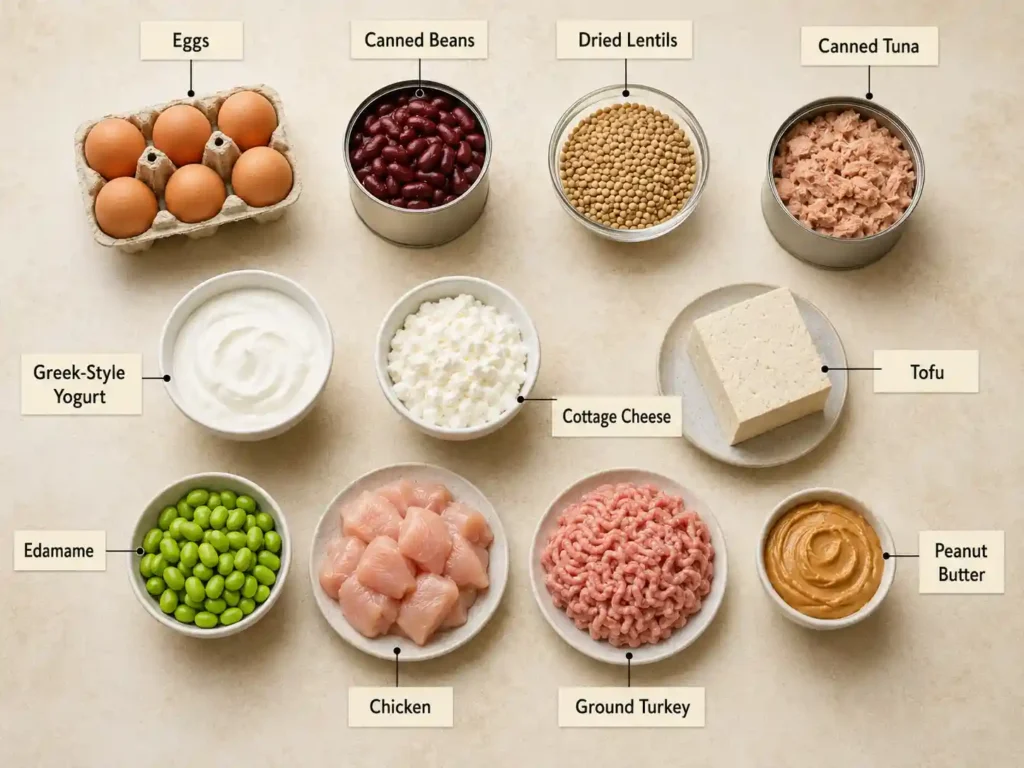
A practical starting list can include:
- Eggs
- Beans, chickpeas, lentils, and split peas
- Canned light tuna, salmon, sardines, or chicken
- Chicken, ground chicken, or ground turkey
- Tofu and frozen edamame
- Plain Greek-style yogurt and cottage cheese
- Milk
- Peanut butter, nuts, or seeds when the local unit price fits your budget
The best option will not be identical every week. A product only earns a place in the cart when its price, package size, preparation time, and planned uses make sense for your kitchen.
What Makes a Protein Grocery Budget-Friendly?
Compare Unit Price, Not Just Package Price
Two packages can look similar while containing very different amounts. Many shelf labels show a unit price, such as a price per ounce or pound, which makes package sizes easier to compare. Check the unit itself before making a decision because one shelf tag may use ounces while another uses pounds.
Consider the Usable Portion
The largest package is not automatically the best value. A smaller container that gets finished can be more practical than a bulk package that is forgotten or discarded. Before buying a value pack, decide what you will cook now, what you can use later in the week, and what can be frozen according to the package directions.
Choose Foods That Work in Several Meals
Flexible ingredients make weekly planning easier. Eggs can become breakfast, a bowl topping, or a snack. Beans can go into salads, wraps, soups, and rice bowls. Plain yogurt can work at breakfast and in a simple sauce. Reusing one purchase in several ways also reduces the number of specialty ingredients you need.
Balance Convenience and Preparation Time
Dried legumes require more planning and cooking, while canned versions can be drained and added to a meal quickly. Fresh meat may need prompt preparation, while frozen options give you more scheduling flexibility. The better choice is the one that fits both your local price and the amount of time you realistically have.
Plan for Storage Before You Buy
Pantry and freezer options can make a grocery list easier to manage, but every product still has its own storage instructions. Check package guidance, refrigerate opened foods when required, and label anything you freeze so it does not disappear at the back of the freezer.
Cheap Protein Grocery List by Store Section
Pantry Proteins
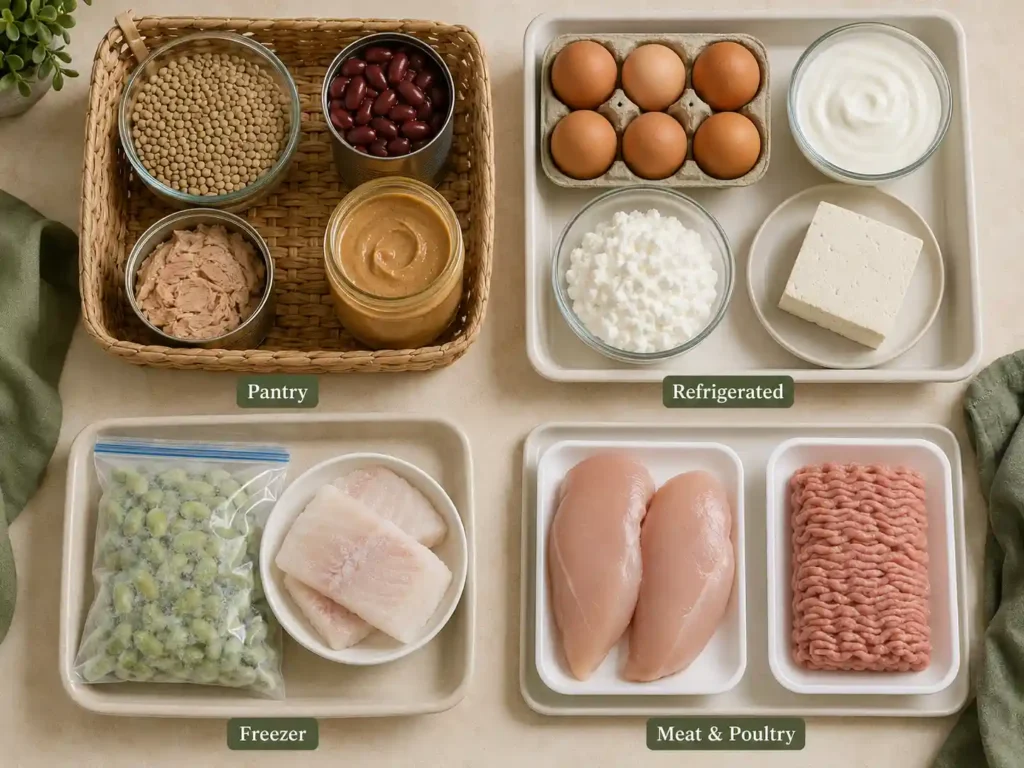
Dried lentils, dried beans, chickpeas, and split peas are useful for soups, bowls, salads, and simple sides. Compare their local unit prices with canned options while accounting for the extra cooking time. Canned beans and chickpeas are convenient for quick meals because they can be drained, rinsed when appropriate, and added directly to a dish.
Canned light tuna, salmon, sardines, and chicken can support fast lunches without requiring a separate cooking session. Use them in wraps, salads, sandwiches, or rice bowls, and follow the label for storage after opening. Peanut butter is easy to use in oatmeal, toast, smoothies, or snacks. Nuts and seeds can also add variety, but they should be compared carefully because package sizes and prices vary widely.
For a practical way to turn pantry legumes into lunch, try this high-protein dense bean salad.
Refrigerated Proteins
Eggs are flexible enough for breakfast, lunch, dinner, or snacks. Plain Greek-style yogurt and cottage cheese work in breakfast bowls, lunch plates, dips, sauces, and snacks. Milk can support oatmeal, smoothies, sauces, and breakfast meals.
Tofu is a plant-based option for scrambles, stir-fries, bowls, and sheet pan meals. Block cheese can add flavor and support a meal, but it should not automatically replace a primary protein choice. Compare the package size and planned use before adding it to a tight-budget list.
Readers who regularly buy cottage cheese can find more ways to finish a container in these high-protein cottage cheese recipes.
Freezer Proteins
Frozen edamame is easy to portion for bowls, salads, and snacks. Chicken or fish from the freezer may also be useful when the local unit price is favorable or when that format better matches your schedule. Shrimp is worth considering when discounted, but it should not be treated as a universally inexpensive staple.
Before buying a large frozen package, make sure you have enough freezer space and a realistic plan for using it. A resealable bag or individually frozen pieces can make portioning easier, but exact product features must be checked on the package.
Meat and Poultry Options
Chicken thighs, chicken breast value packs, ground chicken, and ground turkey can all fit a budget plan depending on the local unit price. Lean ground beef may also work when it fits the weekly budget or is discounted. Instead of assuming one cut is always cheaper, compare the shelf labels and choose a format you can use in several meals.
Ground meat can be divided across bowls, pasta dishes, tacos, and meal prep lunches. This ground chicken protein bowl is one example of how to turn a package into a complete meal.
| Food | Store Section | Best Uses | Prep Level | Budget Note |
|---|---|---|---|---|
| Eggs | Refrigerated | Breakfast, bowls, snacks | Low | Useful across several meals |
| Canned beans | Pantry | Salads, wraps, soups | Low | Compare convenience with dried beans |
| Dried lentils | Pantry | Soups, bowls, sides | Medium | Requires cooking and planning |
| Canned light tuna | Pantry | Wraps, salads, quick lunches | Low | Shelf-stable before opening |
| Plain Greek-style yogurt | Refrigerated | Breakfast, snacks, sauces | Low | Compare unit prices across sizes |
| Cottage cheese | Refrigerated | Breakfast, lunch plates, dips | Low | Plan several uses for one container |
| Tofu | Refrigerated | Stir-fries, bowls, scrambles | Medium | Choose a texture that fits the recipe |
| Frozen edamame | Freezer | Bowls, salads, snacks | Low | Portion only what you need |
| Chicken thighs | Meat and poultry | Bowls, sheet pan meals, dinners | Medium | Compare with other chicken cuts weekly |
| Ground turkey | Meat and poultry | Tacos, pasta, bowls | Medium | Plan two or more meal uses |
| Peanut butter | Pantry | Breakfast, smoothies, snacks | Low | Check ingredients and unit price |
Best Budget Protein Choices by Situation
Best for No-Cook Meals
Plain Greek-style yogurt, cottage cheese, canned fish, canned chicken, and canned beans can be assembled quickly. Open, drain, rinse, or refrigerate them as directed on the label, then pair them with bread, tortillas, vegetables, fruit, or a cooked grain.
Best for Meal Prep
Eggs, lentils, beans, tofu, chicken, ground chicken, and ground turkey can be prepared in batches and used in different combinations. The cheap high-protein meal prep guide shows how to organize a small set of groceries into several practical meals.
Best Vegetarian Options
Beans, lentils, chickpeas, tofu, edamame, eggs, yogurt, cottage cheese, and milk offer a range of vegetarian choices. Select the foods that match your eating preferences and the meals you already know how to prepare.
Best Pantry Options
Dried legumes, canned beans, canned fish, canned chicken, peanut butter, nuts, and seeds are useful when refrigerator space is limited. Their value still depends on the local package price and whether the household will use the full amount.
Best Beginner Options
Eggs, canned beans, canned tuna, plain yogurt, cottage cheese, and tofu require relatively little equipment. A beginner can combine one of these with a meal base and vegetables without learning a complicated recipe first.
A Simple One-Week Starter Grocery List
Instead of copying a rigid cart, choose a small number of foods from each role. This keeps the list flexible when one option is expensive, unavailable, or already in your kitchen.
| Choose | Number to Pick | Examples | How to Use |
|---|---|---|---|
| Pantry proteins | 2 | Canned beans, lentils, canned tuna | Soups, salads, wraps, quick lunches |
| Refrigerated proteins | 2 | Eggs, yogurt, cottage cheese, tofu | Breakfasts, snacks, quick meals |
| Batch-cook protein | 1 | Chicken, ground turkey, tofu, lentils | Cook once and use in several meals |
| No-cook option | 1 | Canned fish, beans, cottage cheese | Fast lunches and backup meals |
| Meal bases | 2 | Rice, oats, tortillas, pasta, potatoes | Build complete meals around the protein |
| Vegetables | 3 | Fresh, frozen, or canned choices | Add to bowls, sides, salads, and skillets |
| Flavor helpers | 2 | Seasonings, sauces, herbs, citrus | Give repeated ingredients different flavors |
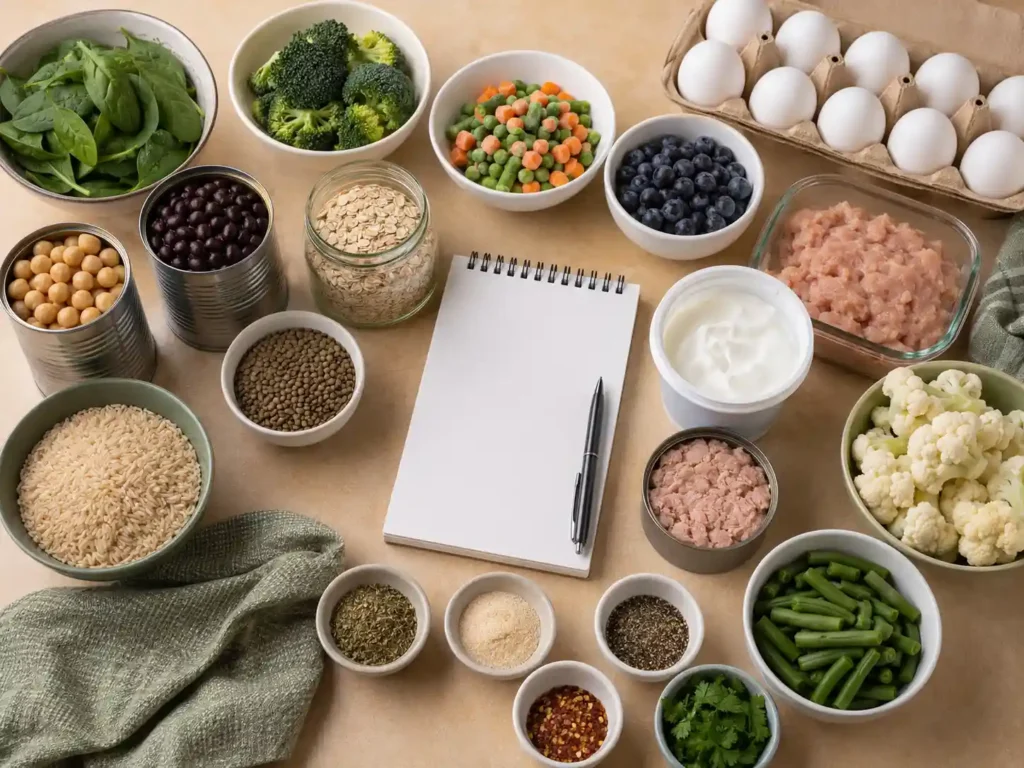
Meal bases and vegetables help build satisfying, practical meals, but they are not necessarily the main protein source. Choose them according to your planned dishes, pantry inventory, and local prices.
How to Turn These Groceries Into Easy Meals
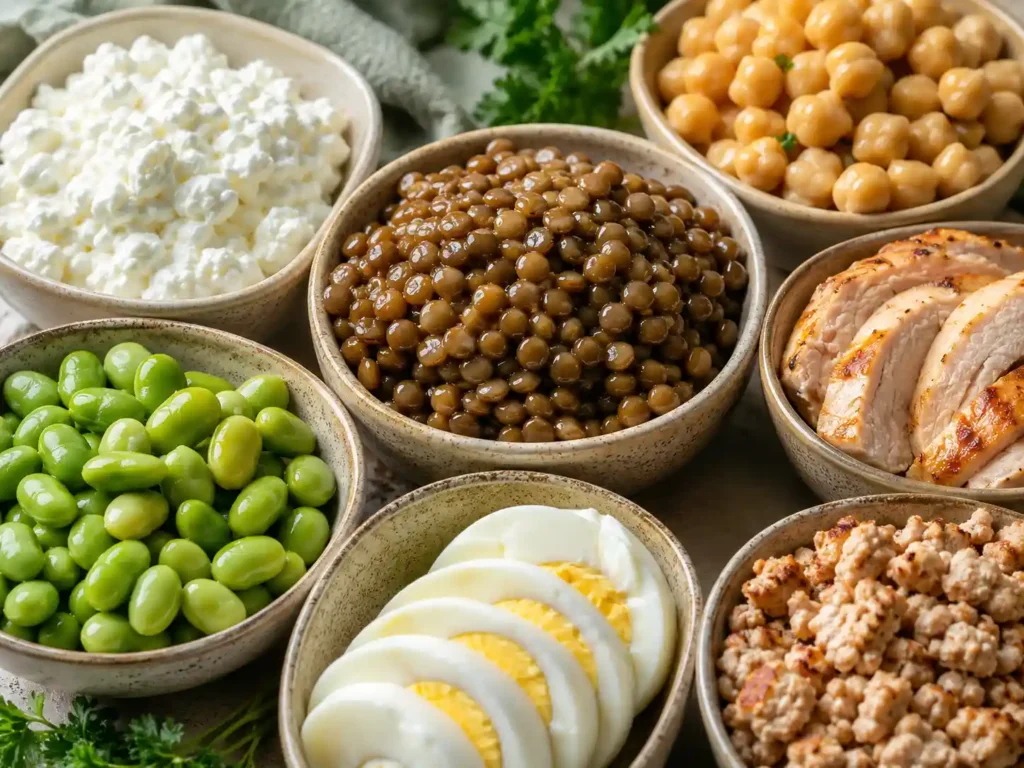
Breakfast Ideas
- Eggs with toast and vegetables
- Plain Greek-style yogurt with fruit and oats
- Cottage cheese with fruit or savory toppings
- Oatmeal made with milk and peanut butter
- A simple smoothie using milk or yogurt
Lunch Ideas
- Bean salad with chopped vegetables and a simple dressing
- Tuna or canned chicken wrap
- Cottage cheese lunch plate with vegetables and crackers
- Leftover chicken or tofu rice bowl
- Lentil soup with bread or a side salad
Use the high-protein lunch ideas collection when you need more combinations for work or home.
Dinner Ideas
- Ground turkey rice bowls
- Chicken and vegetable sheet pan meals
- Tofu stir-fry with rice
- Lentil pasta bowls
- Bean and vegetable tacos
For additional ways to use the same groceries, browse these easy protein dinner ideas.
Snack Ideas
- Plain yogurt with fruit
- Cottage cheese with vegetables or fruit
- Hard-boiled eggs
- Peanut butter with apple slices or toast
- A small portion of nuts or seeds when they fit the weekly budget
You can also explore the broader easy high-protein recipes collection for breakfasts, lunches, dinners, and snacks.
How to Save More on Protein Groceries
- Check the pantry, refrigerator, and freezer before writing the list.
- Choose meals first, then buy the foods needed for those meals.
- Compare unit prices using the same measurement.
- Check store brands and name brands instead of assuming either one is cheaper.
- Buy a larger package only when you have a use, storage, or freezing plan.
- Mix animal and plant options according to your preferences and local prices.
- Pick ingredients that work in at least two meals.
- Use promotions for foods already included in your plan.
- Keep one pantry or freezer protein available for schedule changes.
- Review what was wasted before planning the next grocery trip.
What Is Often Not the Best First Buy on a Tight Budget?
Single-serve protein drinks, specialty bars, premium powders, prepared protein meals, and pre-portioned snack packs may include a convenience premium. Premium meat cuts and niche ingredients intended for one recipe can also make a limited grocery budget harder to manage. Compare the unit price and planned use rather than assuming any category is always a poor purchase.
Convenience can still be worthwhile when it prevents skipped meals or food waste. The goal is not to ban packaged products. It is to make sure the extra cost, if any, solves a real problem for your household.
Helpful Tools for This Guide
A few basic kitchen tools can make pantry proteins and batch cooking easier:
- Manual can opener: Useful for canned beans, fish, and chicken.
- Colander or fine-mesh strainer: Helpful for draining and rinsing beans or lentils.
- Freezer-safe containers or bags: Useful when dividing larger packages into planned portions.
- Large skillet or sheet pan: Practical for cooking one protein with vegetables.
- Meal prep containers: Helpful for organizing lunches and leftovers.
Choose sizes and materials that fit your storage space and cooking routine.
Cheap Protein Grocery List FAQs
What are some affordable protein foods to check first?
Eggs, beans, lentils, canned fish, tofu, plain Greek-style yogurt, cottage cheese, chicken, and ground turkey are useful categories to compare. The most affordable choice depends on the store, package, location, and week.
How can I make a high-protein grocery list on a budget?
Choose a few versatile protein foods, compare unit prices, plan more than one use for each purchase, and fill out the meals with bases, vegetables, and seasonings you will actually use.
What protein foods can I keep in the pantry?
Dried lentils, dried beans, canned beans, chickpeas, split peas, canned fish, canned chicken, peanut butter, nuts, and seeds are pantry options. Follow the package directions for storage before and after opening.
Do I need protein powder for protein-focused meals?
No. Meals can be built with foods such as eggs, beans, lentils, dairy, tofu, fish, chicken, turkey, and beef. Powder is optional and should be evaluated by its ingredients, unit price, and actual usefulness in your routine.
What should a beginner buy for one week of meals?
A simple starting cart can include two pantry proteins, two refrigerated choices, one protein to cook in a batch, and one quick backup option. Add a few meal bases, vegetables, and flavor helpers that match the meals you plan to make.
Build Your Next Week of Budget Protein Meals
A useful grocery list changes with your store, schedule, and pantry. Start with a few flexible proteins, assign each one to at least two meals, and leave room to swap products when the local unit price does not work. The high-protein meal plan for beginners can help turn these building blocks into a simple weekly routine. Join the Budget Protein Meals newsletter for practical meal ideas and future printable grocery guides.