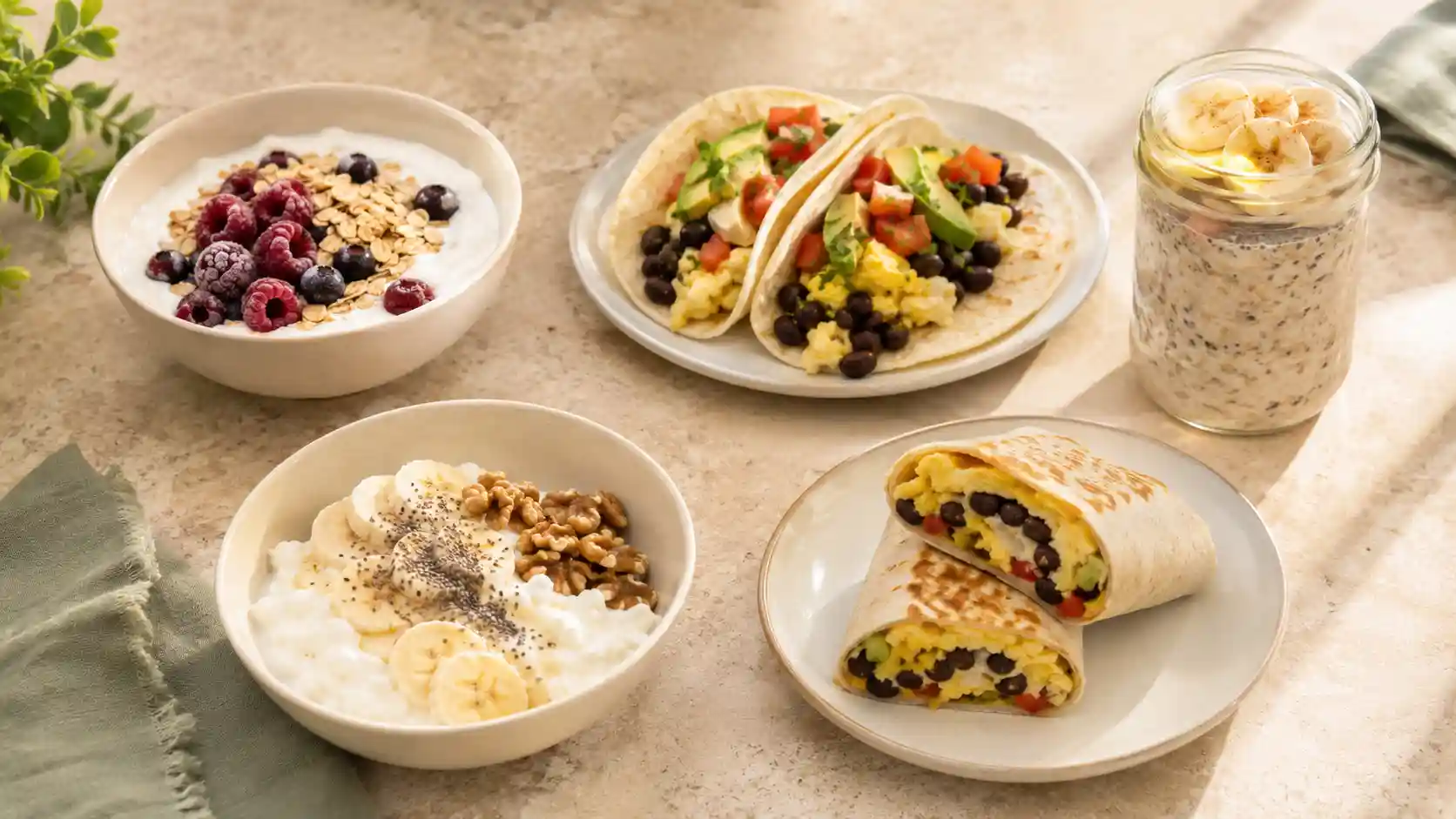
High-protein breakfasts on a budget do not require specialty powders or a long shopping list. A more practical strategy is to start with familiar foods, reuse the same ingredients in different ways, and build breakfasts that fit your weekday routine.
This guide includes no-cook bowls, egg breakfasts, egg-free options, make-ahead recipes, and freezer-friendly ideas. Prices vary by store, region, brand, package size, season, and promotion, so this article does not promise a fixed cost. Instead, it focuses on helping you shop efficiently and turn a small group of ingredients into several different breakfasts.
Quick Answer: What Are the Best High-Protein Breakfasts on a Budget?
Practical options often start with eggs, Greek-style yogurt, cottage cheese, oats made with milk, beans, lentils, tofu, or peanut butter paired with another protein source. These foods can be used in several meals and adapted to sweet or savory breakfasts. The best value depends on local prices, serving sizes, available storage, preparation time, and which ingredients your household will actually finish.
What Makes a Breakfast High-Protein and Budget-Friendly?
Start With One Clear Protein Anchor
Begin with one main protein source, such as eggs, Greek-style yogurt, cottage cheese, milk, beans, lentils, tofu, chicken, or turkey. You do not need to combine every possible protein in one meal. Choosing one dependable anchor keeps the grocery list manageable and makes each breakfast easier to assemble.
Add an Affordable Base
A base gives the breakfast structure and helps stretch the main ingredients. Rolled oats, bread, tortillas, potatoes, rice, or fruit can work depending on whether you want something cold, warm, savory, or portable. Reusing the same base during the week also reduces the number of one-use ingredients in your cart.
Compare Unit Price and Serving Size
Package price alone does not show the full value of a product. A large container may be useful when you can finish or safely store it, while a smaller package may make more sense when it prevents waste. For packaged foods, compare similar serving sizes and review the complete Nutrition Facts label instead of relying only on front-of-package claims.
For a broader shopping strategy, use this cheap protein grocery list to compare versatile protein foods and plan more than one use for each purchase.
Buy Ingredients You Can Use More Than Once
Repeat ingredients are one of the simplest ways to make breakfast planning more efficient. A container of yogurt can become a bowl, overnight oats, a smoothie, or a simple sauce. Oats can become warm oatmeal, breakfast cups, pancakes, or baked oatmeal. The more useful an ingredient is, the less likely it is to sit unused.
Do Not Depend on Protein Powder
Protein powder can be convenient, but it should remain optional. Eggs, dairy foods, tofu, beans, lentils, milk, chicken, and turkey can all serve as protein anchors. Readers who already use a powder can include it where appropriate, but the breakfast plan should still work without it.
25 Budget High-Protein Breakfast Ideas at a Glance
Use the tables below to compare the main protein source, preparation style, and budget strategy for each breakfast. The ideas are grouped by the type of morning they suit best, making it easier to find a quick, egg-free, cooked, or make-ahead option.
No-Cook and Quick Breakfast Ideas
| Breakfast idea | Main protein anchor | Preparation | Egg-free | Budget strategy | Best for |
|---|---|---|---|---|---|
| Greek Yogurt, Oats, and Frozen Berry Bowl | Greek-style yogurt | No-cook | Yes | Uses one yogurt base with oats and frozen fruit | Busy mornings |
| Cottage Cheese and Banana Breakfast Bowl | Cottage cheese | No-cook | Yes | Keeps the ingredient list short | Quick breakfast |
| Blackberry Greek Yogurt Protein Cups | Greek-style yogurt | Make-ahead | Yes | Uses a larger yogurt container across several cups | Grab and go |
| Blueberry Cottage Cheese Meal Prep Cups | Cottage cheese | Make-ahead | Yes | Portions one container into several breakfasts | Meal prep |
| Greek Yogurt and Peanut Butter Overnight Oats | Greek-style yogurt | Make-ahead | Yes | Uses versatile pantry and refrigerator staples | Prep ahead |
| Protein Coffee Smoothie | Greek-style yogurt, milk, or another recipe-specific protein | No-cook | Yes | Uses flexible ingredients instead of a specialty drink | Portable mornings |
Budget Egg Breakfast Ideas
| Breakfast idea | Main protein anchor | Preparation | Egg-free | Budget strategy | Best for |
|---|---|---|---|---|---|
| Egg and Black Bean Breakfast Tacos | Eggs and beans | Cooked | No | Beans and tortillas help extend the eggs | Savory breakfast |
| Cottage Cheese Scrambled Eggs on Toast | Eggs and cottage cheese | Cooked | No | Uses two ingredients across several meals | Quick hot breakfast |
| Vegetable Egg Muffins | Eggs | Make-ahead | No | Uses leftover or frozen vegetables | Meal prep |
| Egg, Potato, and Bean Skillet | Eggs and beans | Cooked | No | Uses potatoes and beans as flexible bases | Hearty mornings |
| Hard-Boiled Egg Breakfast Box | Eggs | Make-ahead | No | Uses simple sides already in the kitchen | Grab and go |
| Egg, Rice, Bean, and Salsa Breakfast Bowl | Eggs and beans | Cooked | No | Repurposes cooked rice and pantry beans | Leftover-friendly meals |
High-Protein Breakfast Ideas Without Eggs
| Breakfast idea | Main protein anchor | Preparation | Egg-free | Budget strategy | Best for |
|---|---|---|---|---|---|
| Peach Cobbler Protein Overnight Oats | Greek-style yogurt or another recipe-specific protein | Make-ahead | Yes | Uses one basic oat mixture with flexible fruit | Prep ahead |
| Savory Cottage Cheese and Bean Toast | Cottage cheese and beans | Quick assembly | Yes | Combines bread with two reusable ingredients | Fast savory breakfast |
| Tofu Scramble and Bean Wrap | Tofu and beans | Cooked | Yes | Uses tortillas and pantry beans | Egg-free breakfast |
| Cheesy Bean Toast With a Greek Yogurt Side | Beans and Greek-style yogurt | Quick assembly | Yes | Uses familiar groceries in more than one meal | Quick breakfast |
| Peanut Butter Banana Oatmeal Made With Milk | Milk and peanut butter | Cooked | Yes | Uses common pantry ingredients | Warm breakfast |
| Lentil and Potato Breakfast Bowl With Yogurt Sauce | Lentils and yogurt | Cooked | Yes | Builds a savory bowl from staple ingredients | Meal prep |
Make-Ahead and Freezer-Friendly Breakfast Ideas
| Breakfast idea | Main protein anchor | Preparation | Egg-free | Budget strategy | Best for |
|---|---|---|---|---|---|
| Freezer Egg and Bean Burritos | Eggs and beans | Make-ahead | No | Uses one batch for several mornings | Busy mornings |
| Cottage Cheese Egg Bake With Frozen Vegetables | Eggs and cottage cheese | Make-ahead | No | Uses frozen vegetables and one baking dish | Meal prep |
| Greek Yogurt Baked Oatmeal | Greek-style yogurt | Make-ahead | Depends on recipe | Batch-cooks oats for several servings | Meal prep |
| Greek Yogurt Protein Biscuits | Greek-style yogurt | Make-ahead | Check recipe | Creates a flexible sandwich or side base | Grab and go |
| Turkey and Egg Breakfast Sandwiches | Turkey and eggs | Make-ahead | No | Builds several sandwiches in one session | Portable breakfast |
| Chicken and Sweet Potato Breakfast Hash | Chicken | Cooked | Yes | Repurposes leftover cooked chicken | Hearty breakfast |
| Oat, Egg, and Greek Yogurt Pancake Batch | Eggs and Greek-style yogurt | Make-ahead | No | Batch-cooks one mixture for several mornings | Weekend prep |
No-Cook and Five-Minute Breakfasts
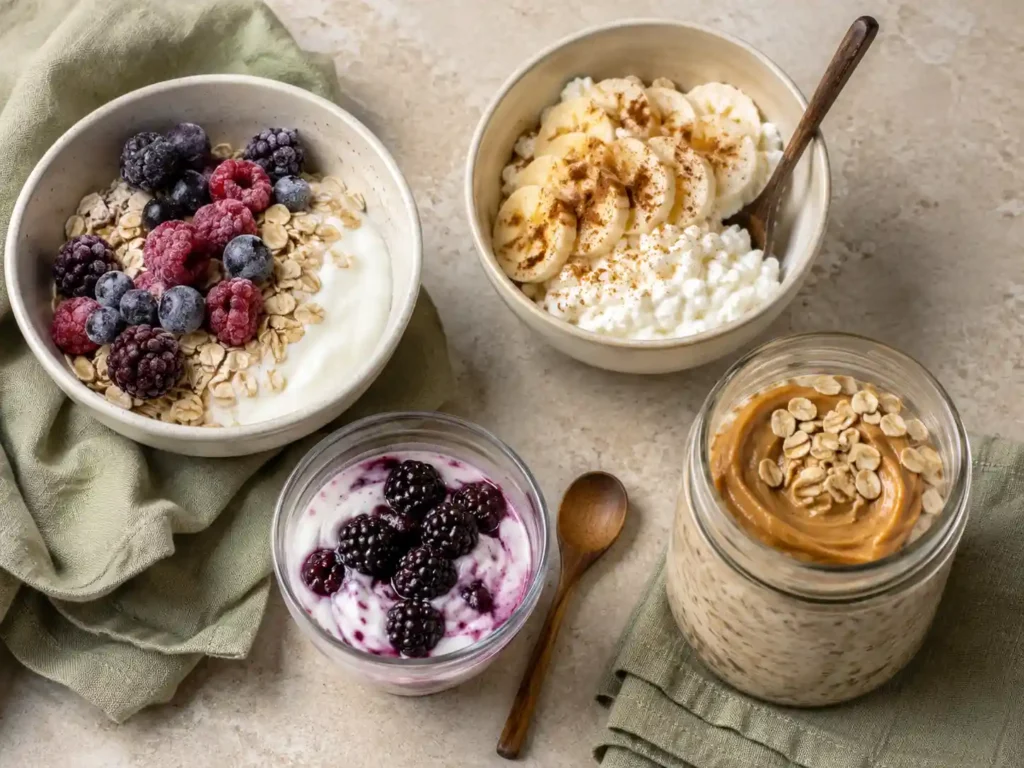
1. Greek Yogurt, Oats, and Frozen Berry Bowl
This breakfast starts with Greek-style yogurt, then adds oats and frozen berries for texture and flavor. It works well for a practical grocery plan because the yogurt and oats can appear in several other breakfasts, while frozen fruit lets you use only what you need. Swap the berries for another frozen fruit or add cinnamon. Keep crunchy toppings separate until serving.
2. Cottage Cheese and Banana Breakfast Bowl
Cottage cheese is the main protein anchor, while banana adds sweetness without requiring a complicated recipe. The bowl uses only a few ingredients and can be changed with cinnamon, oats, berries, or peanut butter. For more topping combinations and a complete method, use this cottage cheese breakfast bowl as your starting point.
3. Blackberry Greek Yogurt Protein Cups
These cups use Greek-style yogurt with a blackberry layer for a cold breakfast that can be portioned in advance. Preparing several cups from one larger yogurt container can be more practical than buying multiple individual containers. Fresh or frozen berries can work depending on availability. Keep granola or toasted oats separate so they remain crisp. See the complete blackberry Greek yogurt protein cups recipe for exact quantities.
4. Blueberry Cottage Cheese Meal Prep Cups
This idea combines cottage cheese and blueberries in small containers that are easy to store and pack. It helps use one cottage cheese container across several breakfasts while keeping the ingredient list manageable. Replace blueberries with another fruit that fits your groceries. Add oats or another crunchy topping only when serving. The full blueberry cottage cheese meal prep cups recipe provides the complete method.
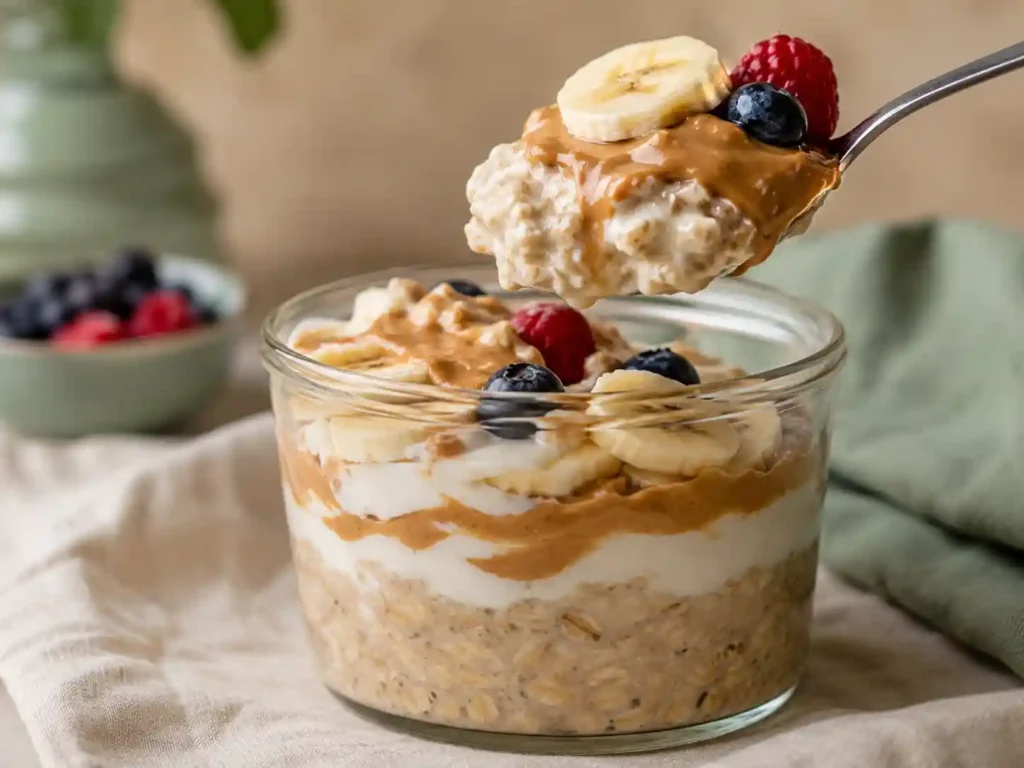
5. Greek Yogurt and Peanut Butter Overnight Oats
Overnight oats make it easy to reuse yogurt, oats, milk, and peanut butter throughout the week. Mix the breakfast the night before and let the oats soften in the refrigerator. Banana, cinnamon, or frozen fruit can change the flavor without requiring a separate collection of specialty ingredients. Adjust the liquid according to the oats and yogurt you use.
6. Protein Coffee Smoothie
A coffee smoothie can combine breakfast and a morning drink in one portable option. Use the milk, Greek-style yogurt, or other protein ingredient specified in your chosen recipe, then add chilled coffee and simple flavorings. It remains more budget-conscious when built around groceries you already use. Explore these protein coffee smoothie ideas for complete combinations and preparation notes.
Budget Egg Breakfasts
7. Egg and Black Bean Breakfast Tacos
Eggs and black beans make a practical taco filling, while tortillas turn the combination into a portable breakfast. Beans also let you use fewer eggs without making the meal feel incomplete. Replace black beans with pinto beans or another bean already in the pantry. Salsa, herbs, or leftover vegetables can provide flavor without requiring a separate breakfast sauce.
8. Cottage Cheese Scrambled Eggs on Toast
Adding cottage cheese to scrambled eggs gives you two familiar protein ingredients in one quick breakfast. Toast provides a simple base and can also be used for other meals during the week. Replace the toast with tortillas or potatoes when needed. This idea is especially useful when you have part of a cottage cheese container left after making bowls or meal prep cups.
9. Vegetable Egg Muffins
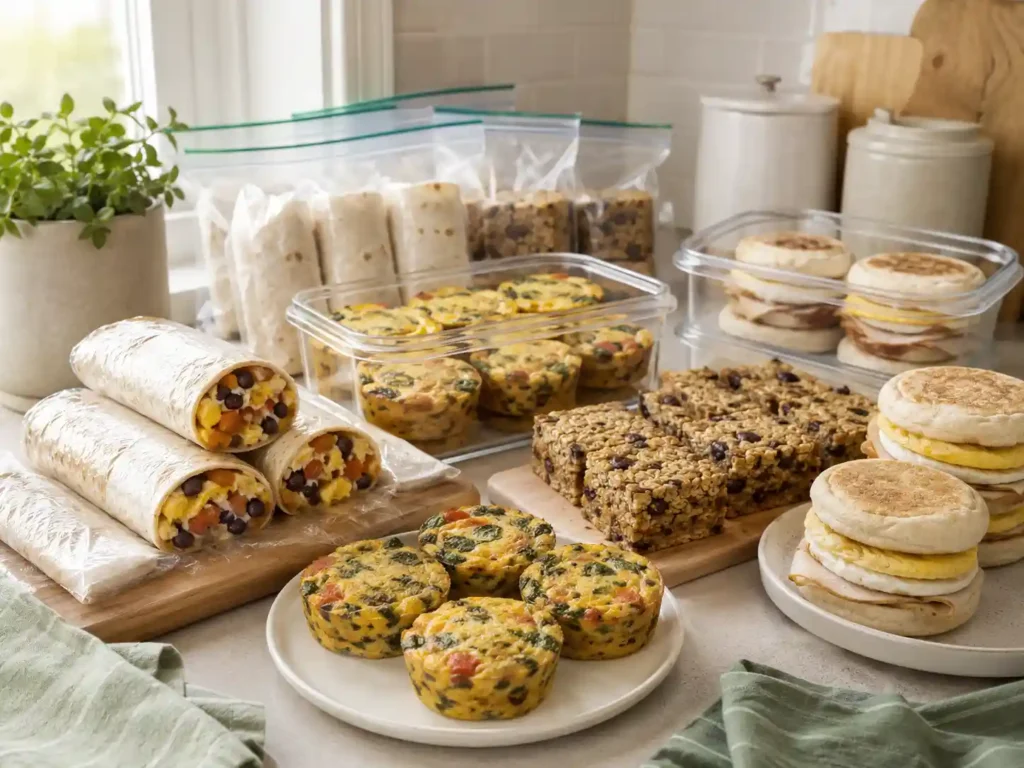
Egg muffins are a flexible way to use small amounts of cooked or frozen vegetables. Prepare a batch, portion the muffins, and use them for breakfasts that need minimal morning preparation. Spinach, peppers, onions, broccoli, or another suitable vegetable can work. Use recipe-specific storage instructions and refrigerate or freeze the cooked muffins promptly in appropriate containers.
10. Egg, Potato, and Bean Skillet
This skillet combines eggs with potatoes and beans for a warm savory breakfast. Potatoes and beans are useful because they can also appear in lunch bowls, tacos, soups, or dinner sides. Replace the potatoes with leftover rice when that is more convenient. Cook the components in one skillet and season them with spices, salsa, or herbs already in your kitchen.
11. Hard-Boiled Egg Breakfast Box
A breakfast box turns a batch of hard-boiled eggs into an easy portable meal. Add simple sides such as fruit, toast, vegetables, or crackers according to what you already have. Keep moist foods separate from bread or crackers when possible. Follow safe refrigeration guidance for the eggs and any dairy or cooked ingredients included in the box.
12. Egg, Rice, Bean, and Salsa Breakfast Bowl
This bowl is a useful way to repurpose cooked rice from another meal. Add beans, eggs, and salsa for a savory breakfast with familiar ingredients. Potatoes or tortillas can replace the rice when needed. This format works best when you plan the rice and beans for several meals instead of buying or cooking them only for breakfast.
High-Protein Breakfasts Without Eggs
13. Peach Cobbler Protein Overnight Oats
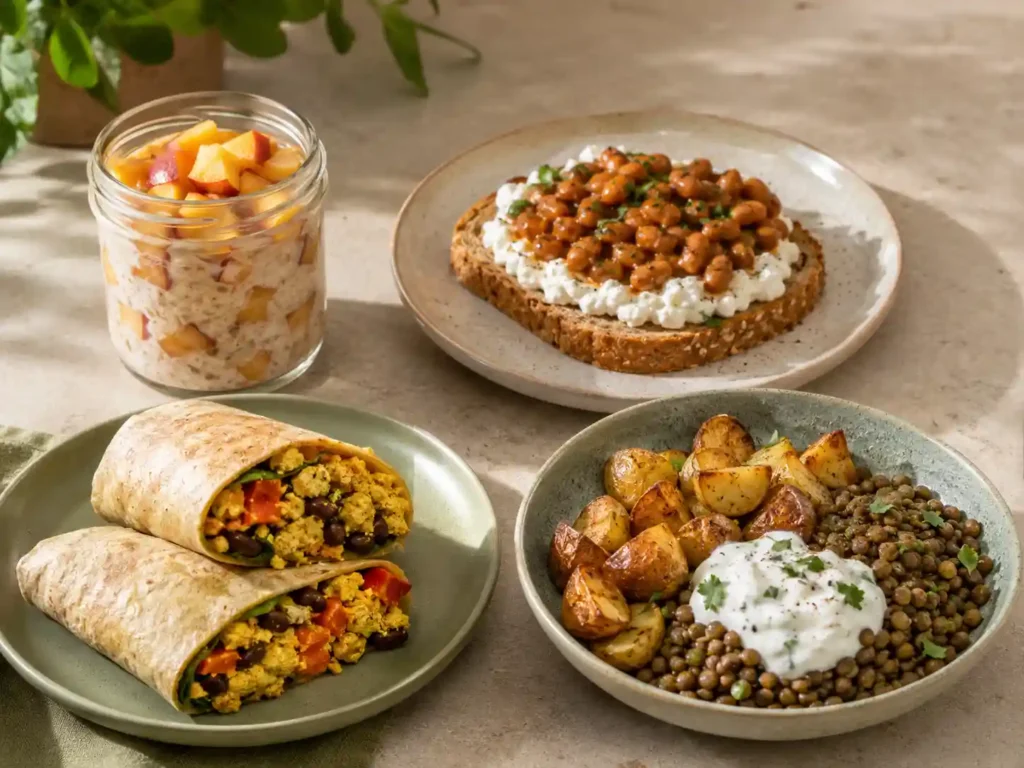
These overnight oats combine rolled oats, peaches, Greek-style yogurt, and recipe-specific optional ingredients in a cold make-ahead breakfast. Fresh, frozen, or properly drained canned peaches may work depending on the recipe. Keep crunchy toppings separate until serving. Follow the complete peach cobbler protein overnight oats recipe for verified quantities and storage guidance.
14. Savory Cottage Cheese and Bean Toast
This savory toast uses cottage cheese and beans instead of relying on sweet breakfast toppings. Bread, beans, and cottage cheese can all be reused in lunches or snacks, which makes the combination practical for a small grocery list. Add salsa, herbs, black pepper, or chopped vegetables for flavor. Toast the bread shortly before serving to protect its texture.
15. Tofu Scramble and Bean Wrap
Tofu scramble offers a savory egg-free base that works with beans and tortillas. Prepare the tofu with vegetables or seasonings you already use, then wrap it with beans for a portable breakfast. Rice or potatoes can replace the tortilla when you prefer a bowl. Make sure any cooked filling is refrigerated promptly and reheated according to recipe-specific guidance.
16. Cheesy Bean Toast With a Greek Yogurt Side
Beans on toast paired with plain Greek-style yogurt creates a simple breakfast using familiar groceries. The components can also be used separately in bowls, sauces, snacks, and lunches. Add cheese only when it fits the meal and your grocery plan. Salsa, herbs, or vegetables can provide a different flavor without adding another specialized product.
17. Peanut Butter Banana Oatmeal Made With Milk
Oatmeal made with milk and finished with peanut butter and banana uses ingredients that are easy to repeat throughout the week. The milk serves as the main protein contributor, with peanut butter adding flavor and additional nutrition. Replace banana with another fruit or use cinnamon when fruit is unavailable. Check the peanut butter and milk labels if you need to compare products.
18. Lentil and Potato Breakfast Bowl With Yogurt Sauce
Lentils and potatoes create a savory bowl that can be assembled from previously cooked ingredients. A plain yogurt sauce adds creaminess and can also be used with lunch or dinner bowls. Rice can replace the potatoes, while beans can replace the lentils. Keep the sauce separate during storage and combine the components after reheating.
Make-Ahead and Freezer-Friendly Ideas
19. Freezer Egg and Bean Burritos
Freezer burritos let you prepare several breakfasts during one cooking session. Eggs and beans form the filling, while tortillas keep the meal portable. Cooked vegetables, salsa, or a small amount of cheese can be added when appropriate. Avoid overly wet fillings, wrap each burrito securely, label the package, and follow recipe-specific freezing and reheating directions.
20. Cottage Cheese Egg Bake With Frozen Vegetables
An egg bake with cottage cheese and frozen vegetables creates several portions in one baking dish. Frozen vegetables are convenient because you can use the needed amount and keep the rest frozen. Serve the bake with toast, potatoes, or fruit according to your routine. Portion the cooked bake into shallow containers and refrigerate or freeze it promptly.
21. Greek Yogurt Baked Oatmeal
Baked oatmeal changes the texture of everyday oats and can cover several mornings from one pan. Greek-style yogurt can add creaminess, while fruit and cinnamon provide easy flavor variations. Some baked oatmeal recipes use eggs and others use a different binder, so check the complete recipe before labeling the result egg-free. Store and reheat it according to the recipe you follow.
22. Greek Yogurt Protein Biscuits
Greek-style yogurt biscuits can serve as a breakfast side or the base for a sandwich. Baking a batch gives you several ways to use the same item during the week. Pair the biscuits with eggs, cottage cheese, fruit, chicken, or turkey according to your meal plan. Use the complete high-protein Greek yogurt biscuits recipe for the ingredient quantities, baking instructions, and storage notes.
23. Turkey and Egg Breakfast Sandwiches
Turkey and egg sandwiches are useful when you want breakfast ready before leaving home. Prepare the eggs and turkey, then assemble them with bread or English muffins. Another cooked poultry option can replace turkey when that is what you already have. If freezing the sandwiches, avoid watery toppings and add fresh vegetables or sauces after reheating.
24. Chicken and Sweet Potato Breakfast Hash
This hash is a practical way to turn leftover cooked chicken into a new meal. Sweet potatoes provide the base, while onions, peppers, or frozen vegetables can add flavor and texture. Regular potatoes can replace sweet potatoes. Only use chicken that has been handled and stored safely, and refrigerate the finished hash promptly in shallow containers.
25. Oat, Egg, and Greek Yogurt Pancake Batch
A batch of pancakes can provide several breakfasts from one mixing and cooking session. Oats, eggs, and Greek-style yogurt create a flexible base, while cinnamon, banana, or berries can change the flavor. Cool the pancakes briefly, package them in suitable portions, and refrigerate or freeze them promptly. Reheat only the amount you plan to serve.
Budget Protein Staples to Compare for Breakfast
There is no single ingredient that is always the least expensive. Prices change by location, store, brand, package size, and promotion. The following foods are worth comparing because they can be used in several types of breakfast:
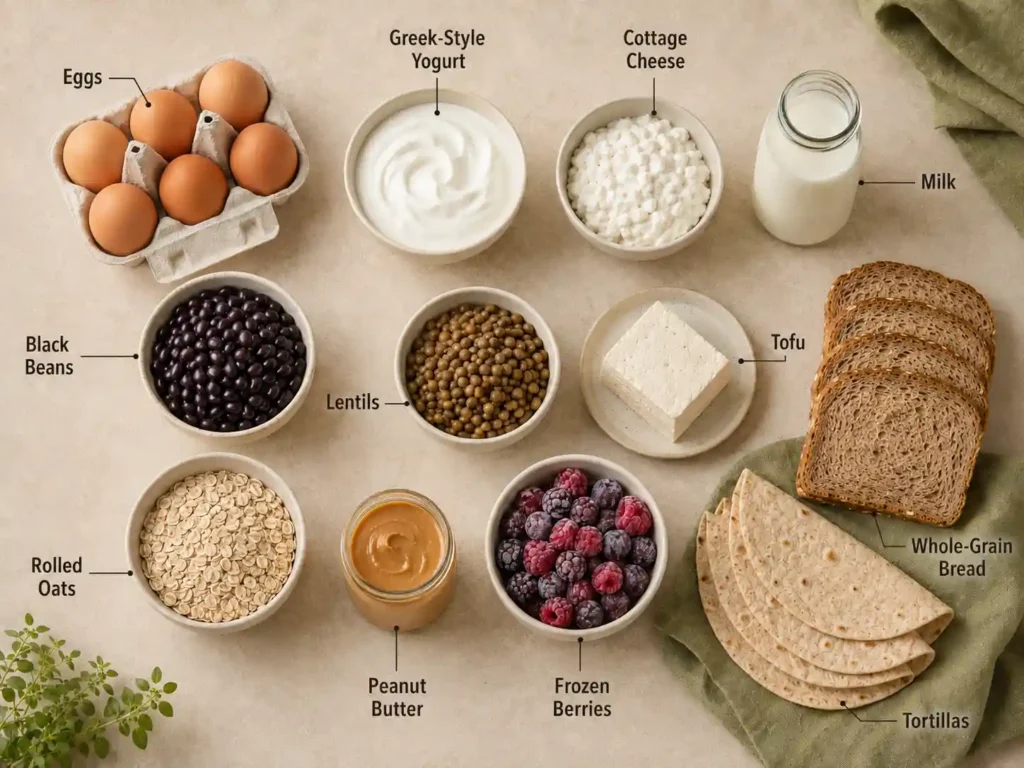
- Eggs
- Plain Greek-style yogurt
- Cottage cheese
- Milk
- Beans and lentils
- Tofu
- Rolled oats
- Peanut butter
- Frozen fruit
- Frozen vegetables
- Whole-grain bread
- Tortillas
Meal bases such as oats, bread, potatoes, and tortillas are not always the primary protein source. Their role is to help you turn the chosen protein ingredient into a complete and practical breakfast.
How to Shop Once and Build Five Different Breakfasts
A short, reusable shopping list is usually more practical than buying a different set of ingredients for every morning. Choose a few foods that work together and vary the flavor, preparation method, and toppings.
Choose Two Main Protein Foods
Select two main protein foods you already know how to use. Eggs and Greek-style yogurt could support tacos, bowls, overnight oats, egg muffins, and smoothies. Cottage cheese and beans could become toast, bowls, wraps, or meal prep cups. The best pair depends on your local prices and preferences.
Choose One Oat or Bread Base
Choose a base that can appear in several breakfasts. Oats can become oatmeal, overnight oats, baked oatmeal, or pancakes. Bread can become toast, sandwiches, or a side for eggs. Using one main base reduces the number of packages opened during the week.
Choose One Fresh and One Frozen Produce Option
A fresh fruit or vegetable and a frozen option provide flexibility. Use the fresh item earlier in the week and keep the frozen produce for later meals or schedule changes. Frozen berries, spinach, peppers, or mixed vegetables can be portioned without opening a new fresh ingredient every morning.
Reuse the Same Flavor Boosters
Cinnamon, salsa, herbs, vanilla, peanut butter, lemon, and everyday seasonings can make repeated ingredients taste different. Choose a few flavor helpers that also work in lunch or dinner recipes. Avoid buying an expensive topping for only one breakfast unless you already know how you will finish it.
Sample Five-Day Budget Breakfast Rotation
| Day | Breakfast | Prep needed | Ingredients reused | Serve cold or reheat |
|---|---|---|---|---|
| Day 1 | Greek yogurt bowl with oats and frozen berries | Quick assembly | Yogurt, oats, berries | Serve cold |
| Day 2 | Egg and black bean breakfast tacos | Cook eggs and warm beans | Eggs, beans, tortillas | Serve warm |
| Day 3 | Peanut butter and banana overnight oats | Mix the night before | Oats, yogurt or milk, peanut butter | Serve cold |
| Day 4 | Cottage cheese breakfast bowl | Quick assembly | Cottage cheese, fruit, oats | Serve cold |
| Day 5 | Egg and bean breakfast burrito | Reheat a prepared burrito | Eggs, beans, tortillas | Reheat |
Want a simpler weekly routine? Join the Budget Protein Meals newsletter for practical breakfast ideas, reusable grocery lists, and future meal planning resources.
How to Meal Prep Breakfast Without Ruining the Texture
Keep Crunchy Toppings Separate
Granola, toasted oats, nuts, seeds, crackers, and crisp vegetables usually keep a better texture when stored separately. Add them shortly before eating rather than mixing them into yogurt, cottage cheese, or overnight oats several days in advance.
Use Shallow Containers and Refrigerate Promptly
Divide cooked food into shallow containers so it can cool more quickly, then refrigerate or freeze it promptly. Do not leave cooked breakfasts sitting at room temperature while waiting for them to become completely cold. Follow current food-safety guidance and the instructions for the specific recipe.
Label Refrigerator and Freezer Containers
Add the name of the breakfast and the preparation date to each container. Labels help you distinguish refrigerated meals from frozen meals and reduce the chance that prepared food will be forgotten. They are particularly helpful when preparing burritos, pancakes, egg muffins, and baked oatmeal at the same time.
Follow Recipe-Specific Storage Guidance
Different breakfasts require different storage and reheating methods. Yogurt cups, egg dishes, overnight oats, sandwiches, and baked items should not automatically receive the same storage duration. Use the instructions attached to the complete recipe and check freshness before serving.
Helpful Tools for This Guide
You do not need specialty equipment to prepare these breakfasts. A few basic tools can make portioning, batch cooking, and storage more convenient:
- Small jars or containers with secure lids for yogurt cups and overnight oats
- Meal prep containers for breakfast boxes, bowls, and cooked portions
- Freezer-safe bags or containers for burritos, pancakes, and sandwiches
- A blender for smoothies
- A nonstick skillet for eggs, tofu scrambles, and breakfast hashes
- A muffin pan for egg muffins
- A sheet pan or baking dish for baked oatmeal and egg bakes
- Measuring cups and spoons when following a complete recipe
Choose container sizes and tools that match your storage space and the breakfasts you plan to make. No specific product is required for this guide.
Common Budget Breakfast Mistakes
- Buying several ingredients that work in only one recipe
- Assuming the largest package always provides the best value
- Using protein powder in every breakfast
- Building the entire plan around eggs and forgetting egg-free options
- Adding several expensive toppings to one basic meal
- Publishing or relying on unverified nutrition estimates
- Mixing crunchy ingredients with wet ingredients too early
- Ignoring serving sizes when comparing packaged foods
- Preparing more food than the household can safely store and use
Nutrition Note
Nutrition varies according to ingredient quantities, serving sizes, brands, substitutions, toppings, and preparation methods. The ideas in this guide are flexible breakfast concepts rather than one standardized recipe, so exact calories, protein, and other nutrition values are not provided.
When comparing packaged foods, review the serving size and the complete Nutrition Facts label. Individual nutrition needs vary, and this article provides general meal-planning information rather than personalized medical or nutrition advice.
FAQs About High-Protein Breakfasts on a Budget
What is the cheapest high-protein breakfast?
No breakfast is always the cheapest because prices vary by store, location, brand, and week. Eggs, beans, oats prepared with milk or yogurt, cottage cheese, tofu, and Greek-style yogurt are useful categories to compare based on local unit prices and how many meals each package can support.
How can I make a high-protein breakfast without protein powder?
Start with regular foods such as eggs, Greek-style yogurt, cottage cheese, milk, tofu, beans, lentils, chicken, or turkey. Choose one as the protein anchor, then add a practical base such as oats, bread, potatoes, rice, or tortillas.
What are good high-protein breakfasts without eggs?
Options include overnight oats made with Greek-style yogurt, cottage cheese bowls, tofu scramble, bean toast, lentil breakfast bowls, yogurt cups, and smoothies made with milk or yogurt. Check the complete recipe when you need verified quantities or nutrition information.
Can I prepare these breakfasts ahead of time?
Many of the ideas can be prepared in advance, including overnight oats, yogurt cups, egg muffins, burritos, baked oatmeal, pancakes, and breakfast sandwiches. Follow recipe-specific guidance for refrigeration, freezing, thawing, and reheating.
How should I compare packaged breakfast foods?
Compare products using similar serving sizes and review the entire Nutrition Facts label. Consider the grams of protein per serving along with other nutrients, ingredients, package size, planned uses, and whether you are likely to finish the product.
Build a Breakfast Routine You Can Repeat
A useful budget breakfast plan does not need 25 separate grocery lists. Start with two protein foods, one flexible base, a few produce options, and flavorings you already use. Choose two or three breakfasts from this guide for the coming week, then repeat or adjust them according to your schedule.
When you are ready to organize breakfast, lunch, dinner, and snacks together, use this high-protein meal plan for beginners as your next planning step.