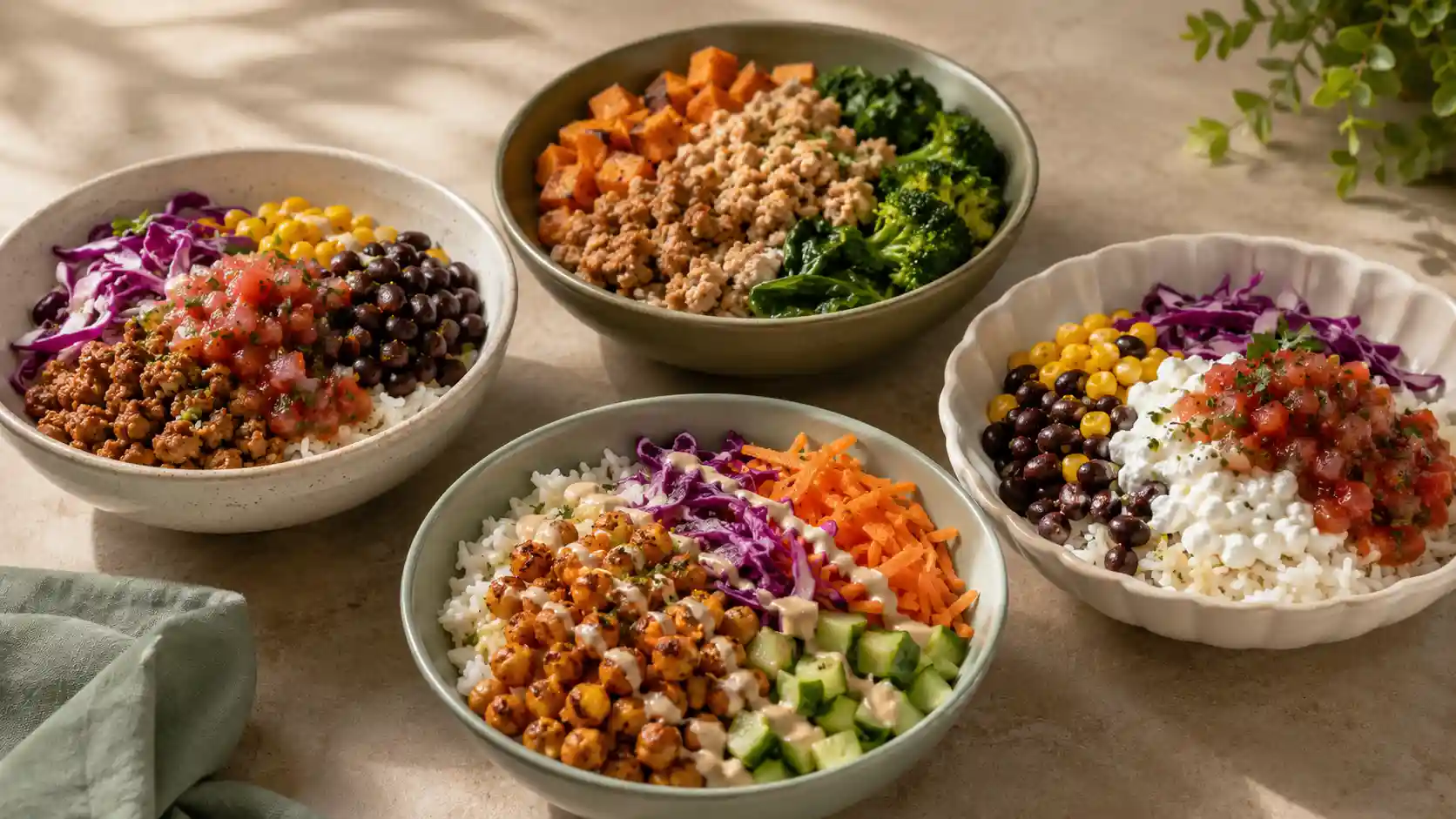
High protein bowls on a budget sound simple until every recipe calls for a different protein, sauce, grain, and topping. That approach can leave you with a long grocery list and several half-used ingredients.
This guide uses a reusable component strategy instead. You will choose a small number of proteins, bases, vegetables, and sauces, then combine them in different ways throughout the week. For a broader plan that also includes breakfasts and dinners, start with this cheap high protein meal prep guide.
Grocery prices vary by store, region, brand, package size, season, and promotion. The ideas below focus on practical shopping habits rather than promising a fixed cost per bowl.
Quick Answer: How Do You Make High Protein Bowls on a Budget?
The simplest method is to combine one clear protein source, one practical base, one or two vegetables, one versatile sauce, and an optional crunchy topping. Prepare only a few components, then change the combinations instead of cooking fifteen completely separate recipes.
| Component | Purpose | Practical Choices |
|---|---|---|
| Protein source | Centers the bowl around a protein-containing ingredient | Chicken, turkey, beef, eggs, beans, lentils, tofu, tuna, cottage cheese |
| Base | Adds volume and makes the meal more substantial | Rice, potatoes, pasta, lentils, beans |
| Vegetables | Add color, texture, and variety | Cabbage, carrots, frozen vegetables, cucumber, corn, spinach |
| Sauce | Changes the flavor without rebuilding the entire bowl | Salsa, yogurt sauce, mustard sauce, soy sauce, lemon dressing |
| Texture | Keeps the finished bowl from feeling one-note | Fresh herbs, cabbage, seeds, crushed tortilla chips |
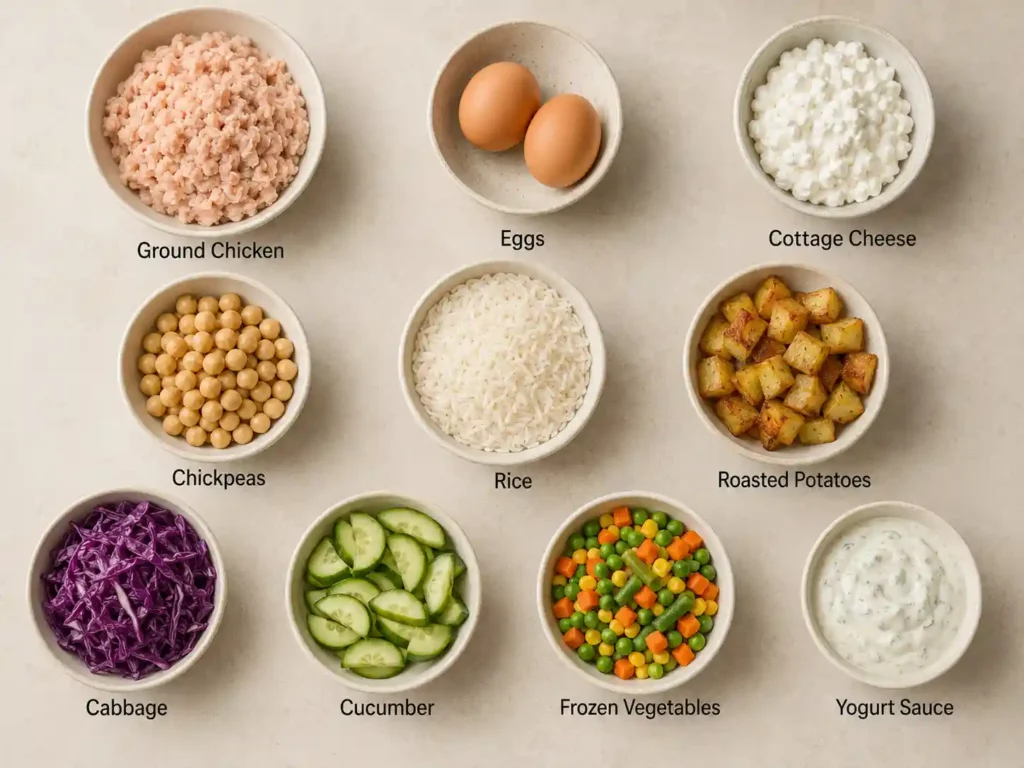
The 5-Part Budget Protein Bowl Formula
Start With a Clear Protein Source
Choose an ingredient that clearly anchors the bowl, such as chicken, ground turkey, eggs, beans, lentils, tofu, tuna, or cottage cheese. Some bowls combine two protein-containing ingredients, but you do not need several expensive additions in every meal.
Exact protein content depends on the quantity, serving size, brand, and other components used. Avoid assigning a protein number until the complete recipe has been calculated.
Add a Practical Base
Rice, potatoes, pasta, beans, and lentils can all serve as bowl bases. The most economical option will depend on local prices and what you already have at home.
Choose bases that can work in more than one meal. A batch of rice, for example, can support a taco bowl, a chicken bowl, and a tofu bowl without requiring three separate cooking sessions.
Choose Vegetables You Will Actually Use
The best vegetable for meal prep is one that fits several meals and will be eaten before its quality declines. Cabbage and carrots work in multiple bowl styles. Frozen vegetable blends are useful when you need flexible portions, while cucumber is best stored separately to protect its texture.
Add a Simple Sauce
A sauce can turn the same rice, chicken, and vegetables into a completely different meal. Salsa creates a taco-style bowl, while a yogurt and herb sauce changes the same ingredients into a fresher lunch.
Try to choose sauces that work with at least two of the bowls you plan to make. This helps prevent a collection of half-used bottles from building up in the refrigerator.
Finish With Texture
Fresh herbs, shredded cabbage, seeds, or crushed tortilla chips can add contrast. Keep crunchy toppings separate until serving so they do not soften during storage.
How to Shop Once and Build Several Different Bowls
Choose 2 Protein Options
Choose one protein that requires cooking and one quick option that is ready to use or needs little preparation. A weekly combination might include ground turkey plus eggs, chicken plus canned tuna, or tofu plus beans.
The cheap protein grocery list offers more ideas for comparing versatile protein options without relying on one specific grocery price.
Prepare 2 Bases
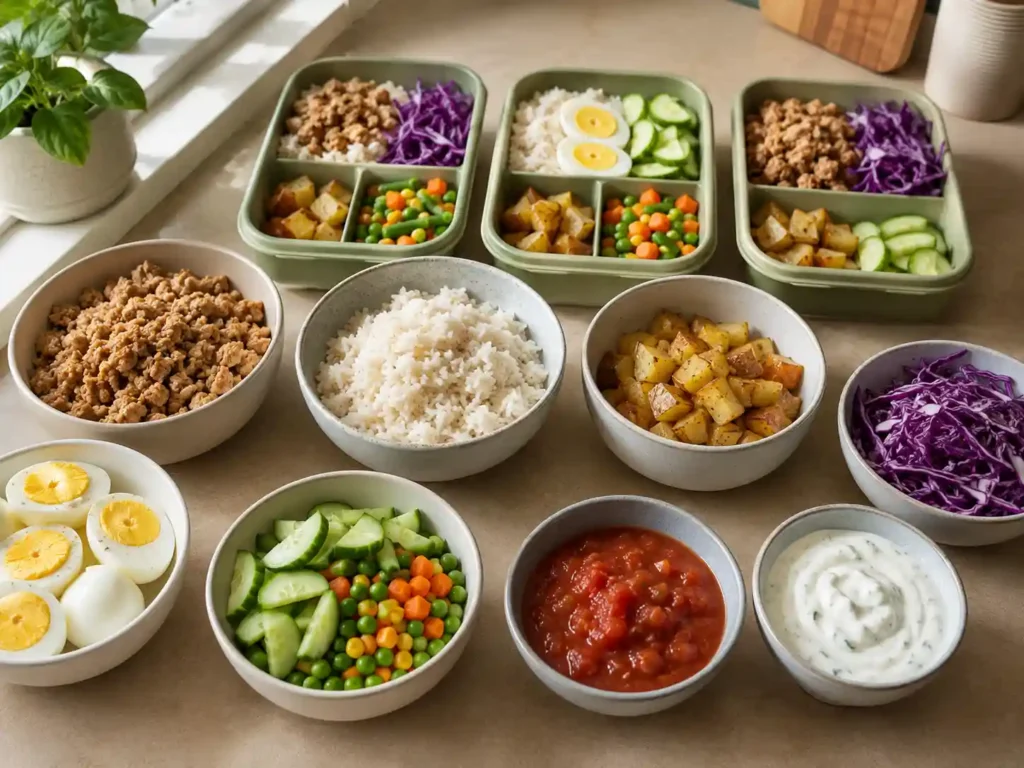
Prepare two bases at the beginning of your meal prep session. Rice and roasted potatoes are one flexible combination, but you can use pasta, beans, lentils, or another base that fits your menu.
Buy 3 Versatile Vegetables
Select three vegetables that can appear in several bowls. Cabbage, carrots, and a frozen vegetable blend can work with taco flavors, soy-based sauces, yogurt sauces, and simple mustard dressings.
Make 2 Simple Sauces
Two sauces are usually enough to give several bowls distinct flavors. Salsa and a yogurt-based sauce are one example. Soy sauce with garlic and a mustard-based sauce are another.
Use the Most Perishable Ingredients First
Plan the first meals around ingredients with the shortest quality window. Use delicate greens, cut cucumber, and ripe tomatoes earlier. Save frozen vegetables, canned beans, and other pantry ingredients for later meals.
Want more practical meal prep ideas? Join the Budget Protein Meals email list for budget-conscious meal inspiration and flexible weekly planning tips.
15 High Protein Bowls on a Budget
The following ideas are flexible bowl concepts rather than complete recipes with fixed quantities. Adjust each combination to your preferred portion size, available groceries, and local prices.
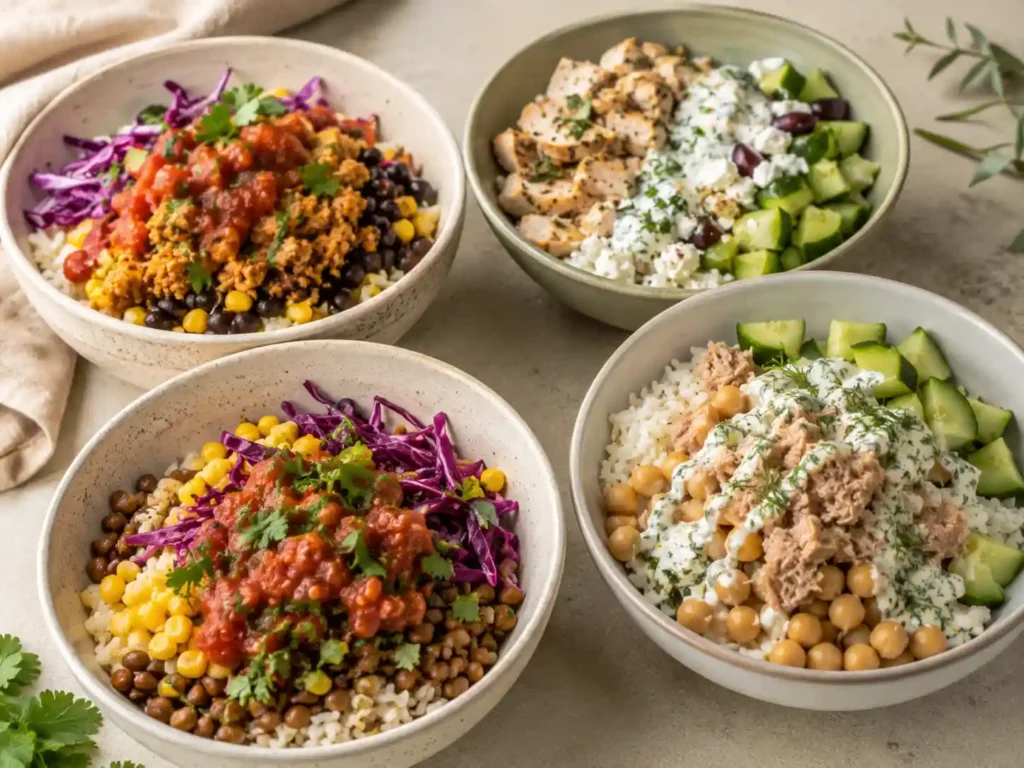
| Bowl | Main Protein Source | Base | Budget Strategy |
|---|---|---|---|
| Ground Chicken Taco Bowl | Ground chicken and beans | Rice | Reuse salsa, cabbage, corn, and beans |
| Greek Chicken Bowl | Chicken and yogurt sauce | Rice | Use the same chicken and rice with a different sauce |
| Pesto Chicken Bowl | Chicken | Rice or pasta | Use a small amount of pesto across several meals |
| Ground Turkey Taco Bowl | Ground turkey and beans | Rice | Reuse taco vegetables and salsa |
| Turkey Sweet Potato Bowl | Ground turkey | Sweet potato | Roast several portions on one sheet pan |
| Beef and Bean Bowl | Ground beef and beans | Rice | Combine beans with the meat mixture |
| Korean-Inspired Beef Bowl | Ground beef | Rice | Use cabbage and carrots in several bowls |
| Burger Bowl | Ground beef | Potatoes | Use basic burger-style toppings already on hand |
| Black Bean and Egg Bowl | Eggs and black beans | Potatoes or rice | Use leftover cooked rice or potatoes |
| Lentil Taco Bowl | Lentils | Rice | Reuse taco toppings from other bowls |
| Chickpea Crunch Bowl | Chickpeas | Rice | Use cabbage and carrots for texture |
| Tofu Edamame Bowl | Tofu and edamame | Rice | Use frozen vegetables in measured portions |
| Tuna Chickpea Bowl | Tuna and chickpeas | Rice or pasta | Combine pantry ingredients with fresh cucumber |
| Cottage Cheese Taco Bowl | Cottage cheese and beans | Rice | Reuse salsa, corn, cabbage, and beans |
| Savory Cottage Cheese Bowl | Cottage cheese and egg | Potatoes | Use breakfast ingredients in a lunch-style bowl |
1. Ground Chicken Taco Rice Bowl
Combine ground chicken, rice, black beans, corn, cabbage, and salsa for a practical taco-style bowl. Most of the components can also be used in turkey, lentil, beef, or cottage cheese bowls, which keeps the shopping list focused.
Use pinto beans instead of black beans when that is what you already have. Keep any crunchy toppings separate during storage. For a complete version with detailed instructions, see this ground chicken protein bowl.
2. Greek Chicken Rice Bowl
Use cooked chicken, rice, cucumber, a yogurt-based sauce, and dried or fresh herbs. Tomatoes can be added when they fit your shopping plan, but the bowl still works without them.
Store the cucumber and sauce separately when preparing the bowl in advance. The same cooked chicken and rice can also be used in the pesto or taco bowls, reducing the number of components you need to cook.
3. Pesto Chicken Meal Prep Bowl
Pair chicken with rice or pasta, broccoli, spinach, and a small amount of pesto. If plain yogurt is already part of your grocery plan, it can be mixed with pesto to make a lighter, more spreadable sauce without buying another dressing.
Keep the sauce separate until serving when possible. Frozen broccoli can be used in place of fresh broccoli when it better suits your shopping plan or helps prevent unused produce.
4. Ground Turkey Taco Bowl
Combine ground turkey, rice, beans, cabbage, corn, and salsa. This idea uses many of the same supporting ingredients as the ground chicken taco bowl, so you can change the main protein without rebuilding the entire grocery list.
Use frozen corn or canned corn according to availability. For meal prep, divide the warm ingredients into containers and store the cabbage and salsa separately when you want the best texture.
5. Turkey Sweet Potato Bowl
Pair ground turkey with roasted sweet potato, broccoli, spinach, and a yogurt or mustard-based sauce. Roast several portions of sweet potato and broccoli together to reduce active preparation time.
Regular potatoes can replace sweet potatoes when they are already in your pantry or better fit local prices. Find additional combinations in this collection of ground turkey meal prep bowls.
6. Ground Beef and Bean Rice Bowl
Use ground beef, beans, rice, frozen vegetables, and a simple sauce. Combining beans with the beef mixture can increase the total volume and create more servings, although the final cost and nutrition will depend on the amounts and products used.
Choose a frozen vegetable blend that can also appear in another meal. A complete starting recipe is available in this ground beef protein bowl.
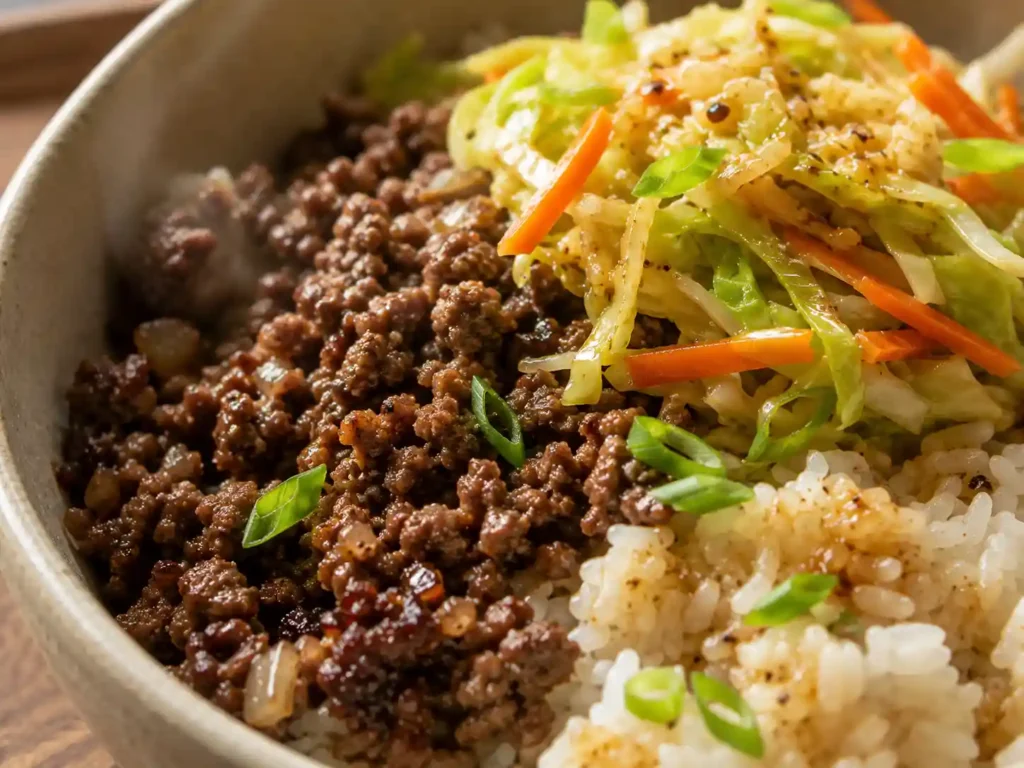
7. Korean-Inspired Ground Beef Cabbage Bowl
This Korean-inspired bowl combines ground beef, rice, cabbage, carrots, soy sauce, and garlic. The description is intentionally “Korean-inspired” because it is a flexible meal prep idea rather than a claim of traditional authenticity.
Use the remaining cabbage and carrots in a chickpea crunch bowl or burger bowl. Store the rice and beef together, then add crisp vegetables after reheating when possible.
8. Burger Bowl With Potatoes and Pickles
Build this bowl with ground beef, roasted potatoes, cabbage or lettuce, pickles, and a yogurt and mustard sauce. Add tomatoes only when they fit your menu and will also be used in other meals.
Rice can replace potatoes when a batch is already prepared. Keep pickles, fresh vegetables, and sauce away from the warm components until serving.
9. Black Bean and Egg Breakfast Bowl
Combine eggs, black beans, cooked potatoes or rice, salsa, and spinach for a flexible breakfast, brunch, or lunch. This is a useful way to turn leftover rice or roasted potatoes into another meal.
Pinto beans can replace black beans. For the best egg texture, prepare the eggs closer to serving rather than assembling several days of completed bowls at once.
10. Lentil Taco Bowl
Use cooked lentils, rice, corn, cabbage, salsa, and an optional yogurt sauce. The supporting ingredients overlap with several taco-style bowls, making this a practical plant-forward variation.
Canned beans can replace lentils when faster preparation matters. The exact protein content cannot be determined without ingredient quantities and serving sizes.
11. Chickpea Crunch Bowl
Combine chickpeas, rice, cabbage, carrots, cucumber, and a peanut or lemon-based sauce. Use chickpeas directly from the can after draining and rinsing, or roast them when you want a firmer texture.
Keep cucumber and sauce separate during storage. If peanut sauce requires ingredients you would not use elsewhere, choose a simple lemon and yogurt dressing instead.
12. Tofu Edamame Rice Bowl
Pair tofu and edamame with rice, frozen vegetables, soy sauce, and garlic. The cost of tofu and edamame differs between stores, so compare them with the other protein options available locally rather than assuming they will always be the least expensive choice.
Use extra tofu or beans if edamame is unavailable. Pack the sauce separately if you prefer the tofu to keep a firmer exterior.
13. Tuna Chickpea Cucumber Bowl
Combine canned tuna, chickpeas, cucumber, rice or pasta, and a yogurt sauce or lemon dressing. This bowl works well when you already have cooked rice or pasta and need an option with little additional cooking.
Keep cucumber and dressing separate until serving. Another canned fish can be used when it fits your preferences and shopping plan, but always verify the product label and serving information before making nutrition comparisons.
14. Cottage Cheese Taco Bowl
Use cottage cheese, beans, corn, rice, salsa, and cabbage for a no-cook variation on the taco bowl concept. The salsa, beans, corn, and cabbage can all be shared with other bowls in this guide.
Swap rice for potatoes or use an extra portion of beans when those ingredients are already prepared. Explore additional combinations in these savory cottage cheese bowls.
15. Savory Cottage Cheese Breakfast Bowl
Combine cottage cheese, a cooked egg, roasted potatoes, cucumber or tomato, herbs, and optional hot sauce. This idea uses familiar breakfast ingredients but can also work as a quick lunch.
Use leftover rice instead of potatoes when that is more convenient. Add cucumber, tomato, herbs, and hot sauce just before eating for better texture.
Budget Swaps That Keep the Bowls Practical
Use the Base That Fits Your Shopping Plan
Rice is commonly used in budget bowls, but it is not automatically the least expensive choice in every location. Compare the unit price of rice, pasta, potatoes, beans, and lentils, then choose a base you can use in several meals.
Replace Part of the Meat With Beans or Lentils
Beans or lentils can be combined with ground chicken, turkey, or beef to increase the volume of the mixture. The exact effect on cost, portions, and nutrition depends on the quantities and local prices.
Use Frozen Vegetables When They Reduce Waste
Frozen vegetables allow you to use only the amount you need and save the rest. They are not always cheaper than fresh produce, but they can be practical when fresh vegetables are likely to remain unused.
Turn Plain Yogurt Into More Than One Sauce
When plain yogurt is already on the grocery list, season separate portions with herbs, mustard, salsa, lemon, or garlic. This can provide several flavor options without purchasing multiple prepared dressings.
Skip Toppings That Serve Only One Recipe
A topping purchased for a single bowl may remain unused. Prioritize ingredients that can appear in breakfast, lunch, dinner, or snacks instead of buying a separate garnish for every idea.
A Simple 3-Day Meal Prep Plan
| Task | Prep Day | Day 1 | Day 2 | Day 3 |
|---|---|---|---|---|
| Proteins | Cook one or two protein options | Use protein 1 | Use protein 2 | Use remaining portions |
| Bases | Prepare two bases | Use base 1 | Use base 2 | Use the remaining base |
| Vegetables | Prepare sturdy vegetables | Use delicate produce first | Use remaining fresh vegetables | Use frozen or pantry vegetables |
| Sauces | Prepare two sauces | Use sauce 1 | Use sauce 2 | Choose either sauce |
| Texture | Portion toppings separately | Add before serving | Add before serving | Add before serving |
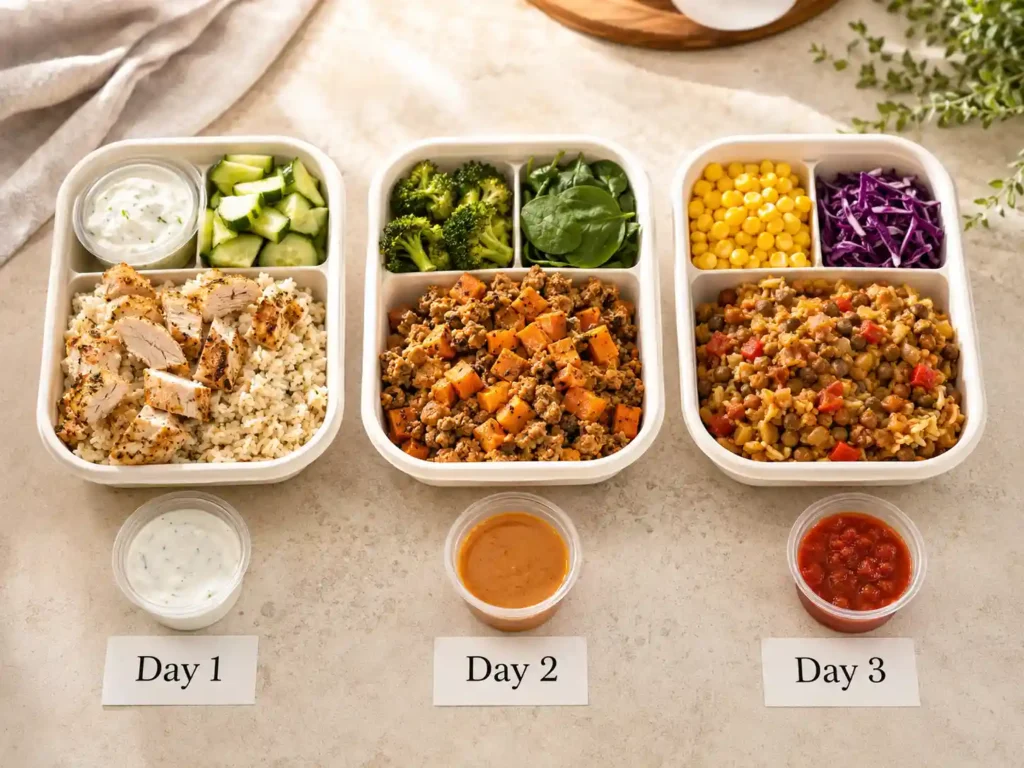
A three-day plan helps preserve texture and keeps the system manageable. When preparing food for later in the week, consider freezing suitable cooked components or scheduling a second short preparation session instead of keeping every assembled bowl in the refrigerator for seven days.
Helpful Tools for This Guide
You do not need specialized equipment to make these bowls, but a few general kitchen tools can make batch preparation and storage easier:
- Meal prep containers: useful for dividing cooked bases, proteins, and vegetables into individual portions.
- Small sauce containers: help keep dressings away from grains and vegetables until serving.
- Large skillet: useful for cooking ground chicken, turkey, beef, tofu, or vegetables.
- Sheet pan: allows potatoes and vegetables to roast in larger batches.
- Rice cooker or saucepan: useful for preparing a repeatable grain base.
- Food thermometer: helps confirm safe cooking and reheating temperatures.
No particular brand or model is required. Choose tools that fit your kitchen, storage space, and normal cooking routine.
How to Keep Meal Prep Bowls From Getting Soggy
- Store sauces in separate containers instead of pouring them over the completed bowl.
- Keep watery vegetables such as cucumber separate when possible.
- Refrigerate cooked food promptly in small, shallow containers rather than leaving it on the counter to cool completely.
- Add avocado immediately before eating.
- Store crunchy toppings separately.
- Reheat only the components intended to be served warm.
- Add fresh vegetables after reheating the rice, meat, or cooked vegetables.
Storage and Reheating Notes
Refrigerate perishable food promptly and keep the refrigerator at 40°F or below. Dividing cooked food into small, shallow containers helps it cool more quickly. Avoid leaving perishable ingredients at room temperature for extended periods.
FoodSafety.gov lists cooked meat and poultry leftovers for three to four days in the refrigerator. Other components may have different limits, so check the guidance for the specific foods in your bowl. See the official cold food storage chart when you are unsure.
Reheat leftovers to an internal temperature of 165°F, measured with a food thermometer. The official safe minimum internal temperature chart provides additional guidance.
If you do not know how long a perishable food has been stored or whether it stayed at a safe temperature, discard it rather than relying only on smell or appearance.
Common Budget Protein Bowl Mistakes
Buying Too Many Different Ingredients
Preparing five completely different meals often requires more ingredients than building several bowls from shared components. Start with a short list and create variety through sauces and assembly.
Using a Different Sauce for Every Bowl
Multiple bottled sauces can increase the shopping list and leave unused products behind. Two flexible sauces are usually enough for several combinations.
Forgetting Texture
A bowl made entirely from soft ingredients may feel repetitive. Add cabbage, carrots, cucumber, herbs, seeds, or another texture that is already part of your meal plan.
Mixing Everything Before Storage
Combining warm grains, fresh vegetables, sauce, and crunchy toppings too early can reduce quality. Store incompatible components separately and assemble them closer to serving.
Assuming Every Bowl Freezes Well
Cooked rice, some meats, beans, lentils, and certain cooked vegetables may freeze well. Fresh cucumber, lettuce, yogurt sauces, and several other toppings generally need to be added after thawing.
Guessing Calories or Protein
A list of ingredients is not enough to calculate nutrition. Exact quantities, brands, final yield, and serving size are required before publishing calories, protein, fiber, or other values.
Publishing Prices Without Store and Date Context
A price observed at one store may not apply to another region or shopping date. Focus on reusable ingredients, unit-price comparison, and reduced waste instead of promising one universal cost per serving.
Nutrition Note
Nutrition information is not included because these are flexible bowl concepts rather than recipes with complete ingredient quantities, brands, yields, and serving sizes.
If one of these ideas is developed into a complete recipe, its nutrition can be calculated from the final ingredients and serving count. Any published figures should be labeled as estimated because values vary by product, portion, and substitution.
More Budget High Protein Meal Ideas
For bowls that place additional emphasis on legumes, vegetables, and other fiber-containing ingredients, read the guide to high fiber high protein meal prep bowls.
Readers who prefer poultry-based meals can explore this collection of chicken rice bowl recipes.
Choose one or two ideas from this list, prepare only the components you will realistically use, and build your next bowls around the groceries already in your kitchen.
Frequently Asked Questions
What can I put in a high protein bowl on a budget?
Start with a clear protein source, a practical base, one or two vegetables, a versatile sauce, and an optional crunchy topping. Use ingredients that can appear in more than one meal.
What are some practical protein options for bowls?
Possible options include eggs, beans, lentils, tofu, canned tuna, chicken, ground turkey, ground beef, cottage cheese, and plain yogurt. The most suitable choice depends on local prices, dietary preferences, and the other ingredients you plan to use.
Can I meal prep protein bowls for the whole week?
Many cooked leftovers are generally stored in the refrigerator for three to four days. For a longer plan, prepare a second batch later in the week or freeze suitable cooked components while storing fresh vegetables and sauces separately.
How do I keep meal prep bowls from getting soggy?
Store sauces, cucumber, tomatoes, fresh greens, and crunchy toppings separately. Reheat only the cooked components, then assemble the bowl immediately before eating.
How can I tell if a bowl is actually high in protein?
Calculate the nutrition using exact ingredient quantities, product labels, the finished recipe yield, and the number of servings. The recipe name or presence of one protein-containing ingredient is not enough to confirm an exact protein value.