
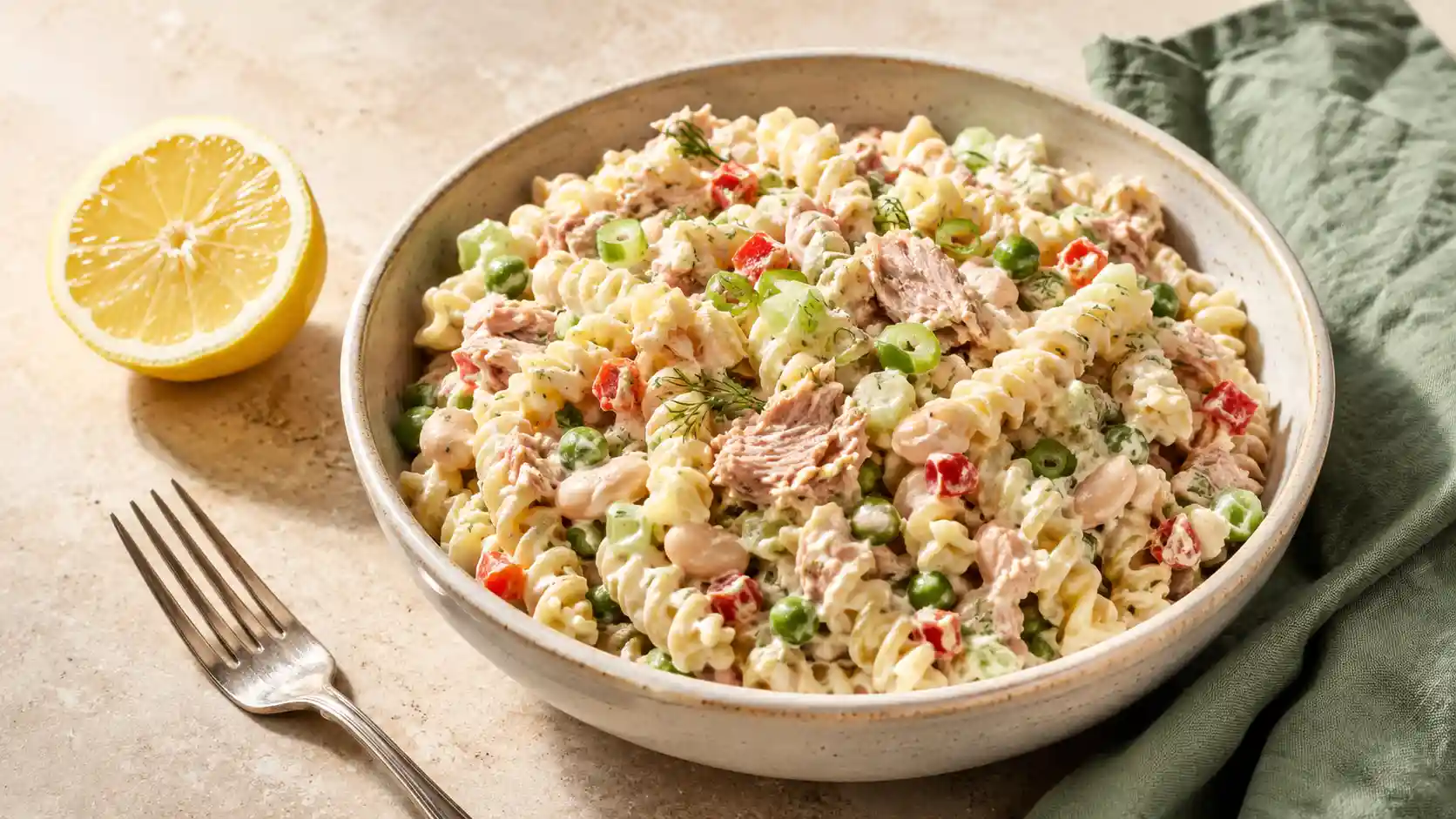
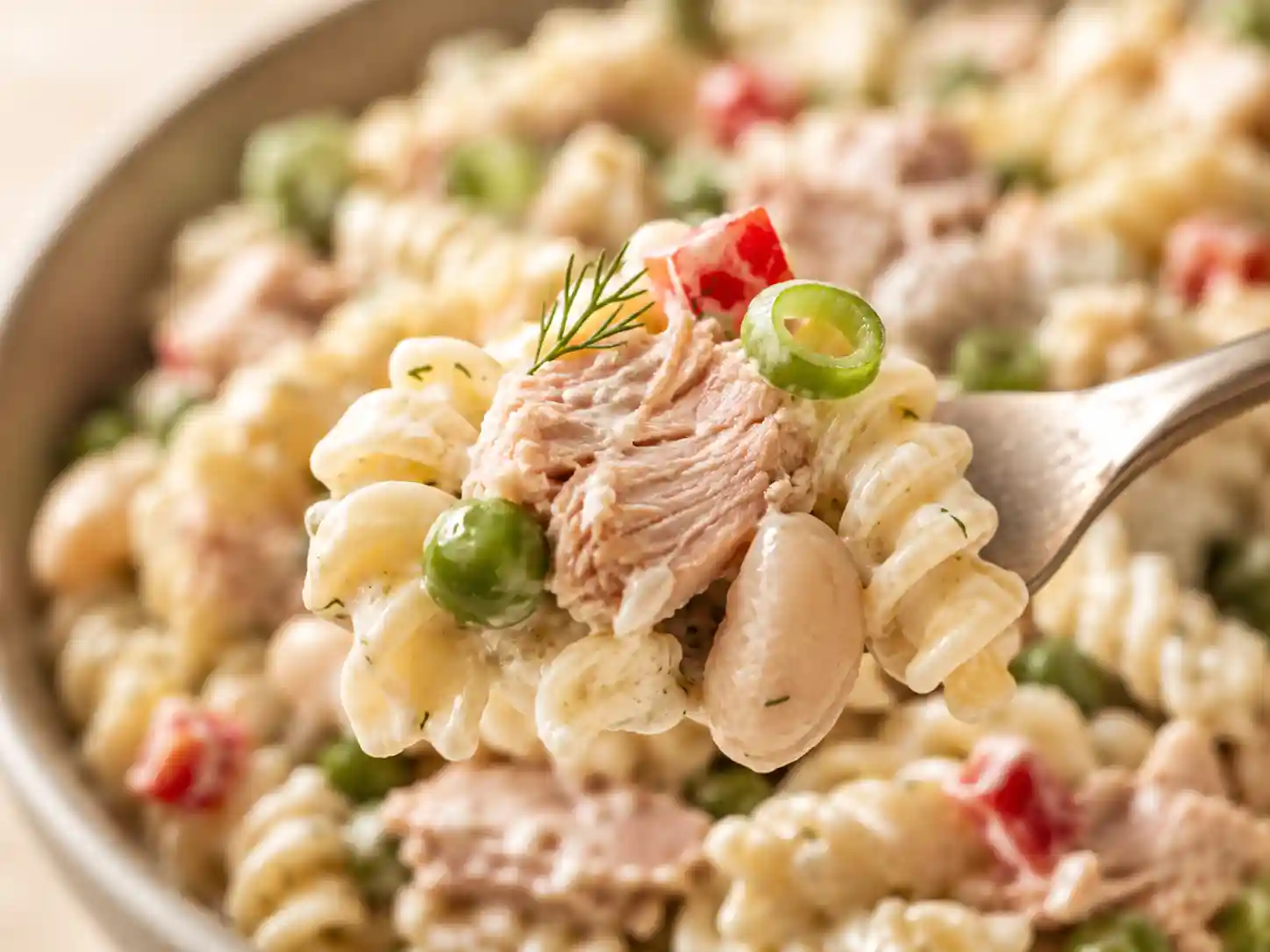
This high-protein tuna pasta salad combines canned tuna, cannellini beans, plain Greek yogurt, short pasta, and crisp vegetables in one creamy cold lunch. It is designed for practical meal prep with familiar supermarket ingredients, so you do not need protein powder or specialty protein pasta.
You can portion the salad into containers for work lunches or keep it refrigerated for quick meals at home. The sections below explain the ingredients, preparation method, budget-conscious substitutions, storage rules, and simple ways to prevent a watery or dry pasta salad. You can also explore these protein pasta salad recipes for more cold lunch combinations.
Why You’ll Like This High-Protein Tuna Pasta Salad
- It uses familiar ingredients such as canned tuna, pasta, beans, and Greek yogurt.
- The dressing is creamy without being made entirely with mayonnaise.
- You can prepare and portion it ahead for cold lunches.
- The vegetables are flexible, so you can use suitable ingredients already in your kitchen.
- Frozen peas and canned ingredients keep preparation practical.
- You do not need specialty protein pasta or protein powder.
Ingredients You’ll Need
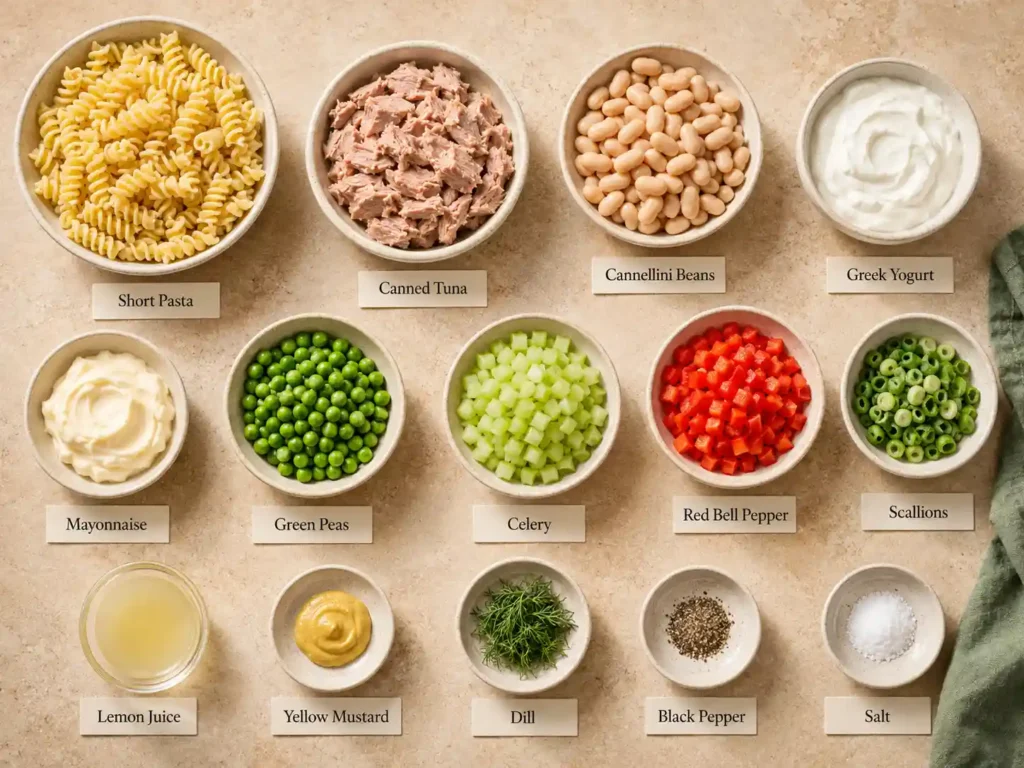
Short Pasta
Rotini, elbows, shells, and bow ties all work well because their shape helps hold the creamy dressing. They also mix evenly with the beans, tuna, and chopped vegetables. Long pasta shapes, such as spaghetti, are harder to portion and do not distribute the ingredients as evenly.
You can use regular or whole-wheat pasta. Legume-based pasta is another possible variation, but its cooking time and texture may differ by product.
Canned Tuna
Canned light tuna in water provides the main tuna component. Drain it thoroughly before mixing so the excess liquid does not thin the dressing. Add the tuna near the end and fold it in gently if you want to preserve some larger pieces.
People who are pregnant or breastfeeding, as well as anyone preparing fish for children, should follow current FDA advice about eating fish.
Greek Yogurt Dressing
Plain Greek yogurt creates the base of the dressing. A smaller amount of mayonnaise helps give it a familiar pasta salad consistency. Lemon juice, yellow mustard, dill, and black pepper add acidity and flavor.
Check the mustard label if you need to avoid ingredients associated with wine or alcohol. Taste the completed salad before adding salt because the tuna, beans, mayonnaise, and mustard may already contribute sodium.
Beans and Vegetables
Cannellini beans add a soft, creamy texture that works well with tuna. Frozen peas, celery, bell pepper, and scallions provide color and contrast.
Rinse and drain the beans thoroughly. Thaw and drain the peas before mixing them into the pasta. Excess moisture from any of these ingredients can make the finished salad watery.
Budget-Friendly Ingredient Swaps
Use the table below to adapt the salad to ingredients that are already available in your pantry, freezer, or refrigerator.
| Ingredient | Possible Swap | What Changes |
|---|---|---|
| Whole-wheat pasta | Regular short pasta | The pasta will have a slightly different flavor and fiber content. |
| Cannellini beans | Chickpeas or another mild bean | Chickpeas create a firmer and slightly nuttier texture. |
| Red bell pepper | Another bell pepper or finely chopped carrot | The color and sweetness may change, but the salad keeps some crunch. |
| Fresh dill | Dried dill | Dried dill has a more concentrated flavor and can be stored longer. |
| Scallions | Finely chopped red onion | Red onion has a sharper and more noticeable flavor. |
| Greek yogurt | Blended cottage cheese | The dressing texture and flavor will change, so treat this as a variation. |
For more practical pantry and refrigerator options, see this cheap protein grocery list.
How to Make Tuna Pasta Salad
Cook and Cool the Pasta
Cook the pasta according to its package directions until it is tender but still holds its shape. Avoid overcooking it because softer pasta can become mushy after absorbing the dressing.
Drain the pasta thoroughly and let it cool before adding the Greek yogurt dressing. Warm pasta can change the texture of the dressing and create unwanted moisture in the bowl.
Mix the Creamy Dressing
Whisk the plain Greek yogurt, mayonnaise, lemon juice, yellow mustard, dill, and black pepper in a separate bowl. Mixing the dressing before adding it to the pasta helps distribute the mustard and seasonings more evenly.
Add the Beans and Vegetables
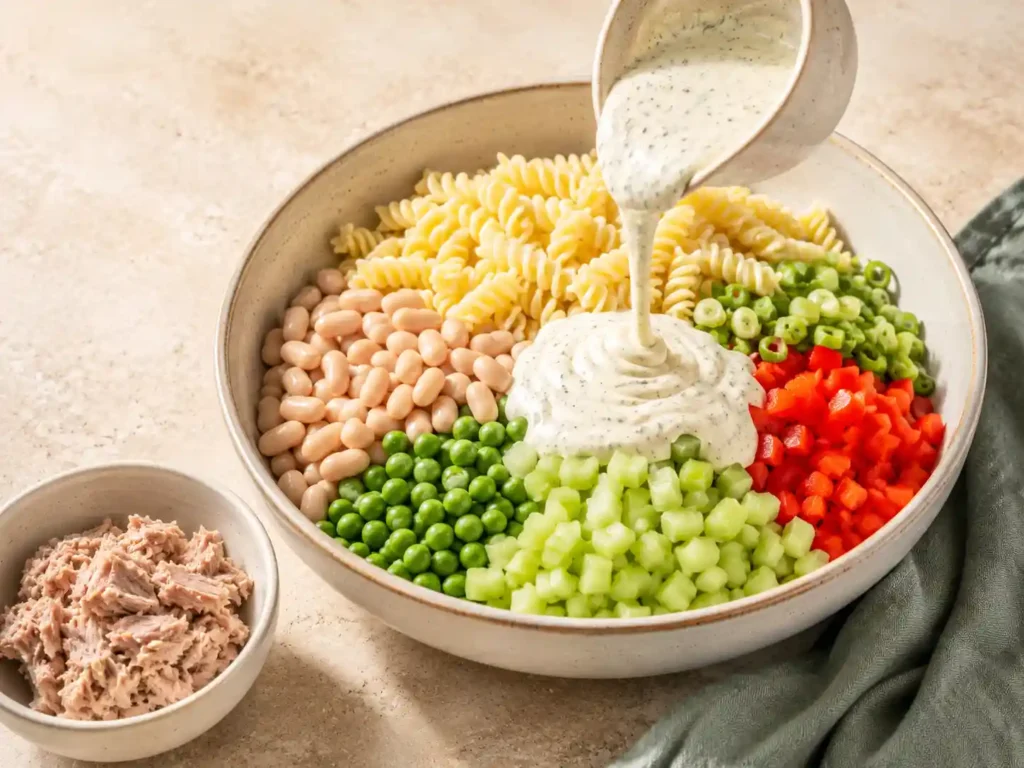
Place the cooled pasta in a large mixing bowl. Add the drained cannellini beans, thawed peas, celery, bell pepper, and scallions.
Pour the dressing over the mixture and stir gently until the pasta, beans, and vegetables are evenly coated.
Fold in the Tuna
Add the drained tuna last. Fold it into the salad gently instead of stirring aggressively. This keeps some tuna pieces intact rather than breaking everything into a paste.
Taste the salad and adjust the seasoning only after all the ingredients have been combined. Chill it before serving if you are preparing it in advance.
How to Prevent Watery or Dry Tuna Pasta Salad
- Cook the pasta only until tender so it does not become mushy.
- Drain the pasta, tuna, beans, and peas thoroughly.
- Allow the pasta to cool before adding the Greek yogurt dressing.
- Use watery vegetables, such as cucumber or tomatoes, only when the salad will be eaten soon.
- Fold in the tuna gently to preserve its texture.
- Taste before adding salt because several ingredients already contain sodium.
- Check the consistency after refrigeration because pasta continues to absorb moisture.
- If the salad becomes dry, gently stir in a small amount of Greek yogurt or lemon juice before serving.
Meal Prep and Storage
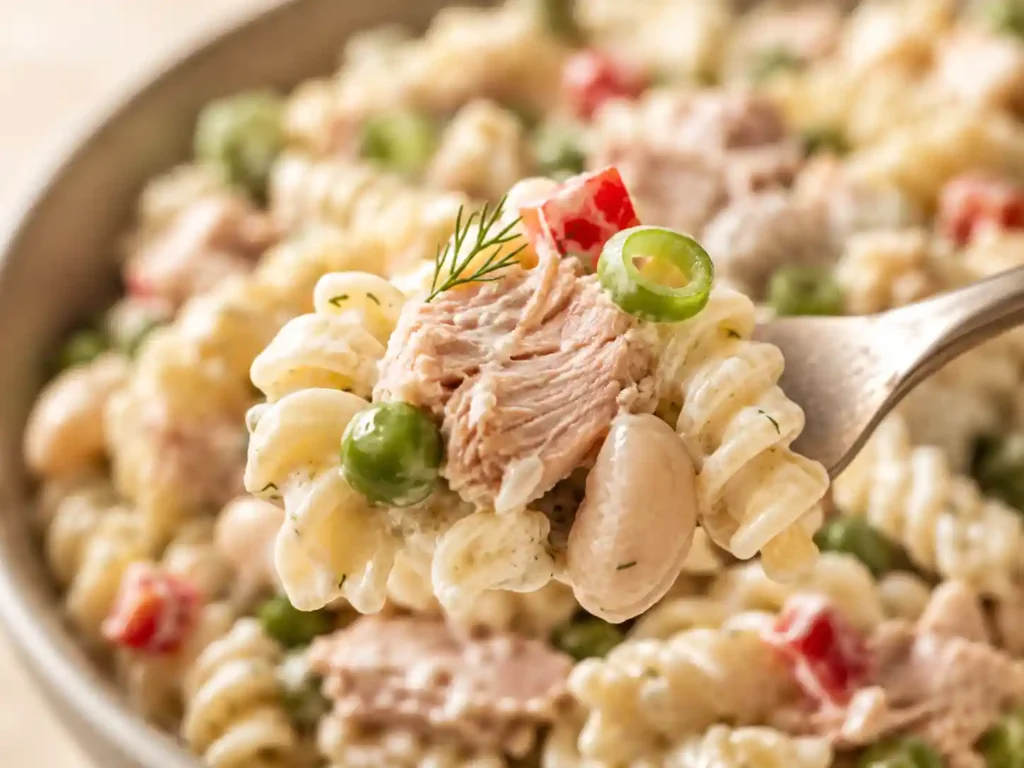
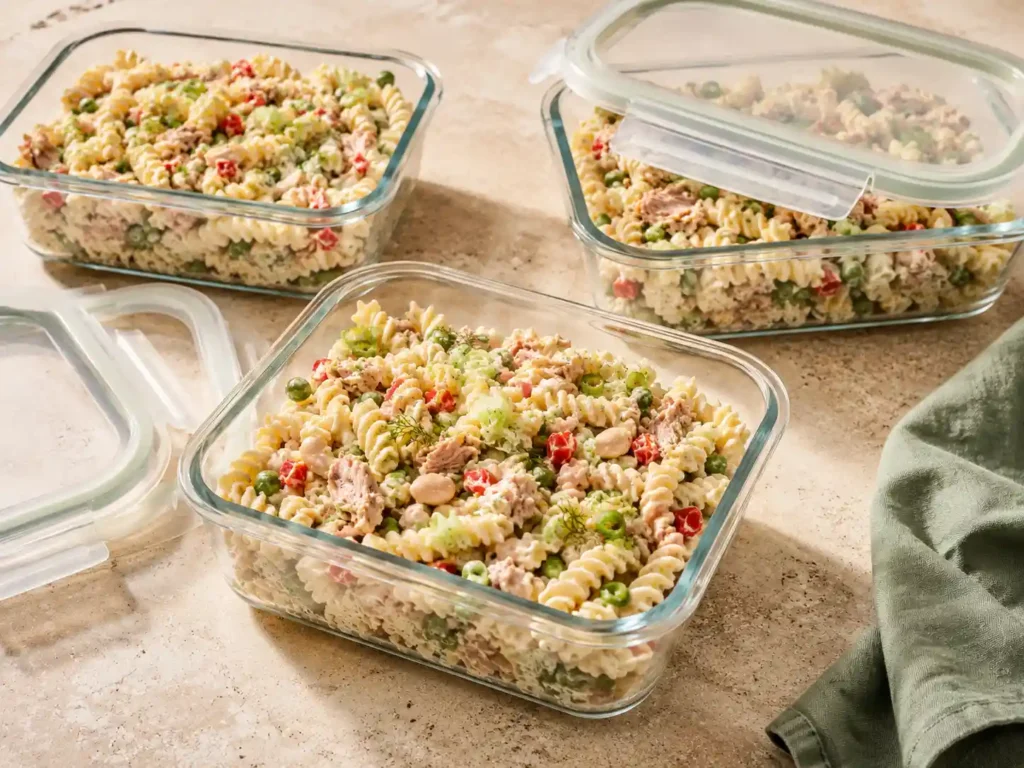
Transfer the tuna pasta salad to an airtight container and refrigerate it promptly. For the best texture, plan to eat it within three days.
According to the FoodSafety.gov cold food storage chart, tuna salad and macaroni salad can generally be refrigerated for three to four days when kept at 40°F or below. Do not extend the storage time simply because the salad still looks or smells normal.
This type of creamy pasta salad does not freeze well. Freezing can change the texture of the pasta, vegetables, Greek yogurt, and mayonnaise.
When packing the salad for work, a picnic, or another meal away from home, keep it chilled. The USDA recommends refrigerating perishable food within two hours, or within one hour when the temperature is above 90°F.
For more make-ahead lunch inspiration, browse these cheap high-protein meal prep ideas.
Helpful Tools for This Recipe
- Large pot: For cooking the short pasta without crowding it.
- Colander: For draining the pasta, tuna, beans, and thawed peas thoroughly.
- Large mixing bowl: For combining the ingredients without crushing the tuna.
- Small whisk: For blending the Greek yogurt dressing evenly.
- Can opener: For opening the tuna and beans safely.
- Airtight meal prep containers: For refrigerating and portioning the finished salad.
Variations and Substitutions
No-Mayonnaise Version
You can replace the mayonnaise with additional plain Greek yogurt. This creates a more yogurt-forward flavor and may produce a tangier dressing. Add the replacement gradually so the dressing does not become too loose.
Cottage Cheese Version
Blended cottage cheese can replace part of the Greek yogurt. Blend it until smooth before adding it to the dressing so the finished salad does not have large curds.
For another tuna option built around cottage cheese, see this cottage cheese tuna salad.
Higher-Fiber Pasta Option
Whole-wheat pasta can replace regular pasta. You can also try legume-based pasta, but follow its package directions carefully because the cooking time and final texture may differ.
This high-fiber protein pasta salad offers another related combination.
Vegetable Swaps
Finely chopped carrots, corn, spinach, cucumber, or tomatoes can work in the salad. Add cucumber, tomatoes, and leafy greens close to serving time when possible because they may release water or wilt during storage.
Browse these protein pasta salad ideas for more ingredient combinations.
What to Serve With Tuna Pasta Salad
The salad can be packed as the main part of a cold lunch. Simple side options include:
- Fresh fruit
- Carrot or cucumber slices
- A small green salad
- Crackers
- Pita wedges
- Another simple lunchbox vegetable
Keep any crackers or pita separate until serving so they do not absorb moisture from the pasta salad.
High-Protein Tuna Pasta Salad for Easy Meal Prep
Ingredients
Equipment
Method
- Bring a large pot of water to a boil. Cook the short pasta according to the package directions until tender but still firm enough to hold its shape. Avoid overcooking.
- Drain the pasta thoroughly in a colander. Spread it out or leave it in the colander until completely cooled before adding the dressing.
- In a small bowl, whisk together the Greek yogurt, mayonnaise, lemon juice, yellow mustard, dill, and black pepper until smooth and evenly combined.
- Place the cooled pasta in a large mixing bowl. Add the drained cannellini beans, thawed peas, celery, red bell pepper, and scallions.
- Pour the creamy dressing over the pasta mixture. Stir gently until the pasta, beans, and vegetables are evenly coated.
- Add the thoroughly drained tuna last. Fold it into the salad gently to preserve some larger pieces instead of breaking the tuna into a paste.
- Taste the finished salad and adjust the seasoning only after everything has been combined. Cover and refrigerate until chilled, or divide it among airtight meal prep containers.
Notes
Frequently Asked Questions
Can I make tuna pasta salad ahead of time?
Yes. Prepare the salad, place it in an airtight container, and refrigerate it promptly. Check the consistency before serving because the pasta may absorb some of the dressing while it chills.
How long does tuna pasta salad last in the refrigerator?
For the best texture, eat it within three days. Official cold storage guidance allows three to four days for properly refrigerated tuna and macaroni salads kept at 40°F or below.
Can I make tuna pasta salad without mayonnaise?
Yes. Replace the mayonnaise with more plain Greek yogurt, adding it gradually until the dressing reaches the consistency you prefer. The flavor will be tangier and the texture may be different.
What pasta shape works best for tuna pasta salad?
Short pasta shapes such as rotini, elbows, shells, and bow ties work well because they hold the dressing and distribute evenly with the tuna, beans, and vegetables.
Can I use cottage cheese instead of Greek yogurt?
Blended cottage cheese can replace some of the Greek yogurt. Blend it until smooth and adjust the amount gradually because its consistency varies by product.
Get practical budget high-protein lunches and easy meal prep ideas sent to your inbox.
Looking for more portable meals? Explore these high-protein cold lunches for work.