

These meal prep egg bites combine eggs, cottage cheese, broccoli, bell pepper, and cheddar in 12 convenient individual portions. They bake in a standard muffin pan, so no specialized cooking equipment is required.
Prepare a batch for several mornings, refrigerate the portions you plan to eat soon, and freeze the rest. Careful vegetable preparation and a short baking time help prevent the watery or rubbery texture that can spoil homemade egg bites.
For more practical breakfast inspiration, explore these high-protein breakfasts on a budget.
Quick Answer: To make meal prep egg bites, blend eggs with cottage cheese and seasonings. Divide well-drained cooked vegetables and cheddar among 12 greased muffin cups, add the egg mixture, and bake at 350°F until the centers are set. Refrigerate the cooled bites for 3 to 4 days or freeze them for longer storage.
Meal Prep Egg Bites at a Glance
| Detail | Information |
|---|---|
| Yield | 12 egg bites |
| Serving size | 2 egg bites |
| Number of servings | 6 |
| Cooking method | Oven-baked in a muffin pan |
| Oven temperature | 350°F |
| Refrigerator storage | 3 to 4 days |
| Freezer guideline | 2 to 3 months for best quality |
Why You’ll Like These Meal Prep Egg Bites
- Individual portions: The muffin-pan format makes the egg bites easy to divide among meal prep containers.
- Familiar ingredients: Eggs, cottage cheese, cheddar, and vegetables are available in most US grocery stores.
- Flexible vegetables: Fresh or frozen broccoli can work when it is cooked and drained properly.
- Make-ahead friendly: The bites can be refrigerated or frozen after cooling.
- Easy to serve: Pair two bites with fruit, toast, potatoes, or another simple breakfast side.
If you are building a larger weekly routine, this guide to cheap high-protein meal prep provides additional planning ideas.
Ingredients You’ll Need
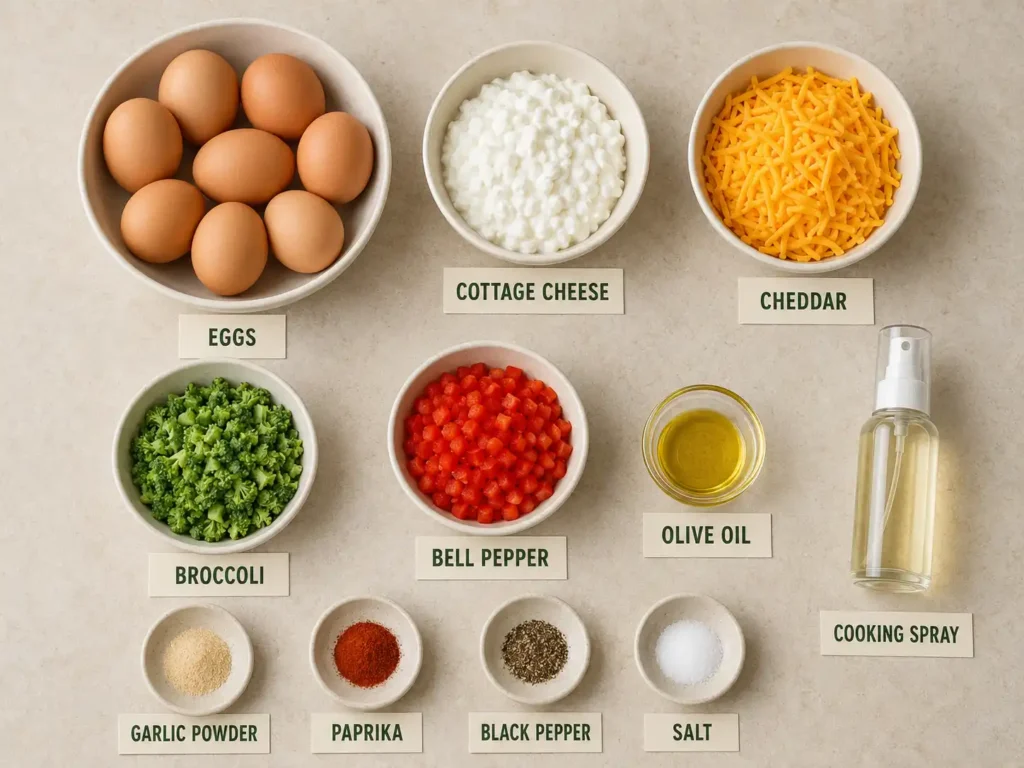
Eggs
Eight whole eggs form the base of the recipe. Whole eggs provide more richness and color than a recipe made only with egg whites.
Cottage Cheese
Cottage cheese adds moisture and blends into the eggs to create a smoother base. A 4% cottage cheese generally creates a richer texture, but a lower-fat variety may also be used. The final texture and estimated nutrition will vary by brand.
You can use the remaining container in a cottage cheese breakfast bowl later in the week.
Broccoli and Bell Pepper
Broccoli is the main vegetable in this version. Fresh broccoli can be steamed until just tender. Frozen broccoli should be thawed, cooked if needed, and pressed dry before it goes into the muffin pan.
Bell pepper adds color and savory flavor. Sauteing it briefly allows some of its moisture to evaporate.
Cheddar
Shredded cheddar gives the egg bites a familiar savory flavor. Finely shredded cheese distributes more evenly among the 12 muffin cups.
Seasonings
Garlic powder, paprika, black pepper, and a small amount of salt keep the seasoning simple. Cottage cheese and cheddar can already contain a noticeable amount of sodium, so additional salt should be measured carefully.
How to Make Meal Prep Egg Bites
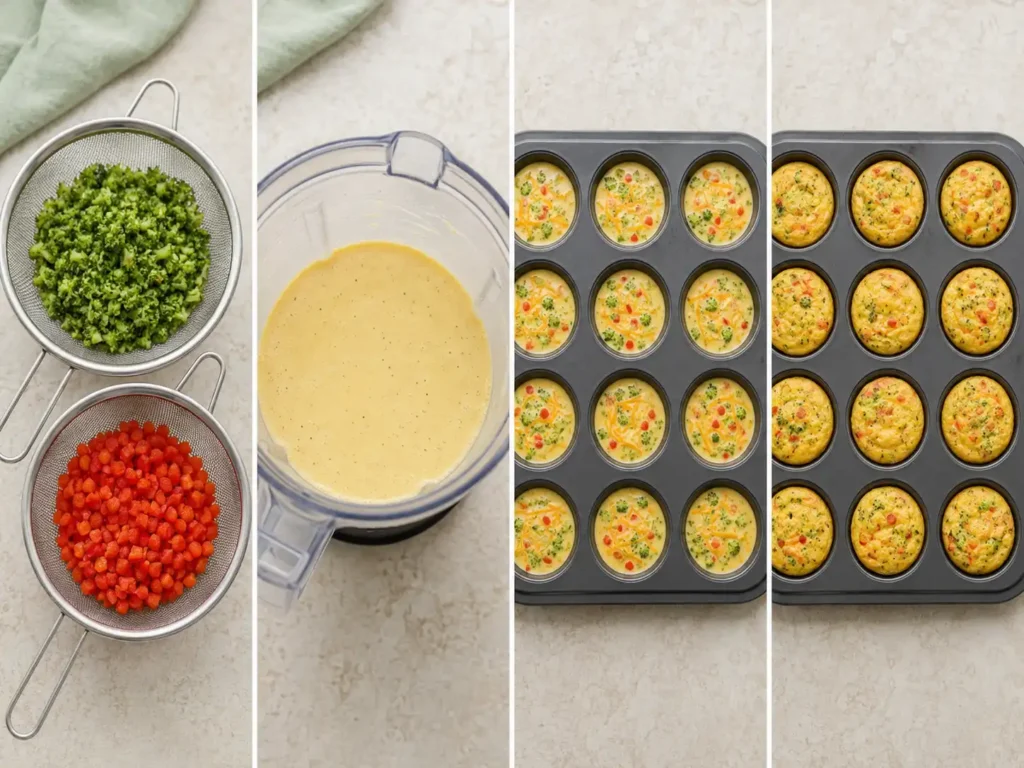
1. Prepare the Muffin Pan
Preheat the oven to 350°F. Coat all 12 cups of a standard muffin pan with cooking spray. Pay attention to the sides of each cup because baked eggs can stick around the edges.
If you use a flexible silicone pan, place it on a rigid baking sheet before filling it.
2. Cook and Drain the Vegetables
Cook the broccoli until it is just tender. Drain it thoroughly, press away excess moisture, and chop it into small pieces.
Heat one teaspoon of olive oil in a small skillet. Add the diced bell pepper and cook until it begins to soften and no visible liquid remains. Let both vegetables cool slightly before assembling the egg bites.
3. Blend the Egg Mixture
Add the eggs, cottage cheese, garlic powder, paprika, black pepper, and salt to a blender. Blend until the mixture looks smooth and evenly combined.
Blending removes most visible cottage cheese curds and makes it easier to distribute the mixture evenly.
4. Fill the Muffin Cups
Divide the broccoli, bell pepper, and cheddar among the 12 prepared muffin cups. Pour the blended egg mixture over the fillings.
Leave a little room at the top of each cup because the eggs will expand while baking. Gently stir each cup once if the vegetables appear concentrated at the bottom.
5. Bake Until Just Set
Bake for approximately 18 to 22 minutes. Begin checking early because dark metal, light metal, and silicone pans can cook at different rates.
The centers should look set rather than liquid. For food safety, egg dishes should reach an internal temperature of 160°F. Avoid continuing to bake them until deeply browned because prolonged cooking can make the texture rubbery.
6. Cool and Remove
Let the egg bites rest in the pan for about 5 minutes. Run a thin silicone spatula or butter knife around the edges before lifting them out.
The egg bites will puff in the oven and settle slightly as they cool. This mild deflation is normal.
How to Prevent Watery or Rubbery Egg Bites
Most egg bite problems come from excess moisture, sticking, or overcooking. These precautions make the biggest difference:
- Cook and thoroughly drain the vegetables before adding them.
- Chop the broccoli finely so large pieces do not displace the egg mixture.
- Keep the total vegetable volume close to the tested recipe amount.
- Grease the bottoms and sides of all muffin cups.
- Remove the bites once the centers are set.
- Allow steam to escape before closing the storage containers.
- Reheat gently because excessive microwave time can toughen cooked eggs.

Budget-Friendly Ingredient Substitutions
| Original ingredient | Possible substitute | Preparation needed | Expected difference |
|---|---|---|---|
| Fresh broccoli | Frozen broccoli | Thaw, cook if needed, chop, and press dry | Can release more water if poorly drained |
| Cheddar | Monterey Jack | Shred before dividing among the cups | Milder flavor |
| Bell pepper | Fresh spinach | Wilt, cool, and squeeze dry | Softer filling with less crunch |
| Bell pepper | Green onion | Slice thinly and use a modest amount | Stronger onion flavor |
| Fresh vegetables | Leftover cooked vegetables | Use only tender, well-drained vegetables | Texture depends on the original cooking method |
Changing the type or volume of filling can affect the moisture level and cooking time. The nutrition estimate below applies only to the main broccoli, bell pepper, and cheddar version.
Meal Prep, Storage, Freezing, and Reheating
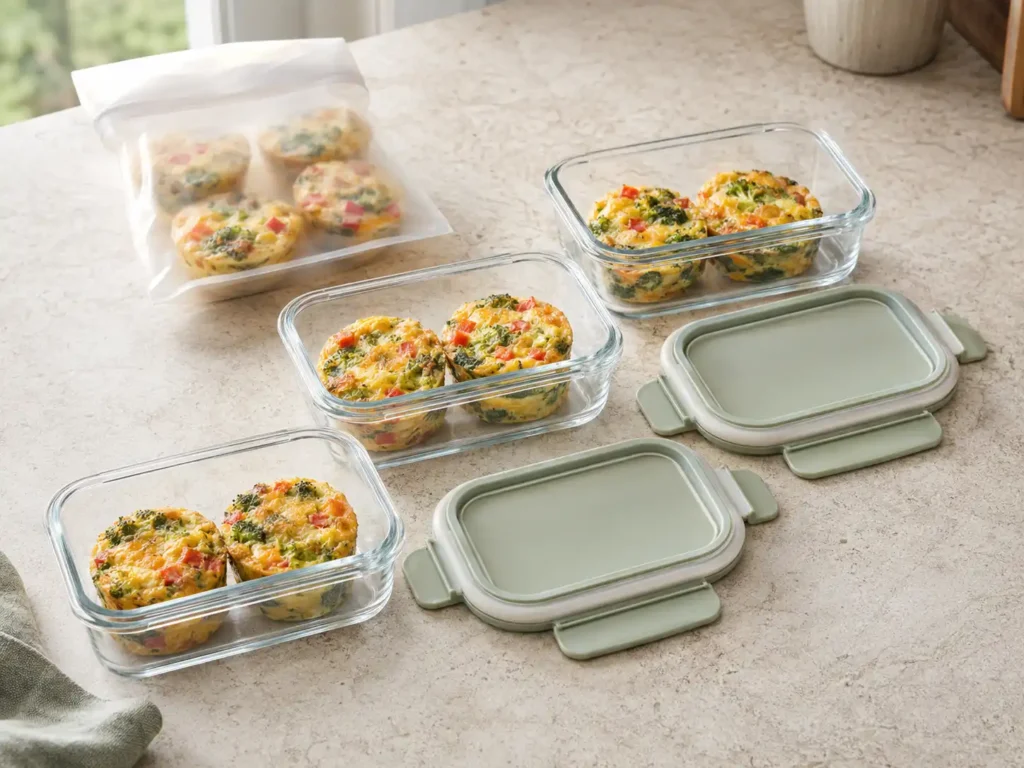
Refrigerator Storage
Allow the egg bites to cool, then place them in a shallow airtight container and refrigerate them within two hours of cooking.
The FoodSafety.gov cold-storage chart recommends keeping baked egg casseroles for 3 to 4 days in a refrigerator maintained at 40°F or below. Using the same conservative range for egg bites is a practical approach.
How to Freeze Egg Bites
Arrange cooled egg bites in a single layer and freeze until firm. Transfer them to a freezer-safe container or bag, separating layers with parchment if needed.
FoodSafety.gov lists 2 to 3 months of freezer storage for baked egg casseroles. This provides a reasonable guideline for safety and quality, but the texture of these egg bites after freezing should still be checked with the final tested recipe.
How to Reheat Egg Bites
Thaw frozen egg bites overnight in the refrigerator when possible. Reheat them gently in the microwave or a low oven until the centers are hot.
The FDA recommends reheating refrigerated cooked egg dishes to 165°F. Microwave wattage varies, so use short intervals and check the center instead of depending on one universal reheating time.
Packing Egg Bites for Work or School
Pack refrigerated egg bites in an insulated lunch bag with a frozen gel pack and keep them at 40°F or below. If they have been above 40°F for more than two hours, they should be discarded rather than returned to the refrigerator.
| Storage method | Container | Guideline | Reheating notes |
|---|---|---|---|
| Refrigerator | Shallow airtight container | 3 to 4 days at 40°F or below | Reheat to 165°F |
| Freezer | Freezer-safe bag or container | 2 to 3 months for best quality | Thaw in the refrigerator when possible |
| Packed lunch | Insulated bag with frozen gel pack | Keep at 40°F or below | Reheat only when a safe appliance is available |
Want more make-ahead breakfasts? These egg white breakfast burritos offer another portable format for busy mornings.
Newsletter CTA: Get practical budget-friendly meal prep recipes and easy breakfast ideas delivered to your inbox.
What to Serve With Egg Bites
Two egg bites can be served with one or two simple sides, depending on your appetite and meal plan:
- Fresh fruit
- Whole-grain toast
- Roasted potatoes
- Sliced tomatoes
- Salsa or hot sauce
For a cold breakfast later in the week, rotate these bites with a Greek yogurt breakfast bowl.
Helpful Tools for This Recipe
- 12-cup muffin pan: A standard metal pan keeps the portions uniform.
- Silicone muffin pan: Flexible cups can make removal easier but need support from a rigid baking sheet.
- Blender: Blends the cottage cheese into a smoother egg base.
- Thin silicone spatula: Helps release the edges without scratching the pan.
- Airtight meal prep containers: Keep refrigerator and freezer portions organized.
- Food thermometer: Confirms safe cooking and reheating temperatures.

Meal Prep Egg Bites for Easy Budget Breakfasts
Ingredients
Equipment
Method
- Preheat the oven to 350°F (175°C). Coat the bottoms and sides of all 12 cups of a standard muffin pan with cooking spray. If using a flexible silicone muffin pan, place it on a rigid baking sheet before filling.
- Cook the broccoli until just tender. Drain it thoroughly, press away as much excess moisture as possible, and chop it finely.
- Heat the olive oil in a small skillet over medium heat. Add the diced bell pepper and cook until it begins to soften and no visible liquid remains. Let the broccoli and bell pepper cool slightly.
- Add the eggs, cottage cheese, garlic powder, paprika, black pepper, and salt to a blender. Blend until the mixture is smooth and evenly combined.
- Divide the prepared broccoli, bell pepper, and shredded cheddar evenly among the 12 greased muffin cups.
- Pour the blended egg mixture evenly over the fillings, leaving a little space at the top of each muffin cup because the egg bites will expand during baking. Gently stir each cup once if the vegetables are concentrated at the bottom.
- Bake for approximately 18 to 22 minutes, beginning to check early. The centers should be set rather than liquid, and the internal temperature should reach 160°F (71°C).
- Let the egg bites rest in the muffin pan for about 5 minutes. Run a thin silicone spatula or butter knife carefully around the edges, then remove the bites from the pan.
- Serve warm or allow the egg bites to cool before transferring them to storage containers. Refrigerate promptly if preparing them for later meals.
Notes
Frequently Asked Questions
How long do meal prep egg bites last in the refrigerator?
Use refrigerated egg bites within 3 to 4 days when they are cooled promptly and stored in an airtight container at 40°F or below.
Can you freeze egg bites?
Yes. Cool them completely, freeze them in a single layer, and transfer them to a freezer-safe container. Use them within approximately 2 to 3 months for the best quality.
Why did my egg bites turn watery?
Watery egg bites usually result from vegetables that were not cooked or drained sufficiently. Excessive filling can also disrupt the balance between the eggs and vegetables.
Can I make these egg bites without cottage cheese?
Removing the cottage cheese changes the liquid ratio and texture. That substitution has not been verified for this formula. Use a separately tested recipe designed without cottage cheese instead of simply leaving it out.
How do I reheat egg bites without making them rubbery?
Use short microwave intervals or a low oven and stop once the centers are hot. Repeated or prolonged high heat can make cooked eggs firm and rubbery. Reheated egg dishes should reach 165°F.
Final Takeaway
Good meal prep egg bites depend on three details: well-drained vegetables, a properly greased muffin pan, and a short cooking time. Start with the broccoli and cheddar version, cool the finished bites before storing them, and keep only three or four days of portions in the refrigerator.
Prefer one larger breakfast casserole? Try this cottage cheese egg bake. For help planning the rest of the week, use this high-protein meal plan for beginners.