
This high-protein baked oatmeal combines blended cottage cheese, eggs, rolled oats, banana, milk, and blueberries in one practical breakfast bake. Once cooled, the oatmeal can be divided into six substantial portions for several mornings.
The recipe gets its estimated protein from familiar ingredients rather than protein powder. Blending the cottage cheese creates a smoother batter, while old-fashioned rolled oats help the finished slices hold their shape.
Quick Answer: How Do You Make High-Protein Baked Oatmeal?
Blend cottage cheese with eggs, milk, banana, maple syrup, and oil. Stir that mixture into old-fashioned rolled oats, cinnamon, baking powder, and salt, then fold in the blueberries. Bake the oatmeal in a greased 9 x 13-inch dish at 350°F until the center is set and reaches 160°F. Let it rest for at least 10 minutes before cutting it into six portions.
High-Protein Baked Oatmeal at a Glance
| Recipe detail | Information |
|---|---|
| Recipe type | Baked breakfast oatmeal |
| Protein sources | Cottage cheese, eggs, milk, and oats |
| Protein powder | None |
| Pan | 9 x 13-inch baking dish |
| Oven temperature | 350°F |
| Estimated bake time | 40 to 45 minutes |
| Servings | 6 substantial breakfast portions |
| Estimated protein | About 20 g per serving |
| Refrigerator storage | 3 to 4 days |
What Makes This Baked Oatmeal Higher in Protein?
A standard oatmeal bake may rely mainly on oats and milk. This formula combines four sources of protein and divides the pan into six larger breakfast portions.
Cottage Cheese
Two cups of low-fat cottage cheese provide much of the estimated protein. Blending it into the wet ingredients distributes the dairy evenly and removes noticeable curds from the finished oatmeal.
For more ways to use the same ingredient, browse these high-protein cottage cheese recipes or try a cottage cheese breakfast bowl.
Eggs
Four eggs add protein and help the oatmeal set. They are also the reason the center must cook completely rather than remaining wet or custardy.
Milk
Two percent milk loosens the blended cottage cheese mixture and contributes additional protein. Changing the milk will alter both the nutrition and, potentially, the texture.
Rolled Oats
Old-fashioned rolled oats supply part of the protein while giving the bake its structure. Quick oats absorb liquid differently and may produce a softer texture. Steel-cut oats require a separate formula and a longer cooking method.
Why Make Baked Oatmeal Without Protein Powder?
Protein powders vary in sweetness, flavor, ingredients, and baking behavior. Some formulas become dry or chalky when a large amount of powder is heated.
This version instead uses cottage cheese, eggs, milk, and oats. That keeps the formula independent of a particular powder brand and makes the estimated nutrition easier to explain from standard ingredients.
Ingredients You Will Need
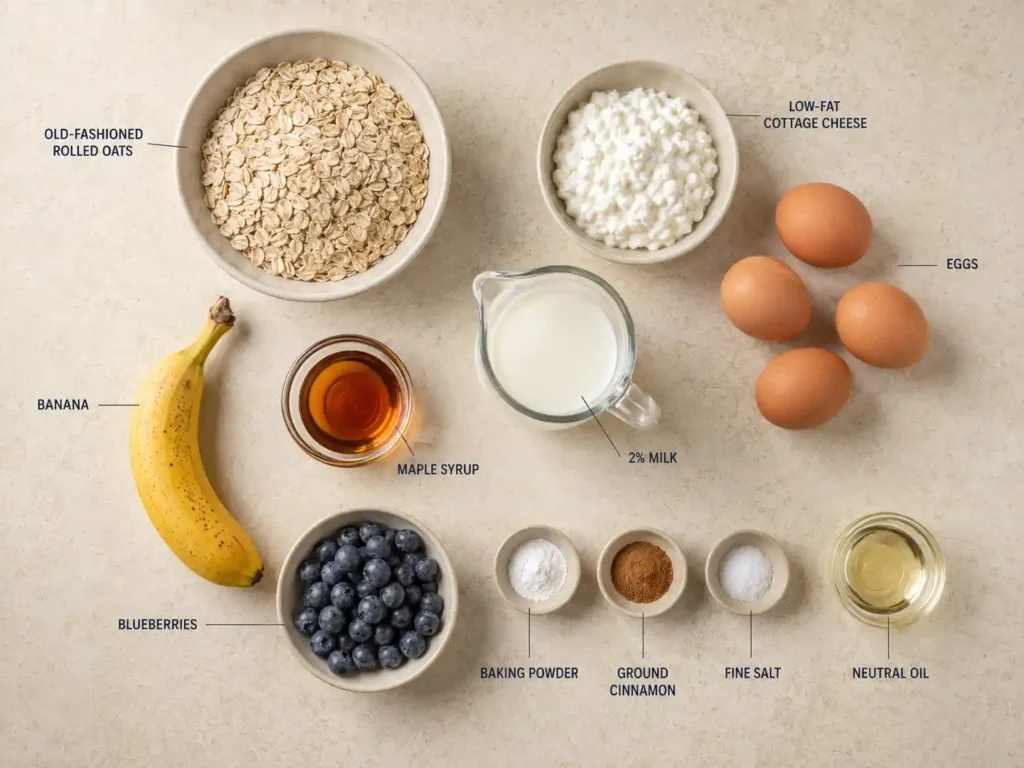
Old-Fashioned Rolled Oats
Use 3 3/4 cups, or 300 grams. Weighing the oats is the most consistent option because cup measurements can vary according to how densely the oats are packed.
Low-Fat Cottage Cheese
Use 2 cups, approximately 452 grams. Sodium and protein differ between brands, so the exact product label will affect the final nutrition.
Eggs
Four large eggs help bind the oatmeal and create slices that hold together after resting.
Two Percent Milk
One cup provides enough liquid to hydrate the oats while the cottage cheese, eggs, and banana add additional moisture.
Banana and Maple Syrup
A ripe mashed banana adds moisture and sweetness. Maple syrup supplements the banana without requiring a dry granulated sweetener.
Blueberries
Fresh or frozen blueberries can be used. Add frozen berries directly from the freezer so they do not release extra juice into the mixing bowl.
Cinnamon, Baking Powder, Salt, and Oil
Cinnamon supplies the main flavor. Baking powder gives the oatmeal a slight lift, while neutral oil keeps the slices from becoming excessively dry.
The batter does not contain standard vanilla extract because alcohol-based ingredients are excluded from BudgetProteinMeals.com recipes.
Should You Blend the Cottage Cheese?
Yes. Blending is part of this recipe’s method, not an optional cosmetic step.
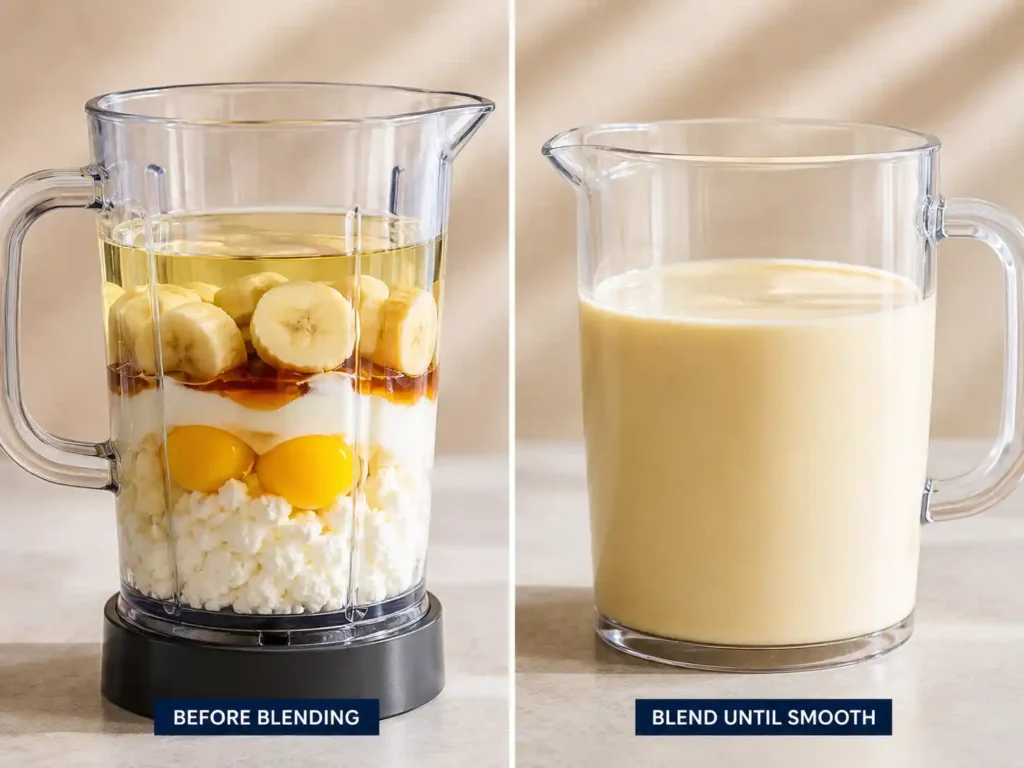
Process the cottage cheese with the eggs, milk, banana, maple syrup, and oil until the mixture looks smooth. This prevents pockets of cottage cheese from remaining between the oats and helps distribute the moisture more evenly.
How to Make High-Protein Baked Oatmeal
1. Prepare the Oven and Baking Dish
Preheat the oven to 350°F. Grease a 9 x 13-inch baking dish with 1 teaspoon neutral oil.
2. Combine the Dry Ingredients
In a large mixing bowl, stir together the rolled oats, baking powder, cinnamon, and salt. Break up any visible clumps of baking powder before adding the liquid.
3. Blend the Wet Ingredients
Add the cottage cheese, eggs, milk, banana, maple syrup, and 1 tablespoon neutral oil to a blender. Blend until smooth, stopping to scrape the sides if needed.
4. Mix the Batter
Pour the blended mixture over the oats. Stir until every oat is coated and no dry mixture remains at the bottom of the bowl.
5. Add the Blueberries
Fold in the blueberries gently. Frozen berries should remain frozen until they are added.
6. Bake Until the Center Is Set
Spread the mixture evenly in the prepared dish. Bake for 35 minutes, then check the center.
Continue baking for another 5 to 10 minutes as needed. The center should no longer look glossy or liquid, and an instant-read thermometer inserted into the middle should register 160°F.
7. Rest Before Slicing
Let the baked oatmeal rest in the dish for at least 10 minutes. This cooling period allows the oats to absorb remaining moisture and makes the portions easier to cut.
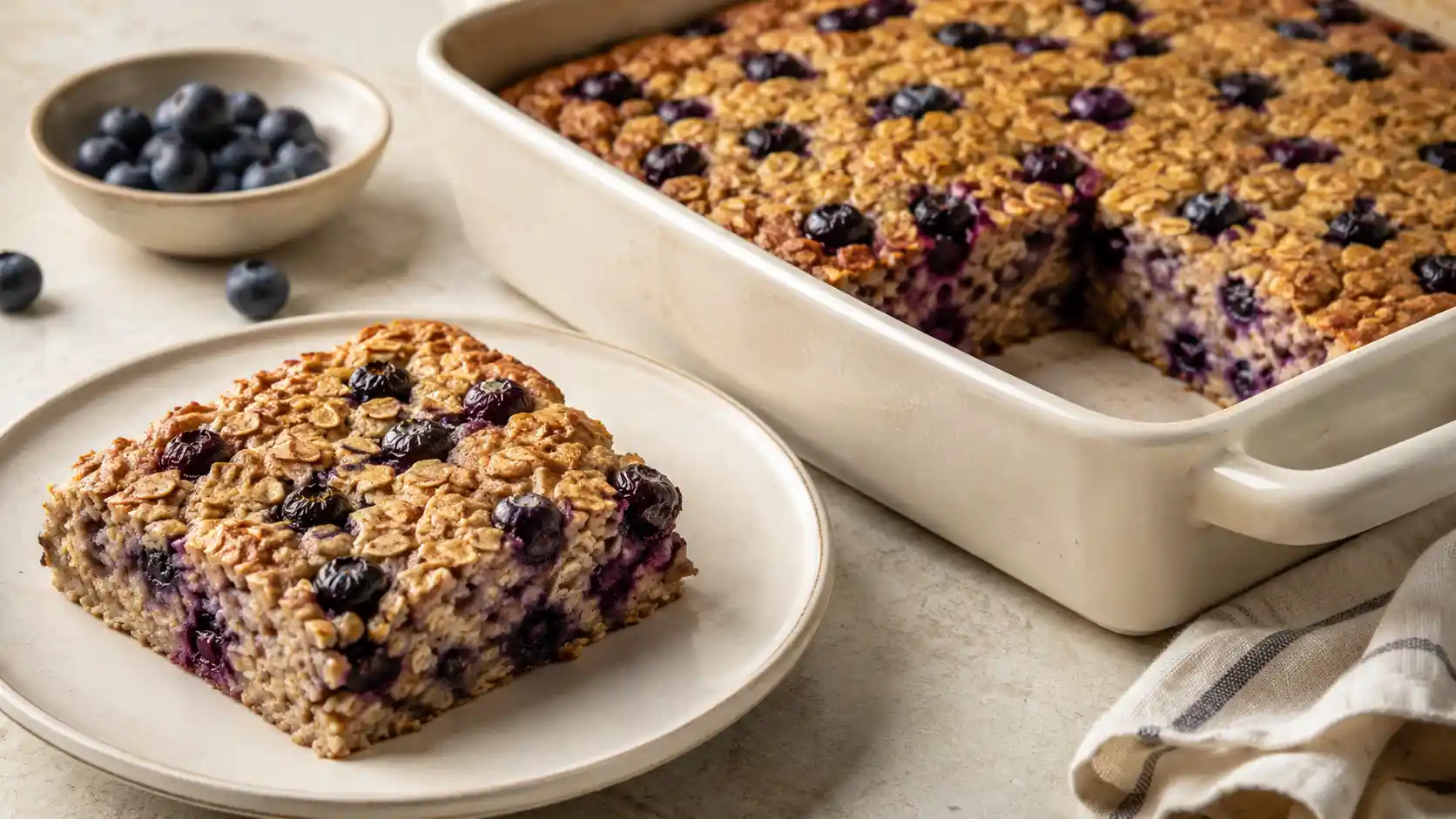
High-Protein Baked Oatmeal With Cottage Cheese
Ingredients
Equipment
Method
- Preheat the oven to 350°F (175°C).
- Grease a 9 x 13-inch baking dish with 1 teaspoon neutral oil.
- In a large mixing bowl, combine the rolled oats, baking powder, cinnamon, and salt. Break up any visible clumps of baking powder.
- Add the cottage cheese, eggs, milk, banana, maple syrup, and 1 tablespoon neutral oil to a blender.
- Blend until the wet mixture is smooth and no obvious cottage cheese curds remain, stopping to scrape down the sides when necessary.
- Pour the blended mixture over the dry ingredients.
- Stir until every oat is evenly coated and no dry mixture remains at the bottom of the bowl.
- Gently fold in the blueberries. Add frozen blueberries directly from the freezer without thawing them.
- Transfer the mixture to the prepared baking dish and spread it into an even layer.
- Bake for 35 minutes, then check the center of the oatmeal.
- Continue baking for another 5 to 10 minutes, until the center no longer looks glossy or liquid and an instant-read thermometer inserted into the middle registers 160°F (71°C).
- Let the baked oatmeal rest in the dish for at least 10 minutes before cutting it into six equal portions.
Notes
How to Tell When Baked Oatmeal Is Done
Use several cues together:
- The center no longer looks glossy or liquid
- The surface springs back slightly when pressed
- The edges are lightly golden
- A knife inserted near the middle does not bring up raw liquid
- The center reaches 160°F
Do not continue baking simply because a few blueberries leave moist streaks. Check the surrounding oatmeal rather than the fruit itself.
How to Avoid Dry or Soggy Baked Oatmeal
| Problem | Likely cause | Correction |
|---|---|---|
| Wet center | The oatmeal needs more time or the batter is deeper than expected | Continue baking in 5-minute intervals and check for 160°F |
| Gummy texture | Quick oats, underbaking, or inaccurate liquid measurements | Use rolled oats, weigh the main ingredients, and bake until set |
| Dry slices | Overbaking or too many oats | Use 300 g oats and remove the pan once the center is safely set |
| Visible cottage cheese curds | The wet ingredients were not blended long enough | Blend until the mixture looks smooth |
| Blue liquid around the fruit | Frozen blueberries were thawed or crushed | Add the berries frozen and fold them in gently |
| Crumbly portions | The oatmeal was cut while very hot | Rest for at least 10 minutes before slicing |
| Wet surface after storage | The portions were covered while warm | Cool before covering and refrigerating |
Budget-Friendly Ingredient Decisions
- Use frozen blueberries: They are practical when fresh berries are unavailable or unsuitable for the recipe budget.
- Choose store-brand oats: Plain rolled oats do not require a specialty product.
- Buy cottage cheese in a larger container: Use the remainder in breakfast bowls, dips, pasta sauces, or other recipes.
- Use a ripe banana: A soft banana blends more easily and adds natural sweetness.
- Skip additional toppings: The oatmeal can be served without nuts, seeds, nut butter, or extra syrup.
No cost per serving is provided because grocery prices vary by location, retailer, package size, and date.
How to Meal Prep Baked Oatmeal
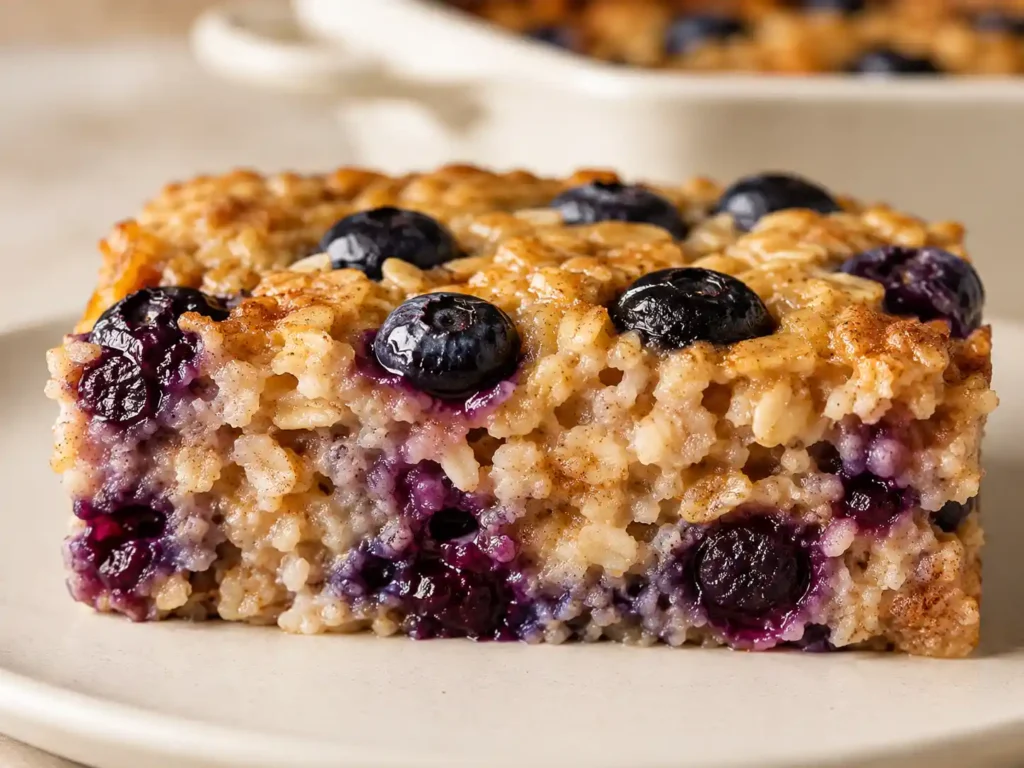
Let the pan rest for at least 10 minutes before slicing. For meal prep, allow the portions to cool further before transferring them to shallow containers.
Divide the pan into six equal rectangles. Store toppings such as yogurt or additional fruit separately so they do not make the oatmeal surface wet.
For more batch-preparation ideas, see this guide to cheap high-protein meal prep.
Storage and Reheating
Refrigeration
Refrigerate the cooked oatmeal within two hours. Store the portions in covered, shallow containers and use them within three to four days.
Freezing
This exact formula has not been evaluated after freezing and thawing. No freezer duration or texture guarantee is provided until a finished batch has been tested.
Microwave Reheating
Place one portion on a microwave-safe plate and heat it in short intervals until the center reaches 165°F. Covering it loosely can reduce splattering while allowing some steam to escape.
Oven or Toaster Oven Reheating
Place a portion in an oven-safe dish and reheat until the center reaches 165°F. This method takes longer than the microwave but may leave the edges slightly firmer.
Estimated Nutrition per Serving
Based on six portions and generic ingredient data, one serving is estimated to provide approximately:
- 410 calories
- 20 g protein
- 57 g carbohydrates
- 12 g fat
- 3.5 g saturated fat
- 7 g fiber
- 19 g total sugars
- 670 mg sodium
Needs verification before publishing. Values vary according to the cottage cheese, milk, baking powder, salt, oil, produce weights, preparation, and finished serving size.
Ingredient Changes and Nutrition Impact
| Change | Likely effect |
|---|---|
| Different cottage cheese brand | May change protein, sodium, moisture, and texture |
| Plant-based milk | May reduce or change the protein estimate |
| Quick oats | May produce a softer or gummier result |
| Steel-cut oats | Requires a different liquid ratio and cooking method |
| Additional nuts or nut butter | Changes calories, fat, protein, and allergens |
| Extra maple syrup | Increases total and added sugars |
Flavor Variations
Keep untested variations simple and avoid changing several structural ingredients at once.
- Mixed berry: Replace the blueberries with the same weight of a berry mixture. Moisture may vary.
- Extra cinnamon: Add a small additional pinch without changing the structure.
- Banana blueberry: Add thin banana slices on top before baking, noting that the surface will remain softer.
- Yogurt topping: Serve plain Greek yogurt on the side after baking.
Apple, nut butter, egg-white, and chocolate variations require separate testing because they can change the moisture, sweetness, nutrition, or bake time.
What to Serve With Baked Oatmeal
The oatmeal can be served alone or paired with:
- Plain Greek yogurt
- Fresh fruit
- A small serving of cottage cheese
- Eggs prepared separately
- A Greek yogurt breakfast bowl
For a cold oat option, try these peach cobbler protein overnight oats.
Helpful Tools for This Recipe
- 9 x 13-inch baking dish: Keeps the oatmeal layer relatively shallow for more even cooking.
- Countertop blender: Smooths the cottage cheese and wet ingredients.
- Kitchen scale: Provides a more reliable oat measurement than cups alone.
- Silicone spatula: Helps transfer the blended mixture and fold in the berries.
- Instant-read thermometer: Checks the center for 160°F during cooking and 165°F during reheating.
- Shallow storage containers: Make portioning and cooling more practical.
FAQs About High-Protein Baked Oatmeal
How much protein is in this baked oatmeal?
One-sixth of the pan is estimated to contain about 20 grams of protein. The final value depends on the exact cottage cheese, milk, oats, egg weights, and serving size.
Can you make protein baked oatmeal without protein powder?
Yes. This formula uses cottage cheese, eggs, milk, and oats instead of protein powder.
Can I use quick oats instead of rolled oats?
Quick oats are not recommended as a direct substitute because they absorb liquid differently and may produce a softer or gummier texture.
How long does baked oatmeal last in the refrigerator?
Refrigerate it within two hours and use the portions within three to four days.
Can high-protein baked oatmeal be frozen?
The safety of freezing cooked oatmeal is not the main concern, but the texture of this specific formula has not been tested after thawing. No freezer-quality promise or duration is included yet.
Final Takeaway
This high-protein baked oatmeal uses blended cottage cheese, eggs, milk, rolled oats, banana, and blueberries to create six substantial breakfast portions without protein powder.
Accurate oat measurement, a smooth cottage cheese mixture, complete cooking to 160°F, and a short rest are the most important steps. Continue planning breakfast with these high-protein breakfasts on a budget or the high-protein meal plan for beginners.