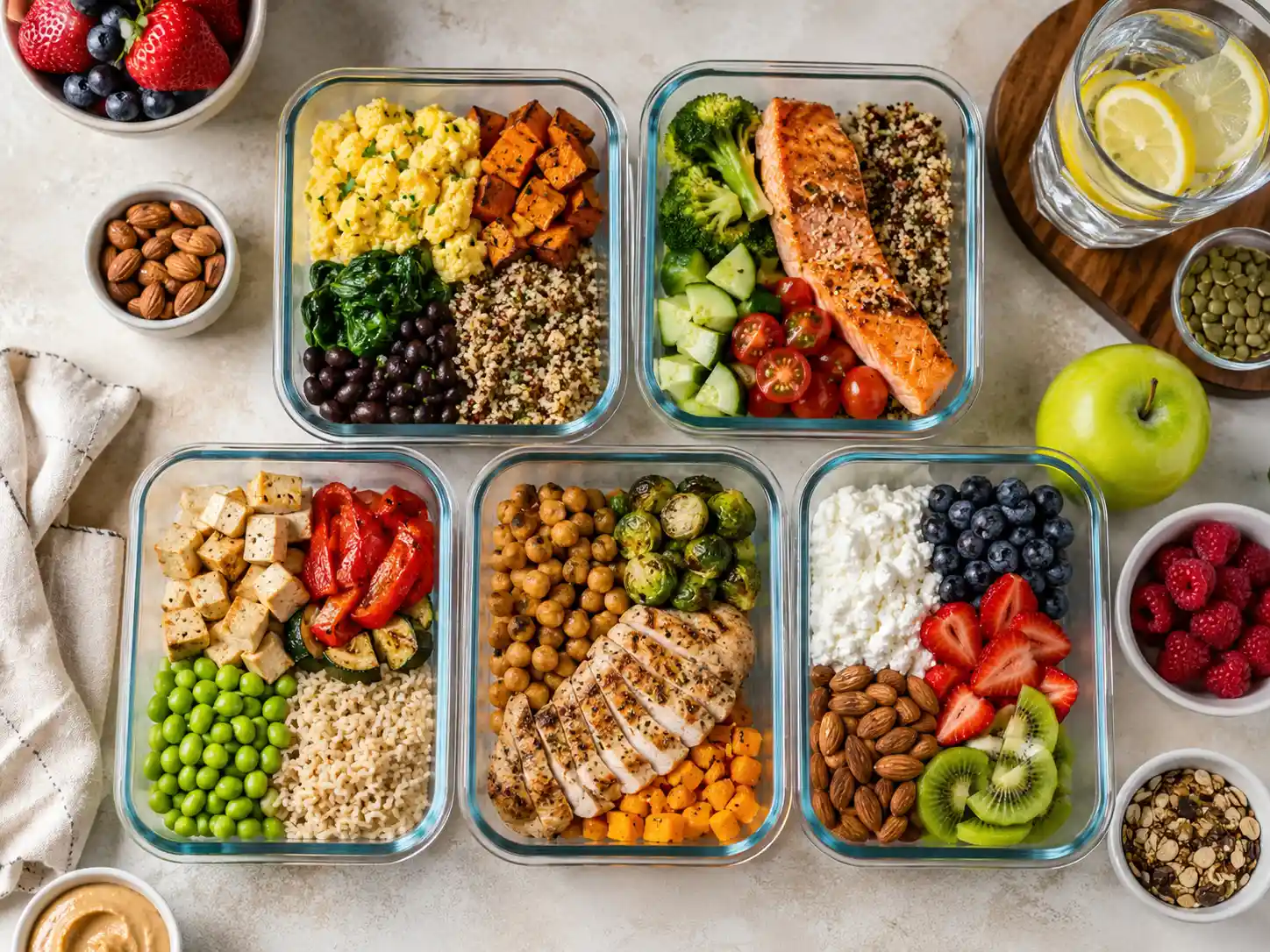
A high-protein meal plan for beginners should make eating enough protein feel simple, affordable, and repeatable. It should not feel like a strict diet, a complicated macro spreadsheet, or a week of plain chicken and dry vegetables.
This 5-day plan uses familiar foods like Greek yogurt, eggs, beans, lentils, tofu, chicken, tuna, cottage cheese, rice, oats, vegetables, and simple sauces. The goal is to help you build meals with a clear protein source, enough fiber, practical snacks, and flexible swaps you can actually use on a normal week.
If you want the bigger meal prep system behind this plan, start with our Cheap High Protein Meal Prep guide. This article is the beginner-friendly 5-day version you can follow before building your own weekly routine.
Nutrition note: This article is for general meal planning and does not replace advice from a doctor, registered dietitian, or qualified healthcare professional. Protein needs vary by body size, age, activity level, health status, and goals. If you have kidney disease, diabetes, pregnancy-related nutrition needs, or a medically prescribed diet, speak with a qualified professional before making major nutrition changes.
Quick Answer: What Is a High-Protein Meal Plan for Beginners?
A high-protein meal plan for beginners is a simple eating plan that includes a clear protein source at most meals and snacks. A practical beginner approach is to build breakfast, lunch, and dinner around a protein food, then add fiber-rich carbs, vegetables, fruit, healthy fats, and flavor.
For many adults, a realistic meal-building target is about 20–35 grams of protein per meal, depending on appetite, body size, activity level, and personal needs. You do not need to track perfectly to start. The beginner goal is consistency: protein at breakfast, protein at lunch, protein at dinner, and one or two easy snacks when needed.
5-Day High-Protein Meal Plan at a Glance
This plan is built around repeatable ingredients so you do not need a huge grocery list. The numbers below are approximate because exact calories and protein depend on brands, portions, and swaps.
| Day | Main Focus | Estimated Protein | Best For |
|---|---|---|---|
| Day 1 | Simple high-protein start | About 90–100 g | Getting into the routine |
| Day 2 | Busy weekday meals | About 85–100 g | Quick meals and easy swaps |
| Day 3 | Plant-forward protein | About 80–95 g | Beans, lentils, tofu, and flexible meals |
| Day 4 | Lunch prep that stays fresh | About 85–100 g | Work lunches and meal prep containers |
| Day 5 | Flexible finish | About 85–100 g | Using leftovers and choosing repeat meals |
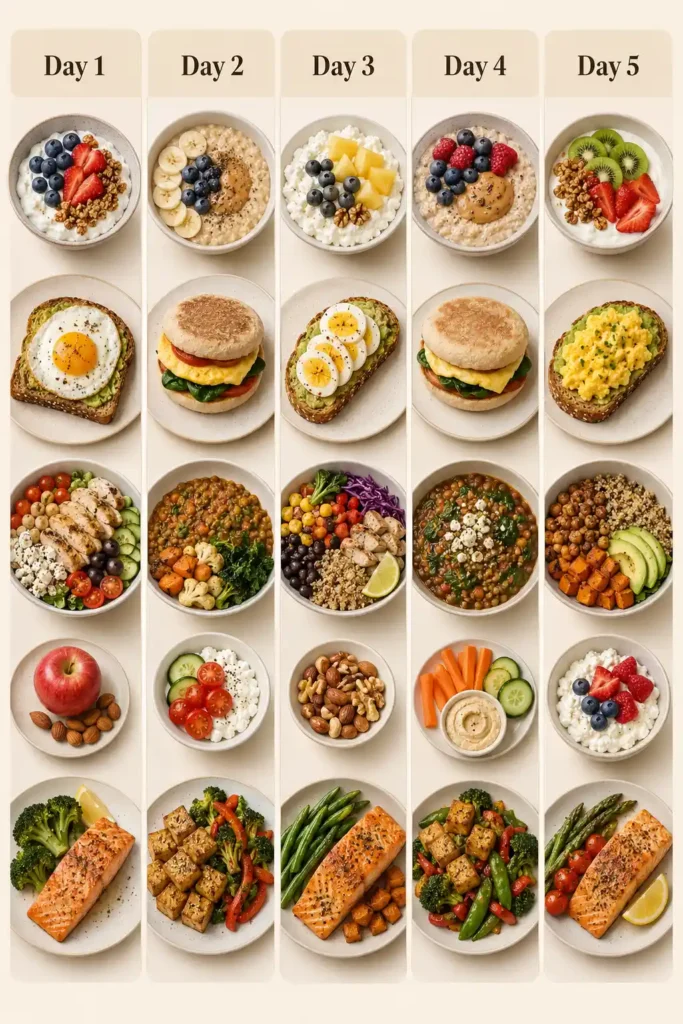
Use this as a flexible starting point. If you need more food, add larger portions of rice, potatoes, oats, fruit, olive oil, avocado, nuts, or another snack. If you need a lighter version, reduce extras like oils, nuts, cheese, or large grain portions before removing vegetables or protein.
Why This Beginner Meal Plan Works
This plan works because it uses a simple formula instead of forcing you to memorize a strict diet. Every meal starts with a protein anchor, then adds fiber, flavor, and enough food to feel like a real meal.
The Beginner Meal Formula
- Choose one protein: eggs, Greek yogurt, chicken, tuna, tofu, beans, lentils, cottage cheese, ground turkey, or edamame.
- Add one filling base: oats, rice, potatoes, quinoa, pasta, beans, whole-grain bread, or tortillas.
- Add produce: berries, apples, cucumbers, greens, peppers, carrots, cabbage, broccoli, tomatoes, or frozen vegetables.
- Add flavor: salsa, lemon juice, mustard, hot sauce, garlic, herbs, Greek yogurt sauce, vinegar, or simple seasoning.
- Keep one snack ready: Greek yogurt, cottage cheese, boiled eggs, edamame, hummus, tuna, roasted chickpeas, or cheese with fruit.
The point is not perfection. The point is to make high-protein eating easier to repeat when you are busy, tired, or shopping on a budget.
How Much Protein Do Beginners Need?
The adult Recommended Dietary Allowance for protein is commonly listed as 0.8 grams per kilogram of body weight per day. That is a baseline reference for many healthy adults, not a personalized target for every goal or lifestyle.
Some people may need more depending on activity level, age, appetite, body size, and health status. For a beginner meal plan, it is usually easier to start by adding a protein source to each meal instead of calculating every gram from day one.
Do Beginners Need Protein Powder?
No. Protein powder can be convenient for smoothies or quick breakfasts, but it is not required. Whole foods like eggs, Greek yogurt, cottage cheese, beans, lentils, tofu, tuna, chicken, edamame, and turkey can carry a high-protein meal plan without supplements.
If you already use protein powder and it fits your budget, it can be helpful. If not, do not build the whole plan around it.
Day 1: Easy High-Protein Start
Day 1 should feel simple. The goal is to set a rhythm: a protein-rich breakfast, a filling lunch, a practical dinner, and snacks that stop you from waiting until you are too hungry to make a good choice.
Day 1 Meal Plan
| Meal | Beginner Option | Budget Swap |
|---|---|---|
| Breakfast | Greek yogurt bowl with berries, oats, and chia seeds | Use frozen berries and regular oats |
| Lunch | Chicken rice bowl with cucumbers, greens, and yogurt sauce | Use frozen vegetables or canned beans |
| Snack | Cottage cheese with fruit | Use boiled eggs or Greek yogurt |
| Dinner | Ground turkey, chicken, or tofu skillet with rice and vegetables | Use beans or lentils to stretch the protein |
The breakfast gives you protein from Greek yogurt, fiber from oats and berries, and extra texture from chia seeds. For another easy breakfast idea, try Blackberry Greek Yogurt Protein Cups.
For lunch, keep the bowl simple. Rice, chicken, vegetables, and a sauce are enough. If you want a full recipe format, use this Ground Chicken Protein Bowl as a template.
Prep Tip for Day 1
Cook extra rice or quinoa today. You can use it for lunch bowls, dinner sides, and leftover meals later in the week. If chopping vegetables slows you down, use frozen vegetables, pre-cut cabbage, bagged greens, or cucumbers that only need slicing.
Day 2: High-Protein Meals for a Busy Weekday
Day 2 is where the plan needs to survive real life. The meals should stay easy, but they also need enough flavor so the plan does not feel like leftovers by lunch.
Day 2 Meal Plan
| Meal | Beginner Option | Easy Swap |
|---|---|---|
| Breakfast | Egg and avocado toast with fruit | Cottage cheese toast or tofu scramble |
| Lunch | Tuna, chicken, or chickpea salad bowl | Use canned tuna, white beans, or leftover chicken |
| Snack | Greek yogurt or edamame | Boiled eggs, hummus, or cottage cheese |
| Dinner | Chicken, tofu, or shrimp rice skillet with vegetables | Use frozen vegetables and leftover rice |
Breakfast starts with eggs because they are simple and flexible. Add whole-grain toast for a more filling base, fruit for freshness, and avocado or olive oil for healthy fat. If eggs are not your favorite, cottage cheese toast or a tofu scramble can work.
Lunch can be built from tuna, chicken, chickpeas, or white beans. Add greens, cucumber, tomatoes, rice or quinoa, and a quick dressing made with Greek yogurt, lemon juice, mustard, garlic, and pepper.
Easy Swaps for Day 2
- No tuna? Use chicken, chickpeas, white beans, tofu, or boiled eggs.
- No avocado? Use olive oil, tahini, seeds, or a little cheese.
- No rice? Use potatoes, quinoa, pasta, tortillas, or whole-grain bread.
- No Greek yogurt? Use cottage cheese, hummus, or a vinaigrette-style dressing.
Day 3: Plant-Forward High-Protein Meals
Day 3 proves that a high-protein meal plan does not need chicken at every meal. Beans, lentils, tofu, edamame, Greek yogurt, cottage cheese, and eggs can help you build satisfying meals with more variety.
Day 3 Meal Plan
| Meal | Beginner Option | Protein Boost |
|---|---|---|
| Breakfast | Protein oatmeal with milk, Greek yogurt, berries, and peanut butter | Add cottage cheese or protein powder if you already use it |
| Lunch | Lentil bowl with rice, greens, cucumber, and tahini-lemon sauce | Add edamame, tofu, or a boiled egg |
| Snack | Hummus with vegetables or whole-grain crackers | Add Greek yogurt or cottage cheese on the side |
| Dinner | Tofu, bean, or chicken tacos with cabbage slaw | Add black beans, Greek yogurt sauce, or extra tofu |
Plant-forward meals work best when they are built like full meals, not tiny side dishes. Lentils and beans bring protein and fiber, but you still need enough total food, sauce, and texture to feel satisfied.
How to Make Plant Protein More Filling
- Use enough beans, lentils, tofu, tempeh, or edamame.
- Add a filling base like rice, potatoes, oats, quinoa, or tortillas.
- Include crunchy vegetables like cabbage, carrots, peppers, or cucumber.
- Add flavor with salsa, lemon juice, garlic, hot sauce, tahini, or yogurt sauce.
- Use healthy fats like olive oil, avocado, nuts, seeds, or peanut butter when needed.
For another plant-forward meal idea, use High Protein Dense Bean Salad as a cold lunch or side for this plan.
Day 4: High-Protein Lunch Prep That Stays Fresh
Day 4 is usually where meal prep starts feeling repetitive. The fix is not always a new recipe. Sometimes the answer is better storage, a fresher sauce, or a crunchy topping added right before eating.
Day 4 Meal Plan
| Meal | Beginner Option | Freshness Tip |
|---|---|---|
| Breakfast | Cottage cheese breakfast bowl with berries and toast | Keep toast separate until serving |
| Lunch | White bean salad with tuna, chicken, tofu, or boiled eggs | Add dressing right before eating |
| Snack | Roasted chickpeas, Greek yogurt, or boiled eggs | Pack crunchy snacks separately |
| Dinner | Stuffed peppers with turkey, lentils, tofu, or beans | Freeze extra portions if needed |
For lunch, mix white beans with cucumber, tomatoes, parsley, red onion, olive oil, lemon juice, pepper, and your chosen protein. This gives you a cold meal prep option that does not depend on a microwave.
If you want more cold lunch options, use High Protein Cold Lunches for Work or High Protein Lunch Ideas for extra rotation ideas.
How to Keep Meal Prep Lunches Fresher
- Keep sauces and dressings in small separate containers.
- Add crunchy toppings right before eating.
- Store greens separately from warm grains or wet ingredients.
- Use sturdy vegetables like cucumber, cabbage, carrots, peppers, and broccoli.
- Do not overcook pasta, rice, or vegetables if they will be reheated later.
Day 5: Flexible Finish
Day 5 is not about finishing perfectly. It is about noticing which meals were easy enough to repeat. Keep the ones that worked, adjust the ones that felt annoying, and replace anything that made the plan harder than it needed to be.
Day 5 Meal Plan
| Meal | Beginner Option | Use-What-You-Have Swap |
|---|---|---|
| Breakfast | High-protein breakfast sandwich with egg, cottage cheese, greens, and whole-grain bread | Use Greek yogurt or overnight oats |
| Lunch | Salmon, tuna, tofu, chicken, or chickpea grain bowl | Use leftover rice, beans, or vegetables |
| Snack | Greek yogurt with nuts or cheese with fruit | Use edamame, hummus, or boiled eggs |
| Dinner | High-protein dinner salad with chicken, eggs, lentils, beans, tofu, or tuna | Use any leftover protein from the week |
Breakfast can be a simple sandwich with egg, greens, and cottage cheese. If you prefer something sweet, try Peach Cobbler Protein Overnight Oats or Protein Coffee Smoothie.
Dinner is the clean-out-the-fridge meal. Add leftover protein to greens, rice, beans, cucumber, tomatoes, cabbage, carrots, or roasted vegetables. A simple sauce can make it feel intentional instead of random.
What to Do After the 5 Days
- Choose two breakfasts worth repeating.
- Choose one lunch that stayed fresh.
- Choose one dinner that reheated well.
- Keep two high-protein snacks available.
- Make a short grocery list from the meals you actually liked.
A plan with no flexibility usually breaks quickly. A plan with a few repeat meals is much easier to keep.
Beginner Grocery List for a High-Protein Meal Plan
A beginner grocery list works best when it is organized by category. You do not need every item below. Choose a few proteins, a few carbs, several vegetables, and two or three flavor boosters.
Protein Foods
- Eggs
- Greek yogurt
- Cottage cheese
- Chicken breast or chicken thighs
- Ground turkey or ground chicken
- Canned tuna or salmon
- Tofu or tempeh
- Lentils, chickpeas, black beans, or white beans
- Edamame
- Hummus
Carbs, Produce, and Flavor Basics
- Oats, rice, potatoes, quinoa, pasta, tortillas, or whole-grain bread
- Berries, apples, bananas, oranges, or grapes
- Cucumbers, tomatoes, peppers, carrots, cabbage, greens, broccoli, or frozen vegetables
- Olive oil, mustard, lemon juice, vinegar, salsa, hot sauce, garlic, herbs, and spices
Cheap High-Protein Foods for Beginners
| Budget Protein | Easy Use | Why It Helps |
|---|---|---|
| Eggs | Breakfast, bowls, snacks | Quick, flexible, beginner-friendly |
| Lentils | Bowls, soups, tacos | Protein plus fiber |
| Canned tuna | Salads, sandwiches, grain bowls | Fast and shelf-stable |
| Greek yogurt | Breakfast, sauces, snacks | High protein with no cooking |
| Tofu | Skillets, tacos, bowls | Affordable plant protein |
| Beans | Salads, bowls, wraps | Filling and easy to batch prep |
For more budget meal prep ideas, use High Fiber High Protein Meal Prep Bowls or Protein Pasta Salad Recipes.
Meal Prep Tips for High-Protein Beginners
Meal prep does not need to mean cooking every meal in advance. For beginners, it is usually better to prep a few building blocks so meals come together faster.
What to Prep First
- Cook one batch of rice, potatoes, oats, pasta, or quinoa.
- Prep one protein like chicken, turkey, tofu, lentils, beans, or boiled eggs.
- Wash or chop sturdy vegetables like cucumbers, peppers, cabbage, carrots, and broccoli.
- Make one sauce such as yogurt dressing, salsa yogurt, vinaigrette, or tahini-lemon sauce.
- Portion simple snacks like Greek yogurt, cottage cheese, edamame, hummus, fruit, or boiled eggs.
The Low-Energy Version
Some weeks, full meal prep is not realistic. Use rotisserie-style cooked chicken if it fits your preferences, canned tuna, canned beans, microwaveable rice, frozen vegetables, Greek yogurt, eggs, hummus, and bagged salad. It may not look fancy, but it can still support a practical high-protein week.
Storage and Food Safety Notes
Most cooked leftovers should be used within 3–4 days when stored properly in the refrigerator. The USDA also recommends cooling leftovers quickly in shallow containers and refrigerating perishable foods within 2 hours. You can review their guidance here: USDA FSIS leftovers and food safety.
- Use shallow containers so food cools faster.
- Keep cold meals chilled until serving.
- Store sauces separately when they can make meals soggy.
- Freeze extra portions if you will not eat them within a few days.
- Reheat cooked leftovers until hot and steaming.
Common Mistakes Beginners Make
Mistake 1: Adding Protein but Forgetting Fiber
Protein helps, but a plain protein source may not feel like a complete meal. Add vegetables, fruit, beans, oats, rice, potatoes, or whole grains so the meal has more staying power.
Mistake 2: Going Too Low-Calorie Too Quickly
Some people start a high-protein plan by making every meal too small. That can backfire. A better beginner approach is to build balanced meals first, then adjust portions gradually if needed.
Mistake 3: Eating the Same Protein Every Day
Chicken, eggs, and Greek yogurt are useful, but they should not be the whole plan. Rotate between poultry, tuna, tofu, beans, lentils, cottage cheese, edamame, turkey, and eggs to keep meals easier to repeat.
Mistake 4: Skipping Flavor
A good sauce can be the difference between eating your lunch and ordering something else. Use salsa, mustard, lemon juice, herbs, garlic, vinegar, hot sauce, yogurt dressing, or tahini sauce to make simple food taste better.
FAQs About a High-Protein Meal Plan for Beginners
What is a good high-protein meal plan for beginners?
A good high-protein meal plan for beginners includes a protein source at most meals, such as eggs, Greek yogurt, cottage cheese, chicken, tuna, tofu, lentils, beans, or edamame. Pair protein with fiber-rich carbs, vegetables, fruit, and flavor so the meals feel satisfying.
Can a beginner get 100 grams of protein a day without protein powder?
Yes, many beginners can get close to 100 grams of protein with whole foods. A day might include Greek yogurt at breakfast, chicken or tuna at lunch, tofu or turkey at dinner, and snacks like cottage cheese, eggs, edamame, or hummus. Exact totals depend on portions and brands.
Can I make this high-protein meal plan vegetarian?
Yes. Use eggs, Greek yogurt, cottage cheese, tofu, tempeh, edamame, lentils, beans, hummus, soy milk, nuts, seeds, and whole grains. If you are fully plant-based, you may need more intentional portions and combinations to reach your target.
What is the easiest high-protein breakfast for beginners?
Greek yogurt with oats, berries, and chia seeds is one of the easiest options because it requires no cooking. Eggs with toast, cottage cheese bowls, overnight oats, and protein smoothies are also beginner-friendly.
Can this high-protein meal plan help with weight loss?
It may support weight management if it helps you build filling meals and stay within a calorie range that fits your goal. Protein alone does not guarantee fat loss, and this article is not a medical or weight-loss plan.
Why am I still hungry on a high-protein meal plan?
You may still feel hungry if meals are too low in calories, fiber, carbohydrates, or fat. Protein works better when it is paired with enough total food, vegetables, fruit, grains, beans, and healthy fats.
Is a high-protein meal plan safe for beginners?
For many healthy adults, a balanced high-protein meal plan can be practical when it includes enough calories, fiber, fluids, fruits, vegetables, and varied protein sources. People with kidney disease, diabetes, pregnancy-related nutrition needs, or medically prescribed diets should speak with a qualified healthcare professional before significantly increasing protein intake.
How We Built This High-Protein Meal Plan
This plan was built around a simple beginner formula: one protein source, one filling base, vegetables or fruit, practical flavor, and easy snacks. The goal is not to create a medical diet or a perfect macro plan. The goal is to give beginners a realistic structure they can repeat and adjust.
Nutrition estimates are approximate and should be treated as planning references, not lab-tested values. Exact numbers change based on brands, portions, ingredients, and substitutions.
Final Thoughts
A high-protein meal plan for beginners should make your week easier, not stricter. Start with protein at each meal, add fiber-rich carbs and vegetables, keep a few snacks ready, and repeat the meals that worked best.
For the next step, choose two breakfasts, one lunch, and one dinner from this 5-day plan. Then use the full Cheap High Protein Meal Prep guide to turn those meals into a simple weekly routine.