
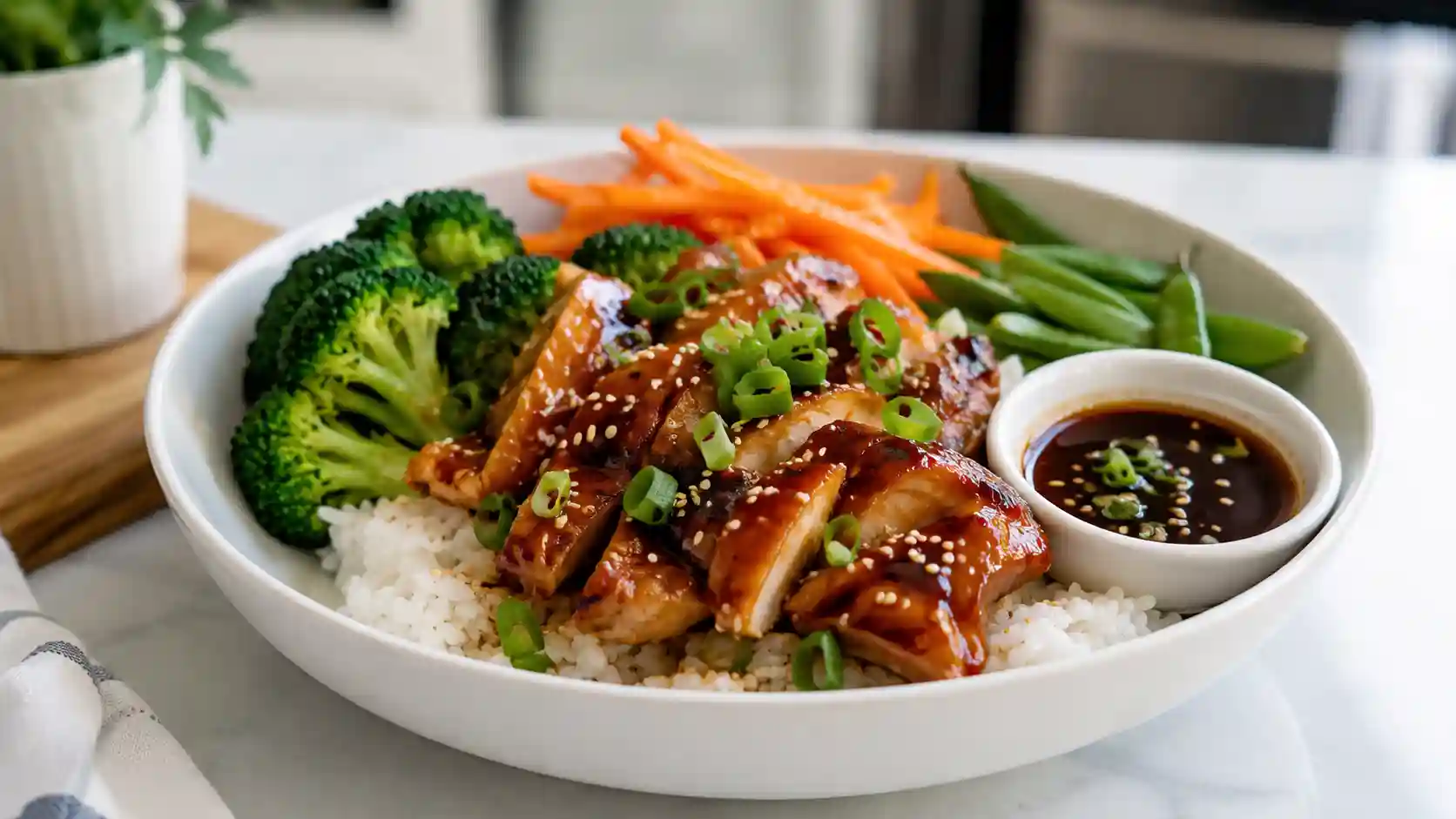
A teriyaki chicken rice bowl is one of the easiest ways to turn chicken, rice, vegetables, and a glossy sauce into a practical lunch or dinner. This version keeps the ingredients simple, uses an alcohol-free teriyaki-style sauce, and works well for meal prep.
The bowl is built around tender chicken, fluffy rice, crisp-tender vegetables, sesame seeds, green onions, and a sweet-savory sauce made with soy sauce, honey or brown sugar, garlic, ginger, rice vinegar, and cornstarch. It tastes like a takeout-style bowl, but it is built for a real budget and a normal weeknight.
If you like easy chicken bowls, this recipe fits naturally into a weekly rotation with other meal prep bowls like a sticky chicken rice bowl or buffalo chicken rice bowl.
Quick Answer
A teriyaki chicken rice bowl is a high-protein meal prep bowl made with cooked chicken, rice, vegetables, and a glossy sweet-savory teriyaki-style sauce. This version uses an alcohol-free sauce with low-sodium soy sauce, honey or brown sugar, rice vinegar, garlic, ginger, water, and cornstarch for thickness.
Quick Recipe Snapshot
| Detail | Info |
|---|---|
| Main protein | Chicken breast or boneless skinless chicken thighs |
| Base | White rice, jasmine rice, brown rice, leftover rice, or microwave rice |
| Sauce style | Alcohol-free teriyaki-style sauce with soy sauce, honey or brown sugar, garlic, ginger, rice vinegar, and cornstarch |
| Vegetables | Broccoli, carrots, bell pepper, snap peas, cabbage, and green onions |
| Toppings | Sesame seeds, green onions, optional chili flakes or sriracha |
| Meal prep friendly | Yes, best for 3 to 4 days when stored properly |
| Prep time | 15 minutes |
| Cook time | 20 minutes |
| Total time | 35 minutes |
| Servings | 4 servings |
For more easy chicken bowl combinations, see these chicken rice bowl recipes.
Why You’ll Like This Teriyaki Chicken Rice Bowl
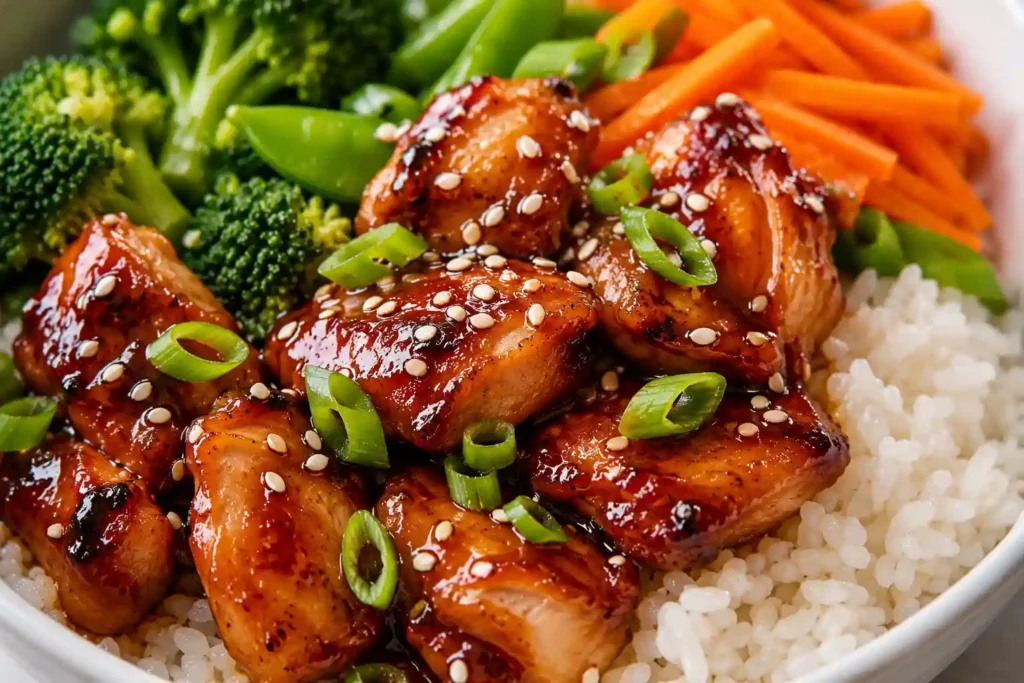
There are plenty of reasons this bowl ends up on regular rotation.
- Glossy teriyaki-style sauce: A simple cornstarch slurry turns pantry ingredients into a thick, shiny sauce that coats every piece of chicken.
- No alcohol-based ingredients: This version does not use mirin, sake, sherry, wine, or any alcohol-based sauce ingredients.
- Simple rice base: White rice, jasmine rice, brown rice, leftover rice, or microwave rice pouches all work.
- Flexible vegetables: Broccoli, carrots, snap peas, bell pepper, cabbage, and green onions all fit the bowl.
- Meal prep friendly: The chicken, rice, and cooked vegetables store well and reheat cleanly.
- Lunch or dinner use: The bowl works as a quick dinner and packs well for work lunches.
It also fits naturally into a high protein lunch ideas rotation if you want more work-friendly meals.
Ingredients You’ll Need
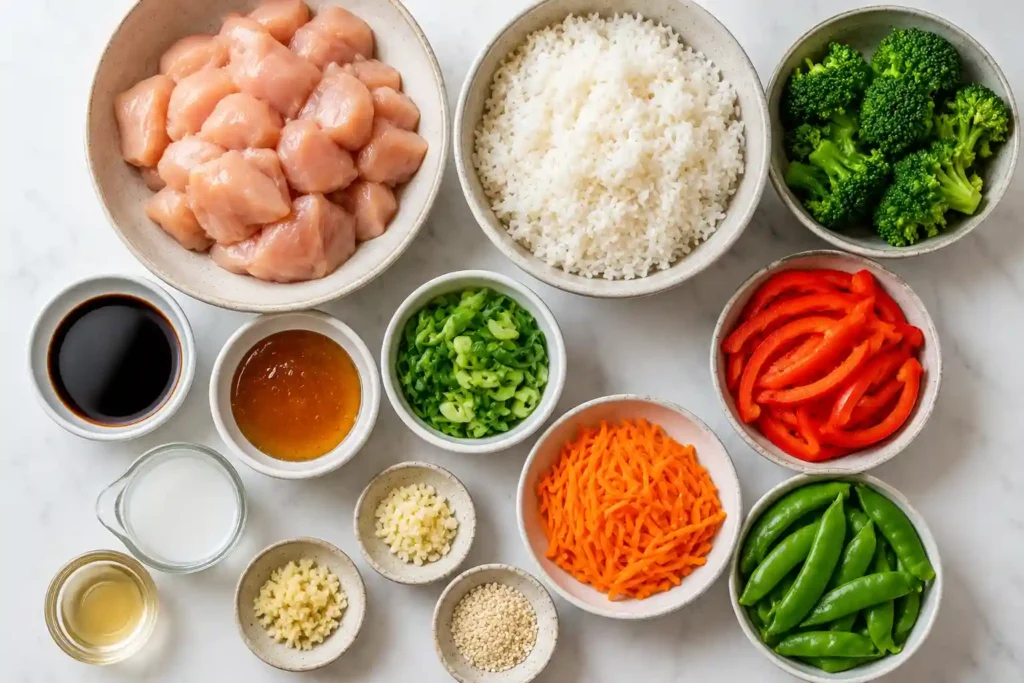
Chicken
- Boneless skinless chicken breast or boneless skinless chicken thighs
- Neutral cooking oil
- Salt and black pepper
Chicken breast works well if you want a leaner bowl. Chicken thighs stay juicier and are often more forgiving for reheating. Slice the chicken thin or cut it into bite-sized pieces so it cooks evenly.
Rice
- White rice
- Jasmine rice
- Brown rice
- Leftover cooked rice
- Microwave rice pouches
Rice is the easiest base because it is affordable, filling, and simple to batch prep. Leftover rice also works well when reheated with a splash of water.
Alcohol-Free Teriyaki-Style Sauce
- Low-sodium soy sauce
- Honey or brown sugar
- Rice vinegar or apple cider vinegar
- Fresh garlic, minced
- Fresh ginger, grated, or ground ginger
- Water
- Cornstarch
- Cold water for the slurry
This sauce is sweet, savory, garlicky, and glossy without using alcohol-based ingredients. Cornstarch helps the sauce thicken so it coats the chicken instead of soaking the rice.
Vegetables
- Broccoli florets
- Sliced carrots
- Snap peas
- Sliced bell pepper
- Shredded cabbage
- Green onions
Use what you already have. Frozen broccoli is a good budget option, but thaw it and pat it dry before adding it to the pan so it does not water down the sauce.
Toppings
- Sesame seeds
- Sliced green onions
- Optional chili flakes
- Optional sriracha
Optional Add-Ins
- Cooked shelled edamame
- Shredded red cabbage
- Sliced cucumber, added fresh
- Fried egg or soft-boiled egg
Budget-Friendly Ingredient Notes
Chicken: Chicken thighs are often more affordable and stay juicy after reheating. Chicken breast works well too, especially if you slice it thin and avoid overcooking it.
Rice: White rice is usually the cheapest option and works well with the sauce. Brown rice adds a slightly nuttier flavor. Microwave rice pouches cost more, but they are useful when time matters more than saving every cent.
Soy sauce: Low-sodium soy sauce is easier to control because the sauce reduces and concentrates in the skillet. Regular soy sauce can make the bowl too salty if you are not careful.
Honey or brown sugar: Honey makes a smoother glossy sauce, while brown sugar gives a deeper flavor. Use whichever one you already have.
Rice vinegar: Rice vinegar gives the sauce acidity without alcohol. Apple cider vinegar can work as a substitute if needed.
Vegetables: Frozen broccoli, shredded carrots, cabbage, and bell peppers are practical budget choices. They add color, texture, and volume without making the bowl complicated.
Cornstarch: Do not skip the slurry if you want the sauce to thicken. It is the easiest way to get that glossy coating.
How to Make a Teriyaki Chicken Rice Bowl
Cook the Rice
Cook the rice according to the package directions. If you are using leftover rice, break it up first and reheat it with a small splash of water until fluffy and steaming. Keep the rice warm while you cook the chicken and vegetables.
Mix the Teriyaki-Style Sauce
In a small bowl or measuring cup, whisk together low-sodium soy sauce, honey or brown sugar, rice vinegar, garlic, ginger, and water. In a separate small bowl, stir cornstarch with cold water until smooth. Keep the slurry nearby because it will go into the sauce near the end.
Cook the Chicken
Pat the chicken dry, then slice it thin or cut it into bite-sized pieces. Season with salt and black pepper. Heat neutral oil in a large skillet over medium-high heat. Add the chicken in a single layer and avoid crowding the pan. Cook until browned on the bottom, then flip and continue cooking until the chicken reaches 165°F / 74°C.
Cook the Vegetables
Transfer the cooked chicken to a plate. Add the vegetables to the skillet and cook until crisp-tender. If you are meal prepping, slightly undercook the vegetables so they do not become mushy when reheated.
Thicken the Sauce
Lower the heat to medium. Pour the teriyaki-style sauce mixture into the skillet and bring it to a gentle simmer. Stir in the cornstarch slurry and cook for 1 to 2 minutes, stirring constantly, until the sauce turns glossy and thick enough to coat the back of a spoon.
Coat the Chicken
Return the cooked chicken to the skillet and toss until every piece is coated in the glossy sauce. Keep the heat moderate so the honey or brown sugar does not scorch.
Build the Bowls
Divide the cooked rice among 4 bowls or meal prep containers. Top with teriyaki chicken, cooked vegetables, and any extra sauce from the pan. Finish with sesame seeds, sliced green onions, chili flakes, sriracha, cucumber, edamame, red cabbage, or an egg if desired.
How to Meal Prep Teriyaki Chicken Rice Bowls
This bowl is one of the better meal prep candidates in a chicken and rice rotation. Here is how to set it up so the components stay good throughout the week.
What to pack together: Cooked rice, sauced chicken, and cooked vegetables can be stored together in the same container. The sauce may settle slightly into the rice overnight, which works well for most meal prep bowls.
What to store separately: Fresh toppings like sliced green onions, sesame seeds, cucumber, and anything crunchy should go in a small separate bag or container. This keeps them from getting soggy or losing their texture.
How to keep vegetables from getting too soft: Slightly undercook the vegetables during meal prep. They will finish softening when reheated. Overcooked broccoli that gets reheated again can turn mushy.
How to keep the sauce from making the bowl watery: Make sure the sauce is fully thickened before adding it to the chicken. A well-thickened sauce sticks to the chicken instead of pooling at the bottom.
Container setup: Use meal prep containers with dividers or keep small sauce cups alongside standard containers. For more meal prep planning, see this high protein meal plan for beginners.
This bowl also fits well into a broader easy protein dinner ideas plan if you are prepping for both lunch and dinner in the same session.
If you want a bigger weekly system using the same chicken and rice base, this chicken and rice meal prep guide can help.
How to Keep the Teriyaki Sauce Glossy, Not Watery
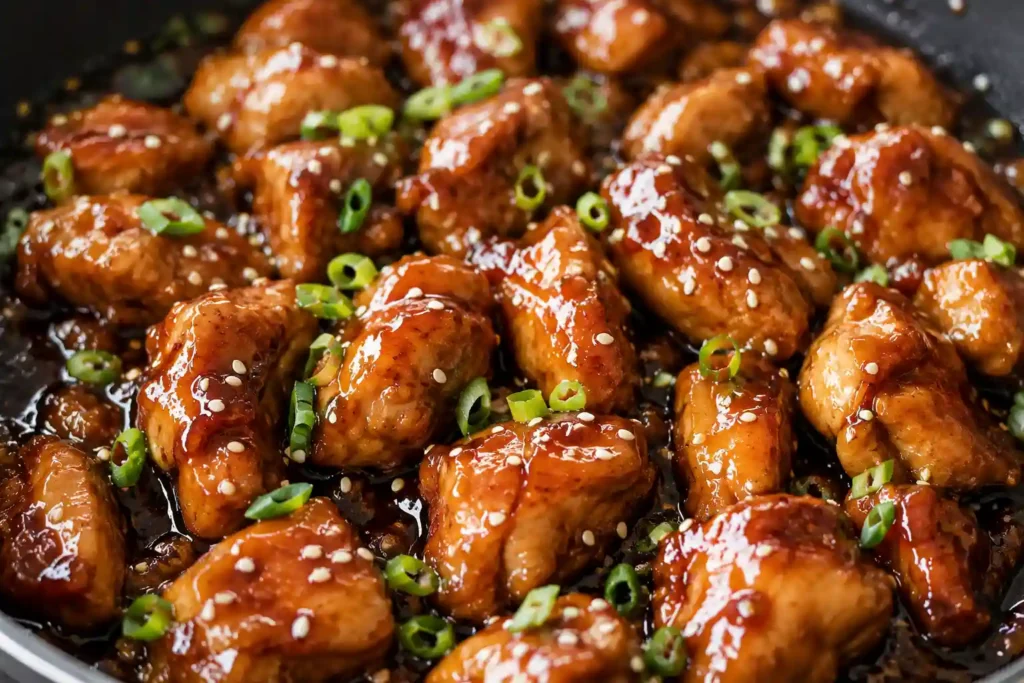
A thin, watery sauce is the most common issue with homemade teriyaki-style bowls. Here is how to avoid it.
- Use a cornstarch slurry: Mix cornstarch with cold water before adding it to the hot sauce. Never add dry cornstarch directly to a hot liquid.
- Simmer briefly until thickened: Give the sauce a minute or two of gentle heat after adding the slurry. Stir constantly until it turns glossy.
- Do not over-dilute the sauce: Keep water additions small. Too much water makes thickening harder.
- Do not add watery vegetables too early: Frozen vegetables and high-moisture vegetables can release water into the sauce. Thaw and pat dry when needed.
- Keep extra sauce separate: If you want more sauce for reheating, store it in a small cup instead of pouring it all over the rice before storage.
- Reheat gently: Stir halfway through reheating so the sauce warms evenly and does not scorch in one spot.
Easy Variations
More Spicy
Add sriracha, chili flakes, or a small amount of chili garlic sauce to the finished bowl. Start with less than you think you need, then adjust after tasting.
Less Sweet
Use a little less honey or brown sugar and add an extra splash of rice vinegar. This gives the bowl a sharper, more savory flavor.
Higher Vegetable Version
Add more broccoli, cabbage, snap peas, carrots, or bell pepper. This gives the bowl more volume and color while keeping the base simple.
Chicken Thigh Version
Use boneless skinless chicken thighs for a juicier bowl that reheats especially well. Cut the thighs into similar-sized pieces so they cook evenly.
Chicken Breast Version
Use chicken breast if you prefer a leaner bowl. Slice it thin, cook it quickly, and pull it from the heat as soon as it reaches 165°F / 74°C.
Egg Teriyaki Bowl
Add a fried egg or soft-boiled egg on top. This makes the bowl feel more filling and works well when you want a bigger dinner.
Edamame Teriyaki Bowl
Add cooked shelled edamame for extra texture and a plant-based protein boost. It also adds color and works well in meal prep containers.
What to Serve With It
This bowl can stand alone, but a few simple sides make it feel more complete.
- Cucumber salad: Thinly sliced cucumber with rice vinegar, sesame seeds, and a pinch of salt.
- Steamed edamame: A fast side that fits the flavor profile.
- Extra vegetables: Add steamed broccoli, cabbage, or snap peas if you want a bigger bowl.
- Fresh fruit: Pineapple, orange slices, or berries can balance the salty-sweet sauce.
- Simple soup: A light broth-based soup can work if you are serving this for dinner.
Storage and Reheating
Refrigerator storage: Store the cooked chicken, rice, and vegetables in airtight containers in the refrigerator. For best quality, use within 3 to 4 days.
Fresh toppings: Store sesame seeds, green onions, cucumber, and extra sauce separately. Add them after reheating so the bowl tastes fresh.
Reheating: Reheat the chicken, rice, and cooked vegetables until hot throughout. Add a small splash of water before reheating if the rice feels dry. Stir halfway through reheating to distribute heat evenly.
Freezing: Chicken and rice can be frozen, but the texture of cooked vegetables and thickened sauce may change after thawing. Freeze the chicken and rice separately from fresh toppings for the best result.
Food safety note: Cook chicken to 165°F / 74°C and refrigerate leftovers promptly. Do not leave cooked chicken or rice at room temperature for long periods.
Common Mistakes to Avoid
- Sauce too thin: Use the cornstarch slurry and give the sauce a full minute or two of gentle heat while stirring.
- Sauce too salty: Use low-sodium soy sauce. If you only have regular soy sauce, start with less and taste before adding more.
- Overcooked chicken: Slice the chicken evenly and cook only until it reaches 165°F / 74°C.
- Burned honey or sugar: Lower the heat before adding the sauce. Honey and brown sugar can scorch quickly over very high heat.
- Soggy vegetables: Slightly undercook vegetables for meal prep and pat frozen vegetables dry before cooking.
- Wet rice: Keep extra sauce in a small container instead of pouring it all over the rice before storing.
- Toppings added too early: Add sesame seeds, green onions, cucumber, and crunchy toppings right before serving.
- Using alcohol-based teriyaki ingredients: This recipe intentionally excludes mirin, sake, sherry, wine, beer, and alcohol-based ingredients. Use rice vinegar or apple cider vinegar for acidity instead.
Teriyaki Chicken Rice Bowl
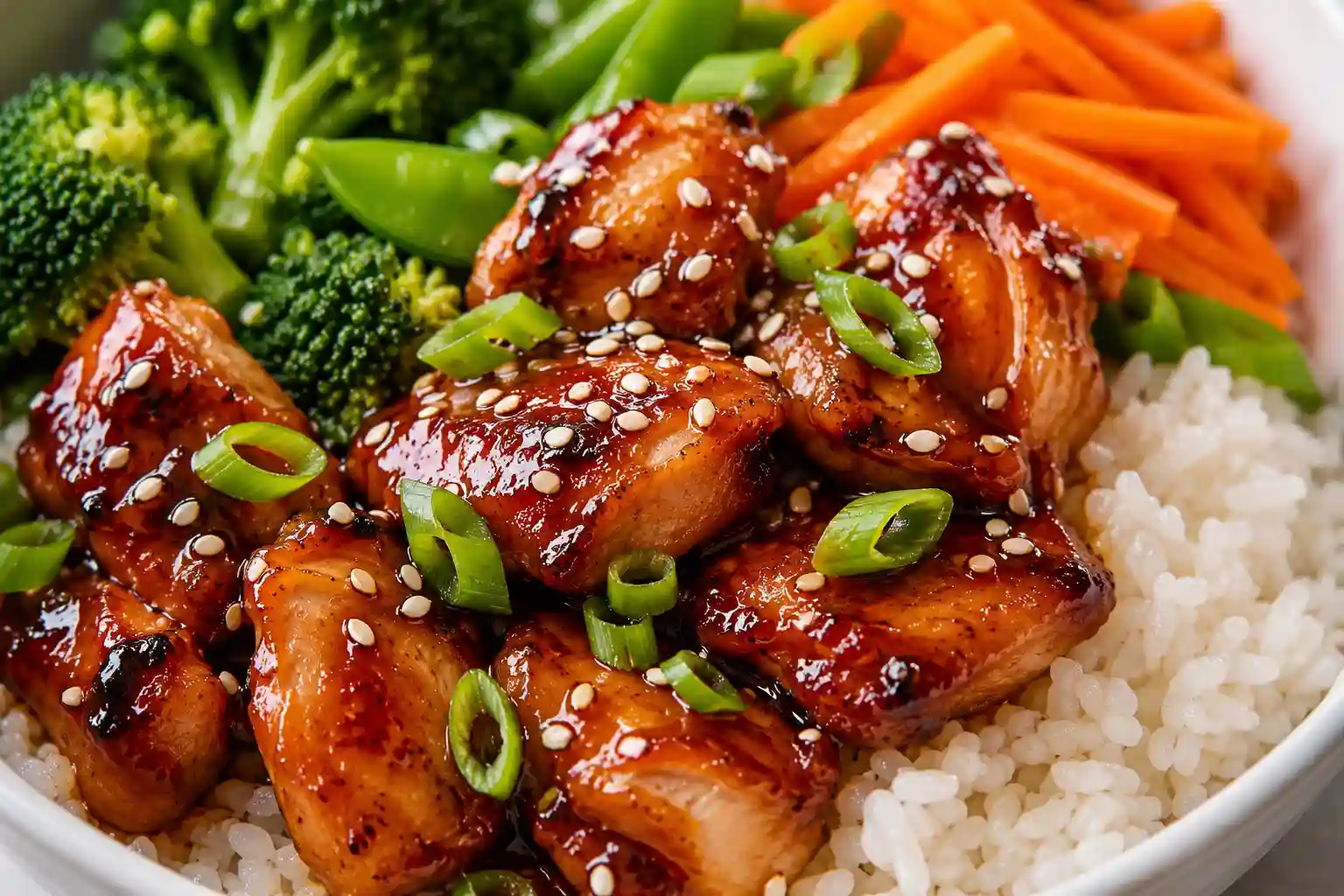

Teriyaki Chicken Rice Bowl
Ingredients
Equipment
Method
- Cook the rice according to package directions. If using leftover rice, break it up first and reheat it with a small splash of water until fluffy and steaming.
- In a small bowl or measuring cup, whisk together the low-sodium soy sauce, honey or brown sugar, vinegar, garlic, ginger, and 1/2 cup water.
- In a separate small bowl, stir the cornstarch with 2 tablespoons cold water until smooth. Set this slurry aside until the sauce is ready to thicken.
- Pat the chicken dry, then slice it thin or cut it into bite-sized pieces. Season with salt and black pepper.
- Heat the oil in a large nonstick skillet over medium-high heat. Add the chicken in a single layer and cook without crowding until browned on the bottom. Flip and continue cooking until the chicken reaches 165°F / 74°C.
- Transfer the cooked chicken to a plate. Add the vegetables to the skillet and cook until crisp-tender. If meal prepping, slightly undercook the vegetables so they do not become mushy when reheated.
- Lower the heat to medium. Pour the teriyaki-style sauce mixture into the skillet and bring it to a gentle simmer.
- Stir in the cornstarch slurry and cook for 1 to 2 minutes, stirring constantly, until the sauce turns glossy and thick enough to coat the back of a spoon.
- Return the cooked chicken to the skillet and toss until every piece is coated in the glossy sauce. Keep the heat moderate so the honey or brown sugar does not scorch.
- Divide the rice among 4 bowls or meal prep containers. Top with the teriyaki chicken, cooked vegetables, and any extra sauce from the pan.
- Finish with sesame seeds, sliced green onions, chili flakes, or sriracha right before serving. Add cucumber, edamame, red cabbage, or an egg if desired.
- For meal prep, pack rice, chicken, and cooked vegetables together. Keep fresh toppings, sesame seeds, cucumber, and extra sauce separate until serving.
Notes
FAQ
Yes. Cook the rice, chicken, and vegetables, then divide them into airtight containers. Keep fresh toppings and any extra sauce in separate small containers. Assembled bowls keep well in the refrigerator for 3 to 4 days when stored properly.
Use a cornstarch slurry and let the sauce simmer for a minute or two after adding it until it thickens and turns glossy. Make sure vegetables are drained and patted dry before they go into the pan so they do not add extra moisture to the sauce.
Yes. Boneless skinless chicken thighs work well and tend to stay juicier than breast when cooked at higher heat. Cut them into similar-sized pieces for even cooking and make sure they reach 165°F / 74°C before serving.
Broccoli florets, sliced carrots, snap peas, bell pepper, shredded cabbage, and green onions all work well. Choose vegetables that hold up to brief high heat and do not release too much water into the sauce. Frozen broccoli is a good budget option when patted dry after thawing.
Yes. Leftover cooked rice reheats well and can even get a slightly crispier texture in a hot skillet. Microwave rice pouches work for a quick single serving. Both options save time compared to cooking rice from scratch on a busy weeknight.
Yes, it can be high in protein when chicken is the main ingredient. The final protein amount depends on the chicken portion, rice amount, sauce, vegetables, toppings, and any optional add-ins like edamame or egg.
More Chicken Rice Bowl Ideas
If you like this teriyaki chicken rice bowl, here are a few more bowl recipes worth trying:
- Buffalo chicken rice bowl for a tangy, spicy take on the classic chicken and rice formula.
- Street corn chicken rice bowl for a bold, creamy bowl with a Mexican-inspired flavor profile.
- Sticky chicken rice bowl for another glossy sauced chicken option.
- Bang bang chicken rice bowl for a creamy sweet-spicy chicken bowl.
- Ground chicken protein bowl for a leaner, faster-cooking chicken bowl alternative.
Planning your full week? This high protein meal plan for beginners walks through how to structure repeatable meals like this one into a practical weekly routine.
For more affordable dinners built around simple protein staples, browse these high protein dinners on a budget.