
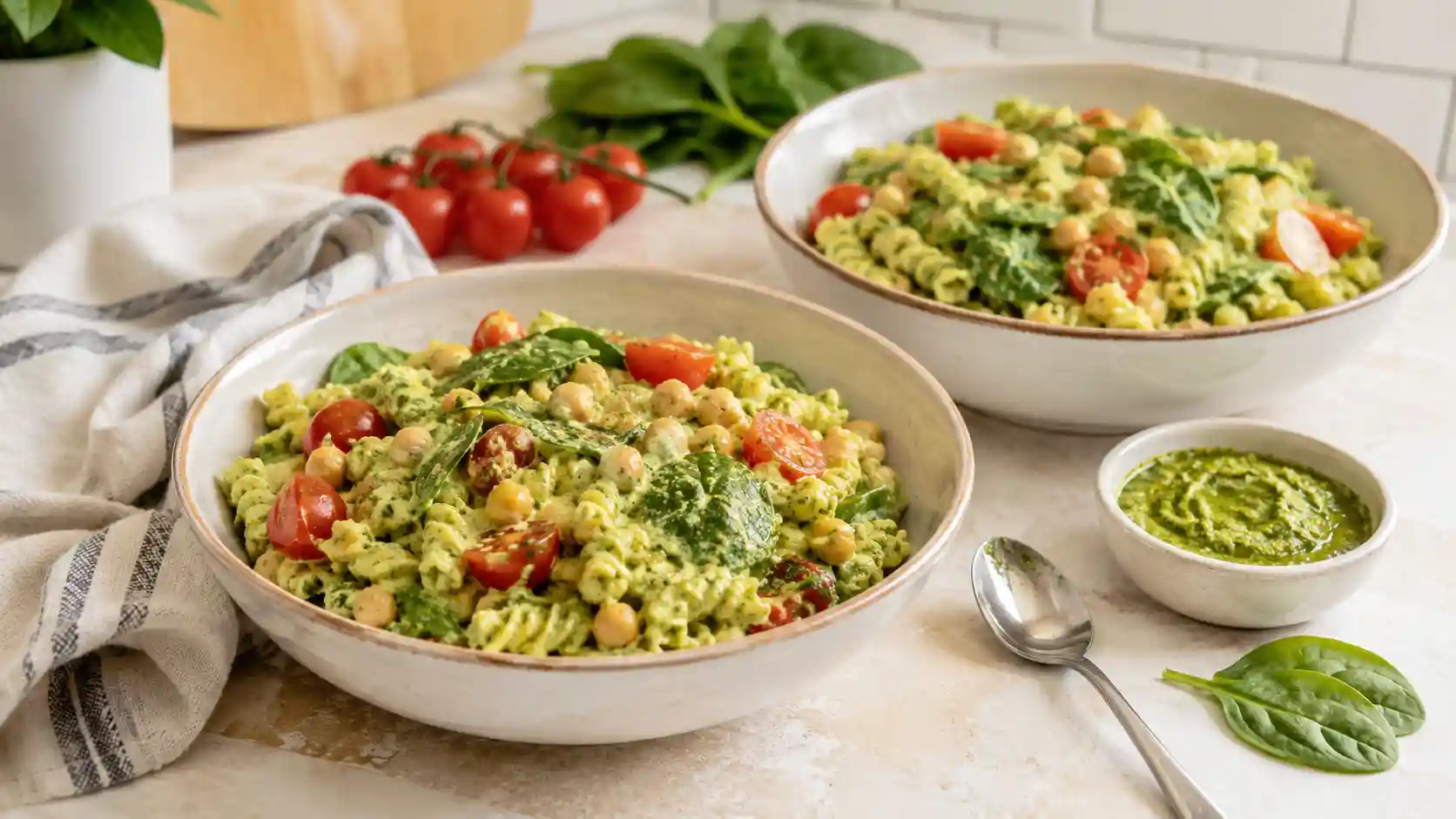
If you want a creamy pasta bowl that feels easy, filling, and practical for meal prep, these cottage cheese pesto pasta bowls are a smart place to start. The sauce is made by blending cottage cheese with pesto and a little reserved pasta water, then tossing it with pasta and building it into a full bowl with vegetables and optional protein add-ins.
This is not just a sauce recipe. It is a complete bowl idea for lunch, dinner, or make-ahead meals. You get the creamy pesto pasta texture, plus the flexibility to add spinach, tomatoes, chickpeas, chicken, tuna, or whatever simple ingredients you already have.
What Are Cottage Cheese Pesto Pasta Bowls?
Cottage cheese pesto pasta bowls are made with cooked pasta, a creamy blended cottage cheese pesto sauce, vegetables, and optional protein add-ins. The sauce is smooth, savory, and easy to adjust with pasta water, lemon, pepper, or extra greens.
The bowl format is what makes this recipe different from a basic cottage cheese pasta sauce. Instead of stopping at pasta and sauce, you build a more complete meal with texture, vegetables, and meal prep options.
Why This Recipe Works for Budget Meal Prep
This recipe works because it uses simple ingredients in a flexible way. Cottage cheese blends into a creamy sauce, store-bought pesto adds fast flavor, and pasta makes the bowl affordable and filling.
- It uses everyday grocery ingredients.
- It does not require heavy cream.
- Store-bought pesto keeps the prep simple.
- The bowl format makes it easy to add vegetables.
- You can add chickpeas, chicken, tuna, or beans based on what you have.
- It can work warm or cold, depending on your lunch setup.
The main thing to remember is that cottage cheese sauces should be reheated gently. High heat can make the sauce separate, so this is best warmed slowly with a splash of water.
For more ideas using this ingredient, see these high protein cottage cheese recipes.
Ingredients You Need
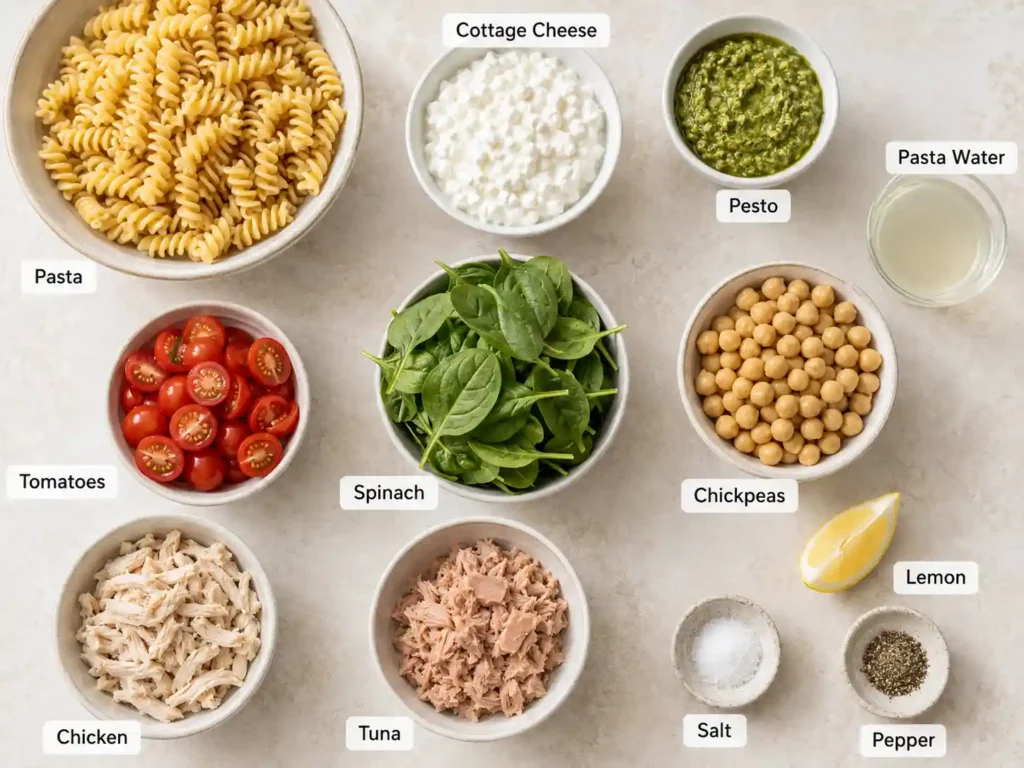
Pasta
Short pasta shapes work well because they hold the creamy pesto sauce. Penne, rotini, shells, elbows, or bow ties are all practical choices. Regular pasta is fine. If you already have a higher-protein pasta in your pantry, you can use it, but you do not need to buy a specialty pasta just for this recipe.
Cottage Cheese
Cottage cheese is the creamy base of the sauce. Blending it helps smooth out the curds and makes the sauce easier to toss with pasta. Full-fat cottage cheese usually gives a richer texture, while low-fat cottage cheese can still work if that is what you prefer.
For another pasta idea using this ingredient, see high protein cottage cheese pasta.
Pesto
Store-bought pesto is the easiest option for this recipe. It adds basil, garlic, oil, cheese, and seasoning in one jar. Since pesto can be salty, taste the sauce before adding extra salt.
Vegetables and Bowl Add-Ins
Use simple vegetables that are easy to prep and not too expensive. Good options include:
- Fresh spinach
- Frozen spinach, thawed and drained
- Cherry tomatoes
- Cucumber
- Peas
- Roasted zucchini
- Any leftover vegetables that fit the flavor
Optional Protein Boosters
The cottage cheese adds some protein to the sauce, but you can make the bowl more filling with extra add-ins. Keep it simple and use what you already have.
- Canned chickpeas, drained and rinsed
- Cooked shredded chicken
- Canned tuna, drained
- White beans or other canned beans
| Ingredient | Budget Option | Best Use | Notes |
|---|---|---|---|
| Pasta | Regular short pasta | Base of the bowl | No specialty pasta required |
| Cottage cheese | Store brand cottage cheese | Creamy sauce base | Blend until smooth |
| Pesto | Store-bought jar | Main flavor | Taste before adding salt |
| Spinach | Frozen spinach | Sauce or bowl mix-in | Thaw and drain first |
| Tomatoes | Cherry or grape tomatoes | Fresh topping | Add after cooking |
| Chickpeas | Canned chickpeas | Optional protein add-in | Drain and rinse before using |
| Chicken or tuna | Leftover chicken or canned tuna | Optional protein add-in | Add after the sauce is mixed in |
How to Make Cottage Cheese Pesto Pasta Bowls
Cook the Pasta and Save Pasta Water
Cook the pasta according to the package directions until al dente. Before draining, scoop out some of the pasta water and set it aside. This starchy water helps loosen the sauce and makes it easier to coat the pasta.
Blend the Cottage Cheese Pesto Sauce
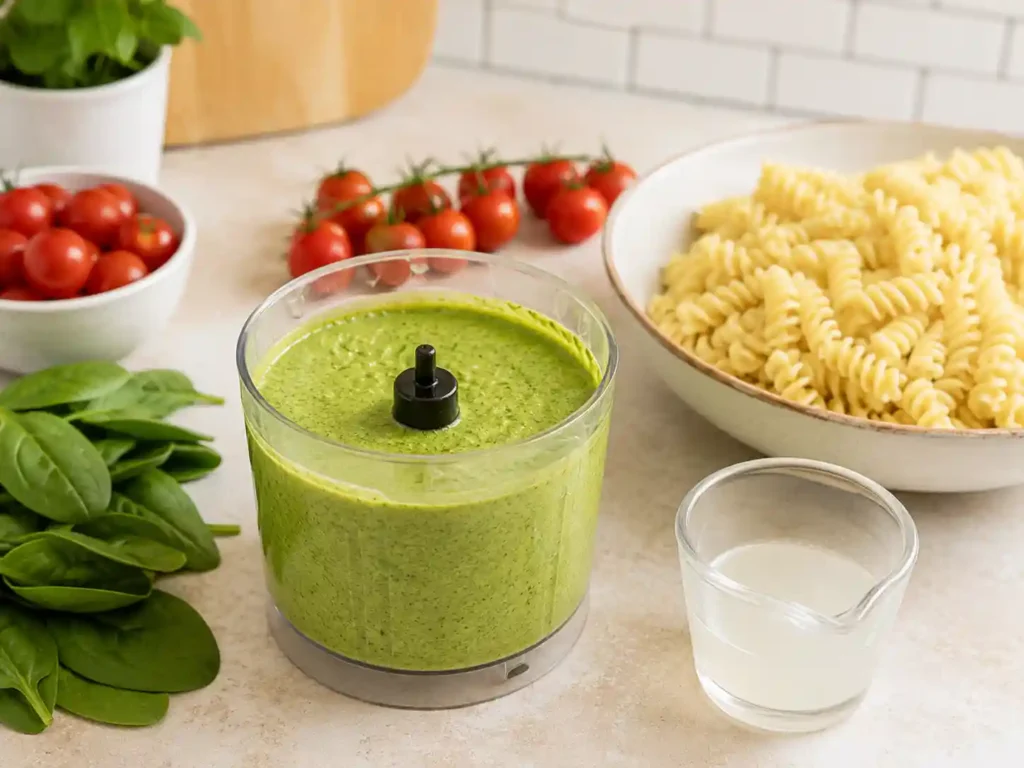
Add the cottage cheese, pesto, and a small splash of reserved pasta water to a blender or food processor. Blend until smooth. Add more pasta water a little at a time until the sauce is creamy and pourable.
Toss Gently Without Boiling
Add the drained pasta back to the pot over very low heat, or mix everything in a large bowl off the heat. Pour the sauce over the pasta and stir gently. Do not boil the sauce. High heat can make cottage cheese sauces separate.
Assemble the Bowls
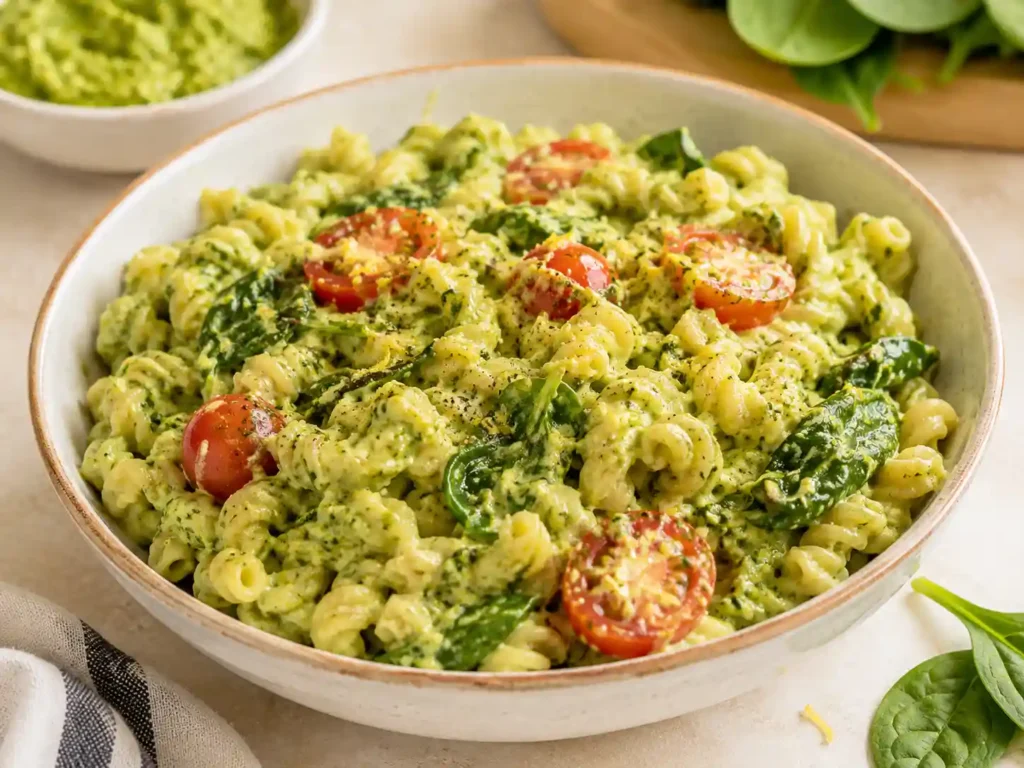
Divide the pasta into bowls or meal prep containers. Add spinach, tomatoes, and any optional protein add-ins. Finish with black pepper, lemon juice, or a small extra spoonful of pesto if needed.
Budget Swaps and Easy Variations
These cottage cheese pesto pasta bowls are easy to adjust based on your grocery budget and what is already in your kitchen.
| Variation | What to Use | Why It Works |
|---|---|---|
| Lower waste greens | Frozen spinach | Easy to keep on hand and simple to portion |
| Plant-based add-in | Canned chickpeas or white beans | Adds texture and makes the bowl more filling |
| Chicken bowl | Cooked shredded chicken | Works well with pesto and pasta |
| No-cook protein | Canned tuna | Fast option for lunch bowls |
| Fresh crunch | Cucumber or tomatoes | Best added after cooking |
| More flavor | Lemon juice or black pepper | Brightens the bowl without adding more salt |
For more low-stress ideas that stretch across the week, see cheap high protein meal prep.
Meal Prep, Storage, and Reheating Tips
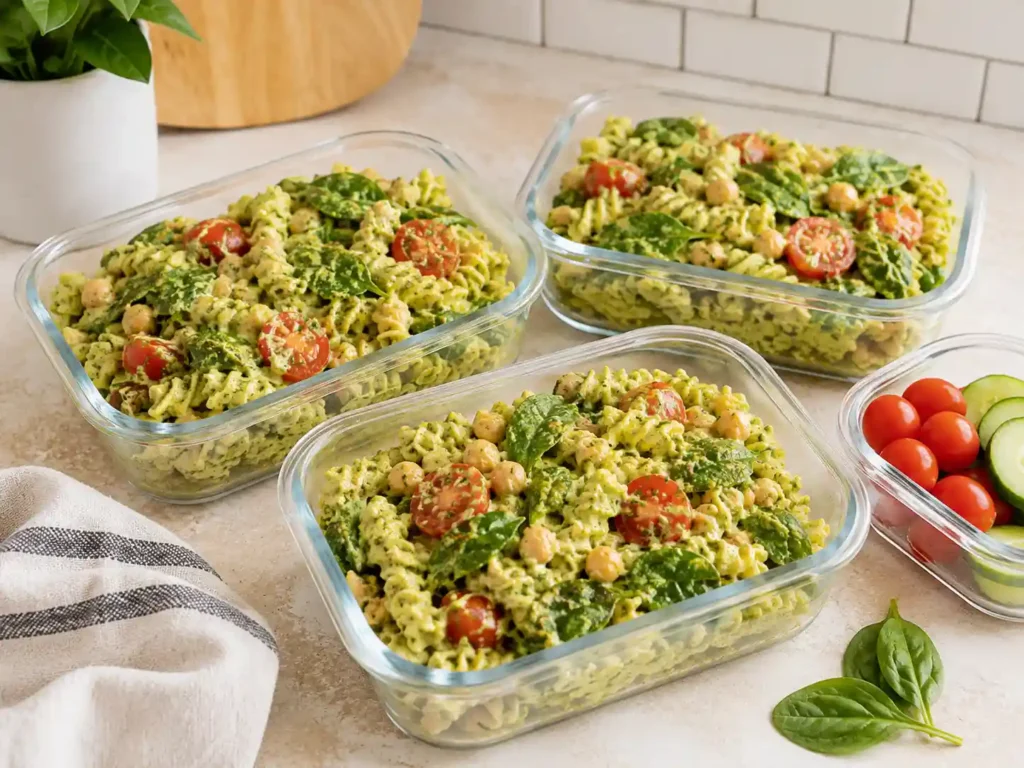
These bowls can work for meal prep, but the texture is best when you handle the sauce gently. Cottage cheese-based sauces can thicken after chilling, so plan to loosen the pasta before serving.
- Store leftovers in airtight containers in the refrigerator.
- Use refrigerated leftovers within 3 to 4 days, following general USDA leftovers guidance.
- Reheat on low heat on the stove, or microwave in short intervals.
- Add a splash of water before reheating to loosen the sauce.
- Do not boil the sauce.
- Store fresh toppings separately if you want better texture.
| Component | How to Store | How to Serve | Texture Note |
|---|---|---|---|
| Pasta with sauce | Airtight container in the refrigerator | Warm gently with a splash of water | May thicken after chilling |
| Fresh tomatoes or cucumber | Separate small container | Add after reheating or serve cold | Stays fresher when stored apart |
| Spinach | Mixed in or stored separately | Serve warm or cold | Frozen spinach should be drained well |
| Chicken, tuna, or chickpeas | Airtight container in the refrigerator | Add cold or warm gently | Choose based on your lunch setup |
If you want more make-ahead lunches with cottage cheese, see cottage cheese meal prep lunch. For no-microwave ideas, check out high protein cold lunches for work.
Helpful Tools for This Recipe
You do not need special equipment for this recipe, but a few basic kitchen tools make the sauce and meal prep easier.
- Blender or food processor: Helps make the cottage cheese pesto sauce smoother.
- Large pot: Gives the pasta enough room to cook evenly.
- Colander: Makes draining the pasta easy after you reserve some pasta water.
- Measuring cups and spoons: Helpful for keeping the sauce balanced.
- Airtight meal prep containers: Useful if you are packing bowls for lunch.
Common Mistakes to Avoid
| Problem | Likely Cause | Easy Fix |
|---|---|---|
| Sauce looks grainy | Cottage cheese was not blended enough | Blend until smooth before mixing with pasta |
| Sauce separates | Heat was too high | Use low heat and avoid boiling |
| Sauce is too thick | Not enough pasta water | Add reserved pasta water a little at a time |
| Bowl tastes too salty | Pesto was already salty | Taste first, then season lightly |
| Leftovers feel dry | Sauce thickened in the fridge | Add a splash of water before reheating |
What to Serve With Cottage Cheese Pesto Pasta Bowls
These bowls can stand on their own, but you can make the meal feel more complete with a simple side. Try one of these easy options:
- A simple green salad
- Roasted zucchini or broccoli
- Fresh fruit
- Extra chickpeas or beans
- Cooked chicken if you want a larger meal
Cottage Cheese Pesto Pasta Bowls
Ingredients
Equipment
Method
- Cook the pasta according to package directions until al dente. Before draining, reserve about 1/2 cup of the pasta water.
- Add the cottage cheese, pesto, and 1/4 cup reserved pasta water to a blender or food processor.
- Blend until smooth. Add more pasta water a little at a time if the sauce is too thick.
- Drain the pasta and return it to the pot over very low heat, or place it in a large mixing bowl off the heat.
- Pour the cottage cheese pesto sauce over the pasta and stir gently until coated. Do not boil the sauce.
- Stir in the spinach. If using fresh spinach, let it wilt slightly from the warm pasta. If using frozen spinach, make sure it is thawed and drained first.
- Divide the pasta into 4 bowls or meal prep containers.
- Top with cherry tomatoes and your choice of chickpeas, chicken, or tuna if using.
- Season lightly with salt and black pepper. Add lemon juice if you want a brighter flavor.
Notes
FAQs
Can I use store-bought pesto?
Yes. Store-bought pesto is the easiest option for this recipe and keeps prep simple. Taste before adding extra salt because pesto can already be salty.
Can I eat cottage cheese pesto pasta bowls cold?
Yes. These bowls can be eaten cold, similar to a pasta salad. If you like cold meal prep bowls, you may also like these protein pasta salad recipes.
How do I keep the sauce from separating?
Blend the sauce well, use reserved pasta water, and avoid high heat. Reheat gently and do not boil the sauce.
How long do the bowls last in the fridge?
Use refrigerated leftovers within 3 to 4 days. For the best texture, store fresh toppings separately and add them before serving.
Can I add chicken, tuna, or chickpeas?
Yes. Chicken, tuna, and chickpeas are simple add-ins that make the bowl more filling. Add them after the pasta and sauce are mixed.
For more simple meal ideas, check out high protein cottage cheese recipes, cheap high protein meal prep, and easy protein dinner ideas.