
This cottage cheese pasta sauce is a simple way to make pasta night feel creamy without using heavy cream. It blends cottage cheese with marinara, parmesan, seasonings, and reserved pasta water for a smooth sauce that works well for a quick budget dinner.
If you are trying to use cottage cheese in more practical meals, this sauce is an easy place to start. It is creamy, flexible, and simple enough for a weeknight. For more ideas using the same grocery staple, see these high protein cottage cheese recipes.
Why You’ll Like This Cottage Cheese Pasta Sauce
This sauce is a good fit when you want something creamy, budget-friendly, and easy to make with ingredients you can find at most grocery stores. Blending the cottage cheese helps create a smoother texture, which is especially helpful if you do not want a grainy sauce.
- Creamy without heavy cream.
- Uses simple grocery staples.
- Blends smooth in a blender or food processor.
- Works with regular pasta or protein pasta.
- Easy to customize with vegetables, chicken, turkey, beans, or tofu.
- Good for a simple dinner or planned leftovers.
This recipe also fits well into a realistic dinner rotation. If you need more simple meals like this, save these easy protein dinner ideas for later.
Ingredients You’ll Need
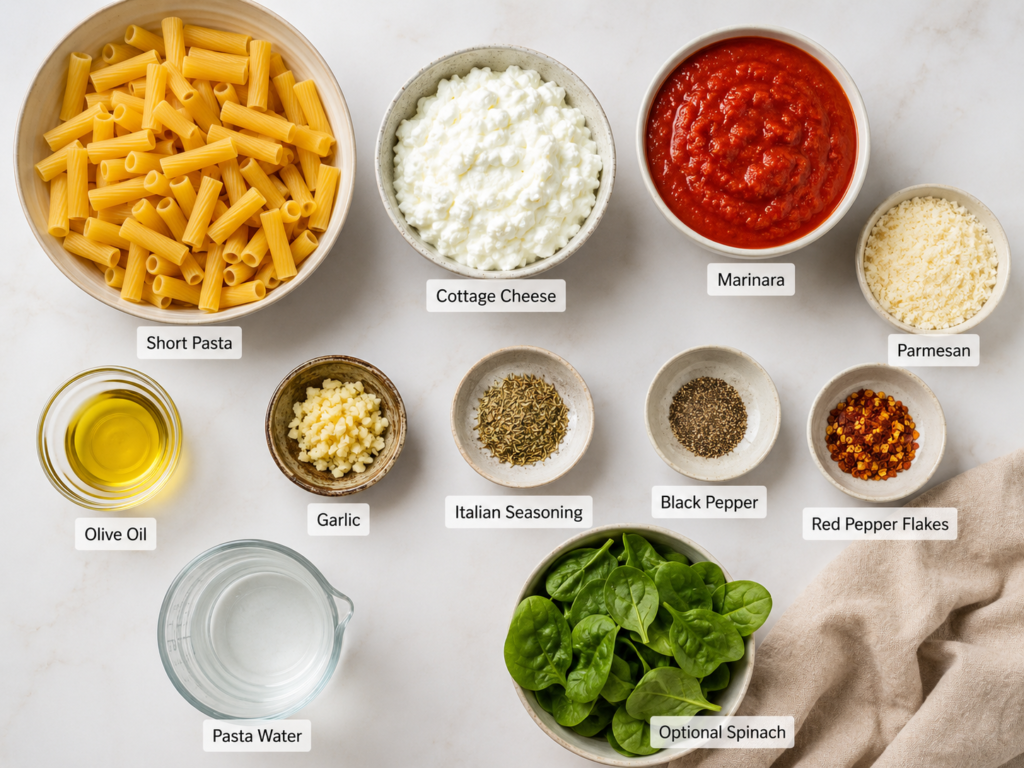
Cottage Cheese
Cottage cheese is the creamy base of this sauce. Blending it is important because it helps smooth out the curds and gives the sauce a more even texture. Full-fat cottage cheese usually gives a richer sauce, but low-fat cottage cheese can work too.
Marinara Sauce
Marinara keeps the recipe simple because it already has tomato flavor and seasoning. Choose a basic marinara you like. If you only have plain tomato sauce, you can still use it, but you may need a little extra garlic, Italian seasoning, and parmesan.
Parmesan
Parmesan adds salty, savory flavor. A small amount goes a long way, so you do not need a huge amount to make the sauce taste more complete.
Garlic and Seasonings
Garlic, Italian seasoning, black pepper, and optional red pepper flakes help balance the tomato and cottage cheese. If you do not have fresh garlic, garlic powder works well.
Pasta and Reserved Pasta Water
Short pasta shapes like penne, rotini, rigatoni, shells, or bow ties work especially well because they catch the sauce. Reserved pasta water helps loosen the sauce and helps it coat the pasta.
Cottage Cheese Pasta Sauce Ingredients
- 12 ounces short pasta, such as penne, rotini, shells, or rigatoni
- 1 cup cottage cheese
- 1 1/2 cups marinara sauce
- 1/3 cup grated parmesan cheese
- 1 tablespoon olive oil
- 2 garlic cloves, minced, or 1 teaspoon garlic powder
- 1 teaspoon Italian seasoning
- 1/4 teaspoon black pepper
- 1/4 teaspoon red pepper flakes, optional
- 1/2 cup reserved pasta water, plus more as needed
- Salt, to taste, only after tasting the sauce
- Optional: 2 cups baby spinach, peas, broccoli, mushrooms, or another vegetable
How to Make Cottage Cheese Pasta Sauce
- Bring a large pot of salted water to a boil. Cook the pasta until al dente according to the package directions.
- Before draining, reserve at least 1 cup of pasta water. Drain the pasta and set it aside.
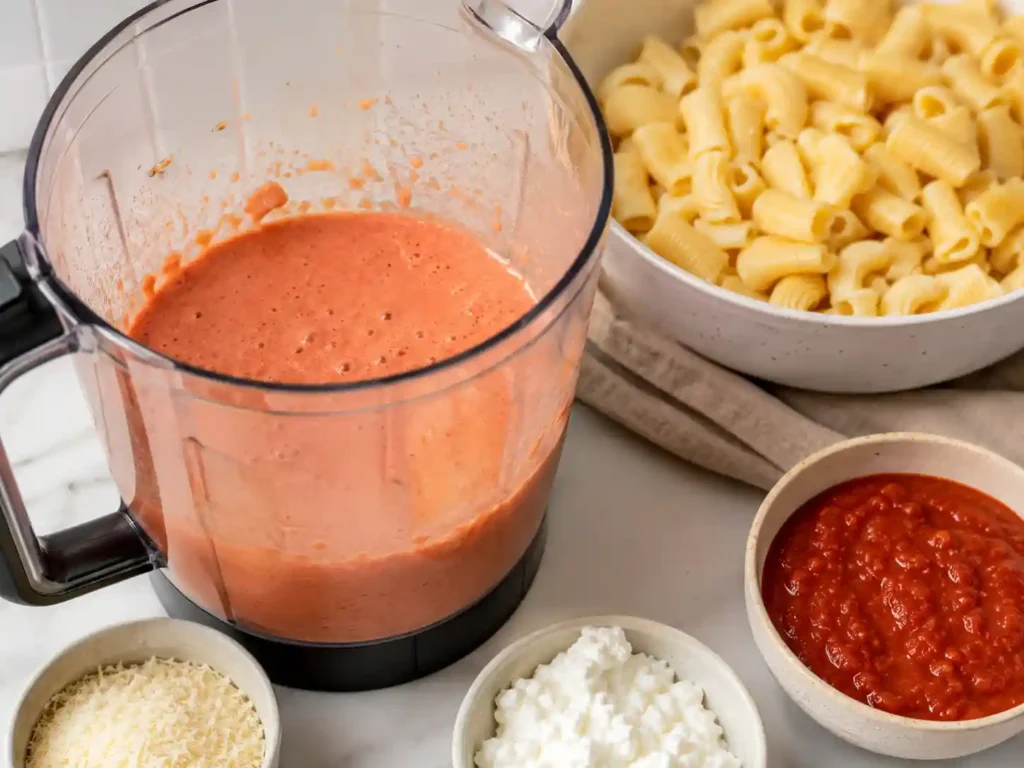
- Add the cottage cheese, marinara sauce, parmesan, olive oil, garlic, Italian seasoning, black pepper, red pepper flakes, and 1/2 cup reserved pasta water to a blender.
- Blend until the sauce is smooth. Stop and scrape down the sides if needed.
- Pour the sauce into a large skillet or back into the warm pot. Warm it over low heat for 1 to 2 minutes, stirring often.
- Add the cooked pasta and toss until coated. Add more pasta water a splash at a time until the sauce reaches the texture you like.
- If using spinach or quick-cooking vegetables, stir them in while the pasta is warm and cook gently until softened.
- Taste before adding salt. Cottage cheese, parmesan, and marinara can already be salty.
Budget Tips and Easy Swaps
This recipe is flexible, so you can adjust it based on what is already in your kitchen. You do not need expensive specialty ingredients to make it work.
| Ingredient | Budget Swap | Texture or Flavor Note |
|---|---|---|
| Marinara sauce | Plain tomato sauce with extra seasoning | May need more garlic, Italian seasoning, and parmesan. |
| Fresh garlic | Garlic powder | Use it when you need a faster pantry option. |
| Full-fat cottage cheese | Low-fat cottage cheese | Low-fat works, but the sauce may be less rich. |
| Protein pasta | Regular pasta | Use whichever fits your budget and pantry. |
| Fresh vegetables | Frozen spinach, peas, or broccoli | Frozen vegetables are convenient and reduce waste. |
How to Make It More Filling
The sauce is simple on purpose, so you can keep it as a lighter pasta dinner or turn it into a fuller meal. Add cooked protein or vegetables after the sauce is blended and warmed.
- Ground chicken: Cook it separately, season it lightly, then stir it into the pasta.
- Ground turkey: A practical option for meal prep. For another idea, try this ground turkey rice bowl.
- Chickpeas or white beans: Drain, rinse, and stir them in for a pantry-friendly add-in.
- Tofu: Use cooked or air-fried tofu cubes for a meatless option.
- Vegetables: Spinach, broccoli, mushrooms, peas, and zucchini all work well.
Troubleshooting the Sauce
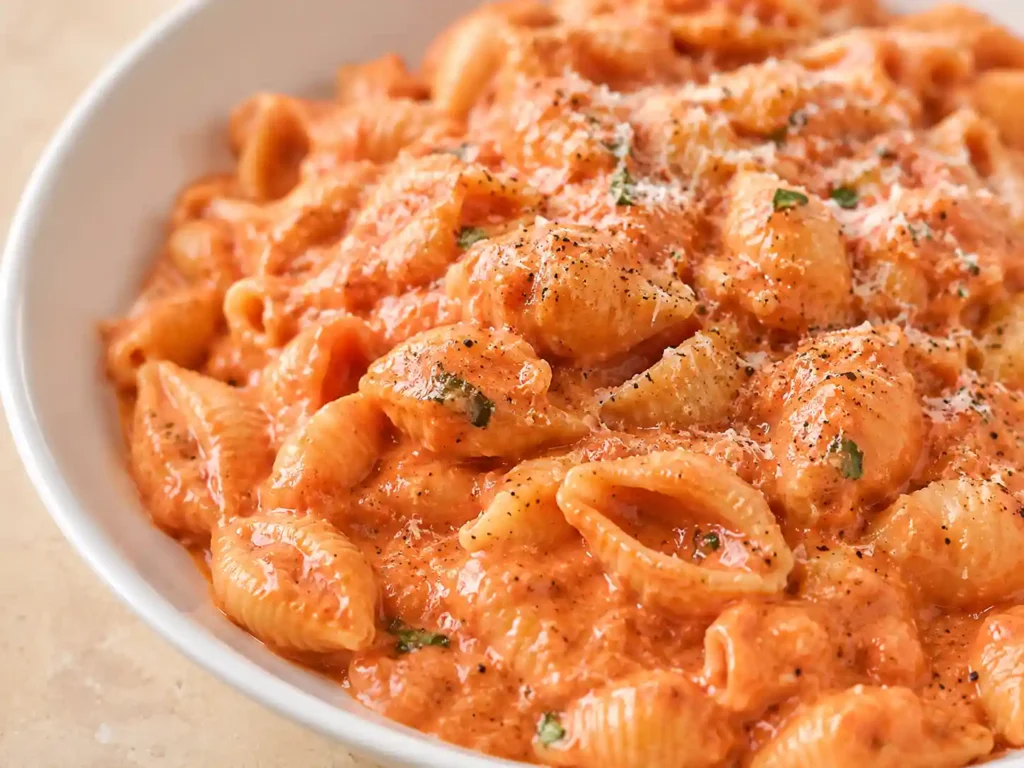
If the sauce does not turn out exactly how you expected, the fix is usually simple. A little pasta water, gentler heat, or a longer blend time can make a big difference.
| Problem | Likely Cause | Fix |
|---|---|---|
| Sauce is too thick | Not enough pasta water | Add warm pasta water a splash at a time and toss again. |
| Sauce is too thin | Too much liquid was added | Warm it gently for a minute or add a little more parmesan. |
| Sauce is grainy | Cottage cheese was not blended long enough | Blend until fully smooth before warming. |
| Sauce tastes too tangy | Tomato sauce or cottage cheese flavor is strong | Add more parmesan, Italian seasoning, or black pepper to balance it. |
| Sauce does not cling to pasta | The pasta was too dry or the sauce was too thick | Add hot pasta water and toss well over low heat. |
Meal Prep, Storage, and Reheating
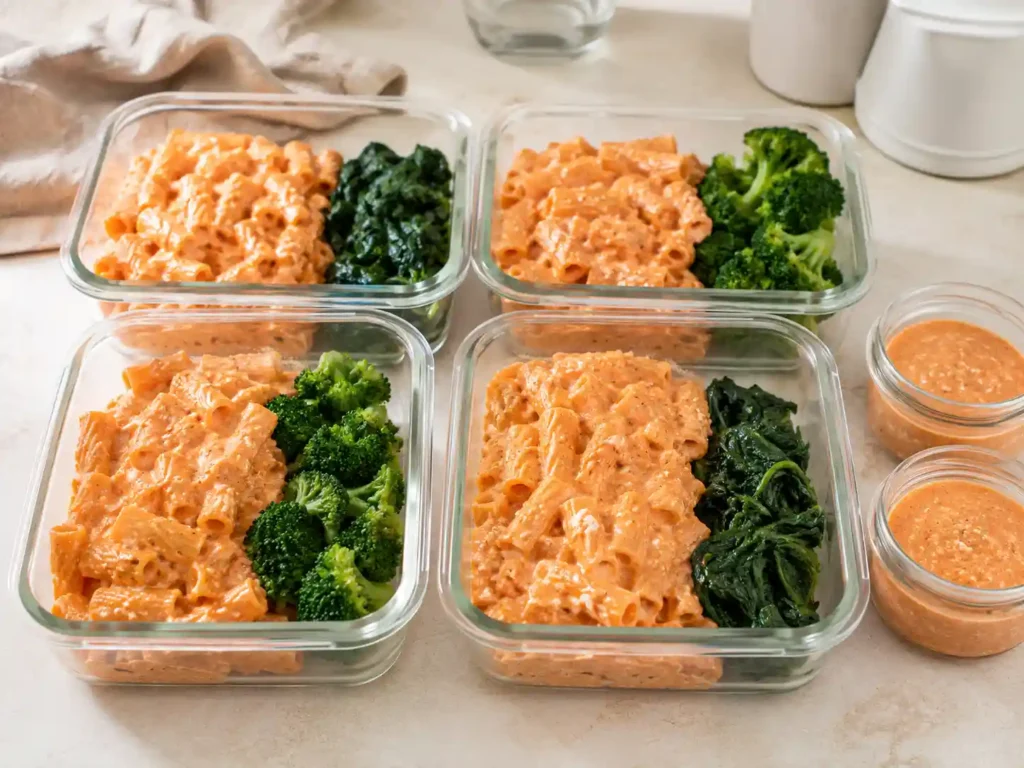
This cottage cheese pasta sauce can work for planned leftovers, but texture matters. For best results, store the sauce and pasta separately when possible. If they are already mixed, they can still be stored together in airtight containers.
- Refrigerator: Store leftovers in airtight containers for 3 to 4 days.
- Reheating: Reheat gently on the stovetop or in the microwave at reduced power, stirring often.
- Texture tip: Add a splash of water before reheating if the sauce looks too thick.
- Freezing: Freezing is not the best option for this sauce because cottage cheese can change texture after thawing.
For more practical prep ideas using this ingredient, see these high protein cottage cheese meal prep ideas. If you like turning leftovers into easy lunches, you may also like these high protein lunch ideas.
Helpful Tools for This Recipe
This recipe does not require fancy equipment, but a few basic tools make it easier. Use what you already have before buying anything new.
- Blender: Best for the smoothest cottage cheese sauce.
- Food processor: A good backup if you do not have a blender.
- Large pot: Needed for cooking the pasta and reserving pasta water.
- Large skillet: Helpful for warming the sauce gently and tossing it with pasta.
- Meal prep containers: Useful if you plan to portion leftovers for lunch or dinner.
What to Serve With Cottage Cheese Pasta Sauce
This sauce is easy to pair with simple sides and add-ins. You can serve it with a green salad, roasted vegetables, cooked chicken, turkey, beans, tofu, or extra steamed vegetables.
If you want another pasta idea for later in the week, these protein pasta salad recipes are useful for cold lunches and meal prep.
Estimated Nutrition
Estimated nutrition per serving, not guaranteed: About 480 calories, 22 grams protein, 70 grams carbohydrates, and 13 grams fat per serving, based on 4 servings made with regular dry pasta, cottage cheese, marinara, parmesan, and olive oil. Actual nutrition will vary based on pasta type, cottage cheese brand, marinara brand, parmesan amount, and optional add-ins.
This estimate is for general meal planning only and should not be treated as medically precise.
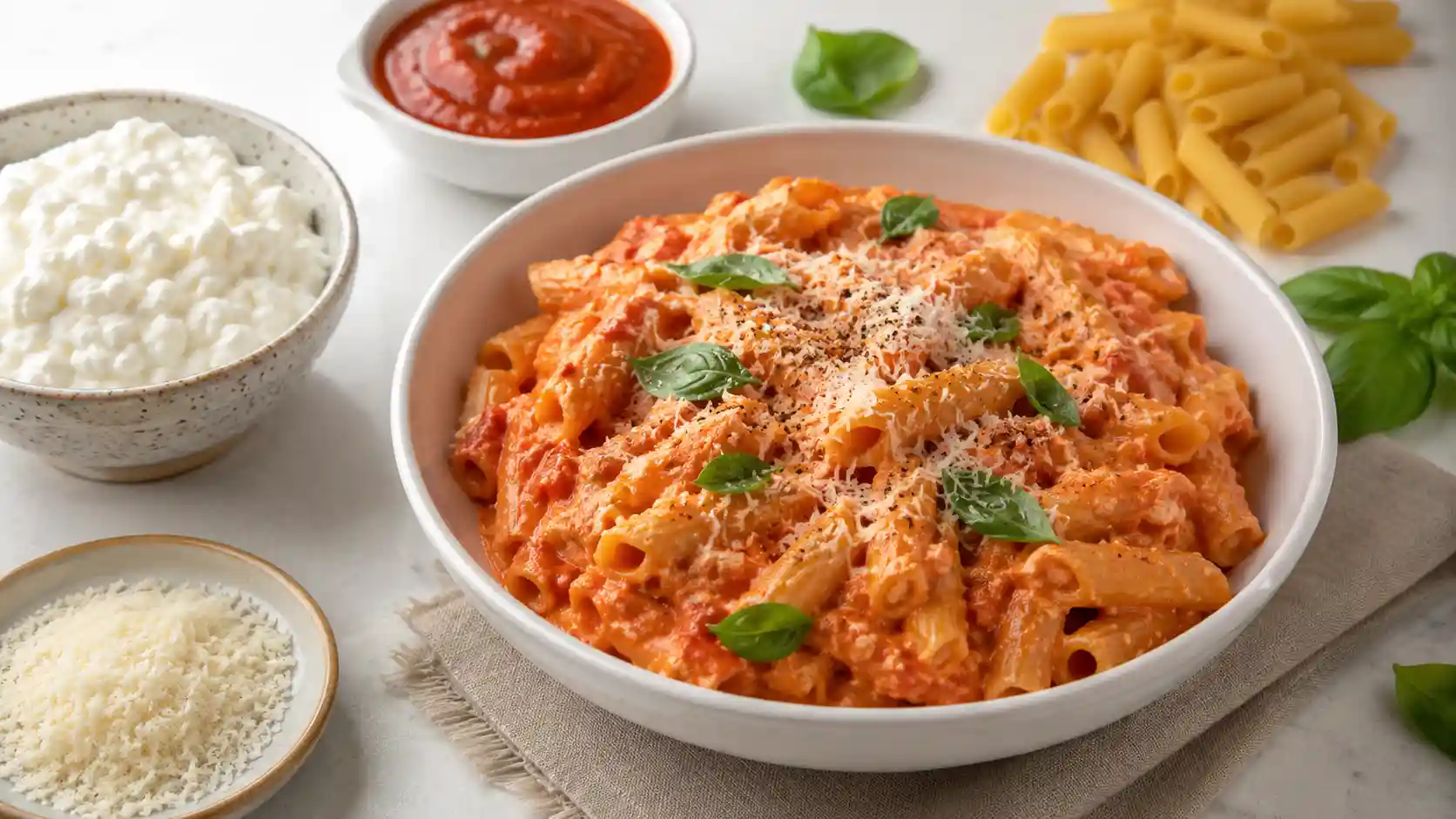
Cottage Cheese Pasta Sauce
Ingredients
Equipment
Method
- Bring a large pot of salted water to a boil. Cook the pasta until al dente according to the package directions.
- Before draining, reserve at least 1 cup of pasta water. Drain the pasta and set it aside.
- Add the cottage cheese, marinara sauce, parmesan, olive oil, garlic, Italian seasoning, black pepper, red pepper flakes, and 1/2 cup reserved pasta water to a blender.
- Blend until the sauce is fully smooth, stopping to scrape down the sides if needed.
- Pour the sauce into a large skillet or back into the warm pot. Warm it over low heat for 1 to 2 minutes, stirring often.
- Add the cooked pasta and toss until coated. Add more reserved pasta water a splash at a time until the sauce is creamy and coats the pasta.
- If using spinach or quick-cooking vegetables, stir them in while the pasta is warm and cook gently until softened or heated through.
- Taste before adding salt. Cottage cheese, parmesan, and marinara can already be salty, so add salt only if needed.
- Serve warm.
Notes
More Cottage Cheese Recipes to Try
If you want more simple ways to use cottage cheese, try this cottage cheese chicken salad for lunch or browse more high protein cottage cheese recipes.
FAQs
Can you taste the cottage cheese in pasta sauce?
Once blended with marinara, parmesan, garlic, and Italian seasoning, the cottage cheese flavor is usually much less noticeable. The sauce tastes more like a creamy tomato pasta sauce.
Do I have to blend cottage cheese pasta sauce?
Yes, blending is the best way to get a smooth texture. If you skip blending, the sauce will likely be grainy or curd-like.
Can I use low-fat cottage cheese?
Yes, low-fat cottage cheese can work. Full-fat cottage cheese usually gives a richer texture, but low-fat is fine if that is what you have.
How do I keep cottage cheese pasta sauce from getting grainy?
Blend the sauce until smooth and warm it gently over low heat. Avoid boiling the sauce after the cottage cheese has been blended in.
Can I meal prep cottage cheese pasta sauce?
Yes. Store leftovers in airtight containers in the refrigerator for 3 to 4 days. For best texture, keep the sauce and pasta separate until reheating when possible.