
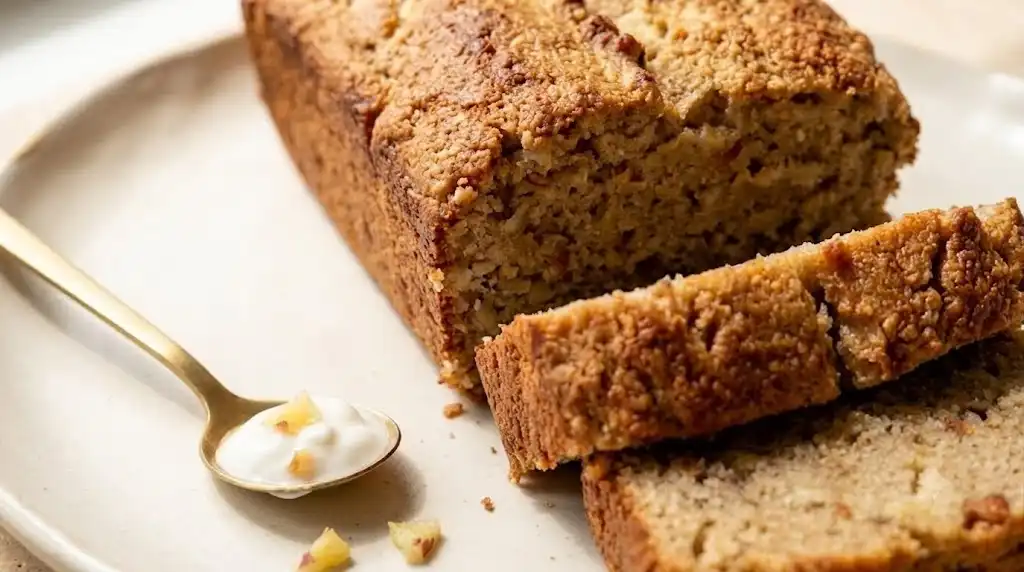
This cottage cheese banana bread combines ripe bananas, blended cottage cheese, eggs, and basic pantry ingredients in one practical loaf. It does not require protein powder, almond flour, or other specialty baking ingredients.
Blending the cottage cheese helps remove visible curds and distributes it evenly through the batter. The result is designed to have a moist, sliceable crumb with a clear banana flavor and a mild cinnamon finish.
For more ways to use the same affordable ingredient, explore these high-protein cottage cheese recipes.
Quick Answer
Cottage cheese can be added to banana bread for moisture and a modest protein contribution. Blend it with the eggs before adding it to the batter if you want a smoother texture with no visible curds. This recipe uses a 9 x 5-inch loaf pan and bakes at 350°F. Start checking the center before the end of the estimated baking time because banana weight, cottage cheese moisture, pan material, and oven accuracy can all affect the result.
Recipe at a Glance
| Detail | Proposed Amount |
|---|---|
| Prep time | About 15 minutes, needs verification |
| Bake time | About 55 to 65 minutes, needs verification |
| Cooling time | At least 1 hour |
| Pan | Light-colored 9 x 5-inch metal loaf pan |
| Yield | 1 loaf, approximately 10 slices |
| Oven temperature | 350°F |
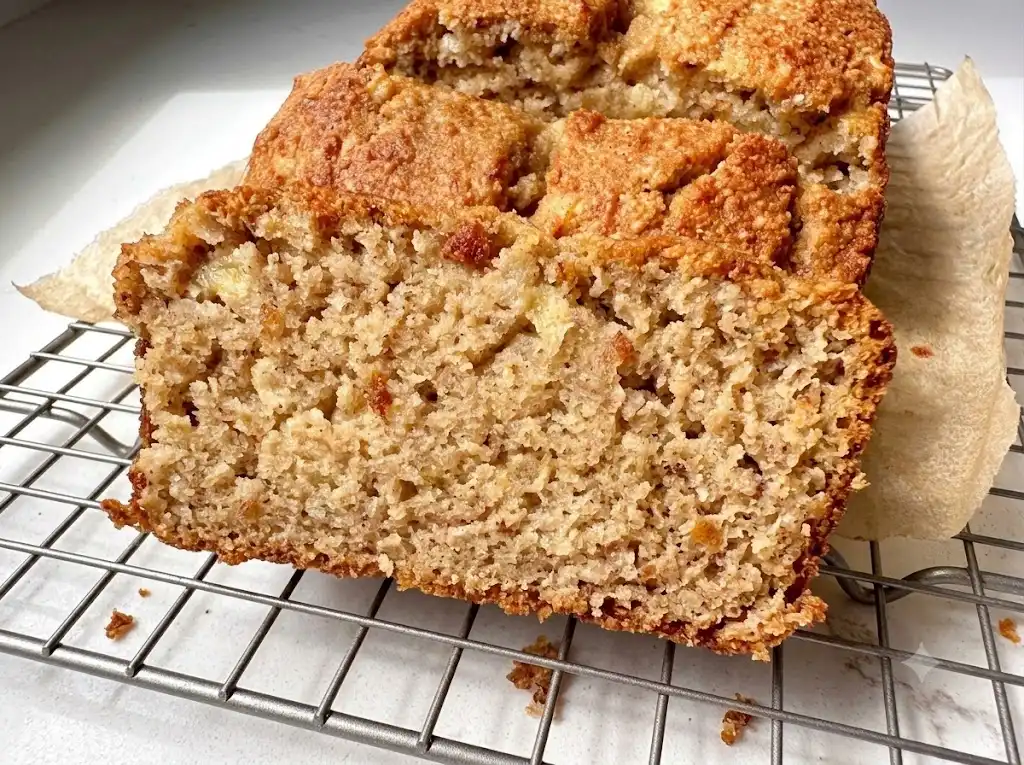
Why Make Banana Bread With Cottage Cheese?
- No protein powder: The recipe gets its protein contribution from cottage cheese, eggs, and flour.
- Common ingredients: It uses all-purpose flour, brown sugar, bananas, eggs, and a neutral oil.
- A use for ripe bananas: The recipe gives heavily spotted bananas a practical purpose.
- No specialty flour: There is no need to buy almond flour or another expensive alternative.
- Suitable for portioning: The loaf can be cooled and cut into individual slices for breakfasts or snacks.
This is still banana bread rather than a complete high-protein meal. Pairing a slice with another protein-containing food can create a more balanced breakfast.
Ingredients
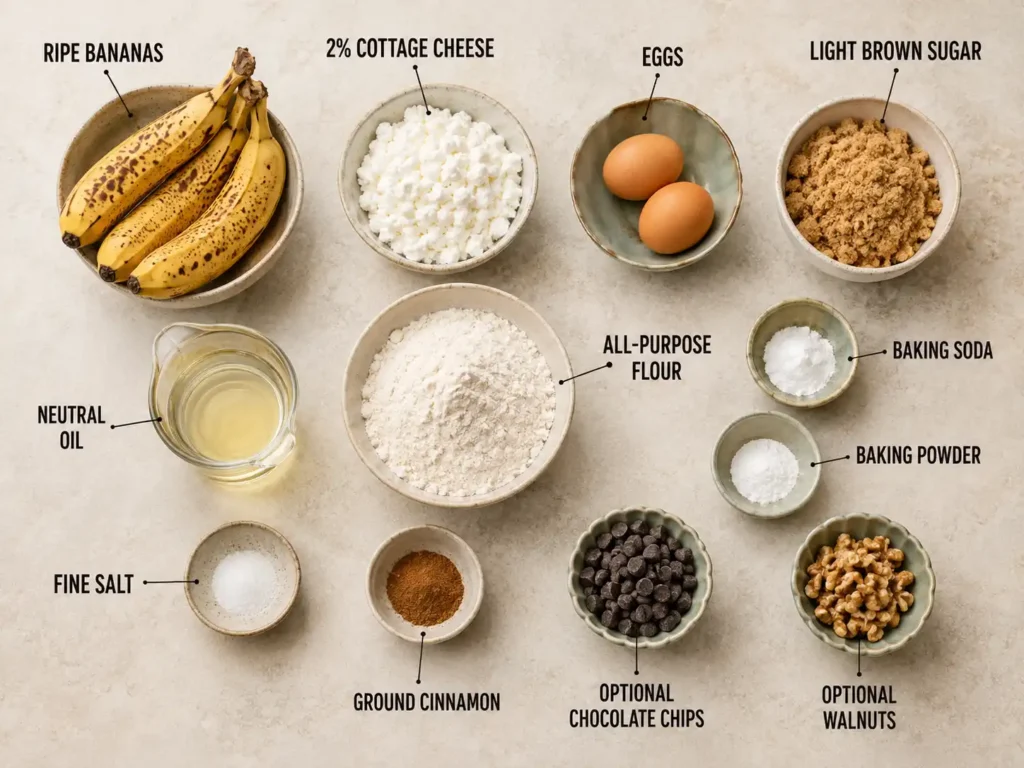
- 3 very ripe medium bananas, peeled and mashed, about 1 1/2 cups or 345 g
- 1 cup 2% cottage cheese, about 226 g
- 2 large eggs
- 1/3 cup packed light brown sugar, about 70 g
- 1/4 cup neutral oil, 60 ml
- 2 cups all-purpose flour, about 240 g
- 1 teaspoon baking soda
- 1 teaspoon baking powder
- 1/2 teaspoon fine salt
- 1 teaspoon ground cinnamon
Optional Add-Ins
- Up to 1/2 cup semisweet chocolate chips
- Or up to 1/2 cup chopped walnuts
Optional add-ins are not included in the estimated nutrition shown later in the article.
Ingredient Notes
Choose a Moderately Thick Cottage Cheese
The formula uses 2% cottage cheese as its starting point. Cottage cheese varies considerably between brands, especially in moisture, sodium, and protein content. Avoid pouring excess liquid from the container into the measuring cup.
Whole-milk cottage cheese may produce a slightly richer texture, but it should be tested separately before being presented as a verified substitution.
Weigh the Mashed Bananas
The weight of the bananas matters more than the number. Three very large bananas can introduce much more moisture than three medium bananas and may leave the center gummy.
For the most consistent result, use approximately 345 g of peeled banana. The peel should show plenty of brown spots, indicating that the fruit is soft and naturally sweet.
Use All-Purpose Flour for the Base Recipe
All-purpose flour gives the loaf predictable structure and keeps the ingredient list accessible. Almond flour, oat flour, coconut flour, and gluten-free flour blends absorb liquid differently and should not be substituted in equal amounts without a separate test.
Use a Neutral-Tasting Oil
A small amount of neutral oil helps the loaf stay tender after cooling. Use an oil with a mild flavor that you already keep for baking. Strongly flavored oils may compete with the banana and cinnamon.
| Ingredient | Purpose | Practical Option | Substitution Status |
|---|---|---|---|
| 2% cottage cheese | Adds moisture and protein | A store-brand product with a similar consistency | Reasonable, but check moisture and the nutrition label |
| All-purpose flour | Provides structure | Standard store-brand flour | Base ingredient |
| Neutral oil | Helps keep the crumb tender | A mild baking oil already in the pantry | Reasonable |
| Light brown sugar | Adds sweetness and flavor | Dark brown or granulated sugar | Requires texture verification |
| Liquid sweetener | Adds sweetness with additional liquid | None recommended without testing | Not a direct substitution |
| Almond, oat, or coconut flour | Alternative flour options | None for the base formula | Not a 1:1 substitution |
| Chocolate chips or walnuts | Optional texture and flavor | Leave them out | Optional and excluded from base nutrition |
Helpful Tools for This Recipe
- A light-colored 9 x 5-inch metal loaf pan
- Parchment paper
- A digital kitchen scale
- A blender, food processor, or immersion blender
- Two mixing bowls
- A whisk and flexible spatula
- A wire cooling rack
A digital scale is particularly helpful because both the banana and flour amounts can significantly affect the final texture. No specific product or brand is required.
How to Make Cottage Cheese Banana Bread
1. Prepare the Oven and Pan
Preheat the oven to 350°F. Lightly grease a light-colored 9 x 5-inch metal loaf pan. Line the long sides and bottom with parchment paper, leaving enough overhang to lift out the baked loaf.
2. Blend the Cottage Cheese and Eggs
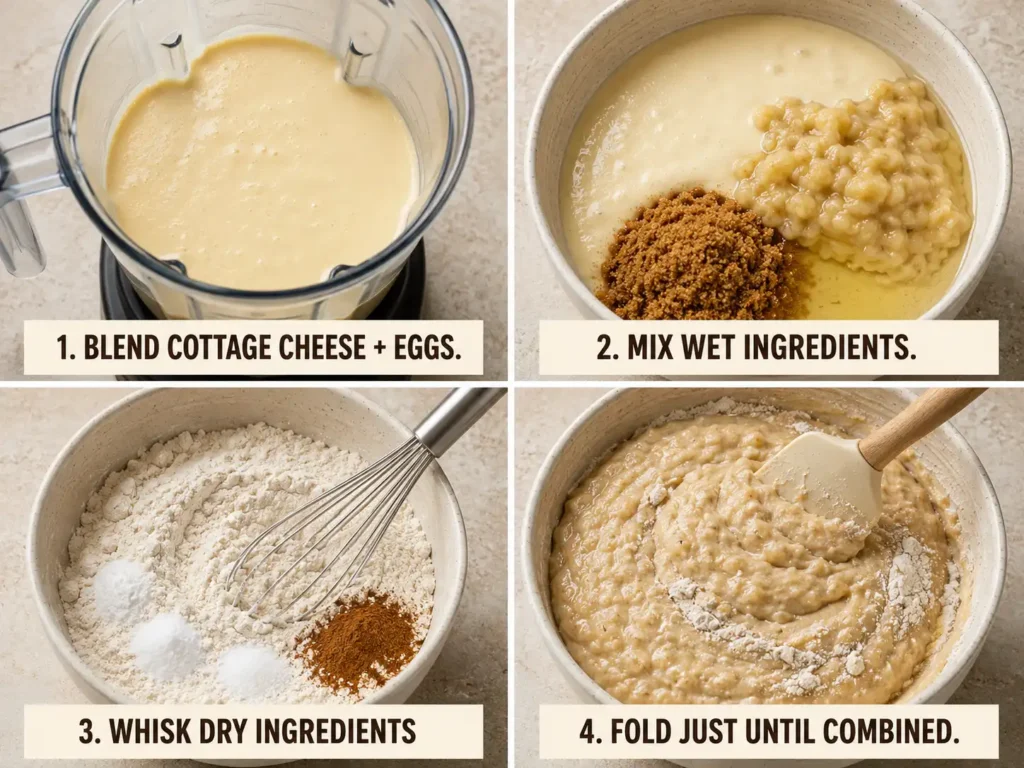
Place the cottage cheese and eggs in a blender or food processor. Blend until the mixture looks smooth and no large curds remain.
This step is recommended for readers who want an even crumb. The cottage cheese can technically be mixed in without blending, but small white curds may remain visible.
3. Mix the Wet Ingredients
Place the mashed banana in a large mixing bowl. Add the blended cottage cheese and egg mixture, brown sugar, and neutral oil. Whisk until evenly combined.
4. Mix the Dry Ingredients
In a separate bowl, whisk together the all-purpose flour, baking soda, baking powder, salt, and cinnamon. Break up any visible lumps before adding the dry mixture to the wet ingredients.
5. Fold the Batter Gently
Add the dry ingredients to the wet ingredients. Fold with a flexible spatula only until no dry streaks of flour remain.
Do not continue stirring once the batter is combined. Excessive mixing can develop more gluten and make the loaf firm or rubbery.
Fold in the chocolate chips or chopped walnuts at this stage, when using them.
6. Fill the Loaf Pan
Transfer the batter to the prepared pan and spread it into an even layer. The pan should have enough empty space at the top to allow the loaf to rise without overflowing.
7. Bake
Bake for an estimated 55 to 65 minutes. Begin checking around 50 minutes because ovens and loaf pans vary.
If the top is already deep golden while the center remains wet, cover the loaf loosely with a sheet of aluminum foil and continue baking.
8. Check the Center
Insert a toothpick or thin tester into the center of the loaf. It should come out without liquid batter. A few moist crumbs are acceptable.
The center should look set rather than shiny or sunken. The edges may also begin to pull slightly away from the pan.
9. Cool Before Slicing
Cool the loaf in the pan for 15 to 20 minutes. Use the parchment paper to lift it onto a wire rack, then let it cool completely before slicing.
Cutting into a hot loaf can compress the crumb and make a properly baked center appear gummy.
How to Tell When the Loaf Is Done
- The top looks set and lightly browned.
- The center does not wobble when the pan moves gently.
- A toothpick shows moist crumbs rather than wet batter.
- The center springs back lightly when touched.
- The edges may pull slightly away from the pan.
An instant-read thermometer may provide an additional quality cue, but it is not necessary. Visual checks and a center tester are more practical for most home bakers.
Troubleshooting Cottage Cheese Banana Bread
| Problem | Likely Cause | How to Fix It |
|---|---|---|
| Wet or gummy center | Too much banana, watery cottage cheese, or insufficient baking | Weigh the banana, confirm the pan size, and extend baking in short intervals |
| Top browns before the middle sets | Dark pan, high oven rack, or oven running hot | Use a light-colored pan, bake on the center rack, and cover loosely with foil |
| Dense or rubbery crumb | Batter was overmixed | Fold only until the flour disappears |
| Loaf sinks in the center | The middle was underbaked or the batter contained excess liquid | Check with a tester before removing the loaf and weigh wet ingredients carefully |
| Loaf sticks to the pan | Pan was insufficiently greased or no parchment was used | Grease the pan and use a parchment sling |
| Visible cottage cheese curds | The cottage cheese was not blended | Blend it with the eggs until smooth |
| Dry loaf | Too much flour or excessive baking | Weigh the flour and begin checking before the full estimated time |
| Slices crumble or compress | The loaf was sliced while warm | Let it cool completely on a wire rack |
Budget-Friendly Recipe Decisions
This recipe avoids several ingredients that often increase the cost of protein-focused baking:
- No protein powder is required.
- All-purpose flour replaces specialty nut or seed flours.
- Chocolate chips and walnuts remain optional.
- Store-brand flour, sugar, oil, and cottage cheese can be considered when their texture and labels suit the recipe.
- Overripe bananas can be peeled and frozen rather than discarded.
No exact cost per loaf or cost per serving is provided because grocery prices vary by retailer, location, package size, and date.
Substitutions That Need Caution
Can I Use Maple Syrup Instead of Brown Sugar?
Maple syrup introduces additional liquid. It should not be presented as an equal-volume substitution until the flour, oil, and baking time have been adjusted and tested.
Can I Use Oat Flour?
Oat flour absorbs liquid and builds structure differently from all-purpose flour. A dedicated oat flour version would need a separate ratio and baking test.
Can I Use Almond Flour?
Almond flour contains more fat and no gluten. It cannot replace the all-purpose flour in this formula cup for cup.
Can I Use Fat-Free Cottage Cheese?
Fat-free cottage cheese may contain a different amount of liquid and may produce a less tender loaf. Treat it as an unverified substitution.
Can I Replace the Oil With Applesauce?
Applesauce adds water and can make an already moist batter heavier. This substitution needs its own kitchen test.
Storage, Freezing, and Reheating
Allow the loaf to cool completely before wrapping or storing it. Trapped steam can soften the surface and make the crumb feel sticky.
| Method | Conservative Guidance | Packaging | Serving |
|---|---|---|---|
| Room temperature | Up to 2 days for best quality in a cool, dry kitchen | Wrap tightly or use an airtight container | Serve at room temperature |
| Refrigerator | Up to 4 days | Use an airtight container and keep the refrigerator at 40°F or below | Serve cold or warm gently |
| Freezer | Up to 2 months for best expected texture | Wrap individual slices, then place them in a freezer-safe bag or container | Thaw in the refrigerator or at room temperature |
Room-temperature storage is primarily a quality recommendation and depends on kitchen temperature, humidity, handling, and the final moisture level of the tested loaf. Refrigeration is the more conservative option in a warm or humid kitchen.
The bread does not require reheating for safety. To serve it warm, heat one slice briefly in the microwave or toaster oven only until it reaches the texture you prefer.
How to Make It a More Protein-Forward Breakfast
One slice is better treated as part of breakfast rather than as a complete protein-focused meal. Pair it with one of the following:
- Plain Greek yogurt
- A side of cottage cheese
- Eggs
- Peanut butter
- A glass of milk
For a savory alternative, try this cottage cheese egg bake. For a quick option that requires no oven, use this cottage cheese breakfast bowl.
Protein totals for these serving combinations are not included because they depend on the exact products and portion sizes selected.
Estimated Nutrition
Using the standard ingredient quantities listed above and dividing the loaf into 10 equal slices, the estimated nutrition per slice is approximately:
- Calories: 230
- Protein: 7 g
- Carbohydrates: 34 g
- Fat: 7 g
- Fiber: 2 g
Estimated nutrition only. Values will vary according to the cottage cheese label, banana weight, flour brand, oil quantity, baked yield, and actual slice size. Chocolate chips and walnuts are excluded.
Needs verification before publishing: Recalculate the nutrition after confirming the exact products, final baked weight, and tested serving count.
Cottage Cheese Banana Bread (Moist, Easy, No Protein Powder)
Ingredients
Equipment
Method
- Preheat the oven to 350°F (175°C). Lightly grease a light-colored 9 x 5-inch metal loaf pan. Line the bottom and long sides with parchment paper, leaving enough overhang to lift out the baked loaf.
- Add the cottage cheese and eggs to a blender or food processor. Blend until smooth and no large cottage cheese curds remain.
- Place the mashed banana in a large mixing bowl. Add the blended cottage cheese mixture, packed brown sugar, and neutral oil. Whisk until evenly combined.
- In a separate bowl, whisk together the all-purpose flour, baking soda, baking powder, salt, and cinnamon. Break up any visible lumps.
- Add the dry ingredients to the wet ingredients. Fold gently with a flexible spatula just until no dry flour streaks remain. Do not overmix.
- When using chocolate chips or walnuts, gently fold them into the batter after the flour is almost fully incorporated.
- Transfer the batter to the prepared loaf pan and spread the top into an even layer. Make sure there is enough empty space above the batter for the loaf to rise.
- Bake for approximately 55 to 65 minutes. Begin checking the loaf around 50 minutes because oven temperatures and loaf pans vary.If the top becomes deeply browned before the center is set, loosely cover the loaf with aluminum foil and continue baking.
- Insert a toothpick or thin tester into the center. It should come out without liquid batter; a few moist crumbs are acceptable. The center should appear set rather than shiny, sunken, or wobbly.
- Cool the loaf in the pan for 15 to 20 minutes. Lift it out using the parchment paper and transfer it to a wire rack. Let it cool completely for at least 1 hour before slicing.
Notes
Frequently Asked Questions
Can you taste cottage cheese in banana bread?
Blending the cottage cheese removes the curds and distributes it through the batter. The banana and cinnamon should provide the dominant flavors, although the precise result can vary by cottage cheese brand.
Do you have to blend cottage cheese for banana bread?
No, but blending is recommended for a smoother crumb. Unblended cottage cheese may leave small white curds in the finished loaf.
Why is my cottage cheese banana bread gummy in the middle?
The most common causes are excess banana, very wet cottage cheese, insufficient baking, or slicing while the loaf is still warm. Weigh the banana, use the correct pan, check the center carefully, and cool the loaf completely.
Can you freeze cottage cheese banana bread?
The loaf can be portioned and frozen after it has cooled completely. Wrap individual slices carefully to limit freezer drying. The exact texture after thawing should be confirmed during recipe testing.
Can I use oat flour or almond flour instead of all-purpose flour?
Not as a direct 1:1 substitution. Both flours behave differently from all-purpose flour and require separate ingredient ratios and baking tests.
More Budget Breakfast Ideas
For another make-ahead breakfast bake, try this high-protein baked oatmeal. You can also browse these high-protein breakfasts on a budget.
For a chilled cottage cheese dessert, see this cottage cheese chocolate pudding.