

If you have a bag of frozen shelled edamame in your freezer, you can turn it into a savory roasted snack with olive oil, salt, and a little patience. The key is not a complicated seasoning blend. It is removing as much moisture as possible before the edamame go into the oven.
This low-temperature method gives the beans enough time to dry and brown without relying on an extremely hot oven. Eat the roasted edamame as a snack, sprinkle them over salads or grain bowls, or add them to a snack box for extra texture.
Quick Answer: Thaw 12 ounces of frozen shelled edamame in the refrigerator or under cold running water. Pat the beans very dry, toss them with 2 teaspoons of olive oil and 1/2 teaspoon of kosher salt, then roast at 325°F for approximately 55 to 70 minutes. Stir every 15 minutes and let the edamame cool completely on the pan before serving.
Why This Roasted Edamame Recipe Works
This roasted edamame recipe uses only three base ingredients and one standard 12-ounce bag of frozen shelled edamame. That keeps the preparation simple and avoids leaving a partial bag in the freezer.
The lower oven temperature gives moisture more time to escape. Stirring the beans regularly also helps the edamame near the edges of the pan cook at a similar rate to those in the center.
The final texture will not be identical to commercially dehydrated edamame. Homemade roasted edamame can still have a slightly tender center, especially if the beans contain more moisture. They will also become firmer as they cool.
For more affordable snack inspiration, explore these high-protein snacks on a budget.

Shelled Edamame vs. Edamame in Pods
This recipe requires frozen shelled edamame, meaning the green soybeans have already been removed from their pods. Some packages use the word mukimame for shelled edamame.
Edamame pods are tough and fibrous. You can cook beans inside their pods and squeeze the beans out before eating, but you should not eat the pods themselves.
Check the package carefully before buying. A bag labeled “edamame in pods” is intended for a different preparation and will not work for this crispy snack recipe.
Ingredients You Need
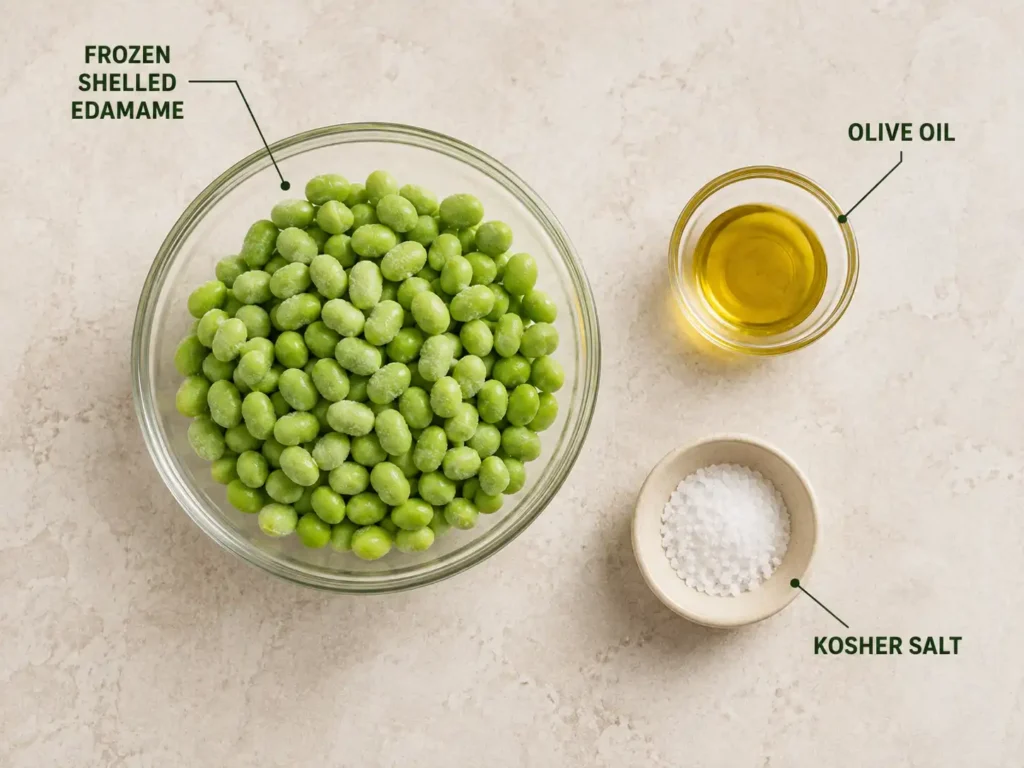
- 12 ounces frozen shelled edamame: Approximately 340 grams. Thaw the beans before drying and roasting.
- 2 teaspoons olive oil: Approximately 9 grams. This lightly coats the beans without leaving excess oil on the pan.
- 1/2 teaspoon kosher salt: The weight varies by salt brand, so use the volume measurement and adjust after roasting if needed.
The sodium content will depend on the edamame brand and the salt you use. Some frozen edamame products may already contain added sodium, so check the package label before seasoning.
How to Make Roasted Edamame
1. Preheat the Oven
Preheat the oven to 325°F. Place an oven rack near the center of the oven.
2. Thaw the Edamame Safely
Thaw the edamame overnight in the refrigerator. For a faster option, place the beans in a colander and rinse them under cold running water until no ice remains. Cook them promptly after using the quick-thaw method.
Follow the package directions when they provide specific thawing or cooking instructions.
3. Dry the Beans Thoroughly
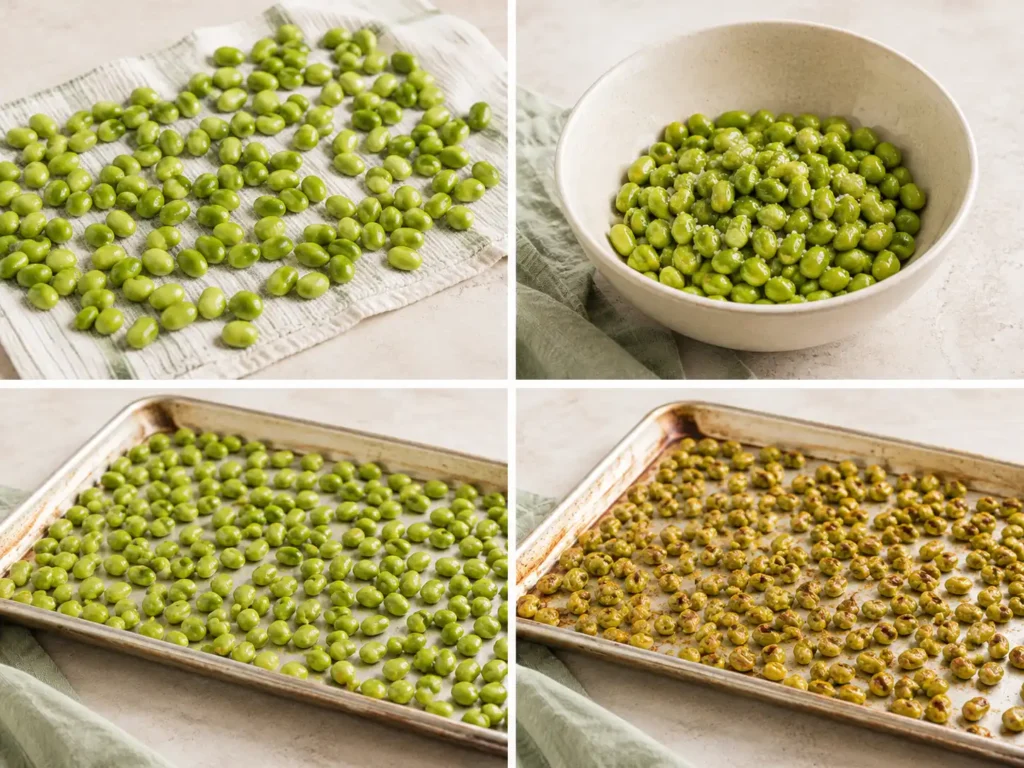
Drain the thawed edamame well. Spread them over a clean absorbent kitchen towel or several layers of paper towels. Gently pat and roll the beans until their surfaces feel as dry as possible.
This step matters because water on the surface creates steam. Steam keeps the beans soft and delays browning.
4. Add the Oil and Salt
Transfer the dried edamame to a mixing bowl. Add the olive oil and kosher salt, then toss until the beans have a light and even coating.
Avoid adding extra oil. Too much oil can make the finished edamame feel greasy and can slow the drying process.
5. Arrange the Edamame on the Pan
Spread the seasoned beans over a large rimmed sheet pan in one even layer. Separate any large clusters and avoid piling the beans on top of one another.
Direct contact with a metal pan may encourage more browning. Parchment can make cleanup easier, but the beans may take slightly longer to dry.
6. Roast and Stir
Roast the edamame for approximately 55 to 70 minutes. Stir every 15 minutes, moving the beans from the outer edges toward the center of the pan.
Start checking closely after 50 minutes. The final time will depend on the moisture in the beans, the size and material of the pan, oven calibration, and how widely the edamame are spaced.
7. Cool Completely
Remove the edamame when the beans look dry, lightly browned, and slightly shrunken. Let them cool on the sheet pan for approximately 15 minutes.
Do not judge the final texture immediately after removing the pan from the oven. The beans continue to firm as they cool.

Crispy Roasted Edamame (Easy Oven Snack)
Ingredients
Equipment
Method
- Preheat the oven to 325°F (165°C) and position an oven rack near the center.
- Thaw the shelled edamame overnight in the refrigerator or rinse it in a colander under cold running water until no ice remains. Follow any specific package cooking instructions when provided.
- Drain the thawed edamame thoroughly. Spread the beans over a clean absorbent kitchen towel or several layers of paper towels and pat them until their surfaces feel as dry as possible.
- Transfer the dried edamame to a mixing bowl. Add the olive oil and kosher salt, then toss until the beans are lightly and evenly coated.
- Spread the seasoned beans in one even, uncrowded layer on a large rimmed sheet pan. Separate any large clusters.
- Roast for approximately 55 to 70 minutes. Stir every 15 minutes, moving the beans near the outer edges toward the center of the pan.
- Begin checking closely after 50 minutes. Remove the pan when the edamame look dry, lightly browned, and slightly shrunken.
- Let the roasted edamame cool completely on the sheet pan for approximately 15 minutes. The beans will become firmer as they cool.
Notes
How to Make Edamame Crispier
Dry the Beans More Than You Think You Need To
Even a small amount of visible water can slow browning. After the first towel becomes damp, move the beans to a dry section or use a second towel.
Use a Large Enough Pan
An overcrowded pan traps steam between the beans. Use a large rimmed sheet pan and keep the edamame in one layer. If your pan is small, divide the beans between two pans or roast them in two batches.
Measure the Oil
Two teaspoons are enough to lightly coat a 12-ounce bag. Pouring directly from the bottle makes it easy to add more than the recipe needs.
Stir During Roasting
The outer edges of a sheet pan usually brown faster than the center. Stirring every 15 minutes reduces burned edges and soft centers.
Let Them Cool
The beans may still feel slightly tender when hot. Allow at least 15 minutes of cooling before deciding whether the texture is right.
Roasted Edamame Troubleshooting
| Problem | Likely Cause | What to Do |
|---|---|---|
| Edamame remain soft | The beans were wet, crowded, or removed too early | Dry the next batch more thoroughly and continue roasting in short intervals while watching closely |
| Some beans brown while others stay green | The pan was not stirred often enough | Stir every 15 minutes and move the outer beans toward the center |
| The edges burn | The oven runs hot or the pan is too close to the heating element | Use the center rack, check earlier, and reduce the temperature slightly if necessary |
| The beans feel greasy | Too much oil was used | Measure the oil and use only enough to coat the beans lightly |
| The beans soften during storage | Residual moisture collected in the container | Cool completely before storing and reheat until hot to restore some crispness |
Seasoning Variations
The plain salted version provides the most flexible starting point. Add seasonings lightly so they do not overpower the edamame.
Garlic and Smoked Paprika
Add a small pinch of garlic powder and smoked paprika with the salt before roasting. Avoid using fresh minced garlic during the long cooking time because it may burn.
Chili Lime
Add chili powder or a dry chili-lime blend before roasting. Finish with lime zest after roasting. Lime juice adds fresh flavor, but it also adds moisture and can soften the beans, so serve them soon after adding it.
Sesame Soy
Roast the edamame using the base method, then add a very small amount of soy sauce or tamari and a few drops of sesame oil after roasting. Return the beans to the oven briefly if needed to remove some added surface moisture.
These variations change the sodium, calories, fat, and allergen profile. Soy sauce and tamari contain soy, while sesame oil and sesame-based seasonings introduce sesame. Always read product labels.
Helpful Tools for This Recipe
- Large rimmed sheet pan: Provides enough space to spread the beans in one layer.
- Absorbent kitchen towel: Helps remove moisture before roasting.
- Measuring spoons: Prevent excess oil and salt.
- Flexible spatula: Makes it easier to stir the beans during roasting.
- Airtight food container: Useful for refrigerated leftovers after the edamame have cooled completely.
No specific product, brand, price, rating, or affiliate link has been supplied for this article.
Budget and Meal Prep Tips
This recipe uses an entire 12-ounce package, which makes planning easier and prevents a small amount of frozen edamame from being forgotten in the freezer.
Compare the unit price of store-brand and national-brand frozen edamame at your local grocery store. Prices vary by retailer and location, so this recipe does not assign an exact cost per serving.
The texture is best on the day the edamame are roasted. For meal prep, keep them separate from moist foods such as dressed salads, cut tomatoes, sauces, or fruit until you are ready to eat.
Use leftover edamame as a topping rather than expecting them to stay as crisp as a newly roasted batch. For more affordable shopping ideas, see this cheap protein grocery list.
Get practical budget-friendly protein recipes and meal-prep ideas delivered to your inbox by subscribing to the Budget Protein Meals newsletter.
Ways to Use Roasted Edamame
- Eat a measured portion as a snack
- Sprinkle over a salad immediately before serving
- Add to a rice, quinoa, or noodle bowl
- Use as a crunchy soup topping
- Place in a separate compartment of a snack box
- Combine with other roasted beans, nuts, or seeds in a homemade snack mix
Roasted edamame can add texture and plant protein to a meal, but it is usually one component rather than a complete meal by itself.
Try it with these high-protein bowls on a budget or add a small portion to one of these high-protein lunchables for adults.
Storage and Reheating
For the best texture, serve the roasted edamame on the day you make them.
Allow the beans to cool completely before placing them in a clean airtight container. Refrigerate cooked leftovers within two hours and use them within three to four days.
Refrigeration will soften the beans. To restore some crispness, spread them on a sheet pan and reheat at 325°F until hot and drier. Watch closely because previously roasted beans can burn quickly.
You can also use an air fryer for reheating, but temperature and timing vary by appliance. Check the beans frequently and stop when they are hot and beginning to crisp.
Do not present homemade roasted edamame as shelf-stable. This recipe has not undergone moisture-activity or commercial shelf-life testing.
Estimated Nutrition Per Serving
The following estimate covers only the base ingredients: 12 ounces of prepared shelled edamame and 2 teaspoons of olive oil, divided into four servings. Salt and optional seasonings are not included in the sodium calculation.
| Nutrient | Estimated Amount Per Serving |
|---|---|
| Calories | Approximately 123 |
| Protein | Approximately 10.1 grams |
| Carbohydrates | Approximately 7.6 grams |
| Fat | Approximately 6.7 grams |
| Fiber | Approximately 4.4 grams |
| Sodium | Needs verification using the actual edamame and salt brands |
Nutrition values are estimates based on USDA FoodData Central reference values. Actual nutrition will vary according to the edamame brand, ingredient weights, salt used, final yield, and serving size.
For related meal ideas, browse these high-fiber high-protein recipes.
Allergen Information
Contains soy: Edamame are soybeans. Soy is a major food allergen in the United States.
Optional soy sauce or tamari also contains soy. Sesame oil and sesame seasonings contain sesame. Check every packaged ingredient label when preparing this recipe for someone with food allergies.
Frequently Asked Questions
Can you roast edamame from frozen?
You can place frozen edamame directly in the oven, but the released moisture makes a crisp result less predictable. For this method, thaw the shelled edamame first and pat it very dry before roasting.
Do you need to thaw edamame before roasting?
Thawing is recommended because it allows you to remove surface water before the beans enter the oven. Thaw them in the refrigerator or under cold running water rather than leaving them on the counter.
Why is my roasted edamame not crispy?
The most common causes are excess moisture, too much oil, an overcrowded pan, insufficient roasting time, or tasting the beans before they have cooled. Dry the beans thoroughly, use one layer, stir regularly, and allow them to cool on the pan.
Can you eat roasted edamame pods?
No. Edamame pods are tough and fibrous. Eat only the green beans inside the pods. This recipe uses edamame that have already been shelled.
Can I make roasted edamame in an air fryer?
Air fryer roasted edamame is possible, but the exact temperature, batch size, and time vary considerably by model. This article uses an oven method. A complete air fryer method should be tested separately before exact instructions are published.
More Budget-Friendly Protein Ideas
Continue planning affordable meals with this high-protein meal plan for beginners.
You can also explore this high-protein dense bean salad for another practical bean-based option.