
Cottage cheese zucchini fritters combine grated zucchini, cottage cheese, eggs, seasonings, and a dry binder in small skillet-cooked portions. The idea is simple, but the texture can change considerably depending on how much liquid remains in the zucchini and cottage cheese.
This guide explains the ingredient roles, moisture-control process, cooking technique, and common problems that must be addressed before publishing a complete tested recipe. Exact quantities, yield, timing, and nutrition still require verification.
Quick Answer: How Do Cottage Cheese Zucchini Fritters Work?
Cottage cheese zucchini fritters are prepared by combining thoroughly squeezed zucchini with cottage cheese, eggs, seasonings, and a tested binder. Small portions are flattened in a preheated skillet and cooked until the first side is firm enough to turn without breaking.
The three most important factors are moisture control, an appropriate amount of binder, and sufficient cooking time before flipping.
Cottage Cheese Zucchini Fritters at a Glance
| Element | Current direction |
|---|---|
| Primary ingredient | Grated zucchini |
| Protein-focused ingredient | Cottage cheese and eggs |
| Cooking method | Stovetop skillet |
| Main texture challenge | Excess moisture |
| Possible uses | Lunch, snack, appetizer, or side |
| Recipe status | Testing required before publication |
Why Moisture Control Matters
Zucchini contains enough liquid to weaken a fritter mixture when it is used directly after grating. Cottage cheese can add additional moisture, depending on its curd size, fat percentage, brand, and packaging liquid.
If the mixture is too wet, the fritters may spread, stick to the skillet, remain soft in the center, or break during flipping. Adding more flour may help the structure, but too much can make the finished fritters dense.
The goal is not simply to add as much binder as possible. The goal is to remove excess liquid first and then use a tested amount of binder.
Ingredient Roles in Cottage Cheese Zucchini Fritters
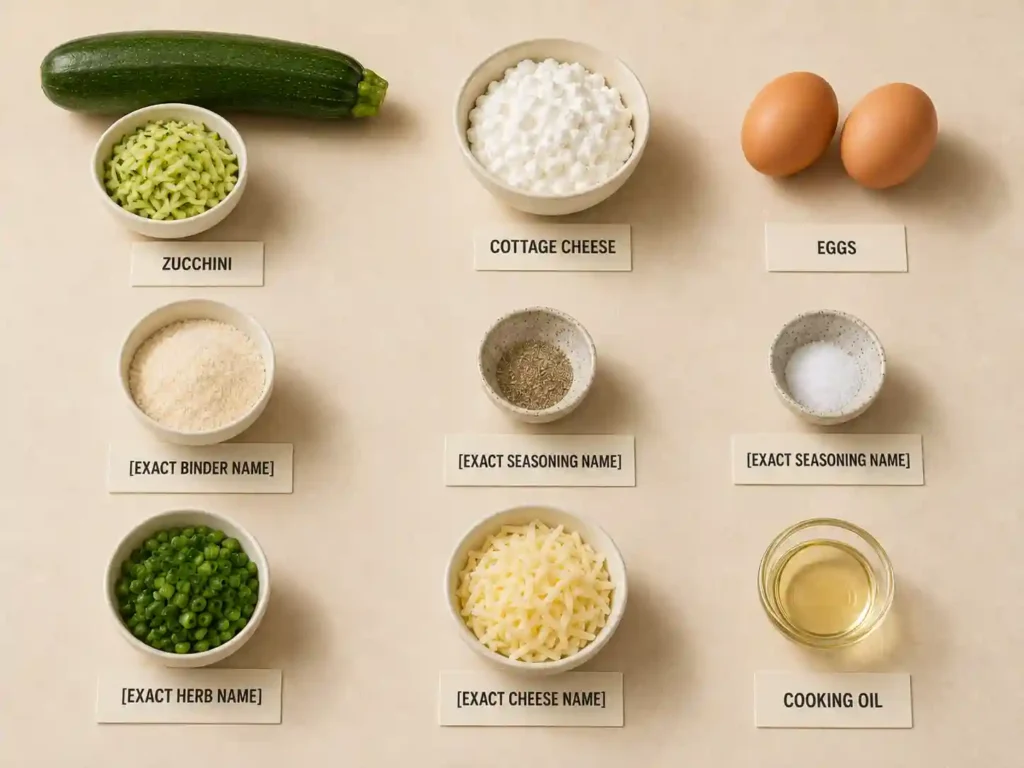
Zucchini
Zucchini provides the vegetable base and tender texture. It should be grated evenly so that the pieces cook at a similar rate.
The weight of the zucchini can change substantially after squeezing. A reliable recipe should therefore specify whether the listed amount refers to whole zucchini, freshly grated zucchini, or squeezed zucchini.
Cottage Cheese
Cottage cheese contributes creaminess and protein, but it also introduces moisture. Some formulations may require draining, while others may work with cottage cheese directly from the container.
The final recipe must identify the cottage cheese type used during testing. A substitution should not be presented as interchangeable until its effect on texture has been checked.
Eggs
Eggs help the mixture set as it cooks. However, they also add liquid, so the correct number must be balanced with the quantity of zucchini, cottage cheese, and dry binder.
Dry Binder
Flour, breadcrumbs, or another tested dry ingredient may help absorb moisture and hold the fritters together. Different binders behave differently and should not automatically be substituted in equal amounts.
A reliable recipe should identify one primary binder and list only substitutions that have produced an acceptable result.
Seasonings
Zucchini and cottage cheese both have mild flavors. Garlic powder, onion powder, black pepper, herbs, scallions, or other simple seasonings may help create a more savory result.
The final combination should be tested before publication, especially when salty cheese or seasoned breadcrumbs are included.
Cooking Oil
A small amount of oil can improve browning and reduce sticking. The amount needed depends on the skillet surface, batch size, and cooking temperature.
The final recipe should explain whether oil is added once or refreshed between batches.
How to Remove Water From Zucchini
Grate the Zucchini Evenly
Medium holes on a box grater are commonly used for fritters because they produce visible shreds that are still thin enough to soften in the skillet.
A food processor with a shredding disc may also be practical for a larger batch, but the finished shred size should remain consistent.
Transfer It to a Clean Towel
Place the grated zucchini in a clean kitchen towel or several layers of cheesecloth. Gather the material around the zucchini to create a secure bundle.
Squeeze in Small Batches
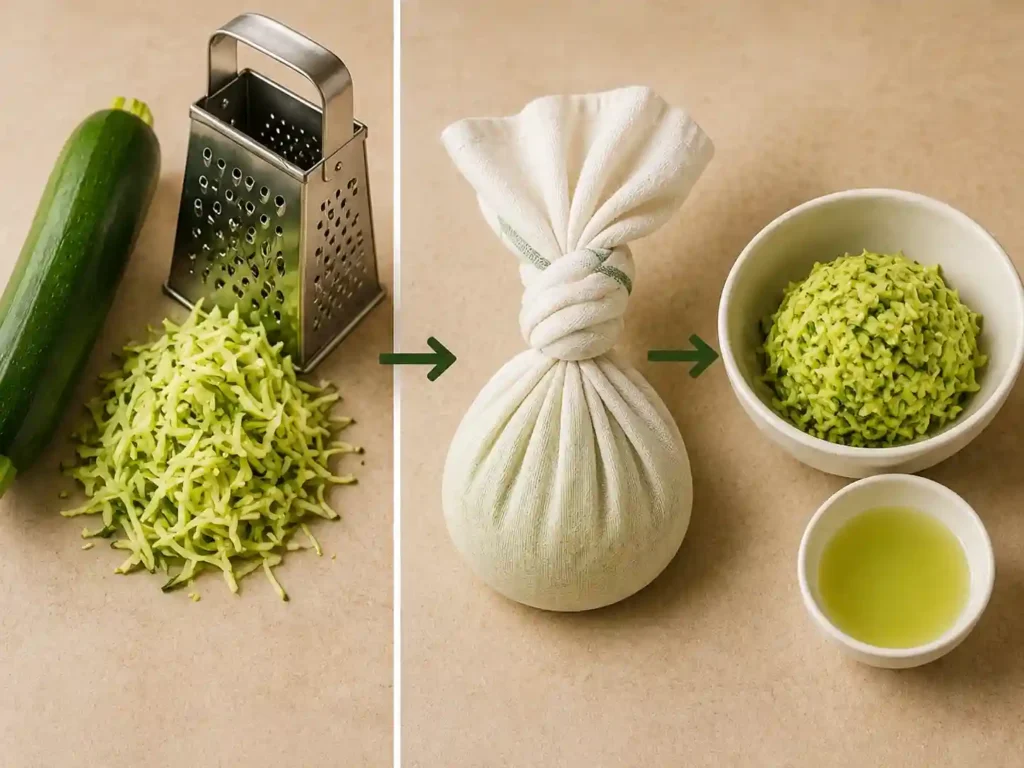
Twist and press the bundle over a sink or bowl. Working with smaller portions can make it easier to remove liquid evenly.
The zucchini should remain slightly damp rather than completely dehydrated, but it should no longer release a stream of water when squeezed.
Measure After Squeezing When Required
Because squeezing changes the volume and weight, the tested recipe should clarify when the zucchini is measured. This prevents readers from unknowingly adding much more or much less vegetable than intended.
How the Fritter Mixture Should Be Built
Combine the Wet Ingredients
The squeezed zucchini, cottage cheese, eggs, and seasonings can be combined before the dry binder is incorporated. Mixing should distribute the cottage cheese without turning the zucchini into a paste.
Add the Binder Gradually
The dry ingredient should be distributed throughout the mixture rather than left in dry pockets. The correct batter should hold a small portion together when gently pressed.
A mixture that immediately releases liquid or spreads flat may still contain too much moisture. A stiff, dough-like mixture may contain too much dry binder.
Cook One Test Fritter
A small test fritter can reveal whether the mixture holds together, browns properly, and cooks through without becoming heavy.
Any adjustment rule must be documented during testing. Readers should not be told to add an unspecified amount of flour until the mixture “looks right” without receiving a clear visual cue.
How to Cook Fritters in a Skillet
Preheat the Skillet
A skillet that has not heated sufficiently may cause the mixture to stick before the surface begins to set. Heat that is too high can darken the exterior while leaving the center too soft.
The tested recipe must identify the most reliable heat level for the chosen skillet and fritter thickness.
Use Even Portions
Consistent portions help the fritters cook at a similar rate. A scoop can make portioning easier, but the mixture should still be gently flattened after it reaches the skillet.
Leave Space Between Fritters
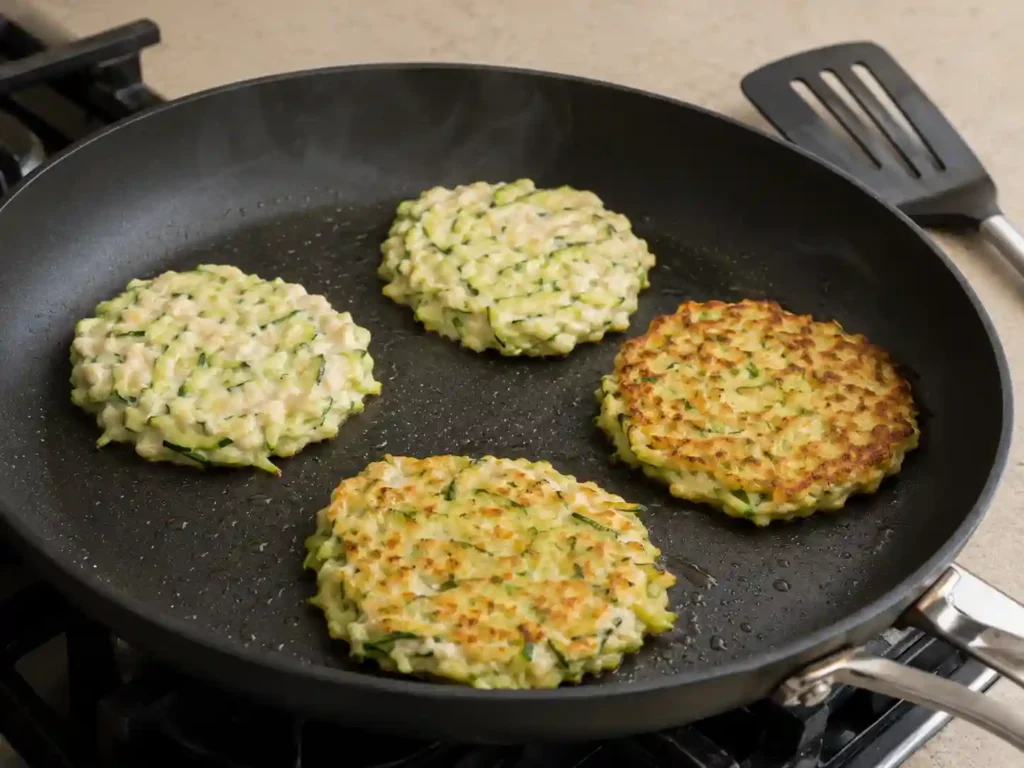
Overcrowding can make flipping difficult and may reduce the skillet temperature. Cook in manageable batches and leave enough space for a spatula.
Wait Before Flipping
The first side should be visibly browned around the edges and firm enough to lift as one piece. Flipping too early is one of the most common reasons fritters break apart.
Adjust the Heat Between Batches
The skillet may become hotter as cooking continues. Later batches may therefore need a lower heat setting or a shorter cooking period.
Cool Without Trapping Steam
Move finished fritters to a cooling rack when possible. A flat plate can trap steam underneath and soften the browned surface.
How to Keep Zucchini Fritters From Falling Apart
| Problem | Likely cause | What to check |
|---|---|---|
| Fritters break during flipping | Excess moisture, insufficient structure, or early flipping | Check the squeezed zucchini, tested binder ratio, and browning on the first side |
| Mixture spreads in the skillet | Batter is too wet | Check zucchini moisture and cottage cheese liquid |
| Center remains very soft | Fritters are too thick or heat is too high | Check portion size, thickness, and skillet temperature |
| Exterior becomes dark too quickly | Skillet is too hot | Reduce heat before the next batch |
| Fritters stick | Skillet is not ready, surface is worn, or oil is insufficient | Check preheating, skillet condition, and tested oil amount |
| Fritters are dense | Too much dry binder | Review the tested ratio rather than adding more flour automatically |
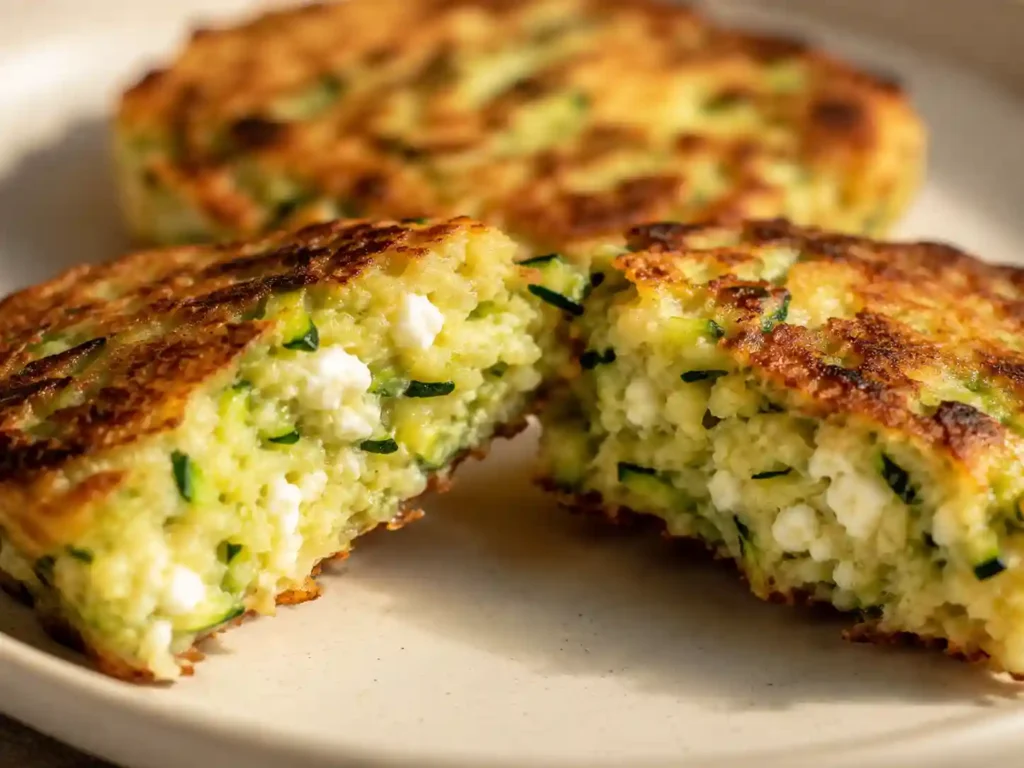
What to Serve With Cottage Cheese Zucchini Fritters
Once the recipe has been verified, the fritters could be served with a simple salad, eggs, cooked vegetables, soup, or an appropriate dip.
A cottage cheese protein dip may provide a relevant pairing when its flavors complement the final seasonings.
For additional snack inspiration, explore these high-protein snacks on a budget. The snack guide should link back to this page only after the tested fritter recipe is published.
Meal Prep, Storage, and Food Safety
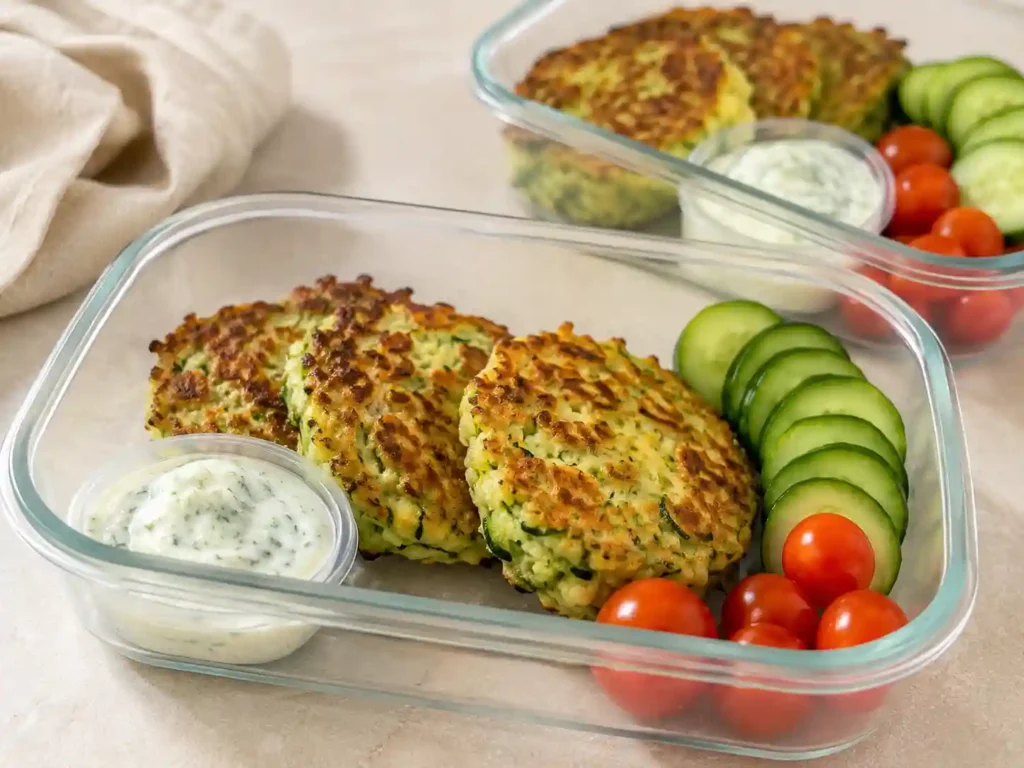
Cooked fritters contain dairy and eggs and should be treated as perishable food. Refrigerate them promptly in shallow covered containers.
The FDA recommends refrigerating perishable foods within two hours of cooking, or within one hour when the surrounding temperature is above 90°F. Keep the refrigerator at 40°F or below.
General USDA guidance allows most properly refrigerated cooked leftovers to be stored for three to four days. This safety window does not guarantee that the fritters will retain their best texture for the entire period.
Best Container Setup
Allow excess steam to escape before sealing the container, while still following safe cooling and refrigeration practices. A shallow container allows the food to cool more quickly than a deep, tightly packed container.
Reheating
A skillet, oven, or air fryer may restore more surface texture than a microwave, but the final recommendation must be based on the tested recipe.
Reheated leftovers should reach 165°F according to FDA guidance.
Freezing
Freezing should not be recommended until the fritters have been frozen, thawed, and reheated successfully. A recipe can remain safe after freezing while still developing an undesirable watery or fragile texture.
For more batch-preparation ideas using the same core ingredient, see these cottage cheese meal prep ideas.
Helpful Tools for Cottage Cheese Zucchini Fritters
The following tool categories may make preparation easier:
- Box grater: For producing even zucchini shreds.
- Food processor with a shredding disc: Useful when preparing a larger quantity.
- Clean kitchen towel or cheesecloth: For removing excess zucchini liquid.
- Mixing bowl: For combining the ingredients without overcrowding the mixture.
- Nonstick skillet: Helps reduce sticking during stovetop cooking.
- Thin spatula: Makes it easier to lift and turn delicate fritters.
- Portion scoop: Helps produce fritters of a similar size.
- Cooling rack: Allows steam to escape from the underside.
- Shallow meal prep containers: Useful for refrigerating the cooked fritters.
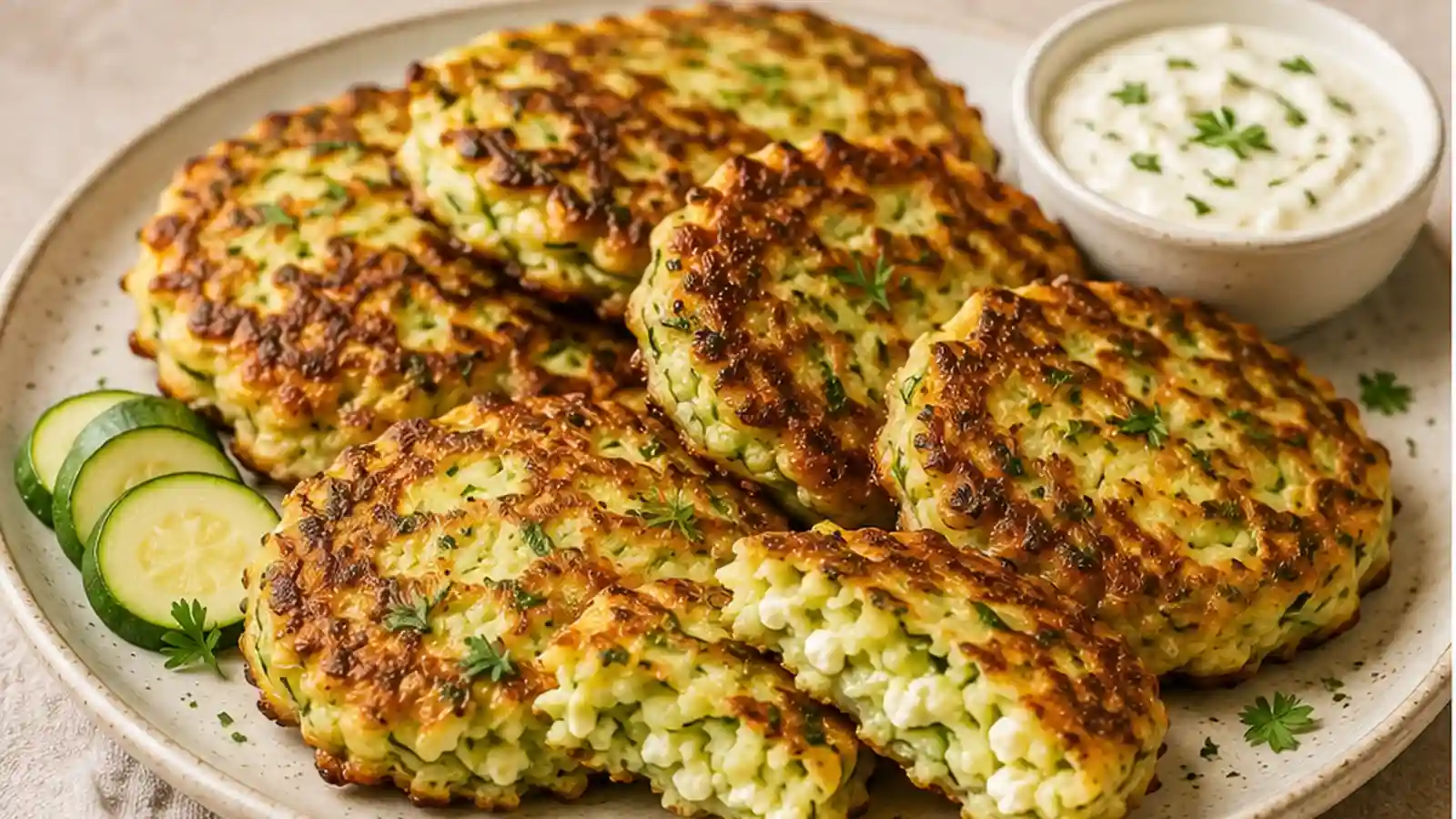
Cottage Cheese Zucchini Fritters
Ingredients
Equipment
Method
- Grate the zucchini evenly through the medium holes of a box grater. A food processor fitted with a shredding disc may be used for a larger batch.
- Transfer the grated zucchini to a clean kitchen towel or several layers of cheesecloth. Gather the cloth around the zucchini, then twist and press firmly over a sink or bowl. Work in smaller batches when necessary.
- The squeezed zucchini should remain slightly damp, but it should no longer release a stream of water when pressed. Measure it at the stage specified by the final tested formula.
- Place the squeezed zucchini, cottage cheese, eggs, and seasonings in a mixing bowl. Stir until evenly distributed without crushing the zucchini into a paste.
- Add the tested dry binder and fold until no dry pockets remain. The mixture should hold together when a small portion is gently pressed without becoming stiff or dough-like.
- Cook one small test fritter to evaluate the structure, seasoning, browning, and center texture. Any adjustment to the mixture should follow a verified testing rule rather than an unspecified addition of flour.
- Preheat a nonstick skillet at the heat level established during recipe testing. Add the verified amount of cooking oil. The skillet should be hot enough to begin setting the fritters without darkening them too quickly.
- Place evenly sized portions of the mixture in the skillet and gently flatten them to a consistent thickness. Leave enough space between the fritters to insert a spatula easily.
- Cook the first side until the edges appear browned and the fritter feels firm enough to lift in one piece. Turn carefully with a thin spatula, then cook the second side until the center is set. Adjust the heat as needed between batches.
- Transfer the cooked fritters to a cooling rack so steam can escape from underneath. Avoid stacking them while hot, as trapped steam may soften the browned surfaces.
Notes
FAQs About Cottage Cheese Zucchini Fritters
Why do zucchini fritters fall apart?
Common causes include excess moisture, insufficient binder, portions that are too large, a skillet that is not properly heated, or flipping before the first side has set.
Do you have to squeeze zucchini for fritters?
Removing excess water is an important part of most zucchini fritter methods. The final recipe should specify exactly how the zucchini is grated, squeezed, and measured.
Should cottage cheese be drained first?
That depends on the cottage cheese and the tested ingredient ratio. The final recipe must state whether draining is required rather than leaving the decision to the reader.
How should zucchini fritters be reheated?
Dry-heat methods such as a skillet or oven may produce a firmer surface than microwave reheating. The best method and timing still require testing with the completed recipe.
Can cottage cheese zucchini fritters be frozen?
Freezing should not be confirmed until a finished batch has been frozen, thawed, and reheated. Safety and texture quality must be evaluated separately.
Final Takeaway
The success of cottage cheese zucchini fritters depends on more than combining zucchini, cottage cheese, eggs, and flour. Moisture removal, binder quantity, fritter thickness, skillet temperature, and flipping time all affect the final structure.
This article must remain in draft status until the complete recipe has been tested and the exact quantities, yield, timing, storage results, and estimated nutrition have been added.
In the meantime, explore these high-protein cottage cheese recipes, review this cheap protein grocery list, or try another zucchini-based meal such as ground turkey zucchini boats.