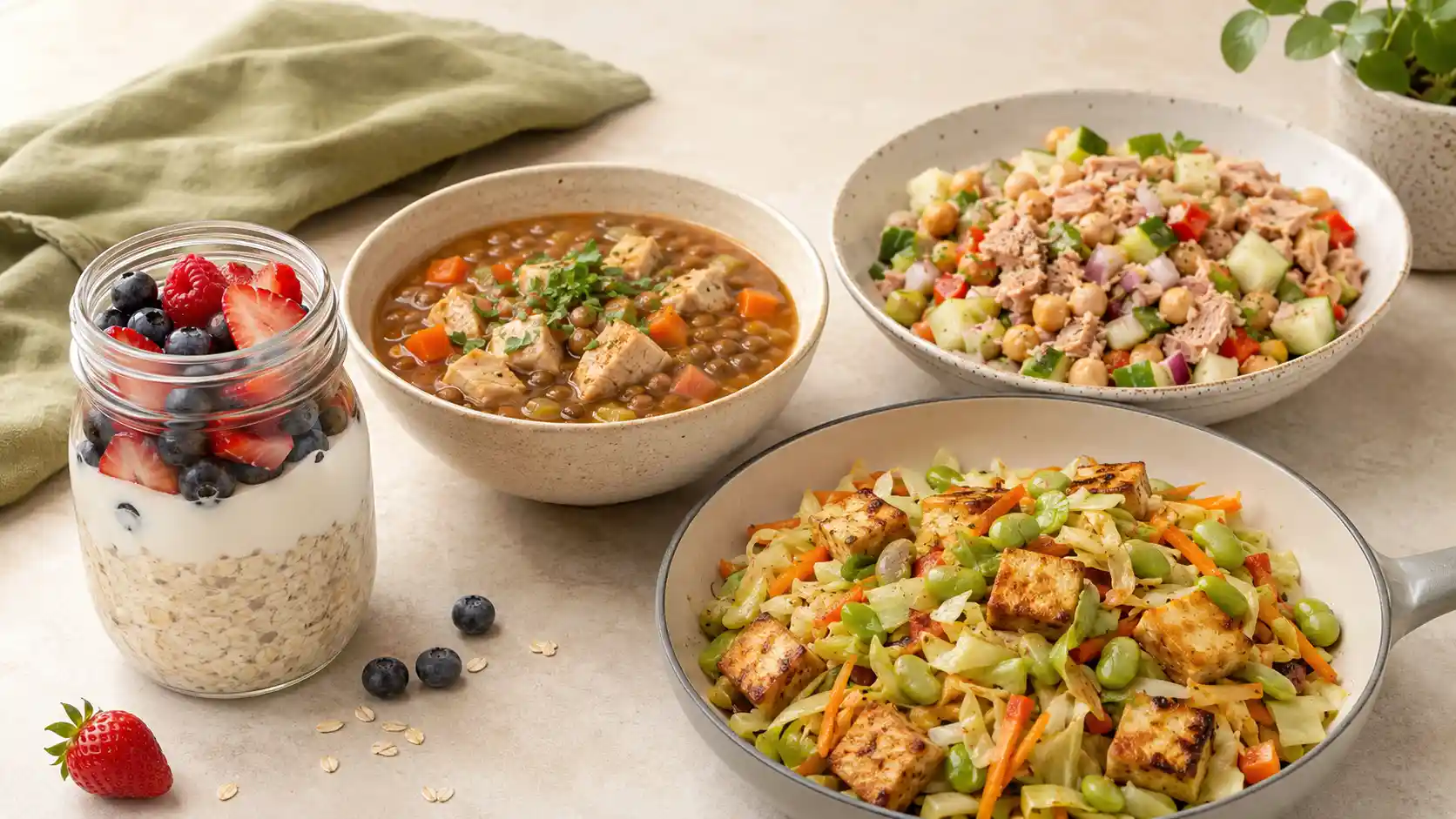
High-fiber high-protein recipes do not need specialty powders, expensive cuts of meat, or a completely different grocery list for every meal. A more practical approach is to combine familiar protein sources with beans, lentils, oats, vegetables, fruit, or whole grains, then reuse those ingredients across several breakfasts, lunches, and dinners.
This guide goes beyond meal prep bowls. You will find make-ahead breakfasts, one-pot soups, bean-forward chilis, cold salads, and flexible skillet meals. Some entries link to complete recipes already published on Budget Protein Meals. Others are adaptable meal ideas that should be finalized and tested before being turned into standalone recipe cards.
Nutrition note: Exact protein, fiber, calorie, and other nutrition values depend on the quantities, brands, recipe yield, and serving size. No recipe-specific nutrition claims are made in this guide.
Quick Answer: What Are the Best Budget High-Fiber High-Protein Recipes?
The most practical choices pair one clear protein source with at least one substantial fiber-contributing ingredient. Examples include chicken lentil soup, ground turkey chili with beans, tuna chickpea salad, Greek yogurt overnight oats, egg and bean breakfast burritos, dense bean salad, and tofu edamame skillets.
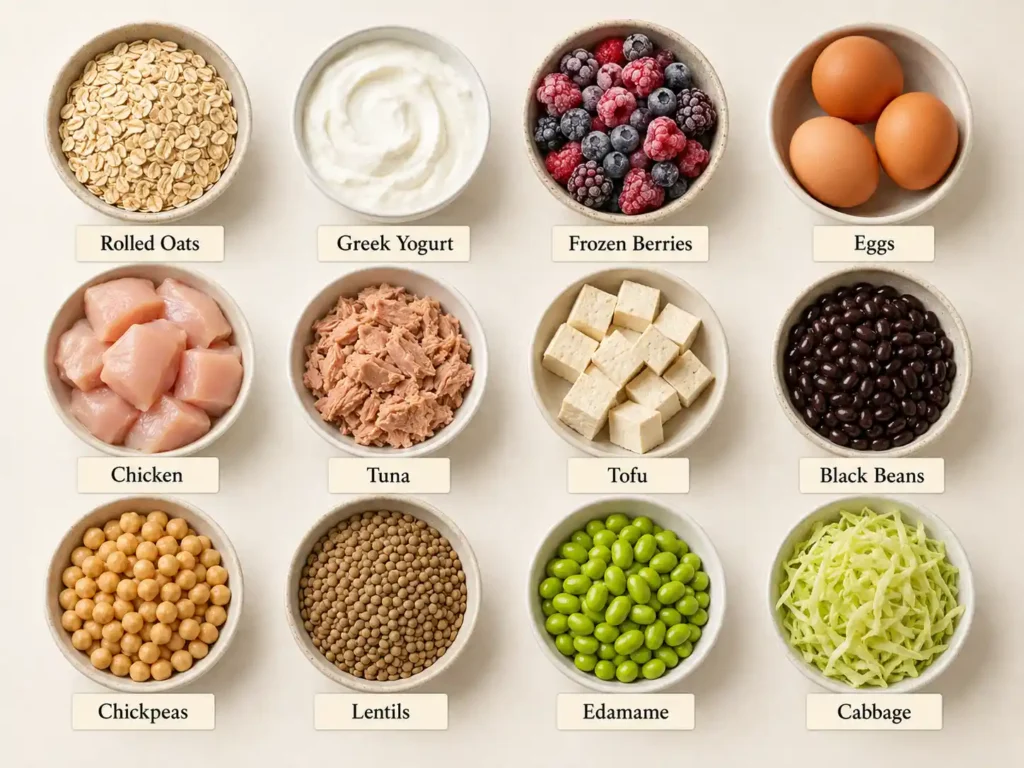
For easier meal prep, choose recipes that share ingredients. A batch of lentils can become soup, salad, and a skillet dinner. Shredded cabbage can add crunch to cold lunches and cook quickly in a hot skillet. Frozen berries can work in overnight oats and yogurt bowls without leaving extra fresh produce to spoil.
How This Guide Uses “High-Fiber” and “High-Protein”
Start with a clear protein anchor
Each meal needs an identifiable protein source. Depending on the recipe, that may be chicken, ground turkey, tuna, eggs, Greek yogurt, cottage cheese, tofu, edamame, beans, lentils, or a combination of ingredients.
The protein anchor should make sense for the way the meal will be stored and served. Tuna and yogurt work naturally in cold meals, while chicken, turkey, tofu, beans, and lentils can fit both hot and cold meal prep.
Add more than one fiber-contributing ingredient
Beans and lentils are useful because they contribute both protein and fiber, but they are not the only choices. Rolled oats, berries, vegetables, fruit, whole-grain products, seeds, chickpeas, edamame, and some legume-based pastas can also contribute fiber.
A practical meal may combine a protein anchor with a legume and a vegetable. Another may use Greek yogurt with oats, fruit, and seeds. The goal is to build variety without making the grocery list unnecessarily long.
Verify every recipe before making a nutrition claim
The FDA Daily Value guidance explains how percentages on Nutrition Facts labels are used to describe whether a serving is low or high in a nutrient. However, that guidance cannot be applied to a recipe until its final quantities, yield, products, and serving size have been calculated.
The current Dietary Guidelines for Americans include protein foods, vegetables, fruits, legumes, nuts, seeds, tofu, and fiber-rich whole grains among the foods that can contribute to a varied eating pattern. This article uses those broad ingredient categories for planning, not as proof of recipe-specific macros or health outcomes.
High-Fiber High-Protein Meal Prep at a Glance
| Meal Idea | Format | Protein Anchor | Fiber Contributors | Serve | Best Make-Ahead Step |
|---|---|---|---|---|---|
| Protein overnight oats | Breakfast | Greek yogurt | Oats, fruit, seeds | Cold | Assemble a short batch of jars |
| Egg and bean breakfast burritos | Breakfast | Eggs or egg whites | Beans, vegetables, tortilla | Hot | Wrap and freeze individual portions |
| Chicken lentil soup | Soup | Chicken | Lentils, vegetables | Hot | Cook one pot and portion it |
| Ground turkey chili | Chili | Ground turkey | Beans, tomatoes, vegetables | Hot | Freeze later-week portions |
| Tuna chickpea salad | Cold lunch | Tuna | Chickpeas, vegetables | Cold | Drain ingredients thoroughly |
| Tofu edamame skillet | Skillet | Tofu and edamame | Cabbage, edamame, vegetables | Hot | Prepare the vegetables ahead |
If you are beginning with the wider meal prep process, use this cheap high-protein meal prep guide to organize portions, containers, and weekly planning.
Budget Breakfasts with Protein and Fiber
Breakfast meal prep works best when it includes both cold options and freezer-friendly hot meals. This prevents every morning from depending on the same jar of oats or the same reheated egg dish.
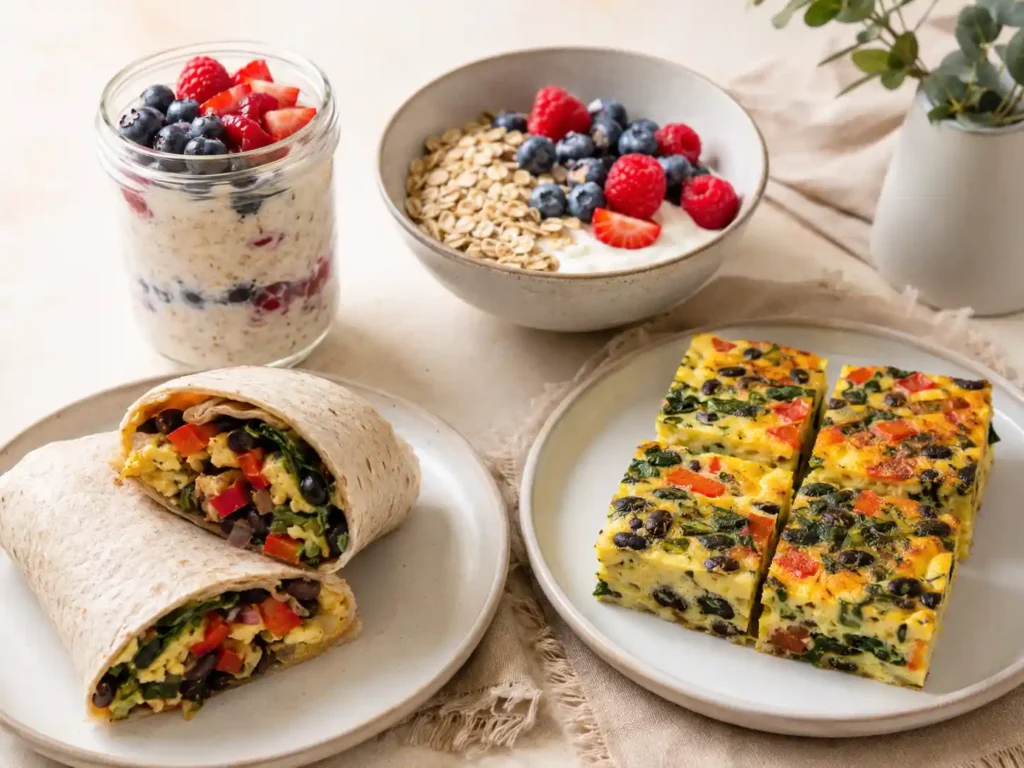
Protein overnight oats with fruit and seeds
Rolled oats provide the base, while Greek yogurt supplies the main protein anchor. Frozen berries, peaches, apples, chia seeds, or ground flax can add texture and fiber-contributing ingredients.
For better meal prep texture, stir together the oats, yogurt, milk, and soft fruit first. Keep nuts, seeds used for crunch, and dry toppings separate until serving. Prepare only the number of refrigerated portions that fits your schedule and the storage guidance for the specific dairy products used.
Budget move: Choose one frozen fruit that can also be used in yogurt bowls or smoothies instead of buying several small containers of fresh berries.
Egg white and bean breakfast burritos
Egg whites or whole eggs can be combined with drained beans and cooked vegetables, then wrapped in tortillas. Bell peppers, onions, spinach, or leftover roasted vegetables can all work when their moisture has been cooked away.
Let the filling stop steaming before wrapping the burritos. Excess steam can soften the tortillas and create ice crystals if the burritos are frozen. Reheat according to the finalized recipe and make sure the center is heated thoroughly before serving.
Budget move: Beans help distribute the egg filling across more burritos without requiring another protein product.
Greek yogurt, oats, and berry breakfast bowls
A yogurt bowl can be assembled quickly with plain Greek yogurt, rolled oats, frozen or fresh fruit, and an optional seed or nut topping. It works best as a short-prep breakfast rather than a large batch stored for the entire week.
Pack watery fruit and crunchy toppings separately when possible. Thawed frozen berries release juice, which can be stirred into the yogurt shortly before eating instead of soaking the oats for several days.
Cottage cheese egg bake with vegetables and beans
An egg bake offers a warm alternative to oats and yogurt. Eggs and cottage cheese form the base, while beans and properly cooked vegetables can add texture and stretch the dish across several portions.
Watery vegetables should be cooked and drained before they are added. Allow the finished bake to rest before slicing, then cool and store the portions promptly. Ingredient quantities, baking time, yield, and nutrition must be established in a finalized recipe before publication as a standalone recipe card.
Find more make-ahead and quick options in these high-protein breakfasts on a budget.
Soups and Chilis for Batch Cooking
Soups and chilis are useful for meal prep because the protein, legumes, vegetables, and cooking liquid can be prepared in one pot. They also make it easy to freeze later-week portions instead of keeping every serving in the refrigerator.
Chicken lentil soup
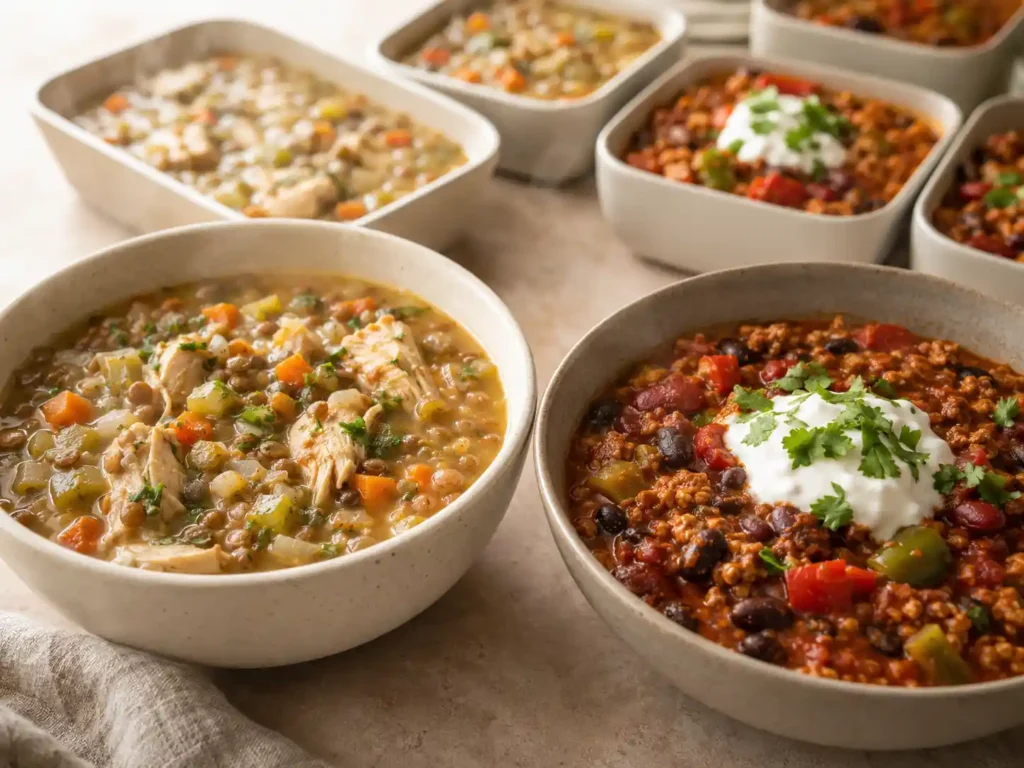
Chicken lentil soup combines a clear meat protein with lentils and vegetables in one pot. Brown or green lentils retain more texture than red lentils, while red lentils create a softer and thicker result. The lentil variety should match the method used in the finalized recipe.
Because lentils continue absorbing liquid after cooking, refrigerated portions may thicken. Add a small amount of broth or water during reheating if needed, then stir thoroughly.
Use the verified quantities and instructions in the complete chicken lentil soup recipe.
Ground turkey chili with beans
Ground turkey chili uses beans, tomatoes, vegetables, and pantry seasonings to create a one-pot meal. A gentle simmer allows the mixture to thicken without drying out the turkey.
Keep toppings separate from the stored chili. This makes it easier to freeze the main portion and add yogurt, cheese, chopped herbs, or another verified topping only when serving.
Follow the full ground turkey chili recipe for the finalized ingredient quantities, yield, cooking method, and storage notes.
Chicken and white bean vegetable soup
This flexible soup idea can combine cooked chicken, properly prepared white beans, broth, and vegetables. Carrots, celery, spinach, green beans, or frozen mixed vegetables can fit, depending on the final flavor direction.
If using already cooked chicken, add it late enough to heat through without becoming dry. If starting with raw chicken, use a verified method and confirm safe doneness with a food thermometer.
Budget move: Use the vegetables already planned for salads or skillets instead of buying a separate soup mix.
Vegetarian lentil tomato soup
Lentils, tomatoes, broth, onions, and vegetables create a plant-forward soup that can be prepared without a separate meat protein. The consistency depends on the lentil variety, amount of liquid, and cooking time.
For a smoother soup, part of the mixture can be blended after cooking. For more texture, use lentils that hold their shape and keep the vegetables in visible pieces. Any complete version still needs finalized quantities and kitchen verification before receiving a recipe card.
Cold Salads and Packable Lunches
Cold meal prep can reduce weekday reheating, but moisture control matters. Drain canned ingredients thoroughly, cool cooked grains or pasta before mixing, and keep extra dressing in a separate container when possible.
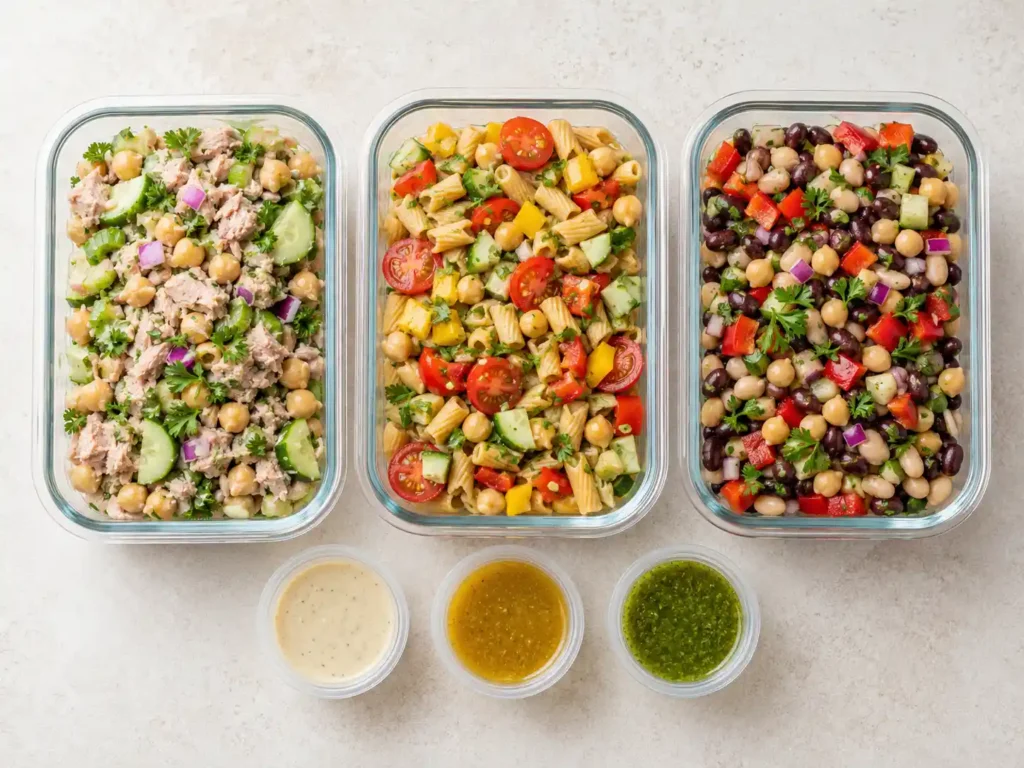
Tuna chickpea salad
Tuna and chickpeas create a convenient pantry-based combination. Crisp vegetables add contrast, while a simple dressing brings the ingredients together. The salad should remain chilled during transport in an insulated lunch bag with an appropriate cold pack.
Use the complete tuna chickpea salad recipe for its verified ingredients and method.
High-fiber protein pasta salad
Pasta salad can use chickpea pasta, lentil pasta, whole-wheat pasta, or another verified option. Beans and vegetables can be added according to the chosen recipe, but the finished nutrition will change with the type of pasta and portion size.
Cook the pasta only until it reaches the texture specified by the recipe. Drain it well and avoid adding all the dressing too early. Saving a small amount of dressing for serving can help refresh pasta that has absorbed liquid in the refrigerator.
See the finalized high-fiber protein pasta salad.
Dense bean salad
A dense bean salad replaces a large base of delicate greens with beans, firmer vegetables, and a dressing. It can be easier to pack than a leafy salad because the main ingredients are less likely to wilt quickly.
Rinse and drain canned beans thoroughly. Chop the vegetables into similar-sized pieces, then keep especially watery or delicate additions separate if the salad will not be eaten immediately.
Use the complete high-protein dense bean salad as the verified recipe.
Lentil vegetable salad
Firm cooked lentils can be paired with chopped vegetables, herbs, and a simple dressing. The lentils should be tender but not so soft that they break apart when tossed.
Cool the lentils before combining them with fresh vegetables. Add delicate herbs close to serving when possible, and adjust the dressing only after the lentils have had time to absorb some of it.
Tofu edamame crunch salad
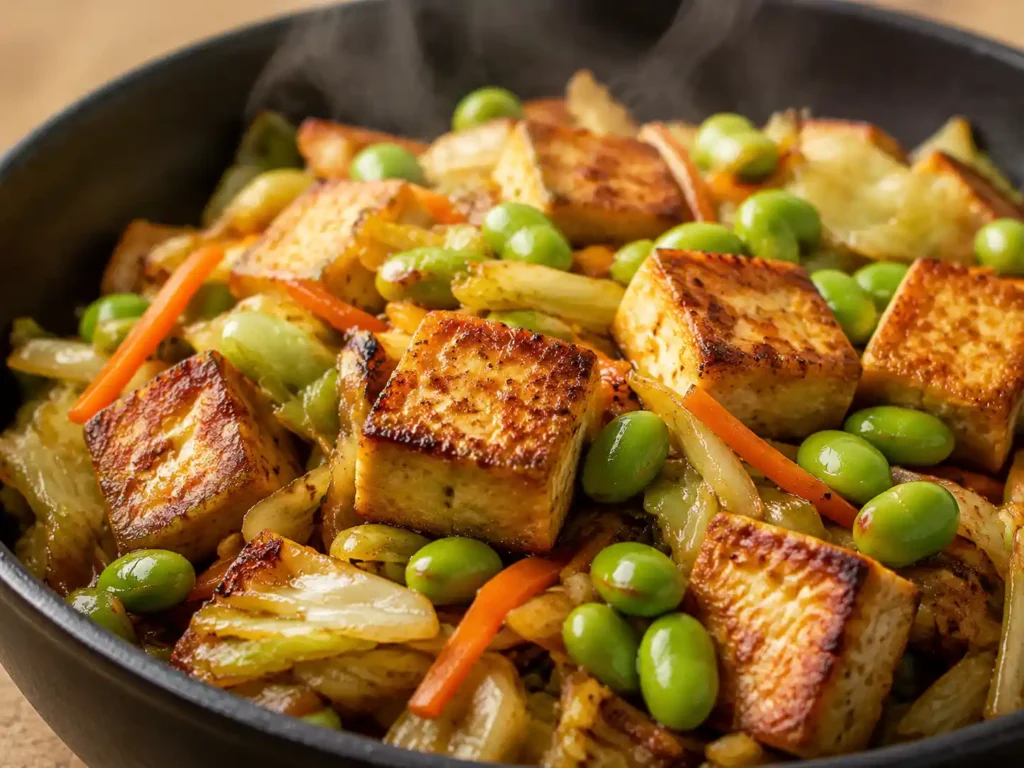
Tofu and edamame can form the protein base of a cold plant-forward salad. Cabbage, carrots, and other firm vegetables help the mixture retain crunch in a packed lunch.
Press or drain the tofu according to the intended recipe, and keep the dressing separate if it contains enough liquid to soften the vegetables. Use only a tested dressing and finalized ingredient list if this idea becomes a standalone recipe.
High-Protein High-Fiber Skillet Meal Ideas
The following combinations are flexible development ideas rather than complete tested recipes. They show how protein, legumes, and vegetables can share one pan, but they should not receive exact quantities, cooking times, nutrition, or recipe cards until finalized.
Turkey, lentil, and zucchini skillet
Cook ground turkey with a simple aromatic base, then add firm cooked lentils and zucchini. The zucchini should be cooked only until tender so it does not release too much water into the skillet.
Meal prep approach: Prepare the lentils in advance, then finish the turkey and vegetables in one pan. Cool the portions before covering them.
Chicken, chickpea, and frozen vegetable skillet
Chicken, drained chickpeas, and frozen vegetables can create a flexible skillet when the vegetables are cooked long enough for excess moisture to evaporate. A sauce or seasoning blend can then be added according to the finalized recipe.
Budget move: Compare the frozen vegetable options already available instead of buying several fresh vegetables that will only be used once.
Tofu, edamame, and cabbage skillet
Firm tofu, edamame, and shredded cabbage cook relatively quickly and can be paired with garlic, ginger, citrus, or another tested seasoning direction. Browning the tofu separately before adding moist vegetables can improve its texture.
Meal prep approach: Keep any finishing sauce separate if it could soften the tofu or make the cabbage watery during storage.
Beef and black bean vegetable skillet
A moderate amount of ground beef can be combined with black beans and vegetables so the meat is not the only substantial component. Bell peppers, zucchini, corn, cabbage, or frozen vegetables may work depending on the final recipe.
Budget move: Increase the beans and vegetables rather than automatically increasing the amount of beef. Exact proportions still need recipe development and testing.
Prefer Meal Prep Bowls?
If bowls are the format you use most often, the dedicated guide to high-fiber high-protein meal prep bowls provides a bowl-building formula, nine combinations, storage guidance, and a complete chicken and black bean bowl recipe.
This pillar intentionally keeps bowls brief so it can focus on breakfast, soup, chili, salad, and skillet formats.
How to Prep Several Meals from One Grocery List
Choose ingredients with more than one job
Instead of planning every recipe independently, look for ingredients that can appear in several formats. Greek yogurt can be used in breakfast oats, bowls, or a sauce. Beans can be divided among burritos, chili, salads, and skillets. Cabbage can stay raw for lunch and cook down in a hot dinner.
Build the week around two main proteins
Choose two principal protein sources, then support them with eggs, dairy, beans, lentils, tofu, or another ingredient already in the plan. This creates more variety than preparing one large batch of a single meat while keeping the grocery list manageable.
Cook one legume or grain in a larger batch
Cooked lentils can be divided between soup, salad, and a skillet. A batch of beans can support burritos, chili, and cold lunches. If you use a grain, choose one that works in more than one meal instead of preparing several separate bases.
Prepare vegetables according to their final use
Some vegetables can be chopped once, but they should not all be stored in the same way. Keep salad vegetables dry and chilled. Cook frozen vegetables until excess moisture evaporates. Store delicate herbs and watery toppings separately.
Freeze meals intended for later in the week
The USDA advises using most properly refrigerated cooked leftovers within three to four days. Review the current USDA leftovers and food safety guidance, follow the shortest safe storage period among all ingredients, and freeze suitable later-week portions rather than leaving everything refrigerated.
Newsletter CTA: Join the Budget Protein Meals newsletter for practical meal prep ideas, grocery planning tips, and new budget-friendly recipes.
Meal Prep Storage and Reheating
| Component | Storage Approach | Texture Tip |
|---|---|---|
| Soups and chilis | Shallow covered containers | Add liquid during reheating if they thicken |
| Cold bean salads | Airtight refrigerated container | Drain beans and vegetables thoroughly |
| Pasta salads | Cold airtight container | Reserve some dressing for serving |
| Cooked skillet meals | Individual reheating containers | Let excess vegetable moisture evaporate |
| Sauces and toppings | Small separate containers | Add after reheating or before serving |
- Use shallow containers so cooked food can cool more efficiently.
- Refrigerate perishable food promptly according to current USDA guidance.
- Keep cold components separate from the portion that will be reheated.
- Label frozen portions with the recipe name and freezing date.
- Thaw frozen meals safely in the refrigerator rather than on the counter.
- Follow recipe-specific cooking and reheating instructions.
Helpful Tools for This Guide
You do not need specialty equipment to use these meal prep ideas. A few basic tool categories can make portioning, cooling, transport, and reheating easier:
- Shallow airtight containers: Useful for cooked meals that need to cool and reheat evenly.
- Leak-resistant sauce cups: Keep dressings and sauces away from grains, pasta, and crunchy vegetables.
- Freezer-safe containers: Useful for soups, chilis, and later-week portions.
- Large skillet: Provides enough surface area for protein and vegetables to cook without excessive crowding.
- Large pot or Dutch oven: Useful for soup, chili, and batch-cooked lentils.
- Fine-mesh strainer: Helps rinse lentils, chickpeas, and canned beans.
- Instant-read food thermometer: Helps verify safe cooking and reheating when required.
- Insulated lunch bag and cold packs: Help keep packed cold meals chilled during transport.
No specific products are recommended because product details and affiliate links were not provided.
Common Mistakes to Avoid
- Calling an idea high-protein or high-fiber without calculation: Verify the final quantities, yield, products, and portion before publishing nutrition claims.
- Planning too many unrelated recipes: Reuse beans, lentils, vegetables, grains, and sauces across several meals.
- Keeping five days of cooked food in the refrigerator: Use refrigerated portions within the applicable safe period and freeze suitable later-week servings.
- Closing containers while food is producing heavy steam: Follow safe cooling guidance and avoid trapping excess moisture.
- Mixing every sauce into the meal early: Separate sauces that could make pasta, grains, or vegetables soggy.
- Ignoring moisture from frozen vegetables: Cook away excess water before portioning skillet meals.
- Presenting a flexible combination as a tested recipe: Finalize ingredients, quantities, method, yield, storage, and nutrition first.
Frequently Asked Questions
What budget foods contribute both protein and fiber?
Beans, chickpeas, lentils, edamame, and some legume-based pastas can contribute both. Exact amounts depend on the product, portion, preparation, and complete recipe.
Can I make these meals without protein powder?
Yes. The ideas use foods such as eggs, chicken, turkey, tuna, Greek yogurt, cottage cheese, tofu, beans, lentils, chickpeas, and edamame. Protein powder is not required.
Can I meal prep these recipes for five days?
Do not assume every recipe can stay refrigerated for five days. The USDA advises using most cooked leftovers within three to four days. Keep only the appropriate early-week portions refrigerated and freeze suitable meals planned for later.
Do all high-protein high-fiber meals need beans or lentils?
No. Oats, vegetables, fruit, seeds, and whole-grain foods can contribute fiber, while eggs, dairy, poultry, fish, tofu, or other verified ingredients can provide the main protein anchor. Beans and lentils are simply practical because they can contribute to both sides of the meal.
Which meal prep formats are best for freezing?
Many soups, chilis, burritos, and cooked skillet components can be suitable for freezing. Fresh salads, yogurt bowls, crisp vegetables, herbs, and creamy sauces often need separate handling. Follow the storage instructions for the finalized recipe and all ingredients used.
Build Your Budget Meal Prep Plan
Start with two main protein sources, one batch of beans or lentils, and a manageable selection of vegetables. Add oats, tortillas, pasta, or another practical base only when it can be used in more than one meal.
From there, prepare one breakfast, one soup or chili, one cold lunch, and one skillet meal. Freeze suitable portions for later in the week, keep wet toppings separate, and calculate nutrition only after every recipe has finalized quantities and servings.
This approach gives you more variety than preparing the same bowl every day while keeping shopping, cooking, and storage realistic.