
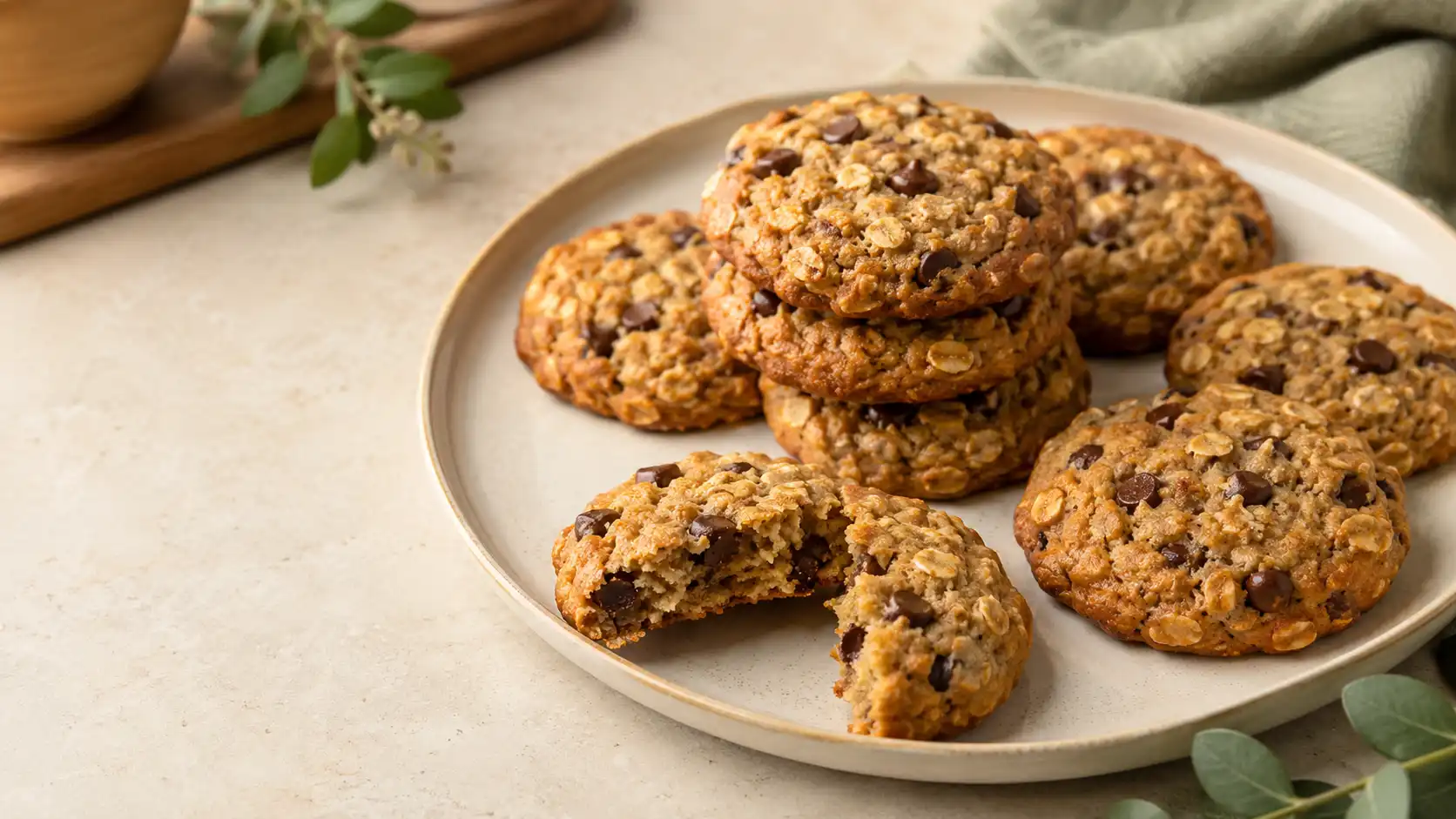
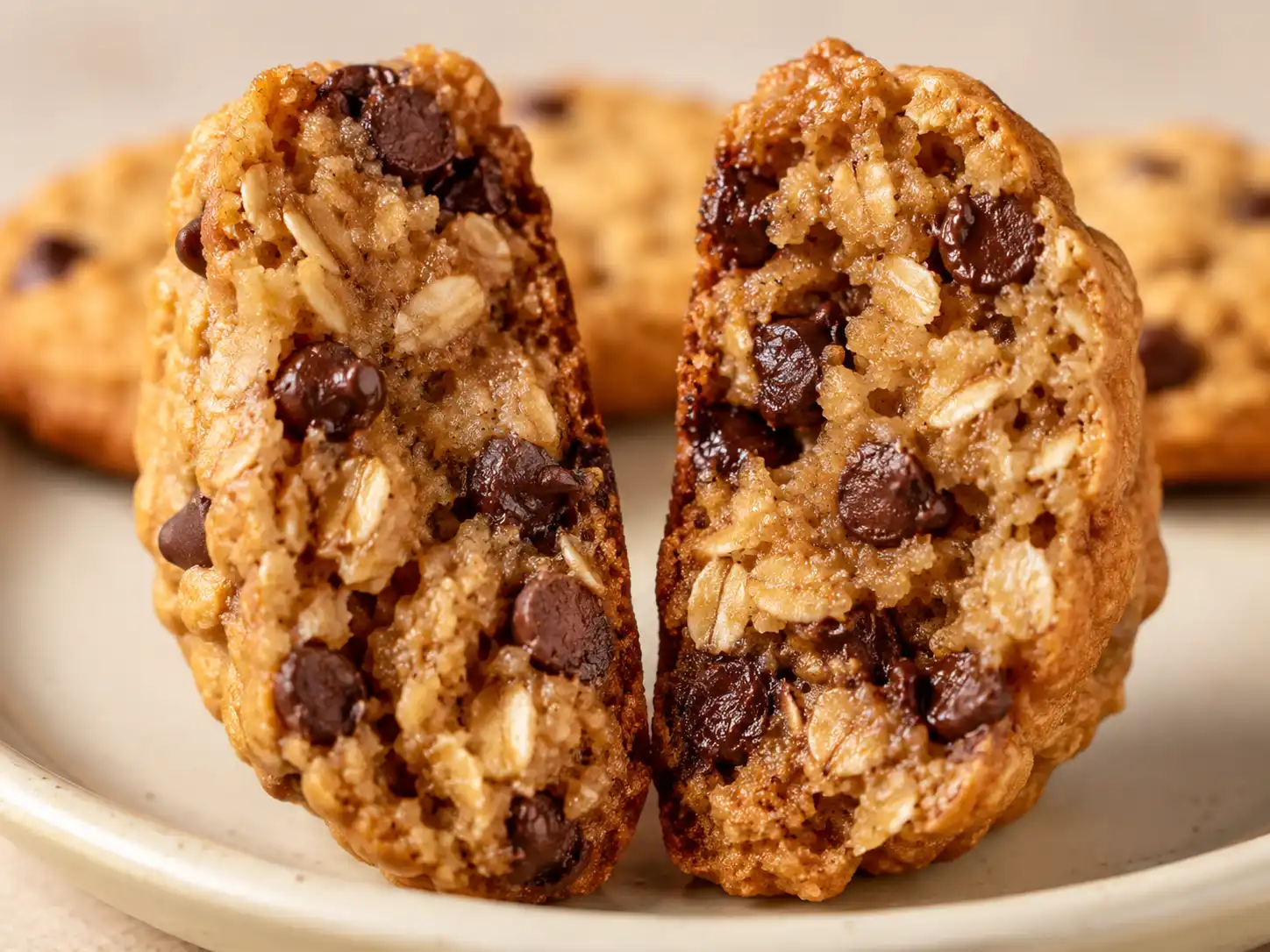
These peanut butter oat cookies combine creamy peanut butter, rolled oats, brown sugar, eggs, and mini chocolate chips in one bowl. They bake into thick cookies with visible oats, lightly set edges, and soft centers.
No all-purpose flour, butter, protein powder, banana, or electric mixer is required. The dough is chilled briefly and flattened before baking to help the cookies hold an even shape.
Quick Answer
Mix creamy peanut butter with brown sugar and eggs, then stir in baking soda, rolled oats, and mini chocolate chips. Chill the dough for 30 minutes, divide it into 16 portions, and flatten each one before baking at 350°F. Remove the cookies when the edges are set but the centers still look soft.
Peanut Butter Oat Cookies at a Glance
| Recipe detail | Information |
|---|---|
| Recipe type | Baked flourless cookie |
| Yield | About 16 cookies |
| Serving size | 1 cookie |
| Prep time | About 10 minutes |
| Chill time | 30 minutes |
| Bake time | 10 to 12 minutes |
| Oven temperature | 350°F |
| Flour required | No |
| Butter required | No |
| Electric mixer required | No |
| Main allergens | Peanuts and eggs |
| Freezer-friendly | Yes |
Why You’ll Like These Peanut Butter Oat Cookies
- Everything is mixed in one bowl.
- No flour or butter is required.
- Rolled oats provide a visible, chewy texture.
- Two eggs help the flourless cookies hold together.
- A short chill makes the dough easier to portion.
- Mini chocolate chips distribute evenly without overwhelming the dough.
- The recipe makes 16 moderately sized cookies.
How These Cookies Differ From the Site’s No-Bake Recipes
These cookies are baked with eggs and baking soda. They develop set edges and become firm enough to move after cooling on the baking sheet.
The site’s peanut butter oat balls are rolled by hand and chilled without baking. The no bake peanut butter oat cups are pressed into muffin liners and finished with a separate chocolate layer.
| Feature | Oat cookies | Oat balls | Oat cups |
|---|---|---|---|
| Preparation | Baked | Rolled and chilled | Pressed and chilled |
| Shape | Flat cookie | Small ball | Muffin-size cup |
| Structure | Eggs and baking soda | Peanut butter and honey | Compacted oat base |
| Chocolate | Mini chips in the dough | Mini chips in the mixture | Separate topping |
Ingredients You’ll Need
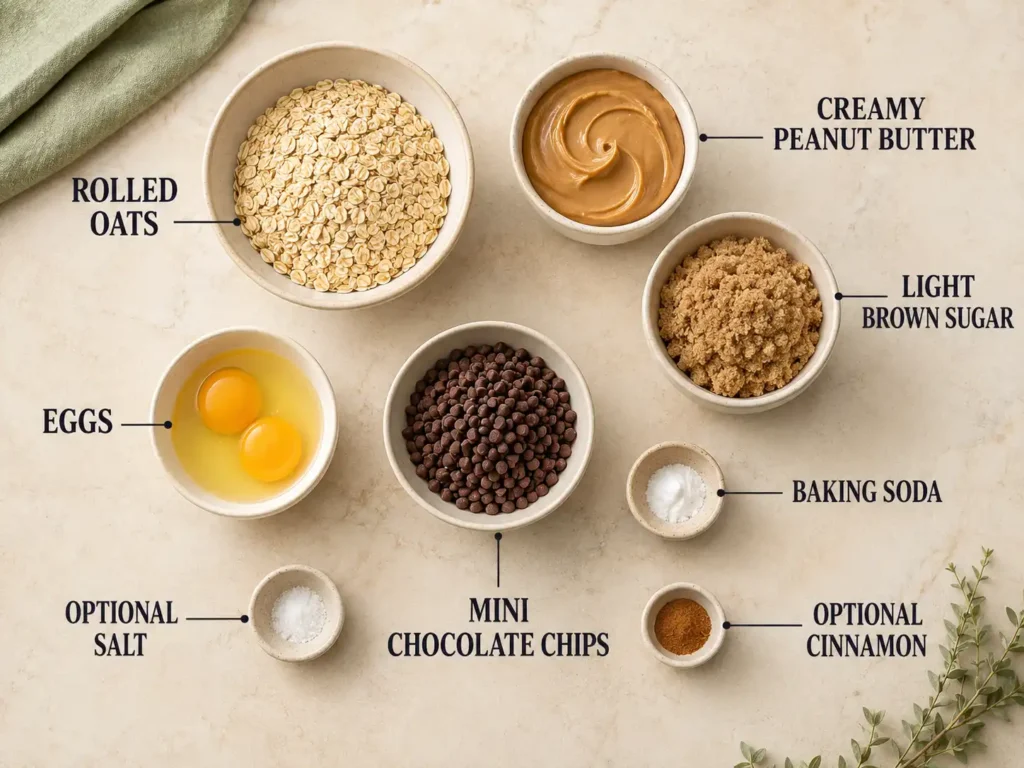
Old-Fashioned Rolled Oats
Use 1 cup, or approximately 85 grams, of old-fashioned rolled oats. They provide the main dry structure while giving the cookies a hearty oatmeal texture.
Measuring by weight is especially helpful in a flourless recipe. Too many oats can make the dough dry and cause the baked cookies to crumble.
For another way to use rolled oats, see this high-protein baked oatmeal.
Creamy Peanut Butter
Use 1 cup, approximately 256 grams, of creamy peanut butter. A conventional no-stir peanut butter provides the most predictable starting consistency for this research-based formula.
Natural peanut butter may also work, but it must be stirred until the oil and peanut solids are fully combined. Bring refrigerated peanut butter to room temperature before mixing.
Light Brown Sugar
Use 1/2 cup, approximately 100 grams, of packed light brown sugar. It sweetens the cookies while contributing moisture and a mild molasses flavor.
Do not replace it with a liquid sweetener without developing a separate formula. Honey or maple syrup would change both the moisture level and cookie spread.
Eggs
Use two large eggs, approximately 100 grams without their shells. The eggs help bind the rolled oats to the peanut butter and give the flourless cookies enough structure to hold together.
Do not taste the raw dough. Wash the bowl, utensils, work surface, and hands after contact with raw egg.
Baking Soda
Use 1/2 teaspoon of baking soda. It supports light spreading and helps keep the cookies from becoming overly dense.
Baking powder is not a direct replacement because it reacts differently and may change the rise and texture.
Mini Semisweet Chocolate Chips
Use 1/3 cup, approximately 57 grams, of mini semisweet chocolate chips. Their smaller size makes them easier to distribute through the thick dough.
Regular chocolate chips can be used, but chopping them roughly helps prevent large pieces from breaking the cookies apart.
Optional Salt and Cinnamon
Add up to 1/4 teaspoon of fine salt when using unsalted peanut butter. Reduce or omit it when the peanut butter already contains salt.
A 1/4 teaspoon of ground cinnamon is optional. It adds warmth without overpowering the peanut butter. Optional salt and cinnamon are excluded from the estimated nutrition.
Rolled Oats vs Quick Oats
| Oat type | Expected texture | Absorption | Recommendation |
|---|---|---|---|
| Old-fashioned rolled oats | Chewy with visible oat flakes | Moderate | Use for the main recipe |
| Quick oats | Softer and more uniform | Faster | Use only as a tested variation |
| Instant oatmeal packets | Unpredictable because of added sugar and flavors | Variable | Not recommended |
| Steel-cut oats | Too firm for this short bake | Slow | Do not use |
If testing quick oats, measure them by weight rather than assuming that the same packed cup will behave identically. The finished cookie may be denser and less visibly textured.
Which Peanut Butter Works Best?
| Peanut butter type | Expected behavior | How to use it |
|---|---|---|
| Creamy no-stir peanut butter | Most consistent texture | Use for the standard version |
| Natural creamy peanut butter | May be softer or oilier | Stir thoroughly before measuring |
| Crunchy peanut butter | Adds peanut pieces and a rougher texture | Use only after confirming the dough still binds |
| Powdered peanut butter | Absorbs moisture and lacks the same fat content | Do not use as a direct replacement |
The peanut butter should be soft enough to stir but not warm or runny. If oil has separated in the jar, mix it back in completely before weighing the ingredient.
How to Make Peanut Butter Oat Cookies
- Prepare the oven and pans. Preheat the oven to 350°F. Line two baking sheets with parchment paper or silicone baking mats. You can also bake the cookies in batches on one sheet.
- Combine the peanut butter and sugar. Add the creamy peanut butter and packed light brown sugar to a large mixing bowl. Stir until evenly combined.
- Add the eggs. Mix in the eggs one at a time, stirring well after each addition until the mixture looks smooth.
- Add the leavening and seasonings. Stir in the baking soda, optional salt, and optional cinnamon.
- Fold in the oats. Add the rolled oats and mix until they are evenly coated.
- Add the chocolate chips. Fold in the mini semisweet chocolate chips.
- Rest the dough. Let the mixture stand for 5 minutes so the oats can begin absorbing moisture.
- Chill the dough. Cover the bowl and refrigerate it for 30 minutes.
- Divide the portions. Weigh the complete dough and divide it into 16 equal portions. Each portion should weigh approximately 37 to 38 grams before baking.
- Shape the cookies. Roll each portion gently into a ball, place it on the prepared baking sheet, and flatten it to approximately 1/2-inch thick.
- Leave room for spreading. Arrange the cookies about 2 inches apart.
- Bake. Bake for 10 to 12 minutes, or until the edges look set and lightly golden while the centers remain slightly soft.
- Cool on the pan. Leave the cookies on the baking sheet for at least 10 minutes. They will be fragile immediately after baking and will firm as they cool.
- Transfer carefully. Move the cookies to a cooling rack only after they can hold their shape.
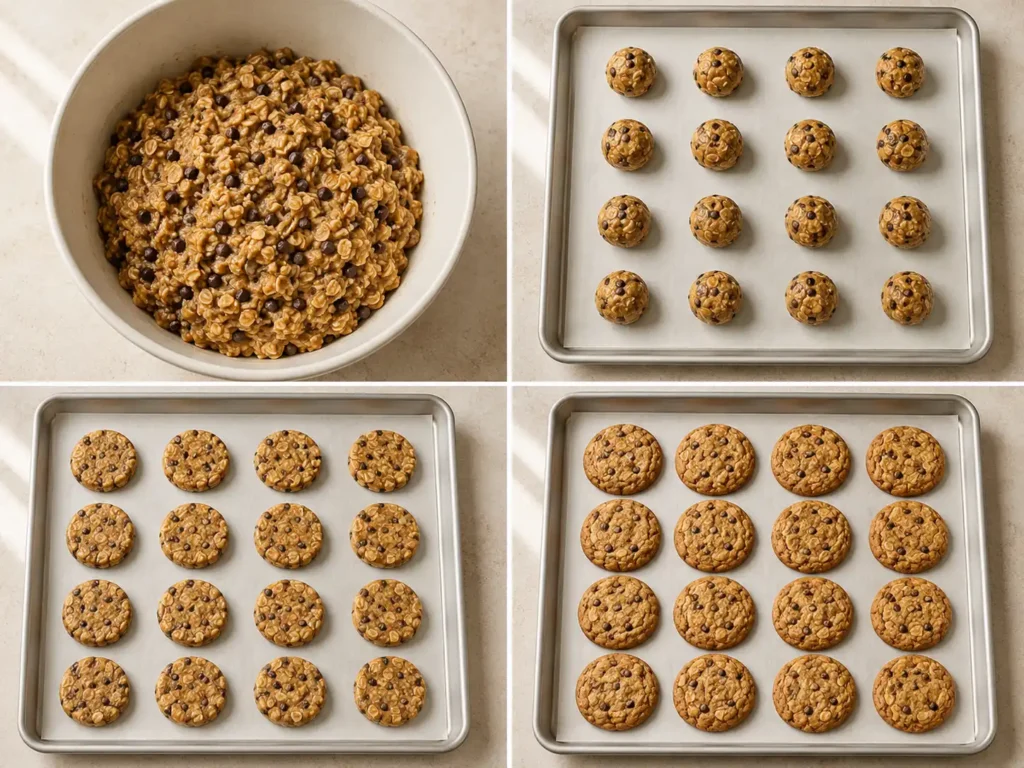
If the dough has been refrigerated for longer than one hour, let it stand at room temperature for 10 to 15 minutes before portioning. Very cold dough may be difficult to flatten.
How to Tell When the Cookies Are Done
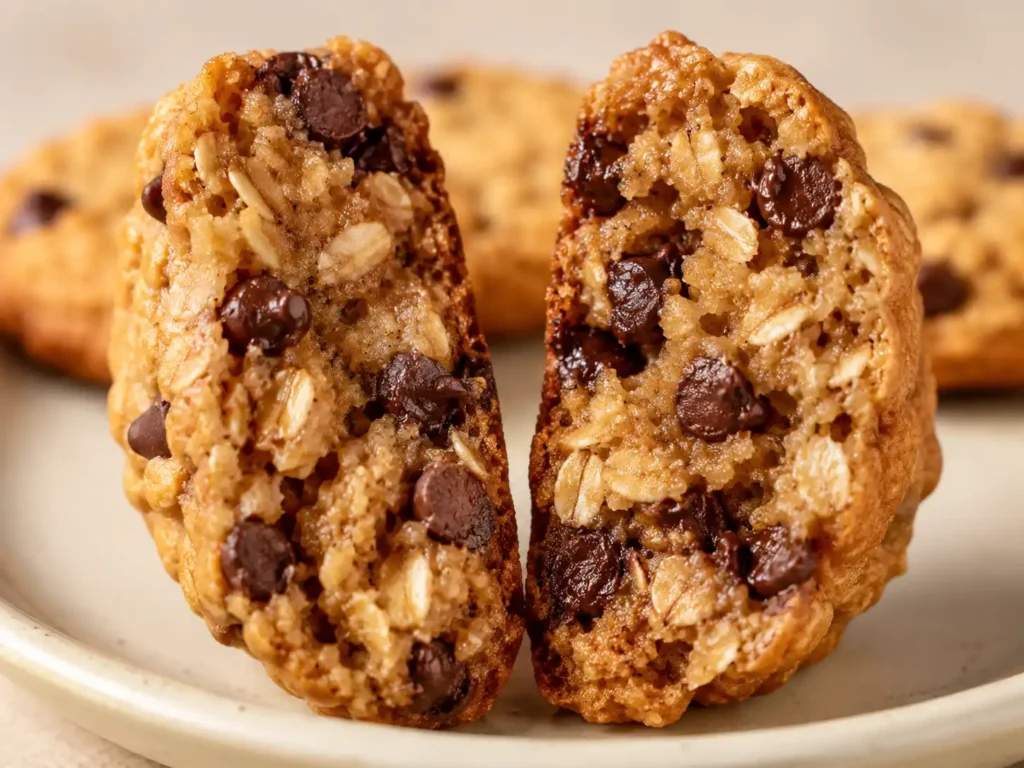
Use visual cues rather than waiting for the centers to become hard.
- The outside edges should look set.
- The edges may show a light golden color.
- The surface should no longer look wet or liquid.
- The centers should remain slightly soft.
- The cookies may look a little underdone when first removed.
- They should become firmer during the 10-minute cooling period.
Overbaking is more likely to make a flourless oat cookie dry than crisp. Start checking the first batch at 10 minutes.
Troubleshooting Peanut Butter Oat Cookies
| Problem | Likely cause | How to fix it |
|---|---|---|
| Dough crumbles after resting | Too many oats or peanut butter is too firm | Add peanut butter 1 teaspoon at a time |
| Dough looks greasy | Peanut butter oil was not fully mixed in or the dough is warm | Stir the peanut butter thoroughly and chill the dough |
| Cookies do not spread | Portions were not flattened or dough was very cold | Flatten to about 1/2-inch thick before baking |
| Cookies spread too much | Dough was warm or peanut butter was unusually runny | Chill longer and confirm the peanut butter was evenly stirred |
| Cookies are dry | Too many oats or excessive baking time | Weigh the oats and check the next batch earlier |
| Cookies break when moved | They were transferred while hot | Cool on the baking sheet for at least 10 minutes |
| Centers remain very wet | Cookies were shaped too thickly | Flatten evenly and add 1 to 2 minutes of baking time |
| Chocolate chips fall out | Chips are too large or too many were added | Use mini chips and keep to the measured amount |
Budget-Friendly Ingredient Decisions
Why Flour Is Not Required
Peanut butter, eggs, and rolled oats provide the structure in this formula. Leaving out flour shortens the ingredient list, but it also makes accurate oat measurement and cooling especially important.
Why Butter Is Not Required
Peanut butter supplies enough fat for the dough, so a separate stick of butter is not needed. The cookies will taste more strongly of peanut butter than a traditional butter-based oatmeal cookie.
Use Ingredients Across Several Recipes
Peanut butter and rolled oats can be reused in breakfasts, snacks, and no-bake recipes. This cheap protein grocery list explains how to compare unit prices without assuming that the largest package is always the best value.
Mini Chips vs Regular Chips
Mini chips distribute more evenly, but regular store-brand chips can be chopped and used instead. No exact price advantage should be assumed without comparing the available package sizes and unit prices.
Variations and Substitutions
| Original ingredient | Possible variation | Expected change |
|---|---|---|
| Rolled oats | Quick oats measured by weight | Denser, softer cookie with less visible oat texture |
| Creamy peanut butter | Crunchy peanut butter | More texture and potentially less even binding |
| Semisweet mini chips | Dark chocolate chips | Less sweet, possibly firmer chocolate pieces |
| Chocolate chips | Raisins | Chewier texture and different sweetness |
| Peanut butter | Smooth sunflower seed butter | Different flavor, color, spread, and allergen considerations |
| Chocolate chips | Omit them | Lower total dough weight and different estimated nutrition |
Substitutions can change the moisture balance and spread. Test one change at a time rather than replacing several ingredients in the same batch.
Allergy and Gluten Notes
This recipe contains peanuts and eggs. Depending on the product label, chocolate chips may also contain milk or soy or be processed on shared equipment.
A seed butter substitution changes the primary allergen, but it does not automatically make the cookies allergy-safe. Check every packaged ingredient for allergen and cross-contact statements.
Only describe the cookies as gluten-free when the oats, baking soda, chocolate chips, peanut butter, and all other packaged ingredients meet applicable gluten-free labeling requirements.
Portion Size and Estimated Nutrition
The ingredients weigh approximately 600 grams before optional salt and cinnamon are added. Dividing the dough into 16 portions produces approximately 37 to 38 grams of raw dough per cookie.
One serving equals one cookie. Larger portions will reduce the yield and increase the nutrition per cookie.
Estimated nutrition per serving, not guaranteed.
| Nutrient | Estimated amount per cookie |
|---|---|
| Calories | About 167 |
| Protein | About 5.4 g |
| Carbohydrates | About 15.5 g |
| Fat | About 10.2 g |
| Fiber | About 1.6 g |
| Total sugars | About 9.7 g |
| Sodium | About 120 mg |
The estimate uses 85 grams of rolled oats, 256 grams of creamy salted peanut butter, 100 grams of light brown sugar, 100 grams of egg, 57 grams of semisweet chocolate chips, and 1/2 teaspoon of baking soda. Optional salt and cinnamon are excluded.
Actual values will vary with the peanut butter, chocolate chips, egg size, substitutions, measuring accuracy, and final yield. Use the labels from the ingredients actually used when entering the final nutrition into WP Recipe Maker.
These estimated values do not justify describing the cookies as high protein or low calorie.
Make Ahead, Storage, and Freezing
Make the Dough Ahead
Cover and refrigerate the mixed dough for up to 24 hours before baking. If it becomes very firm, let it stand at room temperature for 10 to 15 minutes before portioning and flattening.
Do not taste the refrigerated dough because it still contains raw egg.
Freeze Unbaked Dough
- Divide and flatten the dough into individual cookie portions.
- Freeze the portions on a parchment-lined tray until firm.
- Transfer them to a freezer-safe container with parchment between layers.
- Use within approximately 2 months for the best quality.
- Thaw overnight in the refrigerator before baking as directed.
Store Baked Cookies
- Cool the cookies completely before placing them in a container.
- Store them in an airtight container at room temperature.
- Use within about 3 days for the best soft and chewy texture.
- Place parchment between layers if the cookies stick together.
Freeze Baked Cookies
Freeze completely cooled cookies in a single layer before transferring them to a freezer-safe container. Use them within approximately 2 months for the best quality. Thaw at room temperature before serving.
No reheating is required.
Helpful Tools for This Recipe
No specialized appliance is required, but these tools can make portioning and baking easier:
- Large mixing bowl
- Sturdy spoon or silicone spatula
- Digital kitchen scale
- Medium cookie scoop
- Large baking sheet
- Parchment paper or silicone baking mat
- Flat-bottom glass or measuring cup
- Cooling rack
- Airtight cookie container
- Freezer-safe container
A digital scale and medium cookie scoop are the most useful optional tools because consistent portions bake more evenly.
Peanut Butter Oat Cookies (Flourless and Chewy)
Ingredients
Equipment
Method
- Preheat the oven to 350°F (175°C). Line two baking sheets with parchment paper or silicone baking mats.
- Add the creamy peanut butter and packed light brown sugar to a large mixing bowl. Stir until evenly combined.
- Add the eggs one at a time, stirring thoroughly after each addition until the mixture looks smooth.
- Stir in the baking soda, optional salt, and optional cinnamon.
- Add the rolled oats and mix until they are evenly coated with the peanut butter mixture.
- Fold in the mini semisweet chocolate chips.
- Let the dough rest for 5 minutes so the oats can begin absorbing moisture.
- Cover the bowl and refrigerate the dough for 30 minutes.
- Weigh the complete dough and divide it into 16 equal portions. Each portion should weigh approximately 37 to 38 grams.
- Roll each portion gently into a ball and place it on the prepared baking sheet. Flatten each portion to approximately 1/2 inch thick.
- Arrange the cookies about 2 inches apart to allow room for light spreading.
- Bake for 10 to 12 minutes, or until the edges look set and lightly golden while the centers remain slightly soft.
- Leave the cookies on the baking sheet for at least 10 minutes. They will be fragile while hot and will become firmer as they cool.
- Transfer the cookies carefully to a cooling rack once they can hold their shape.
Notes
More Budget Snack Ideas
For a no-bake version that uses similar pantry ingredients, try these peanut butter oat balls.
For a molded snack with a chocolate topping, see these no bake peanut butter oat cups.
This Greek yogurt peanut butter dip pairs the same peanut butter flavor with Greek yogurt as a stronger protein source.
You can also explore these high-protein snacks on a budget when you need snacks built around a clearer primary protein source.
Frequently Asked Questions
Can I use quick oats in peanut butter oat cookies?
Quick oats may work, but they absorb moisture faster and create a softer, denser texture. Measure them by weight and expect the finished cookies to look less visibly oat-filled.
Why are my peanut butter oat cookies falling apart?
The dough may contain too many oats, the peanut butter may be too firm, or the cookies may have been moved while hot. Weigh the oats, add peanut butter one teaspoon at a time when needed, and cool the cookies on the baking sheet for at least 10 minutes.
Do I need to chill the cookie dough?
The 30-minute chill makes the thick flourless dough easier to portion and helps control spreading. It is recommended for the standard version of this recipe.
Can I freeze peanut butter oat cookie dough?
Yes. Divide and flatten the dough, freeze the portions until firm, and transfer them to a freezer-safe container. Thaw the portions overnight in the refrigerator before baking.
Are peanut butter oat cookies gluten-free?
The formula does not contain wheat flour, but the cookies should only be labeled gluten-free when the oats and every packaged ingredient meet applicable gluten-free labeling requirements.
Final Thoughts
These peanut butter oat cookies rely on peanut butter, eggs, and rolled oats instead of flour and butter. Accurate oat measurement, a brief chill, even flattening, and cooling on the baking sheet are the most important steps.
Keep the first batch close to the base recipe so you can evaluate its spread and texture. Once the formula has been kitchen-tested with the peanut butter and oats you normally buy, individual substitutions can be tested more reliably.