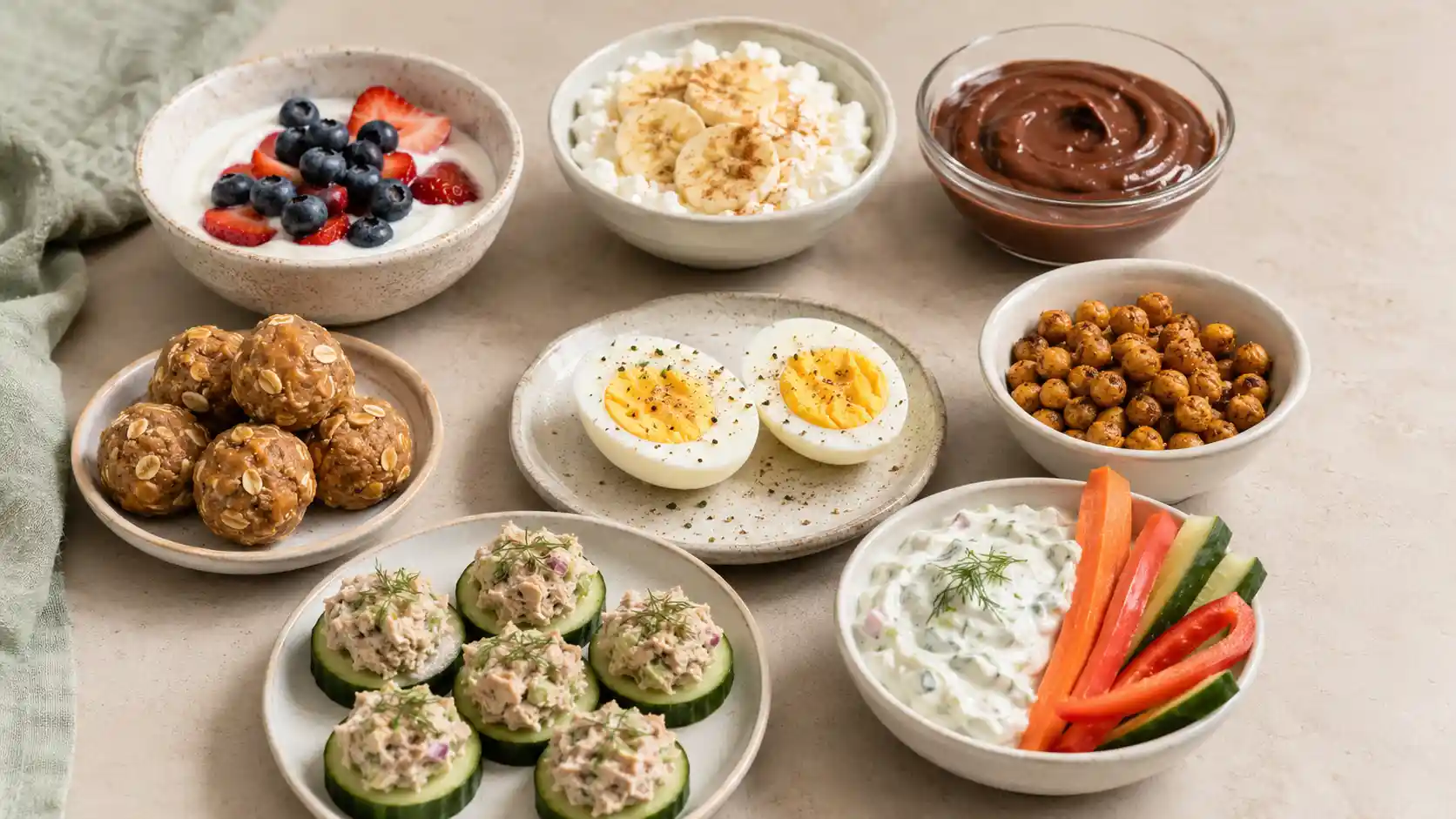
Packaged protein snacks can make a grocery total climb quickly, especially when you buy single servings every week. A more practical approach is to start with a few everyday protein sources and use them in several different ways.
This guide covers 24 individual sweet and savory snacks rather than compartment boxes or miniature meals. You will find no-cook choices, freezer-friendly ideas, crunchy snacks, and options that can travel in an insulated bag. If you are still building your pantry, this cheap protein grocery list can help you compare versatile ingredients before you shop.
Quick Answer: What Are the Best High-Protein Snacks on a Budget?
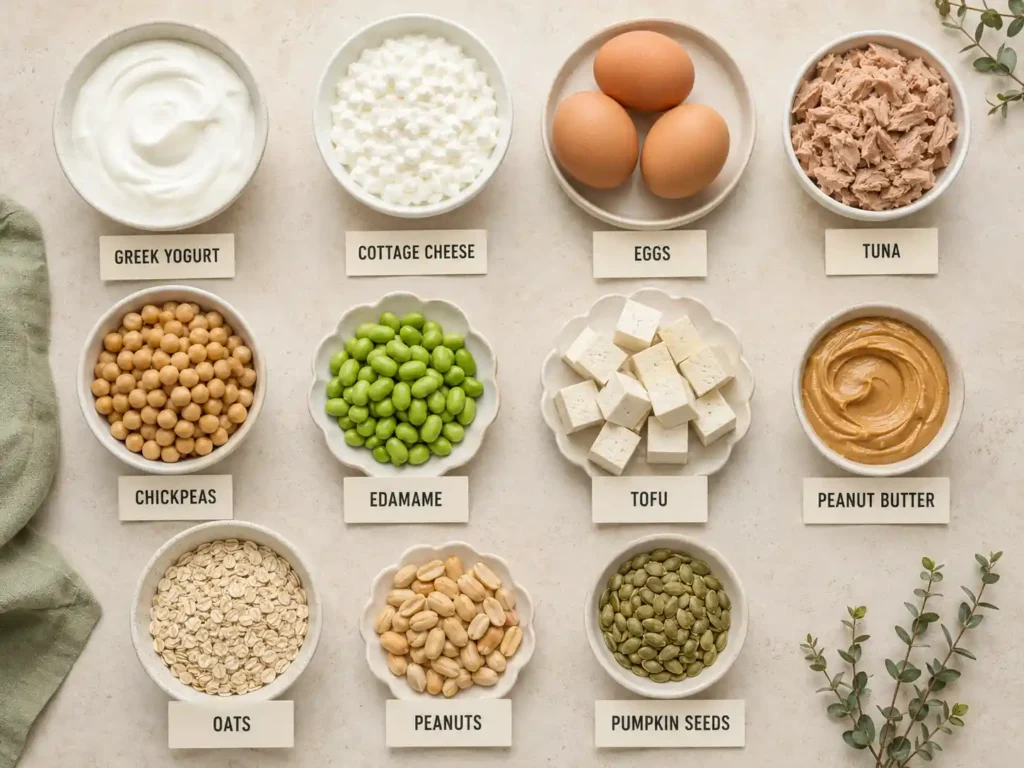
The most practical high-protein snacks on a budget begin with ingredients such as Greek yogurt, cottage cheese, eggs, beans, tuna, tofu, edamame, peanuts, or peanut butter. Choose one clear protein source, add an affordable fruit, vegetable, grain, or seasoning, and reuse the same ingredients in several snacks. Exact protein content and value depend on the product, portion, and local price.
What Makes a Snack Protein-Focused and Budget-Friendly?
Start With One Clear Protein Anchor
A protein anchor is the ingredient doing most of the nutritional work in the snack. Greek yogurt may anchor a fruit dip, eggs can become a boiled snack or egg bite, and beans can turn into either a dip or a crunchy roasted snack.
Starting with one recognizable source also makes the grocery list easier to manage. You can see which foods you are actually using instead of collecting expensive ingredients that only fit one recipe.
Compare Unit Prices and Serving Sizes
The lowest package price does not always represent the best value. Compare the price per ounce, pound, or other unit shown on the shelf, then consider whether you can finish the product before it spoils. The USDA also recommends comparing unit prices and preparing foods ahead as part of its guidance for eating on a budget.
A large yogurt container may offer better value than individual cups, but only when you will use it. The same principle applies to nuts, seeds, frozen produce, canned foods, and multipacks.
Reuse the Same Ingredients in Different Snacks
One ingredient should ideally work in at least two places. Plain Greek yogurt can become a berry bowl, fruit dip, frozen pop, or savory vegetable dip. Cottage cheese can move between fruit, chocolate pudding, cucumber cups, and blended dips.
Ingredient repetition does not mean eating the same snack every day. Changing the seasoning, produce, texture, or serving temperature creates variety while keeping the shopping list controlled.
Check Labels Instead of Guessing Protein
Protein content can change with the brand, variety, serving size, and preparation. A regular yogurt and a strained Greek yogurt, for example, may have very different labels. Peanut butters, tofu products, breads, crackers, and canned foods also vary.
Check the serving size and protein line on the Nutrition Facts label before publishing or relying on a number. This article intentionally does not assign protein grams to combinations that do not have verified quantities.
24 Budget High-Protein Snacks at a Glance
Use these two quick-reference tables to compare sweet and savory snacks by protein source, preparation, portability, refrigeration needs, and budget strategy.
12 Sweet Budget High-Protein Snacks
| Snack | Main protein source | Preparation | Portable | Refrigeration | Budget strategy |
|---|---|---|---|---|---|
| Greek Yogurt With Frozen Berries | Greek yogurt | No-cook | Yes | Yes | Use frozen fruit |
| Greek Yogurt Peanut Butter Fruit Dip | Greek yogurt | No-cook | Yes | Yes | Buy large yogurt tubs |
| Cottage Cheese With Banana and Cinnamon | Cottage cheese | No-cook | Yes | Yes | Use ripe bananas |
| Cottage Cheese Chocolate Pudding | Cottage cheese | Prepared | Yes | Yes | Blend at home |
| Frozen Greek Yogurt Berry Bark | Greek yogurt | Prepared | Yes | Yes | Freeze leftovers |
| Greek Yogurt Berry Pops | Greek yogurt | Prepared | Yes | Yes | Use reusable molds |
| Peanut Butter Oat Protein Bites | Peanut butter | Prepared | Yes | No | Use pantry staples |
| Peanut and Seed Trail Mix | Peanuts | No-cook | Yes | No | Buy in bulk |
| Greek Yogurt Overnight Oats Cup | Greek yogurt | Prepared | Yes | Yes | Prep in batches |
| Chia and Greek Yogurt Pudding | Greek yogurt | Prepared | Yes | Yes | Use pantry staples |
| Peanut Butter Banana Rice Cake | Peanut butter | No-cook | Yes | No | Use a shelf-stable base |
| Chocolate Zucchini Protein Muffin | Eggs | Prepared | Yes | No | Use seasonal produce |
12 Savory Budget High-Protein Snacks
| Snack | Main protein source | Preparation | Portable | Refrigeration | Budget strategy |
|---|---|---|---|---|---|
| Seasoned Hard-Boiled Eggs | Eggs | Prepared | Yes | Yes | Cook in batches |
| Savory Cottage Cheese Cucumber Cup | Cottage cheese | No-cook | Yes | Yes | Use whole cucumbers |
| Greek Yogurt Vegetable Dip | Greek yogurt | No-cook | Yes | Yes | Make dip at home |
| Cottage Cheese Protein Dip | Cottage cheese | Prepared | Yes | Yes | Blend at home |
| Tuna Cucumber Bites | Tuna | No-cook | Yes | Yes | Use canned tuna |
| Crispy Roasted Chickpeas | Chickpeas | Prepared | Yes | No | Use dried or canned beans |
| Crispy Roasted Edamame | Edamame | Prepared | Yes | No | Use frozen bags |
| Cottage Cheese Zucchini Fritters | Cottage cheese | Prepared | Yes | No | Use leftover vegetables |
| Mini Egg and Vegetable Bites | Eggs | Prepared | Yes | Yes | Cook in a muffin pan |
| White Bean Dip With Vegetables or Crackers | White beans | Prepared | Yes | Yes | Use canned beans |
| Seasoned Baked Tofu Bites | Tofu | Prepared | Yes | Yes | Buy store-brand tofu |
| Egg Salad Cucumber Rounds | Eggs | Prepared | Yes | Yes | Use leftover eggs |
Easy Sweet High-Protein Snack – 12 Ideas
1. Greek Yogurt With Frozen Berries
Spoon plain Greek yogurt into a bowl or lidded container and add frozen berries. The berries soften as they sit, releasing juice that naturally flavors the yogurt. You can add cinnamon or oats if those ingredients are already in your pantry.
Compare the unit price of a larger yogurt tub with individual cups before choosing. Frozen fruit can reduce spoilage because you remove only what you need. For a more structured make-ahead version, see these blackberry Greek yogurt protein cups.
2. Greek Yogurt Peanut Butter Fruit Dip
Stir Greek yogurt and peanut butter together to make a creamy dip for banana slices, apples, or another fruit already on your shopping list. The yogurt keeps the texture lighter, while the peanut butter brings richness and a second protein source.
Prepare only the amount you expect to eat and keep the remaining ingredients separate. This prevents sliced fruit from softening in a container of dip and lets you use the same yogurt in a savory recipe later.
3. Cottage Cheese With Banana and Cinnamon
Cottage cheese, sliced banana, and cinnamon make a no-cook snack with creamy, soft, and naturally sweet elements. Mash part of the banana into the cottage cheese if you prefer sweetness throughout rather than only on top.
This idea works best when bananas and cottage cheese already appear elsewhere in the weekly plan. Use the banana at your preferred level of ripeness instead of assuming that older fruit must be discarded.
4. Cottage Cheese Chocolate Pudding
Blended cottage cheese can form the base of a chocolate-style pudding. Cocoa and a sweetener can change the flavor, but the final taste and texture depend on the ingredients and proportions used.
Keep this as a flexible snack concept unless you have a tested recipe with complete quantities and servings. You can find additional ways to use the same container in these high-protein cottage cheese recipes.
5. Frozen Greek Yogurt Berry Bark
Spread Greek yogurt in a thin layer, scatter berries over it, and freeze until firm enough to break into pieces. A lined tray or freezer-safe container makes it easier to lift the bark without buying a special mold.
This is an at-home freezer snack rather than a standard desk snack. It softens as it warms, so transport it only in a suitable cooler and return unused pieces to the freezer promptly.
6. Greek Yogurt Berry Pops
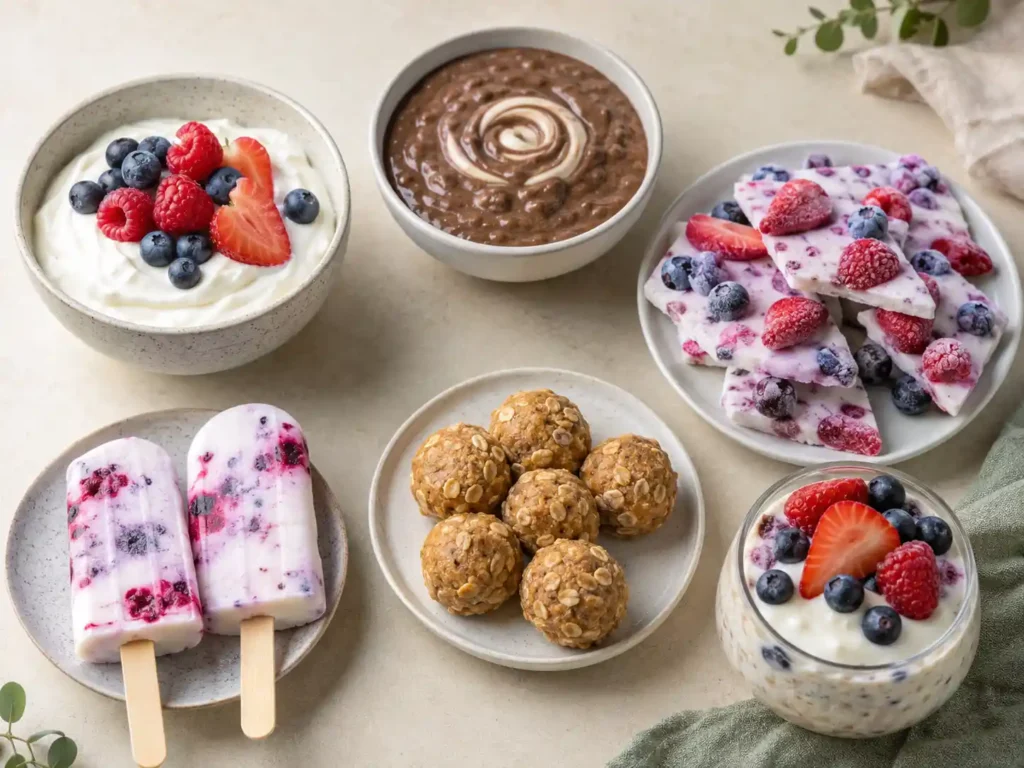
Greek yogurt and fruit can also be frozen in reusable pop molds, small freezer-safe cups, or another suitable container you already own. Fruit can be blended into the yogurt or added in small pieces, depending on the texture you prefer.
Only prepare as many as your freezer space can hold comfortably. These pops can help use fruit already purchased for bowls or smoothies without requiring a new set of ingredients.
7. Peanut Butter Oat Protein Bites
Oats and peanut butter are common starting ingredients for no-bake snack bites. A complete recipe usually needs enough moisture and binding power to hold its shape, so avoid guessing quantities or adding a random scoop of powder.
Choose a verified recipe before making a batch, especially when calculating portions or nutrition. The budget advantage comes from using ingredients that already serve other breakfasts and snacks, not from assuming every homemade bite costs less.
8. Peanut and Seed Trail Mix
Combine dry peanuts and seeds with a modest amount of dried fruit or another dry mix-in. Keeping the blend simple makes it easier to compare the cost with preassembled trail mix and avoids paying for ingredients you routinely leave behind.
Nuts and seeds can still be expensive, so compare their unit prices rather than treating bulk bins as automatically cheaper. Store the dry mixture according to the ingredient labels and avoid adding moist foods to the main batch.
9. Greek Yogurt Overnight Oats Cup
Combine oats and Greek yogurt in a covered container and refrigerate them until the oats soften. Fruit, cinnamon, or peanut butter can change the flavor without requiring an entirely different snack base.
Keep the cup cold during storage and transport. If you want a thinner texture, use a tested combination that specifies the needed liquid rather than improvising quantities and expecting the same result every time.
10. Chia and Greek Yogurt Pudding
Chia seeds absorb moisture and can thicken a Greek yogurt mixture in the refrigerator. Because chia can vary considerably in price, this is most budget-friendly when it is already in your pantry or its unit price fits your shopping plan.
Follow a verified ratio when preparing the pudding. Too many seeds can create a dense texture, while too little liquid may prevent the mixture from hydrating evenly.
11. Peanut Butter Banana Rice Cake With Yogurt
Spread peanut butter over a rice cake, add banana slices, and serve it with Greek yogurt or a yogurt drizzle. The yogurt gives the snack a clearer protein anchor than relying on the rice cake alone.
For better texture, assemble the rice cake shortly before eating. Pack the yogurt separately in a cold container if the snack will travel, then add it when you are ready to eat.
12. Chocolate Zucchini Protein Muffin
A chocolate zucchini muffin can become a protein-focused batch snack only when the recipe contains a documented protein source and a verified serving yield. A regular zucchini muffin does not automatically become high-protein because it contains an egg somewhere in the batch.
Use a tested recipe before publishing quantities, baking instructions, nutrition, or storage guidance. Zucchini makes the most budget sense when you can use the remaining vegetable in another recipe rather than buying it for a single muffin batch.
12 Easy Savory High-Protein Snack Ideas
1. Seasoned Hard-Boiled Eggs
Hard-boiled eggs are simple to prepare in the same cooking session, then season differently when served. Black pepper, paprika, dried herbs, or another seasoning already in the pantry can change the flavor without creating another grocery list.
Keep cooked eggs refrigerated. When packing them away from home, use an insulated bag with a cold source rather than leaving them loose in a desk or tote.
2. Savory Cottage Cheese Cucumber Cup
Add chopped cucumber, pepper, herbs, or another simple seasoning to cottage cheese. The combination stays light and crisp, and the cucumber can also be used with tuna bites, egg salad rounds, or vegetable dips.
Pack the cucumber separately when you want the firmest texture. Cottage cheese requires refrigeration, so this snack should travel with an appropriate cold pack.
3. Greek Yogurt Vegetable Dip
Plain Greek yogurt can become a savory dip with dried herbs and seasonings. Serve it with carrots, cucumber, bell pepper, crackers, or whichever dipper already fits the week’s grocery plan.
Mixing a small portion first lets the rest of the yogurt remain neutral for sweet snacks. It also prevents an entire container from taking on one seasoning blend that you may not want all week.
4. Cottage Cheese Protein Dip
Blending cottage cheese creates a smooth base for a savory dip. Garlic, herbs, pepper, and acidity can influence the flavor, but a verified recipe will provide more dependable proportions than adding everything by instinct.
For complete quantities and method, use this tested-format cottage cheese protein dip. Keep it refrigerated and transport it with a cold source.
5. Tuna Cucumber Bites
Place a prepared tuna mixture on thick cucumber rounds for an individual savory bite. Cucumbers give the snack fresh crunch without turning it into a full sandwich, plate, or compartment box.
Check the drained weight when comparing canned tuna, since differently sized cans may not provide the same usable amount. Assemble the bites close to serving so the cucumber stays firm, and keep the tuna cold.
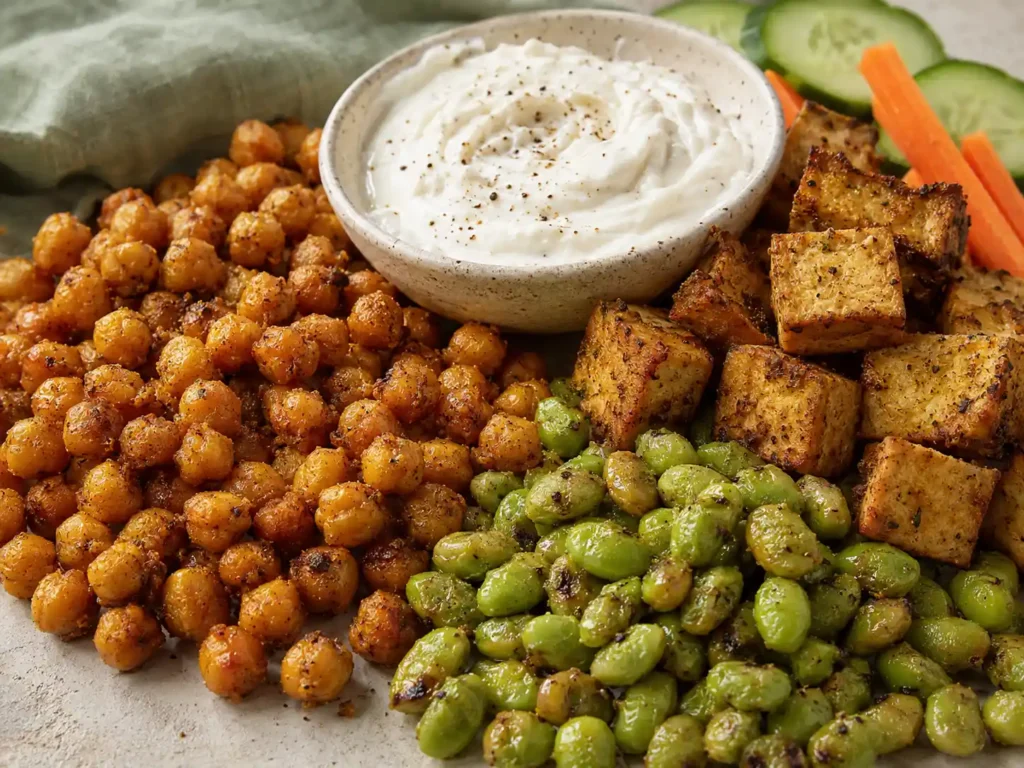
6. Crispy Roasted Chickpeas
Roasted chickpeas offer a crunchy alternative to creamy bean dips. Drying the chickpeas thoroughly before roasting and cooling them completely afterward supports a crisper result.
Moisture levels vary between homemade batches, so do not automatically treat roasted chickpeas as indefinitely shelf-stable. Follow a tested recipe and refrigerate the batch if it remains soft or moist.
7. Crispy Roasted Edamame
Shelled edamame can be seasoned and roasted for a plant-based snack. Frozen bags are convenient, but compare unit prices, package weights, and whether the product is shelled before deciding which option offers better value.
As with roasted chickpeas, the final storage method depends on how thoroughly the edamame dries. Cool it completely and follow the recipe’s storage guidance instead of guessing.
8. Cottage Cheese Zucchini Fritters
Shredded zucchini and cottage cheese can form the base of small savory fritters when combined with an appropriate binder and seasoning. Removing excess water from the zucchini is important for texture.
This idea needs a tested recipe before quantities, cooking temperature, yield, or nutrition can be published. Refrigerate cooked fritters and pack them with a cold source when taking them away from home.
9. Mini Egg and Vegetable Bites
Egg bites turn eggs and chopped vegetables into individual portions that are easy to reheat or eat cold when properly stored. Use vegetables already in the refrigerator rather than purchasing several toppings for one batch.
For a complete recipe and verified preparation instructions, use these meal prep egg bites. Keep cooked egg dishes refrigerated and transport them cold.
10. White Bean Dip With Vegetables or Crackers
Blend white beans with seasonings and enough appropriate liquid to reach a dip-like texture. Pair the dip with vegetables or crackers that also work with the yogurt and cottage cheese dips in this guide.
Canned beans reduce active preparation, while beans cooked from dry may fit a larger meal plan. Compare convenience, usable quantity, and unit price instead of assuming one format is always cheaper.
11. Seasoned Baked Tofu Bites
Tofu can be cut into small pieces, seasoned, and baked until the outside reaches the texture you prefer. Pressing or drying the tofu according to the recipe can help the seasoning adhere and reduce excess surface moisture.
Compare tofu by package weight and type because the protein content, water content, and price can vary. Refrigerate cooked tofu and use an insulated bag with a cold source for transport.
12. Egg Salad Cucumber Rounds
Spoon a prepared egg salad onto cucumber rounds for a cool, crisp snack. Using eggs from the same batch as the seasoned hard-boiled eggs reduces duplicate cooking.
Assemble the rounds shortly before eating to limit excess water from the cucumber. Both the egg salad and assembled bites require refrigeration.
Best No-Cook and Portable Options
Snacks That Can Be Assembled in Five Minutes
Greek yogurt with berries, cottage cheese with banana, peanut butter rice cakes, yogurt dip, cottage cheese cucumber cups, and trail mix require little active preparation. The exact time depends on whether the produce is already washed, sliced, or portioned.
Keep frequently used ingredients together in the refrigerator or pantry so you can see what is available. Visibility can be more useful than preparing every snack several days ahead.
Snacks That Need an Ice Pack
Yogurt, cottage cheese, cooked eggs, tuna, tofu, bean dips, egg salad, and cooked fritters need reliable cold storage. Use an insulated bag and cold source when a refrigerator is unavailable.
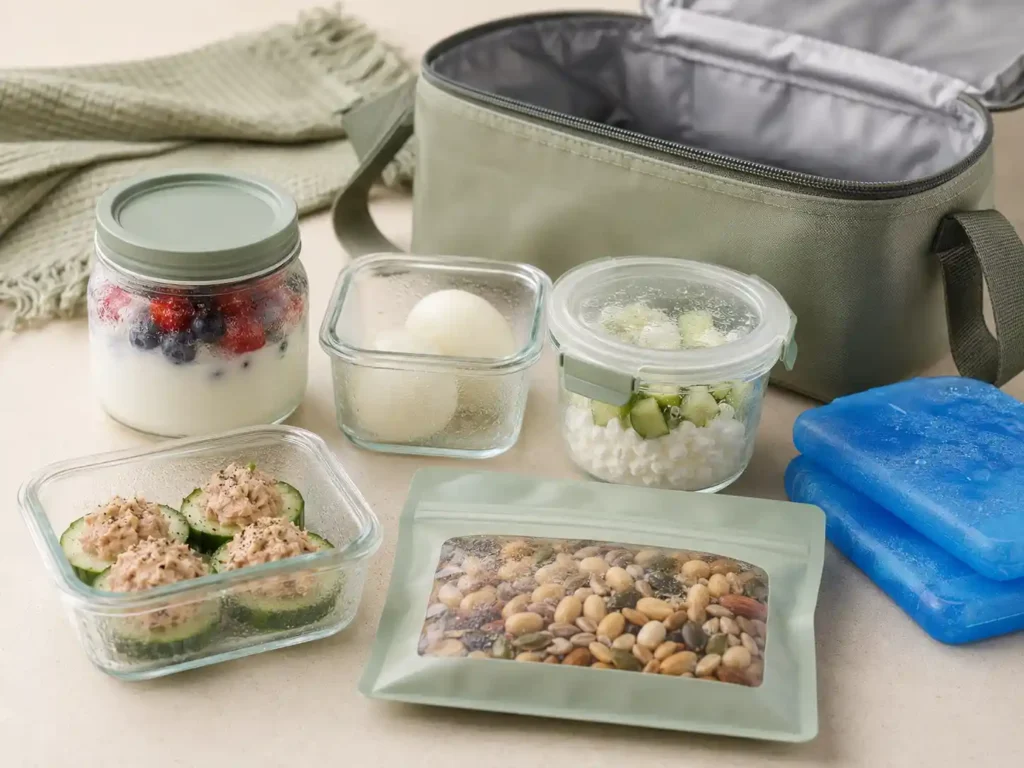
This article intentionally focuses on individual snacks. If you need complete compartment meals for work, use these high-protein Lunchables for adults instead of turning every snack here into another box.
Shelf-Stable Options for Bags and Desks
A completely dry peanut and seed mix is the clearest shelf-stable option in this collection. Commercially packaged crackers, peanut butter portions, or similar pantry items should be stored according to their labels.
Homemade roasted chickpeas or edamame may retain moisture, so follow the tested recipe’s storage instructions. Do not assume that every crunchy homemade snack can remain unrefrigerated for an extended period.
After-School Snacks With Protein
After-school snacks with protein do not need a separate shopping list. Start with one of the protein anchors already used in this guide, then choose a fruit, vegetable, oat, cracker, tortilla, or rice cake that also fits another meal. The best option for a particular afternoon depends on how much time you have, whether the snack must travel, and which ingredients are already open.
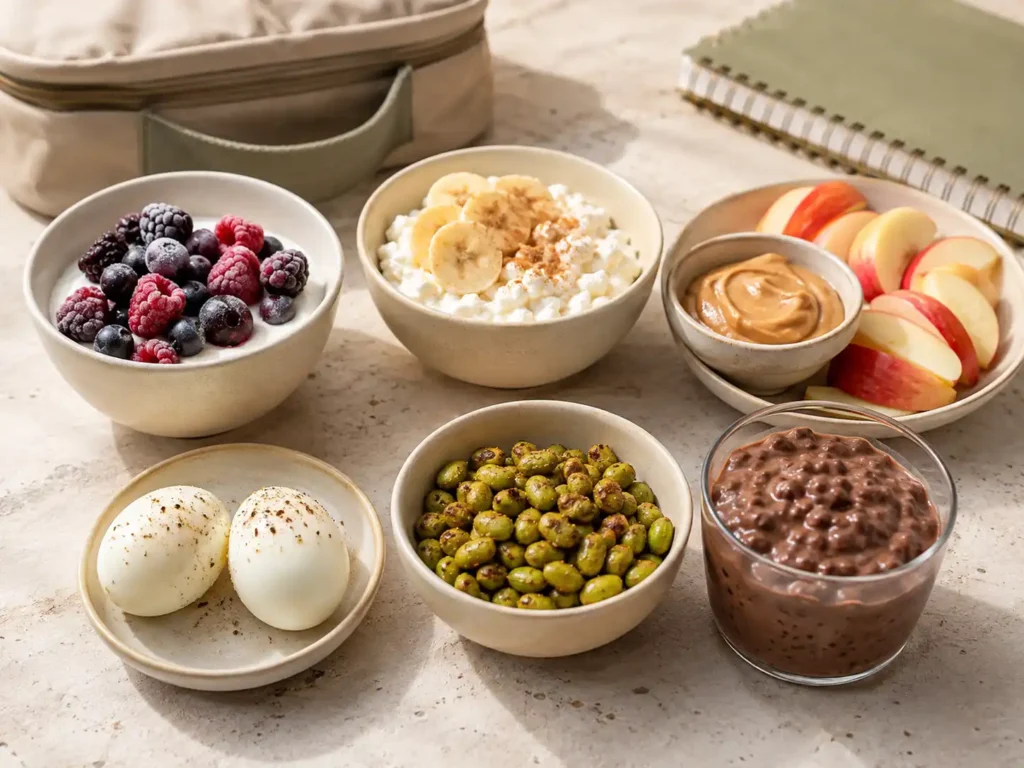
The table below filters eight of the 24 snack ideas by preparation style. It does not assign protein grams because the final amount depends on the exact product, quantity, and serving size.
| Snack idea | Protein anchor | Best timing | Storage note |
|---|---|---|---|
| Greek yogurt with frozen berries | Greek yogurt | Assemble when needed | Keep refrigerated until serving |
| Cottage cheese with banana and cinnamon | Cottage cheese | Assemble when needed | Keep refrigerated until serving |
| Greek yogurt peanut butter fruit dip | Greek yogurt and peanut butter | Mix ahead or assemble fresh | Keep the dip cold and fruit separate |
| Peanut butter banana rice cake with yogurt | Peanut butter and Greek yogurt | Assemble shortly before eating | Pack the yogurt separately when traveling |
| Seasoned hard-boiled eggs | Eggs | Cook in a batch | Refrigerate cooked eggs promptly |
| Mini egg and vegetable bites | Eggs | Prepare ahead from a verified recipe | Keep refrigerated and reheat safely if desired |
| Cottage cheese chocolate pudding | Cottage cheese | Blend and chill ahead | Store covered in the refrigerator |
| Crispy roasted edamame | Edamame | Prepare in a batch | Follow the tested recipe because retained moisture affects storage |
Five-Minute After-School Options
When the snack will be eaten at home, Greek yogurt with berries, cottage cheese with banana, or a simple dip with fruit or vegetables can be assembled with little active work. Keep wet and crunchy components separate until serving so crackers, rice cakes, and cut produce hold their texture.
For dependable quantities and a smoother consistency, use this Greek yogurt peanut butter dip instead of guessing the yogurt-to-peanut-butter ratio. The dip requires refrigeration, and any cut fruit should also be stored appropriately.
Make-Ahead Snacks for Busy School Weeks
Cooked eggs, egg bites, chilled cottage cheese pudding, roasted edamame, and oat-based snacks can reduce afternoon assembly. Prepare only the number of portions your household is likely to use, label the container with the preparation date, and follow the storage directions for each complete recipe.
For sweet make-ahead options, compare peanut butter oat balls, no-bake peanut butter oat cups, and cottage cheese chocolate pudding. The oat recipes should not be treated as automatically high-protein. Pairing and nutrition depend on the exact portion and any separate protein food served with them.
Frozen options work best when the snack will be eaten at home or kept reliably frozen. These frozen Greek yogurt peanut butter bites need suitable freezer storage and will soften as they warm.
What Needs an Ice Pack?
Greek yogurt, cottage cheese, cooked eggs, tuna, tofu, egg salad, and prepared dips are perishable. Keep them refrigerated until serving. If a snack travels to an after-school activity and a refrigerator is unavailable, place it in an insulated bag with an adequate cold source.
The FDA advises keeping refrigerators at 40°F or below and not leaving perishable food at room temperature for more than two hours. That limit becomes one hour when the surrounding temperature is above 90°F. Review the FDA guidance on safe food storage when planning snacks that must travel.
Build a Snack From Familiar Groceries
Choose one clear protein anchor first, such as Greek yogurt, cottage cheese, eggs, tuna, tofu, edamame, beans, or peanut butter. Add one produce item or simple base already used elsewhere in the week, then change the flavor with cinnamon, cocoa, herbs, or another seasoning already in the pantry.
This approach makes it easier to reuse groceries without pretending that every combination has the same protein content or cost. If exact nutrition matters, write down the complete quantities and calculate the serving with product labels or an appropriate USDA FoodData Central entry.
For a crunchy option with a complete method, see this roasted edamame recipe. Storage depends on how dry the finished edamame becomes, so follow the recipe instead of assuming that every homemade batch is shelf-stable.
Allergy note: An after-school snack is not automatically safe for every child or every program. Check all packaged-food labels, consider cross-contact, and follow the allergy policies of any school, club, or activity location. A substitution changes the ingredients but does not guarantee an allergen-free result.
How to Prep Budget Snacks Without Wasting Food
Choose Three Protein Anchors for the Week
Start with three protein ingredients that fit several uses. Greek yogurt, eggs, and beans could support sweet bowls, dips, cooked snacks, and crunchy options. Another week might use cottage cheese, tofu, and peanut butter.
This approach provides variety without requiring every item from this list at once. Buying 24 snack ingredients in one trip would work against the budget-first purpose of the guide.
Repeat Fruit, Vegetables, and Flavorings
Choose produce that appears in multiple ideas. Cucumber can work with cottage cheese, tuna, egg salad, and dips. Bananas can go into cottage cheese, yogurt, overnight oats, or a rice cake snack.
Seasonings can repeat too. Cinnamon works across sweet yogurt and oat ideas, while dried herbs can flavor yogurt dip, cottage cheese, eggs, tofu, and beans.
Keep Crunchy and Wet Components Separate
Rice cakes, crackers, roasted snacks, and dry trail mix lose their texture when stored beside yogurt, dips, or cut produce. Use separate containers until serving instead of assembling everything early.
This also makes leftovers easier to reuse. A container of yogurt dip can serve different vegetables without making the entire batch watery.
Freeze Extras Only When the Texture Allows It
Yogurt bark and pops are intended for the freezer. Fresh cucumber snacks, cottage cheese cups, and egg salad rounds are better assembled fresh or kept refrigerated according to safe food-handling guidance.
Freezing is not automatically the best answer for every leftover. Consider whether the texture will remain appealing after thawing and whether the recipe specifically supports freezing.
Shop Once, Use It More Than Once
| Ingredient | Sweet use | Savory use | Storage or label note |
|---|---|---|---|
| Greek yogurt | Berry bowl, fruit dip, pops, overnight oats | Vegetable dip | Refrigerate and check the label serving size |
| Cottage cheese | Banana cup, chocolate pudding | Cucumber cup, blended dip, fritters | Keep refrigerated |
| Eggs | Verified baked muffin recipe | Boiled eggs, egg bites, egg salad | Refrigerate cooked eggs promptly |
| Peanut butter | Fruit dip, oat bites, rice cakes | Optional savory sauce or dip | Follow the product label |
Want more realistic budget meal and snack ideas? Join the newsletter for simple strategies built around repeatable ingredients and everyday grocery planning.
Helpful Tools for Budget Snack Prep
You do not need a cabinet full of specialized equipment. A few basic categories may make preparation and safe transport easier:
- Small airtight containers: useful for yogurt, cottage cheese, dips, oats, and cut produce.
- Mini blender or food processor: helpful for smooth cottage cheese pudding, cottage cheese dip, and bean dip.
- Sheet pan and reusable baking liner: useful for roasted chickpeas, edamame, tofu, and batch baking.
- Muffin pan: suitable for verified egg-bite and muffin recipes.
- Insulated lunch bag and cold packs: important when transporting perishable snacks without immediate refrigerator access.
No particular product is required. Compare size, materials, care instructions, available storage space, and your actual routine before buying anything.
How to Verify Protein Without Inventing Macros
Start with the Nutrition Facts label when using packaged yogurt, cottage cheese, tofu, peanut butter, canned foods, crackers, or other branded ingredients. Read the serving size first, since the protein number applies to that stated amount rather than every portion someone might serve.
For generic ingredients, USDA FoodData Central provides food-composition data. Use a matching food entry, exact ingredient quantities, and a defined serving yield before performing a nutrition calculation.
This guide does not assign protein numbers to loose snack concepts. A snack may contain protein-rich ingredients without meeting every reader’s personal definition of high-protein. When exact macros matter, calculate the complete combination from verified quantities rather than copying a number from a similar recipe.
Storage and Food Safety
The FDA advises refrigerating perishable foods promptly and keeping the refrigerator at 40°F or below. Foods that require refrigeration should not remain at room temperature for more than two hours. The limit becomes one hour when the surrounding temperature is above 90°F. Review the FDA’s current food storage guidance for additional details.
Use cold packs for yogurt, cottage cheese, eggs, tuna, tofu, cooked vegetables, dips, and similar snacks when a refrigerator is unavailable. Follow product labels and verified recipe instructions for storage duration rather than applying one number to every preparation.
FAQs About High-Protein Snacks on a Budget
What are the cheapest ingredients for protein-focused snacks?
No ingredient is always the cheapest in every US store. Eggs, beans, lentils, plain yogurt, cottage cheese, peanuts, peanut butter, tofu, and canned fish are useful items to compare. Check local unit prices, usable package weight, serving size, and how many different meals or snacks the ingredient can support.
Can I make high-protein snacks without protein powder?
Yes. Greek yogurt, cottage cheese, eggs, beans, tofu, edamame, tuna, peanuts, and other everyday foods can serve as protein anchors. Protein powder is optional and should not be added simply to justify a claim or reach an invented target.
What are easy sweet high-protein snack ideas?
Practical sweet options include Greek yogurt with berries, Greek yogurt peanut butter dip, cottage cheese with banana, blended cottage cheese pudding, overnight oats with Greek yogurt, and frozen yogurt pops. Check the specific products and portions when you need exact nutrition.
Which high-protein snacks are easy to take to work?
Dry trail mix is easy to carry without refrigeration when all ingredients are shelf-stable. Yogurt cups, cottage cheese snacks, eggs, dips, tofu, tuna, and egg bites can also travel, but they need an insulated bag with an adequate cold source.
How can I check how much protein a snack contains?
Write down the exact quantity of every ingredient, obtain protein data from the product label or an appropriate FoodData Central entry, and add the amounts together. Divide only when the total number of servings is clearly defined. Do not use another recipe’s nutrition as a substitute.
Final Takeaway
A practical snack plan does not require 24 different grocery purchases. Choose two sweet snacks and two savory snacks that share the same protein anchors, produce, and seasonings. Compare unit prices, keep perishable foods cold, and verify nutrition only when you have complete quantities.
Once you know which combinations work for your routine, explore these easy high-protein recipes for breakfasts, lunches, dinners, and other simple ways to use the same ingredients.